Category: Influencer Marketing and Partnerships

Marketing professional analyzing influencer profiles on a laptop and tablet with text-free blurred interfaces; magnifying glass and shield paperweight on desk suggest verification and safety; soft daylight in a modern office with shelves, a plant, and a distant city skyline in the background.

How Influencer Vetting Tools Protect Your Brand From Costly Marketing Mistakes

Verify influencer authenticity before signing contracts by examining engagement rates, follower growth patterns, and audience demographics through specialized vetting platforms. A single partnership with a fraudulent influencer can cost your brand between $100,000 and $1 million in wasted ad spend and reputation damage.
Automate your due diligence process using tools that scan for fake followers, bot activity, and past brand controversies within minutes rather than hours. These platforms analyze millions of data points across social channels to flag red flags like sudden follower spikes, suspicious comment patterns, or misaligned …

READ MORE

Marketing professional inspecting printed social profile photo thumbnails with a magnifying glass on a desk, next to a blank white mask symbolizing fake influencers; softly lit office background with blurred ring light and tripod; no visible text.

Your Brand’s Biggest Threat: How Fake Influencers Are Stealing Marketing Budgets

Verify follower authenticity by analyzing engagement rates against industry benchmarks—genuine influencers typically maintain 2-5% engagement rates, while fraudulent accounts show inflated followers with minimal meaningful interaction. Request direct access to their analytics dashboards rather than accepting screenshots, which are easily manipulated through editing tools.
Cross-reference audience demographics with your target market by examining the influencer’s follower locations, age ranges, and interests through platform-specific analytics. Fraudulent accounts often display suspicious patterns like sudden follower spikes…

READ MORE

Hand holding a magnifying glass over printed profile headshots on a desk, revealing duplicated artificial-looking faces while the office background is softly blurred.

Fake Followers Are Costing Your Brand Thousands (Here’s How to Stop It)

Verify follower authenticity by analyzing engagement rates against industry benchmarks—legitimate influencers maintain 1-3% engagement on Instagram, while fake accounts often show inflated follower counts with suspiciously low interaction. Run a quick audit by dividing total likes and comments by follower count across their last 15-20 posts to identify artificial inflation.
Examine audience demographics through platform analytics or third-party tools to confirm followers match your target market geography, age range, and interests. Fraudulent influencers frequently purchase bot followers from click farms, resulting in audiences …

READ MORE

Marketing manager and influencer shake hands over a printed contract as an attorney points with a pen; smartphone, camera, and ring light on the desk, glass-walled office background softly blurred.

Why Your Influencer Contract Needs These Legal Protections (Before Problems Start)

Define clear deliverables in your influencer contract by specifying exact content types, posting schedules, and platform requirements—vague terms like “social media promotion” leave room for misalignment and underperformance. Your agreement should state whether you’re purchasing three Instagram Reels, two TikTok videos, and five Stories, complete with posting dates and hashtag requirements.
Structure compensation terms that protect both parties by outlining payment schedules tied to specific milestones, whether that’s content approval, publication dates, or performance metrics. Include provisions for …

READ MORE

Hands of two professionals signing a contract on a wooden desk, with a DSLR camera, smartphone, and a small gavel; ring light and office shelves softly blurred in the background.

What Influencer Lawsuits Reveal About Protecting Your Brand Deals

Influencer lawsuits typically stem from three contractual failures: ambiguous deliverable specifications, unclear compensation terms, and missing usage rights clauses. When a brand pays $10,000 expecting 12 posts but receives only 8, or discovers their influencer promoting a competitor the next week, legal disputes become inevitable.
Document every aspect of your influencer agreements in writing before any campaign begins. Specify exact content quantities, posting schedules, revision limits, exclusivity periods, and performance metrics. Vague handshake deals or email chains create fertile ground for disagreements that escalate into …

READ MORE

Female influencer filming with a smartphone in a ring light as a marketer reviews ad performance on a laptop in a modern studio; shallow depth of field with softboxes, plants, and tripods softly blurred in the background.

How Influencer Whitelisting Can Double Your Ad Performance (Without Doubling Your Budget)

Influencer whitelisting transforms organic social content into high-performing paid ads by allowing brands to run campaigns directly from an influencer’s account. Instead of simply reposting user-generated content to your business profile, you gain direct access to promote authentic creator posts through Meta’s ad platform, reaching audiences who trust the influencer more than traditional brand advertising.
This paid amplification strategy delivers measurably better results than standard social ads. Whitelisted content typically achieves 3-4x higher engagement rates and 50% lower cost-per-click because it appears …

READ MORE

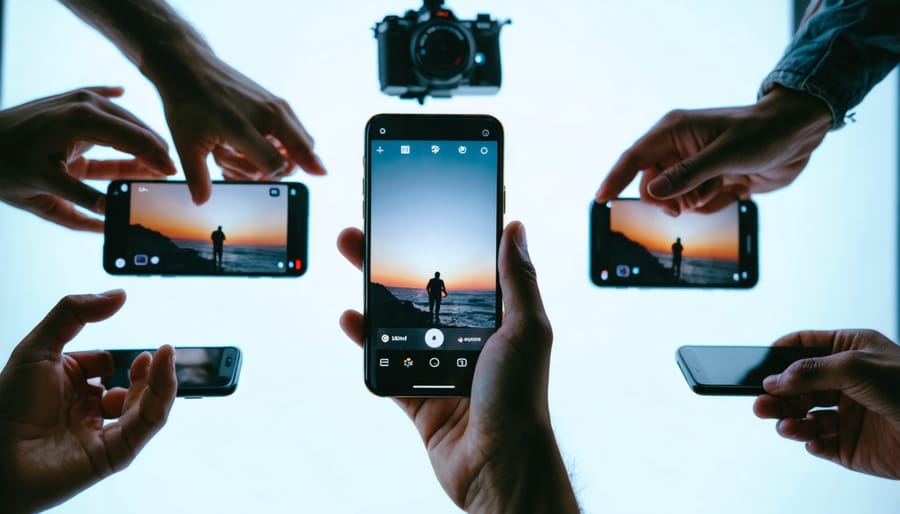
Several hands holding smartphones around a central phone playing a bright video, with ring light and tripod softly blurred in the background, suggesting rapid sharing by multiple users.

Why Your Influencer Strategy Fails Without K-Factor Virality

Measure your influencer content’s viral potential by calculating k-factor: divide the number of new users generated by existing users, then multiply by the conversion rate of those invitations. A k-factor above 1.0 means exponential growth, while anything below indicates your content needs optimization. Track this metric weekly across each platform separately, since a TikTok post with a 1.3 k-factor may simultaneously show 0.6 on Instagram due to different sharing behaviors and audience engagement patterns.
Map your current k-factor baseline by analyzing your last 30 days of influencer content performance. Export engagement …

READ MORE

Female micro-influencer holding an unbranded product while recording with a smartphone and ring light in a bright home studio, with a closed laptop, small shipping boxes, and plants softly blurred in the background.

Why Influencer Partnerships Are Crushing Traditional Affiliate Marketing (And How to Build Yours)

Partner with influencers who already have your target audience’s trust by creating commission structures that reward them for actual sales, not just clicks. This performance-based model ensures you only pay for results while influencers gain incentive to genuinely promote products they believe in.
Automate your affiliate tracking and payment systems from day one to scale efficiently. Use dedicated affiliate software that monitors conversions, calculates commissions, and generates payment reports without manual spreadsheet management. This frees your team to focus on partner relationships and strategy rather than administrative…

READ MORE

Micro-influencer at a minimalist desk with laptop, smartphone on a stand, camera and ring light, lit by soft side daylight with a blurred home office background.

How Micro-Influencers Can Command Every Platform Without Burning Out

Choose platforms strategically by matching your niche to where your ideal brand partners actively recruit. Focus on 2-3 specialized influencer marketplaces like AspireIQ or Upfluence for consumer brands, Creator.co for direct-to-consumer partnerships, or industry-specific platforms rather than spreading thin across every available option.
Automate your cross-platform content distribution using tools like Buffer or Later to repurpose one core piece of content across Instagram, TikTok, and LinkedIn simultaneously. This approach cuts posting time by 60% while maintaining consistent brand presence—critical when managing multiple …

READ MORE

Marketing analyst at a desk with laptop, smartphone, and tablet, screens blurred to suggest social, video, and checkout views, connected by light trails to symbolize cross-platform attribution in a modern office.

Cross-Platform Attribution: Track Every Influencer Touchpoint That Drives Your Sales

Cross-platform attribution refers to tracking customer interactions across multiple marketing channels to determine which touchpoints drive conversions. In influencer marketing, this means connecting the dots between an Instagram story view, a YouTube product review, and a final purchase on your website—giving you the complete picture of your campaign’s true impact.
**Implement automated tracking systems** that assign unique identifiers to each influencer and platform. Use UTM parameters, promo codes, and affiliate links to capture data across social media, websites, and mobile apps simultaneously.
**Map the customer …

READ MORE

All Rights Reserved. Copyright © 2026.