The One Question That Transforms Your Subject Lines From Ignored to Irresistible

Frame your email subject line as a question that taps into your reader’s curiosity gap—the psychological tension between what they know and what they want to know. Questions like “Are you making this common marketing mistake?” or “What’s stopping your emails from converting?” force recipients to mentally engage before they even click. This engagement trigger significantly outperforms generic statements because it activates the brain’s natural desire for closure.
Test questions that address specific pain points your audience faces daily. Instead of “Newsletter Update,” try “Struggling to retain customers?” This targets a genuine business challenge and positions your email as the potential solution. Effective subject line strategies focus on relevance over cleverness—your question must resonate with real problems your recipients are actively trying to solve.
Avoid yes-or-no questions that can be dismissed immediately. Questions beginning with “How,” “What,” or “Why” create deeper intrigue and suggest valuable insights await inside. The key is balancing curiosity with clarity—your question should hint at the answer’s value without giving everything away. When recipients feel compelled to find out more, your open rates will reflect that irresistible pull.
Why Most Subject Lines Fail (And It’s Not What You Think)
Your subject line isn’t failing because it lacks creativity. It’s failing because you’re talking about yourself instead of addressing what your reader needs right now.
Most marketers fall into a predictable trap: they craft subject lines packed with promotional language, clever puns, or company-centric messages. “Our biggest sale yet!” or “Introducing our new feature” might sound engaging to you, but your prospects see dozens of similar lines competing for attention every hour.
The reality is harsh. Your email sits in an inbox alongside 100+ other unread messages. Your reader spends roughly three seconds scanning subject lines before deciding what deserves their attention. In that split second, they’re asking themselves one question: “What’s in this for me right now?”
When you lead with promotional language or try to be clever, you’re forcing readers to do mental work. They have to decode your message, figure out its relevance, and determine if it’s worth their time. That cognitive load kills open rates.
The proven alternative? Address their immediate needs directly. Instead of announcing what you’re offering, speak to the problem they’re already thinking about. This approach doesn’t require guesswork or complex copywriting formulas. It requires understanding your audience’s pain points and addressing them head-on. When you boost your open rates using this method, you’re not tricking anyone. You’re simply demonstrating relevance from the first glance.
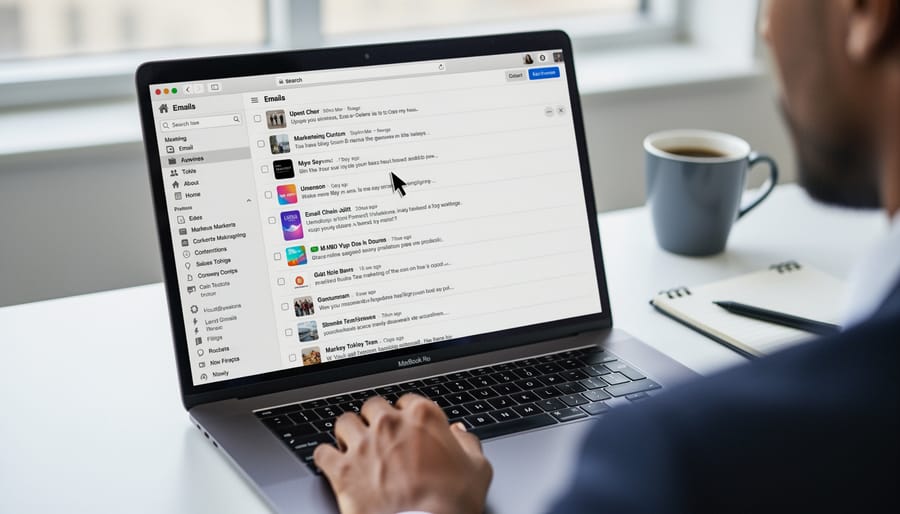
The Compelling Question Framework: What Makes It Work
A compelling question in an email subject line does more than ask—it creates an irresistible urge to find the answer inside. Unlike generic questions that get ignored, a compelling question taps into specific psychological triggers that make recipients stop mid-scroll and click.
The power lies in three core principles. First, the curiosity gap. When you pose a question that hints at valuable information without revealing it completely, you create mental tension. Our brains are wired to close information gaps, making it nearly impossible to ignore questions like “Are you making this pricing mistake?” versus a bland statement like “Common pricing errors.”
Second, personal relevance transforms a generic inquiry into a conversation. Questions that address your recipient’s specific challenges or goals trigger self-reflection. “How much time do you spend on manual follow-ups?” hits harder than “Learn about automation” because it forces the reader to mentally answer, creating immediate engagement with your message.
Third, questions naturally function as conversation starters. They shift the dynamic from broadcast to dialogue, making your email feel less like marketing and more like a genuine exchange. This subtle psychological shift increases receptivity to your message.
The difference between a weak question and a compelling one is specificity and stakes. “Want better results?” is forgettable. “What if your best leads are slipping through the cracks?” creates urgency and relevance simultaneously.
For maximum impact, your question should promise a concrete answer or solution inside the email. This implicit contract—ask a relevant question, deliver a valuable answer—builds trust while driving opens. When executed properly in your automated email sequences, compelling questions consistently outperform statement-based subject lines by creating that essential moment of curiosity your recipients cannot resist.

Four Types of Questions That Boost Open Rates
Problem-Focused Questions
Problem-focused questions tap into your reader’s immediate challenges, making your email feel timely and relevant. These subject lines work because they acknowledge specific pain points your audience faces daily, prompting them to seek solutions inside your message.
Use this approach when you’re offering solutions to common industry problems. For example, “Struggling to follow up with every lead?” speaks directly to overwhelmed sales teams, while “Is manual data entry eating your productivity?” resonates with businesses seeking automation.
The key is specificity. Vague questions like “Want better results?” lack impact. Instead, focus on concrete challenges: “Missing revenue from abandoned proposals?” or “Spending 10+ hours weekly on client updates?”
This question type performs best when your email content delivers actionable answers. Send these during high-stress periods in your audience’s business cycle, such as quarter-end or busy seasons. Pair problem-focused questions with automated email sequences that nurture leads through their decision-making process, ensuring consistent follow-up without manual effort.
Test different pain points to identify which challenges resonate most with your specific audience segments.
Benefit-Driven Questions
Benefit-driven questions work because they immediately show recipients what’s in it for them. The key is highlighting tangible value without resorting to pushy sales language. Frame your questions around specific outcomes your audience wants to achieve.
Instead of “Want to grow your business?” try “Ready to reduce client response time by 40%?” The specificity makes the benefit concrete and measurable. Similarly, “Curious about our service?” becomes “Could automating your follow-ups save you 10 hours weekly?”
The formula is straightforward: identify a real pain point your audience experiences, quantify the improvement you can deliver, and phrase it as a question. “Tired of manual data entry eating up your afternoon?” speaks directly to a daily frustration while implying a solution exists.
Avoid superlatives and vague promises. Questions like “Want incredible results?” feel empty. Focus on realistic, verifiable improvements that align with your actual offerings. Test questions that emphasize time savings, efficiency gains, or process improvements—these resonate particularly well with busy business owners who value automated solutions that streamline their operations.
Curiosity-Sparking Questions
The most effective curiosity-sparking questions create a knowledge gap that compels your reader to open the email. Think of questions like “Are you making this common pricing mistake?” or “What if your follow-up emails could write themselves?” These work because they hint at valuable information without revealing the answer.
The key difference between intrigue and clickbait lies in your ability to deliver on the promise. A clickbait question might ask “You won’t believe what happened to our sales team” without offering real value inside. An intriguing question like “How are your competitors closing deals faster?” sets up a genuine problem your email content actually solves.
Balance your approach by ensuring every question-based subject line connects directly to actionable content. Your automated email sequences should track which question formats generate the highest open rates, allowing you to refine your approach based on real data rather than guesswork. Test variations with your audience segments to identify which information gaps resonate most strongly with different customer types.
Personalized Questions
Personalized questions outperform generic ones because they demonstrate you understand your recipient’s specific challenges. Instead of asking “Want to increase revenue?” segment your audience and tailor questions accordingly. For ecommerce businesses, try “How are you handling abandoned cart recovery this quarter?” For B2B service providers, consider “Is your sales team spending too much time on manual follow-ups?”
Use your CRM data to segment by industry, company size, previous interactions, or pain points. A software startup founder responds differently than an established manufacturer. Automation tools can dynamically insert personalized elements based on these segments, ensuring each recipient sees relevant questions without manual customization.
Test segmented question variations against each other to identify which resonates best with each group. Track open rates by segment to refine your approach. The key is specificity—the more targeted your question feels, the more likely recipients believe you have a solution designed for their exact situation.
How to Test Which Questions Resonate With Your Audience
The only reliable way to know which questions work for your audience is to test them systematically. A/B testing subject lines removes guesswork and provides concrete data on what drives opens and engagement.
Start with a simple test: choose two question formats and send each to a segment of at least 1,000 recipients. This sample size typically provides statistically significant results. Most email automation platforms can split your list automatically and track performance without manual intervention.
Focus on three key metrics. Open rate shows initial appeal, but don’t stop there. Click-through rate reveals whether your question attracted the right audience who engaged with your content. Conversion rate ultimately determines if those opens translated into business results. A question that generates high opens but low conversions may be attracting curiosity seekers rather than qualified prospects.
Test one variable at a time. If you’re comparing “Are you losing customers to competitors?” against “Ready to increase customer retention?”, you’re testing question type and tone simultaneously, making it difficult to identify what actually worked. Instead, keep the core message consistent while varying the question format.
Run tests for at least 24 hours before drawing conclusions, as different audience segments check email at different times. However, avoid analysis paralysis. If one version clearly outperforms after reaching your minimum sample size, implement the winner and move to your next test.
Document your results in a simple spreadsheet noting the question type, open rate, and conversion rate. Over time, you’ll identify patterns specific to your audience. Perhaps they respond better to direct questions than hypothetical scenarios, or vice versa. These insights compound, making each subsequent campaign more effective than the last.

Common Mistakes That Kill Question-Based Subject Lines
Even well-intentioned questions can sabotage your open rates when they fall into common traps. Here are the mistakes that undermine your subject line effectiveness and how to fix them.
The biggest culprit is vagueness. Questions like “Want to improve your business?” are too broad to spark genuine curiosity. They could apply to anyone, which means they don’t feel relevant to your specific recipient.
Before: “Want to improve your business?”
After: “Is manual invoice tracking costing you 10+ hours weekly?”
Another frequent mistake is length. Questions that ramble past 60 characters get cut off on mobile devices, losing their impact mid-thought.
Before: “Are you wondering whether there might be a better way to handle your customer follow-up process?”
After: “Still following up with customers manually?”
The disconnect problem occurs when your question promises one thing but your email delivers another. If your subject line asks “Ready to cut shipping costs in half?” but your email discusses general logistics software, you’ve broken trust and damaged future open rates.
Questions that focus on you rather than the recipient also fail. “Can we show you our new features?” centers on what you want, not what they need.
Before: “Can we show you our new features?”
After: “Which task wastes most of your team’s time?”
Finally, avoid yes-or-no questions that recipients can instantly answer negatively. “Do you want more leads?” invites an immediate mental “no” if they’re satisfied with current results. Instead, create questions that prompt reflection: “What’s blocking your leads from converting?”
Transforming your subject lines with compelling questions isn’t just theory—it’s an immediate opportunity to improve your email performance. The core principle is simple: ask questions that tap into your recipient’s curiosity, pain points, or aspirations. Questions that prompt mental engagement outperform generic statements because they create an information gap your audience wants to close.
Start implementing this approach today by reviewing your next scheduled email campaign. Replace your current subject line with a question that speaks directly to a specific problem your audience faces or a benefit they’re actively seeking. Make it concrete, relevant, and answerable only by opening the email.
Your next step is straightforward: identify three upcoming email campaigns and draft two question-based subject lines for each. Set up A/B tests comparing your current approach against these compelling questions. Track open rates, click-throughs, and conversions over the next two weeks. This data will reveal which question types resonate most with your specific audience.
Remember, the best compelling questions come from understanding your customers’ actual challenges and goals. Use the automated testing capabilities in your email platform to refine your approach continuously, turning insights into repeatable processes that consistently drive engagement.
Leave a Reply