Category: Advertising Tools and Extensions

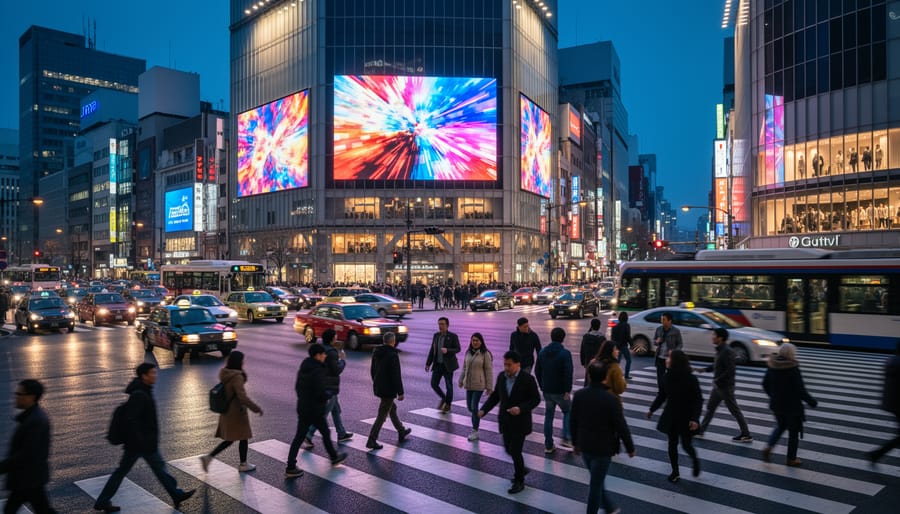
Row of illuminated digital billboards along a busy city street at blue hour, foreground screen showing abstract graphics without text, with passing cars and commuters in the background.

Why Programmatic DOOH Is Changing How Smart Marketers Buy Billboard Space

Digital billboards lining highways and transit stations are transforming into precision-targeted advertising platforms through programmatic technology. This evolution connects the massive reach of outdoor advertising with the data-driven efficiency of digital marketing, allowing you to purchase and optimize billboard placements in real-time through automated platforms.
Programmatic Digital Out of Home (DOOH) advertising operates like display advertising for the physical world. Instead of manually negotiating billboard contracts weeks in advance, you access inventory through demand-side platforms, target audiences based on location …
READ MORE

Digital billboard in a shopping mall corridor displaying abstract graphics, with blurred shoppers carrying bags and escalators in the background, no readable signage.

Digital Out-of-Home Ads That Actually Drive Sales (Not Just Impressions)

Digital out-of-home advertising has evolved from static billboards into a sophisticated, data-driven channel that delivers measurable results. The technology landscape now includes programmatic buying platforms that automate ad placement across digital screens in airports, shopping centers, and transit hubs, alongside analytics tools that track foot traffic and conversion metrics with precision comparable to online campaigns.
Understanding which tools fit your specific marketing goals requires examining three essential categories: content management systems that control what displays on your screens, demand-side platforms that …

READ MORE

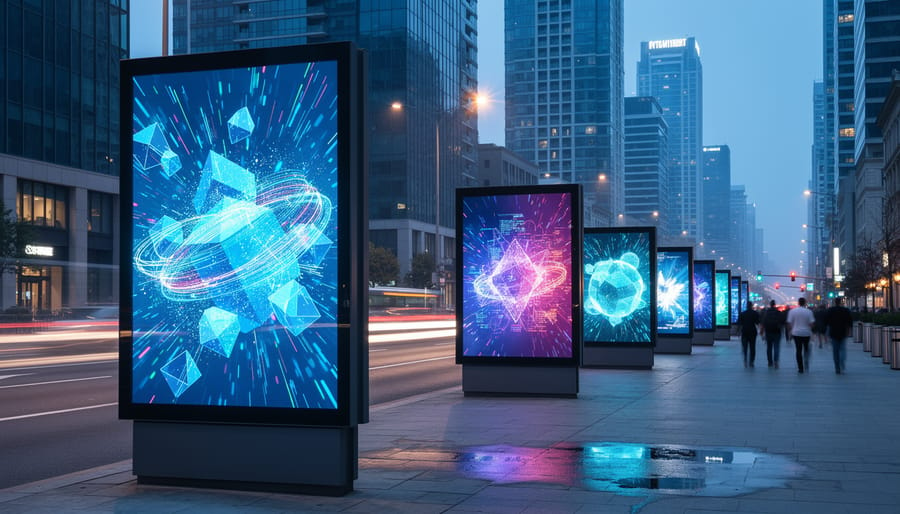
Low-angle dusk view of a city street with large LED digital billboards and a lit transit shelter screen showing colorful visuals without readable text, contrasted by a nearby unlit paper billboard; blurred cars and pedestrians in the background.

Why Digital Billboards Are Crushing Traditional Ads (And How to Use Them)

Digital out of home advertising transforms static billboards and transit posters into dynamic, data-driven marketing channels that reach consumers where traditional digital ads cannot. Today’s DOOH campaigns leverage programmatic platforms that let you buy, manage, and optimize digital displays across thousands of locations from a single dashboard—eliminating the manual coordination that once made outdoor advertising prohibitively complex for smaller businesses.
The technology stack behind successful DOOH campaigns consists of three core components: demand-side platforms (DSPs) that automate media buying, content management …

READ MORE

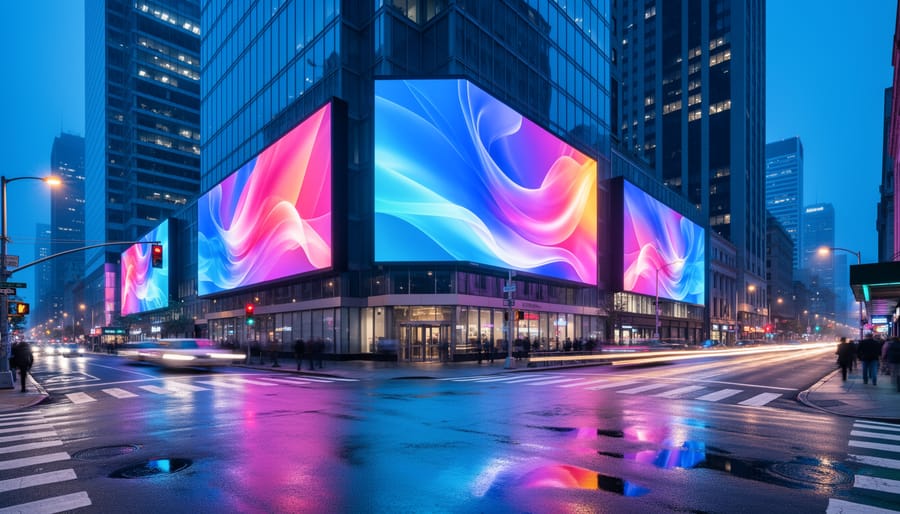
Blue-hour urban intersection from low street level with multiple large digital billboards showing colorful, text-free visuals above pedestrians, cars, and a passing tram, conveying modern programmatic digital out-of-home advertising.

Digital Out-of-Home Advertising Just Got Smarter (Here’s What Changed)

Digital out-of-home advertising has evolved from static billboards into a dynamic, data-driven channel that delivers real-time messages to audiences on the move. Modern DOOH platforms now enable marketers to launch campaigns across digital screens in shopping malls, transit stations, roadside displays, and urban centers with the same precision and agility previously reserved for online advertising.
The transformation centers on programmatic technology. Instead of negotiating individual contracts with billboard owners and waiting weeks for creative approval, businesses can now access DOOH inventory through demand-side platforms, set …

READ MORE

Eye-level view of a city street corner at blue hour with several large digital billboards showing colorful abstract graphics, neon reflections on wet pavement, pedestrians blurred in motion, and car light trails; no text visible.

Digital Out-of-Home Advertising Tools That Actually Drive Results

Digital out of home (DOOH) advertising has transformed traditional billboards and static signage into dynamic, data-driven marketing channels that reach consumers at critical decision-making moments. Unlike conventional outdoor advertising, DOOH leverages digital screens in high-traffic locations—from shopping malls and transit hubs to office buildings and roadside displays—delivering targeted messages that can be updated in real-time based on audience behavior, weather conditions, or time of day.
The technology powering DOOH campaigns relies on specialized platforms and tools that streamline everything from content creation to …

READ MORE

Multiple glowing digital billboards at a busy city intersection during blue hour, with wet pavement reflections, motion-blurred pedestrians, and car light trails; screens display abstract visuals without readable text.

How Digital Out-of-Home Advertising Tools Are Transforming Your Marketing ROI

Digital out-of-home advertising has evolved from static billboards into a sophisticated, data-driven channel that reaches consumers at scale across digital screens in airports, shopping centers, transit stations, and urban landscapes. Modern DOOH platforms now offer the programmatic capabilities marketing professionals expect from online advertising—real-time bidding, audience targeting, performance tracking, and dynamic creative optimization—all applied to physical world environments.
The technology stack powering DOOH campaigns includes demand-side platforms that automate media buying, creative management systems that adapt …

READ MORE

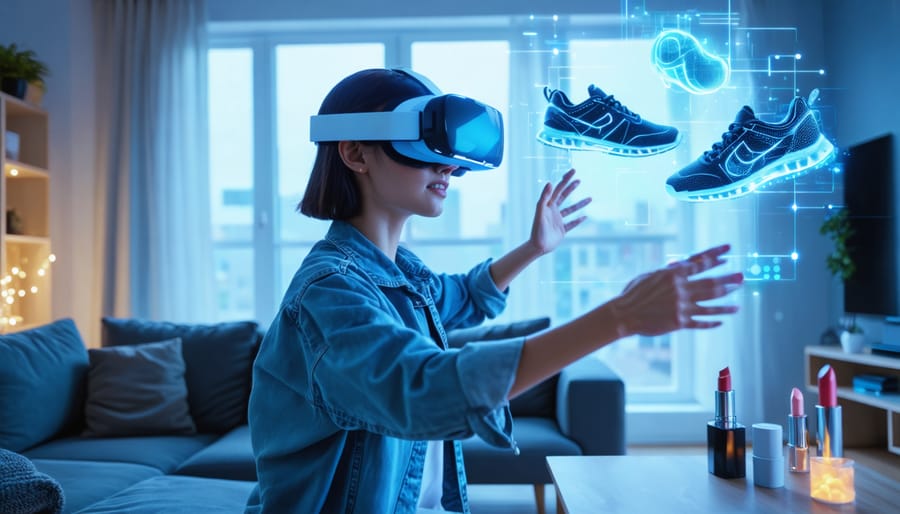
Person wearing a VR headset in a bright living room, reaching toward floating holographic products—a sofa, sneakers, and lipstick—with softly blurred home decor in the background.

Virtual Reality Ad Extensions Are Changing How Customers Shop (Here’s What You Need to Know)

**Leverage extended reality (XR) apps to transform your advertising campaigns from passive viewing experiences into immersive brand interactions.** XR technology—encompassing augmented reality (AR), virtual reality (VR), and mixed reality (MR)—now enables businesses to showcase products in customers’ actual environments, create memorable branded experiences, and drive measurable engagement through interactive ad extensions.
**Implement AR try-before-you-buy features** that let customers visualize furniture in their homes, test makeup shades on their faces, or preview product sizes before purchase. These experiences reduce …

READ MORE

Hand holding a smartphone with a hovering spherical 360-degree panorama showing a car interior, hotel suite, and living room, in a softly lit modern office, no on-screen text or UI.

How 3D Virtual Reality 360 Ads Are Transforming Customer Engagement

**Revolutionize Your Advertising Strategy with Immersive 360-Degree Experiences**
Transform flat, forgettable ads into interactive journeys that place customers inside your product, service, or brand story. 3D virtual reality 360 advertising extensions merge immersive technology with strategic ad placement, delivering conversion rates up to 300% higher than traditional display ads. This isn’t science fiction—it’s a practical marketing tool that businesses of all sizes now use to stand out in crowded digital spaces.
Unlike conventional ads that viewers scroll past in seconds, 360-degree VR experiences keep …

READ MORE

Conceptual image of a person using a smartphone to scan a QR code, triggering an Augmented Reality experience with 3D visualizations and dynamic content.

QR Codes Meet AR: Transform Your Ad Extensions Into Interactive Brand Experiences

Transform your marketing campaigns by merging physical and digital experiences through QR code-powered augmented reality. This groundbreaking technology enables businesses to create interactive, immersive customer experiences that bridge the gap between offline and online engagement. By implementing AR ad extensions with QR codes, marketers can now deliver dynamic content, 3D product demonstrations, and virtual try-ons directly through customers’ smartphones. The technology’s measurable impact on conversion rates—averaging…

READ MORE

A split-image showing AR and VR marketing differences, with a person using AR to view a sofa digitally overlaid in their real living room, and another person experiencing a virtual showroom with a VR headset.

AR vs VR: What Marketers Must Know About Augmented Reality Ads

While both augmented reality (AR) and virtual reality (VR) represent groundbreaking technological advances in immersive experiences, they serve fundamentally different purposes in the marketing landscape. AR enhances the real world by overlaying digital elements onto physical environments—think Pokémon GO or Snapchat filters—while VR creates entirely separate, computer-generated environments that completely immerse users in artificial worlds. For business owners and marketers navigating these technologies, understanding this distinction is crucial for implementing effective digital marketing strategies.
The choice between AR …

READ MORE

All Rights Reserved. Copyright © 2026.