Digital Out-of-Home Ads That Actually Drive Sales (Not Just Impressions)
Digital out-of-home advertising has evolved from static billboards into a sophisticated, data-driven channel that delivers measurable results. The technology landscape now includes programmatic buying platforms that automate ad placement across digital screens in airports, shopping centers, and transit hubs, alongside analytics tools that track foot traffic and conversion metrics with precision comparable to online campaigns.
Understanding which tools fit your specific marketing goals requires examining three essential categories: content management systems that control what displays on your screens, demand-side platforms that enable automated buying and audience targeting, and measurement solutions that connect DOOH exposure to actual customer behavior. Each serves a distinct purpose, yet they work together to transform outdoor advertising into a trackable, optimizable channel.
The challenge for most businesses lies not in the technology itself, but in navigating the fragmented ecosystem of vendors, platforms, and integration requirements. Some solutions cater to enterprise-level campaigns with complex audience segmentation, while others serve local businesses running straightforward promotional campaigns. The right combination depends on your budget, campaign objectives, and existing marketing infrastructure.
This guide cuts through the complexity by identifying the essential tools that matter, explaining how they integrate with your current marketing stack, and providing a practical framework for evaluating which investments will drive actual results for your business. No vendor hype, just actionable intelligence for making informed DOOH technology decisions.
What Makes Digital Out-of-Home Different from Traditional Billboards
Digital out-of-home advertising represents a fundamental shift from the static billboards you’ve seen along highways for decades. While traditional billboards display one fixed message for weeks or months at a time, DOOH screens operate more like the digital devices your customers already use every day.
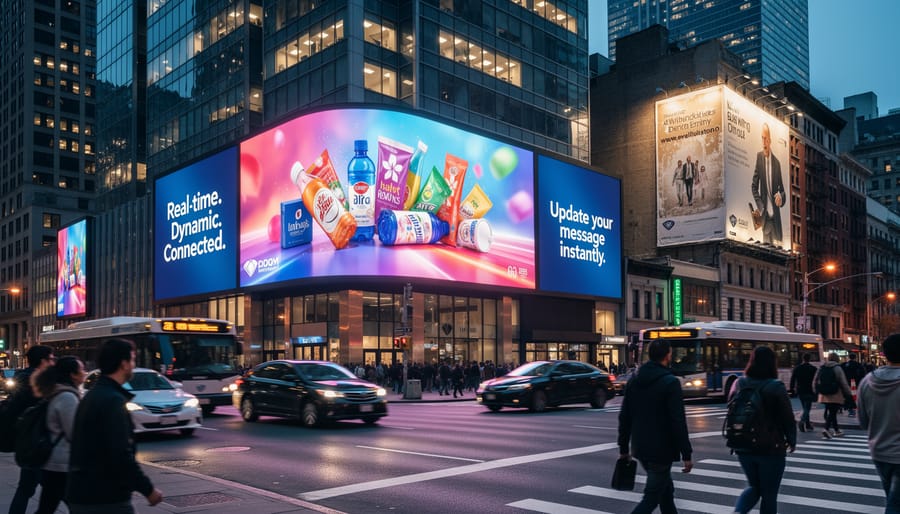
The most immediate difference is dynamic content capability. DOOH displays can rotate multiple advertisements throughout the day, show different messages based on time of day, or even respond to external triggers like weather conditions or traffic patterns. A coffee brand might advertise hot beverages during morning commutes and switch to iced drinks when temperatures rise above 75 degrees. This flexibility simply isn’t possible with printed vinyl stretched across a static frame.
Programmatic buying has transformed how advertisers purchase DOOH inventory. Rather than negotiating month-long contracts for individual billboard locations, you can now buy digital screen time through automated platforms. This process resembles online display advertising, where you set parameters, budgets, and targeting criteria, then let the system execute your campaign across multiple locations. The result is faster deployment and more efficient spending.
Real-time updates eliminate the production delays and costs associated with traditional outdoor advertising. Need to change your messaging based on a competitor’s announcement or breaking news? You can update DOOH content within hours, not weeks. This agility matters when you’re running time-sensitive promotions or responding to market conditions.
Data integration sets DOOH apart as a measurable, accountable channel. Modern DOOH systems connect with audience measurement tools, mobile location data, and attribution platforms. You can understand who’s viewing your ads, track foot traffic to your stores, and measure campaign effectiveness with precision that traditional billboards never offered.
For marketing professionals accustomed to digital channels, DOOH bridges the gap between online precision and outdoor reach. You gain the targeting capabilities and measurement standards you expect from digital advertising while maintaining the visual impact and unavoidable presence that makes outdoor advertising valuable.
Core Digital Out-of-Home Advertising Tools You Need
Programmatic DOOH Platforms
Programmatic DOOH platforms have revolutionized how advertisers purchase and manage digital out-of-home campaigns. These automated systems eliminate the traditional manual processes of negotiating, booking, and executing DOOH placements, making campaign management more efficient and cost-effective.
At the core of programmatic DOOH are two essential technologies. Demand-side platforms (DSPs) allow advertisers and agencies to purchase DOOH inventory across multiple publishers through a single interface. These platforms enable you to set campaign parameters, define target audiences, establish budgets, and monitor performance in real-time. Supply-side platforms (SSPs), on the other hand, help media owners manage their DOOH inventory, set pricing rules, and connect with multiple buyers simultaneously.
The integration of programmatic buying platforms delivers several practical advantages for your business. First, automation eliminates time-consuming manual processes, allowing you to launch campaigns in hours rather than days or weeks. Second, you gain access to diverse inventory sources through a single platform, expanding your reach without managing multiple vendor relationships. Third, real-time bidding capabilities help optimize your budget by purchasing inventory at competitive rates.
Targeting efficiency represents another significant benefit. Programmatic platforms leverage data feeds including weather conditions, traffic patterns, local events, and audience demographics to deliver contextually relevant ads at optimal times. For example, a coffee shop chain could automatically increase ad frequency near their locations during morning commute hours or on particularly cold days.
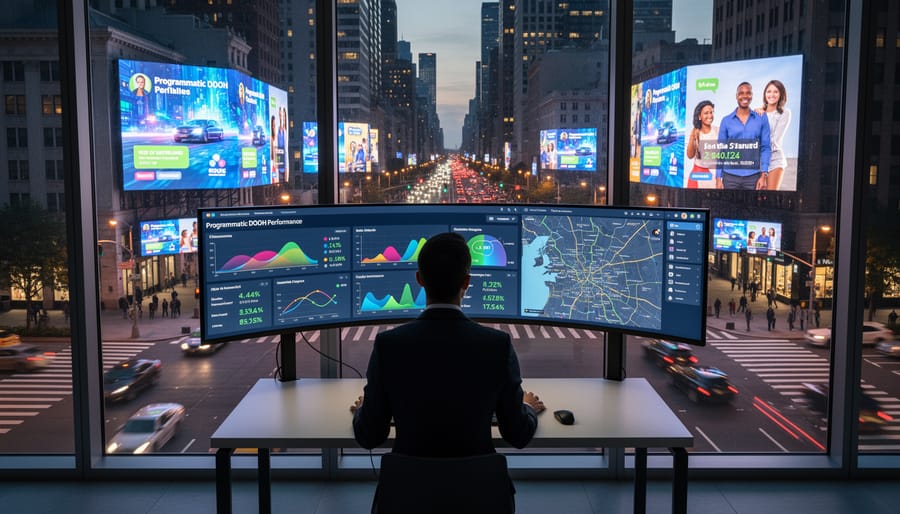
This automation also improves campaign transparency. You receive detailed reporting on impressions, locations, and performance metrics, enabling data-driven decisions and continuous optimization throughout your campaign duration.
Content Management Systems for Dynamic Creative
Content management systems for digital out-of-home advertising automate the process of updating your creative based on real-time data triggers. These platforms connect to external data sources like weather APIs, inventory management systems, location databases, and time-based schedules to deliver relevant messages at precisely the right moment.
For restaurants, these systems can display breakfast menu items in the morning and switch to lunch specials by noon, or promote hot soup when temperatures drop below a certain threshold. Retail stores benefit by showcasing products currently in stock, automatically removing items that have sold out and highlighting new arrivals the moment they hit shelves.
The technology behind dynamic ad insertion eliminates manual updates entirely. Instead of logging in to change creative files, you establish rules once and let the system handle execution. A sporting goods store might set parameters to display running gear when it’s sunny and indoor equipment during rain, with no further intervention required.
Modern CMS platforms integrate with your existing business tools through APIs. Connect your point-of-sale system to reflect accurate inventory, link weather services to adjust messaging based on conditions, or sync with event calendars to promote timely offers. This automation ensures your advertising remains current without demanding constant attention from your team.
The practical advantage for small and medium-sized businesses lies in efficiency. One creative template with variable elements replaces dozens of static designs. You maintain brand consistency while delivering personalized messages that respond to changing conditions. The result is more relevant advertising that connects with audiences when they’re most receptive, all managed through a single dashboard that requires minimal ongoing maintenance.
Audience Measurement and Attribution Tools
One of the biggest hurdles marketers face with DOOH advertising is proving its effectiveness. Unlike digital ads where you can track every click, out-of-home advertising has traditionally operated in a measurement gray zone. Fortunately, modern measurement technologies have largely solved this problem through sophisticated tracking methods that deliver concrete performance data.
Mobile location data forms the foundation of most DOOH measurement strategies. When your ad displays on a digital billboard or screen, measurement platforms track anonymized mobile signals from people who pass by. These tools establish exposure zones around your ad placements and identify devices that enter those zones during your campaign period. This data shows how many people saw your ads and, more importantly, what they did afterward.
Foot traffic attribution connects ad exposure to real-world actions. If someone views your DOOH ad and later visits your store, measurement platforms can identify that connection through continued location tracking. This creates a clear path from impression to conversion, giving you the same type of performance insights you expect from online advertising. The technology works by matching exposed devices to visits at your business locations within a specified timeframe.
For businesses without physical locations, conversion tracking extends to online actions. By integrating DOOH measurement platforms with your digital advertising ecosystem, you can track whether someone exposed to your billboard later visited your website or completed an online purchase. This cross-channel approach to accurate attribution tracking removes guesswork from your DOOH investments.
Leading measurement providers include Placed, Cuebiq, and GroundTruth, each offering slightly different methodologies and data sources. Most DOOH platform providers either build measurement directly into their offerings or partner with these specialized firms to deliver comprehensive reporting.
The key is ensuring your DOOH provider offers transparent measurement capabilities before you commit budget. Ask specifically about their attribution methodology, data sources, and reporting frequency to confirm you’ll receive the performance visibility your business requires.
Extensions That Amplify Your DOOH Campaigns
Mobile Retargeting Extensions
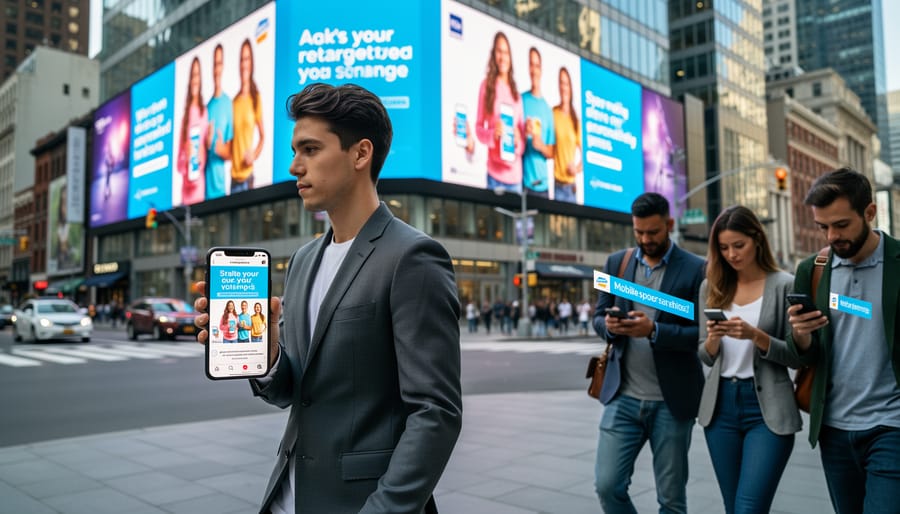
Mobile retargeting extends your DOOH campaign’s reach by connecting offline ad exposure with online engagement. When someone sees your billboard or transit ad, specialized technologies can identify nearby mobile devices and add them to retargeting audiences for follow-up ads on their smartphones and tablets.
The process works through location-based technology that creates a virtual perimeter around your DOOH placement. When mobile devices enter this zone during your campaign period, they become eligible for retargeting. Within hours, these users may see your ads on social media, mobile websites, or apps they frequently use.
This approach works particularly well for several scenarios. Retail locations can retarget people who passed their storefront with limited-time offers. Event promoters can follow up with ticket buyers who saw venue advertising. Service businesses can remind nearby prospects about consultations or appointments after they’ve been exposed to your message on digital screens.
Expected results vary by industry, but businesses typically see 2-3x higher engagement rates when combining DOOH with mobile retargeting compared to DOOH alone. Conversion rates often improve by 30-50% because you’re reaching people who’ve already shown physical proximity to your business or campaign area.
To maximize effectiveness, connect your DOOH mobile retargeting with smart retargeting strategies across other digital channels. Coordinate your messaging so mobile ads reference or build upon what audiences saw on the digital billboard, creating a cohesive brand experience that moves prospects toward conversion.
Social Media Integration Tools
Social media integration transforms DOOH screens from static billboards into interactive community hubs. These tools automatically pull live content from platforms like Instagram, Twitter, and TikTok, displaying user posts, reviews, and brand mentions in real-time across your digital displays.
The most effective approach involves hashtag campaigns that encourage customers to share their experiences. When someone posts with your branded hashtag, their content can appear on your DOOH screens within minutes. This creates a powerful feedback loop where people see their posts displayed publicly, encouraging more participation and amplifying your reach both online and offline.
Modern platforms automate the entire process, including content moderation to filter inappropriate submissions before they reach your screens. You set the parameters once, and the system handles content collection, approval workflows, and display rotation automatically.
User-generated content performs particularly well because it provides authentic social proof. Seeing real customers using your product or visiting your location builds trust more effectively than traditional advertising messages.
Many businesses combine social feeds with promotional content, alternating between customer posts and direct marketing messages. This balance maintains engagement while still delivering your core advertising objectives.
The technology integrates seamlessly with most DOOH platforms through APIs or dedicated connectors. Setup typically takes hours rather than weeks, and most solutions offer dashboard controls that let you adjust campaigns without technical expertise. This approach works especially well for retail locations, events, and hospitality businesses where customer engagement directly impacts foot traffic and sales.
Location-Based Trigger Systems
Location-based trigger systems represent one of the most powerful automation advantages in digital out-of-home advertising. These tools automatically adjust your ad content based on real-time conditions like audience proximity, traffic density, weather patterns, or local events happening near your displays.
The core benefit is eliminating manual campaign management. Instead of scheduling static content weeks in advance, these systems respond instantly to changing conditions. When traffic increases near your billboard during rush hour, the system can automatically switch to ads targeting commuters. If a sporting event starts nearby, your creative shifts to relevant messaging without any manual intervention.
Modern location-based platforms integrate with mobile device data, GPS signals, and traffic monitoring systems to understand who’s near your displays at any given moment. This allows you to activate specific campaigns when your target audience is actually present. A coffee shop can trigger breakfast promotions during morning commutes, then automatically switch to afternoon snack messaging later in the day.
The automation extends beyond time-based scheduling. These systems can react to unexpected opportunities like concert crowds, festival attendees, or even weather changes that bring more pedestrians to certain areas. You define the rules once, and the platform handles execution automatically.
For businesses managing multiple DOOH locations, this automation becomes essential. Rather than coordinating updates across dozens of screens manually, you establish trigger parameters that work consistently across your entire network. The system ensures the right message reaches the right audience at the right moment, freeing your team to focus on strategy and creative development instead of operational tasks.
CRM and Sales Data Connectors
CRM and sales data connectors bridge the gap between your digital out-of-home campaigns and your existing customer database. These extensions automatically sync DOOH platforms with tools like Salesforce, HubSpot, or your preferred customer data platform, enabling you to personalize billboard messaging based on actual customer segments and purchase history. Instead of showing generic ads, you can target high-value customer zones or adjust messaging based on sales performance in specific locations. The real advantage comes from closed-loop tracking—these connectors let you measure whether your DOOH spend actually drives conversions by matching ad exposure locations and times with subsequent sales data. For businesses already investing in CRM systems, these connectors eliminate manual data transfers and provide clear attribution metrics. Most platforms offer pre-built integrations with major CRM providers, requiring minimal technical setup. The result is smarter budget allocation and the ability to demonstrate concrete ROI from your out-of-home advertising efforts.
Choosing the Right Tools for Your Business Size
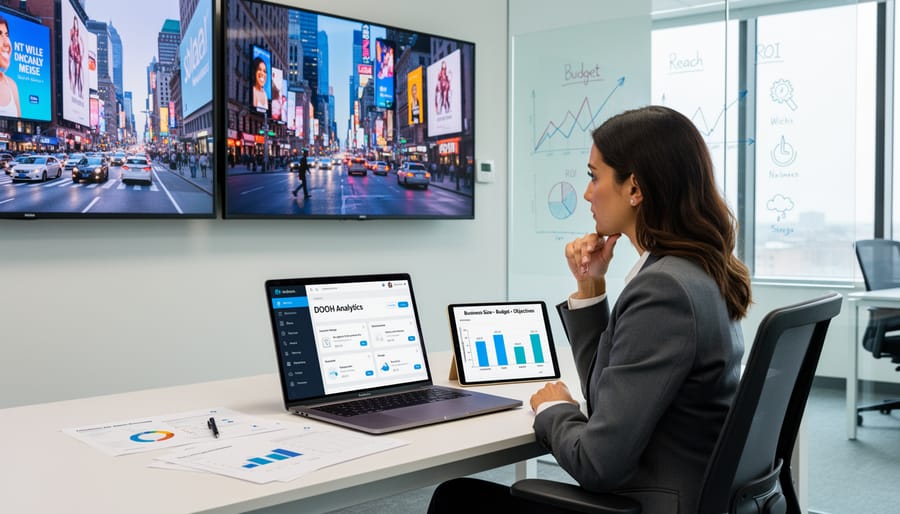
Selecting the right DOOH platform depends on three key factors: your available budget, your team’s technical capabilities, and your campaign objectives. Here’s a practical breakdown to guide your decision.
For small businesses and startups working with budgets under $5,000 monthly, self-service platforms offer the best entry point. These tools provide pre-negotiated screen networks, simplified campaign setup, and automated reporting. Look for platforms that offer minimum spend requirements you can actually meet and intuitive dashboards that don’t require a dedicated media buyer. Many providers now offer pay-as-you-go models that eliminate long-term commitments, making it easier to test DOOH without significant financial risk.
Mid-sized businesses typically benefit from hybrid solutions that combine self-service flexibility with account management support. At this level, you’re likely running campaigns across multiple locations and need more sophisticated targeting capabilities. Prioritize platforms that integrate with your existing marketing stack, particularly your customer relationship management system and analytics tools. The ability to sync audience data and automate campaign adjustments based on performance becomes increasingly valuable as your spend grows beyond $10,000 monthly.
Enterprise organizations require comprehensive programmatic platforms with advanced features like dynamic creative optimization, real-time bidding access, and custom integration capabilities. These solutions typically involve dedicated account teams and custom pricing structures. Focus on platforms that offer robust API access, allowing your development team to build automated processes that align with your broader marketing automation strategy.
Regardless of size, ensure any platform you choose provides transparent reporting and responsive client support. The ability to quickly communicate campaign performance to stakeholders and adjust strategies based on clear data should be non-negotiable requirements in your selection process.
Common Pitfalls When Using DOOH Tools (And How to Avoid Them)
Even with the right tools at your disposal, several common mistakes can derail your DOOH campaigns. Here’s how to identify and fix them before they impact your results.
The first pitfall is overcomplicating your campaigns with too many variables. Many businesses try to test multiple creative versions across dozens of locations simultaneously, making it impossible to determine what’s actually working. The fix is straightforward: start with a focused approach. Launch campaigns in 2-3 locations with a single creative variation, measure performance, then expand gradually. This approach allows you to establish baseline metrics and make data-driven adjustments without getting lost in complexity.
Neglecting creative quality remains surprisingly common. Businesses often repurpose social media ads or print materials without considering that DOOH requires immediate visual impact and minimal text. Your audience has 3-5 seconds to absorb your message while in motion. The solution is to design specifically for the medium: use bold visuals, limit text to seven words or fewer, and ensure your brand and call-to-action are instantly recognizable. Many DOOH platforms offer creative templates designed for quick comprehension, which can streamline this process.
Poor location selection undermines even the best creative work. Choosing screens based solely on cost or availability rather than audience alignment wastes budget quickly. Combat this by requesting detailed audience demographic data from your DOOH provider before committing. Cross-reference this information with your customer profiles. A cheaper screen in a high-traffic area means nothing if those people aren’t your potential customers.
Finally, inadequate measurement setup prevents you from optimizing campaigns effectively. Many businesses launch campaigns without establishing clear KPIs or tracking mechanisms. Before your campaign goes live, determine which metrics matter most for your objectives, whether that’s foot traffic increases, website visits, or brand awareness lifts. Ensure your tracking pixels, QR codes, or geofencing parameters are properly configured and tested. This upfront investment in measurement infrastructure pays dividends throughout your campaign’s lifecycle.
Success with digital out-of-home advertising isn’t about deploying every available tool or securing the most screens. It’s about selecting the right platforms and using them strategically to achieve your specific business goals.
Start small and focused. Choose one programmatic platform that aligns with your target audience and budget, then add one creative automation or measurement extension. Test this combination for 30-60 days, tracking concrete metrics like foot traffic, conversion rates, or brand lift. This approach lets you understand what actually drives results before committing significant resources.
As you gather data, you’ll identify which tools deliver measurable value and which integrations streamline your workflow. Scale based on these insights, not industry hype or competitor activity. The businesses seeing genuine ROI from DOOH are those treating it as a data-informed channel requiring the same strategic rigor as their digital campaigns.
Your next step is straightforward: audit your current advertising channels, identify one specific objective DOOH could address, and research which single platform best serves that goal. Begin there, measure everything, and expand only when the numbers justify it. Strategic implementation beats hasty adoption every time.
Leave a Reply