Month: March 2026

Rows of identical smartphones tethered to USB hubs on metal racks under cool blue lighting, with one phone in sharp focus and others blurred, symbolizing bot-driven phone farms and mobile app install fraud.

Mobile Frauds Are Bleeding Your App Budget (Here’s How to Stop Them)

Monitor your app’s install-to-engagement ratio daily, as sudden spikes in downloads with minimal actual usage signal click injection or install hijacking attempts draining your marketing budget. Set baseline metrics for legitimate user behavior—session length, feature adoption, retention rates—and flag any traffic sources where these numbers fall 40% or more below average.
Implement multi-touch attribution tracking to identify fraudulent patterns across your paid user acquisition campaigns. Fraudsters exploit last…


READ MORE

Close-up of a hand holding a smartphone with glowing star, chat, and notification bell icons hovering above the screen, set against a blurred modern office with a laptop and headset.

Why Your Mobile App Reviews Could Be Costing You Customers (And How to Fix It)

Prioritize collecting reviews within the first 72 hours after a user completes a key action in your app—this window captures peak satisfaction and drives 3x higher response rates than delayed requests. Set up automated in-app prompts triggered by positive user behaviors like completing a purchase, achieving a milestone, or engaging with premium features, ensuring you’re asking satisfied users at the exact moment they’re most likely to leave positive feedback.
Implement a systematic response protocol for every review, whether positive or negative, within 24 hours of posting. This demonstrates active ownership and …

READ MORE

Close-up of a crumbled chocolate chip cookie next to a metal padlock on a sleek desk, with blue server rack lights softly blurred in the background

Performance Cookies Are Dead—Here’s How to Actually Measure Your Marketing Now

Performance cookies are disappearing, and your ability to track website behavior, measure campaign effectiveness, and understand customer journeys hangs in the balance. These small data files have powered analytics platforms for decades, but privacy regulations and browser restrictions are systematically eliminating them. For marketers and business owners, this shift means losing visibility into which campaigns drive conversions, how users navigate your site, and where prospects drop off in your sales funnel.
The stakes are clear: without performance cookies, you’re making marketing decisions blind. Google Analytics already …

READ MORE

Two professionals in safety vests shake hands on a warehouse loading dock with electric trucks loading, solar panels on the roof, stacked reusable crates, and wind turbines in the distance at golden hour

Why Your Suppliers Hold the Key to Real Sustainability (And How to Partner Better)

Your supply chain decisions directly impact your bottom line and environmental footprint, making supplier partnerships one of the most powerful levers for meaningful sustainability progress. The Suppliers Partnership for the Environment (SP4E) operates as a practical framework where companies collaborate to reduce environmental impacts across their supply networks while cutting costs and managing risks.
Established as a voluntary initiative, SP4E connects manufacturers, suppliers, and service providers who share environmental data, best practices, and innovative solutions. Rather than viewing sustainability as a compliance burden, …

READ MORE

Blue-hour urban intersection from low street level with multiple large digital billboards showing colorful, text-free visuals above pedestrians, cars, and a passing tram, conveying modern programmatic digital out-of-home advertising.

Digital Out-of-Home Advertising Just Got Smarter (Here’s What Changed)

Digital out-of-home advertising has evolved from static billboards into a dynamic, data-driven channel that delivers real-time messages to audiences on the move. Modern DOOH platforms now enable marketers to launch campaigns across digital screens in shopping malls, transit stations, roadside displays, and urban centers with the same precision and agility previously reserved for online advertising.
The transformation centers on programmatic technology. Instead of negotiating individual contracts with billboard owners and waiting weeks for creative approval, businesses can now access DOOH inventory through demand-side platforms, set …

READ MORE

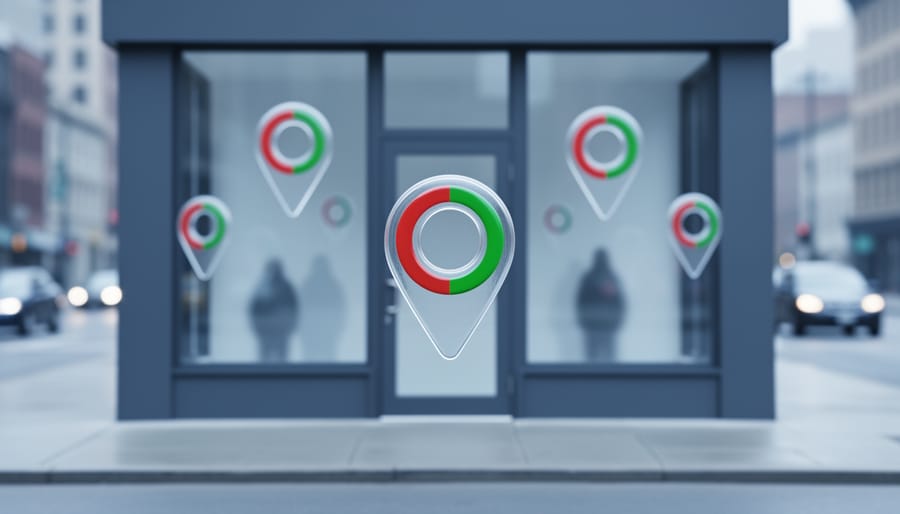
Small urban storefront with multiple floating map pins, one clear pin in focus and others faded and misaligned, blurred city street background, no visible text or logos.

Why Inconsistent Business Listings Are Costing You Customers (And How to Fix It)

Your business name, address, and phone number must appear identically across every online platform where your company is listed. This fundamental principle, known as NAP consistency, directly influences whether potential customers can find you in local search results and whether search engines trust your business information enough to rank you prominently. When Google encounters conflicting information about your business location across different directories, it cannot confidently display your listing to searchers, meaning you lose customers to competitors with cleaner data.
The stakes are higher than most business owners realize. …

READ MORE

Foreground hand holds a smartphone showing prominent star icons while a diverse team collaborates in a modern office; background laptops and whiteboard are blurred with no visible text, lit by soft natural daylight.

Why Your App’s Star Rating Isn’t Driving Downloads (And What Actually Does)

Implement automated review request workflows that trigger 3-7 days after a user’s first meaningful interaction with your app, when satisfaction peaks and feedback quality is highest. This timing captures genuine user sentiment while the experience remains fresh, generating 3-5x more reviews than random requests.
Monitor your review response rate as a key performance metric—apps that respond to 75% or more of reviews see 12% higher ratings over time. Set up notification systems that alert your team within hours of negative reviews, enabling rapid resolution before damage spreads.
Segment your review requests based on …

READ MORE

B2B customer experience team in a glass-walled operations room, a manager holding a tablet with a support rep and analyst beside them, in front of a blurred multi-screen wall displaying abstract connected data.

Why Your B2B Digital Transformation Fails Without Customer Experience at Its Core

Audit your current customer touchpoints to identify where digital tools create friction instead of value. Most B2B companies invest heavily in CRM systems, marketing automation, and digital portals, yet 70% of transformation initiatives fail because they prioritize internal efficiency over customer outcomes. Map every interaction from initial inquiry through post-sale support, noting where prospects wait for responses, repeat information, or encounter dead ends.
Implement automated communication workflows that respond to customer actions in real-time rather than forcing clients into rigid processes. When a prospect downloads a …

READ MORE

Close-up smartphone displaying unlabeled app icons magnified by a glass lens, with a subtle upward arrow glow, on a blurred minimalist desk with a laptop and coffee cup, symbolizing ASO boosting visibility and downloads.

Why Your Mobile App Isn’t Getting Downloads (And How ASO Fixes It)

Your app’s success in crowded app stores depends on mastering App Store Optimization (ASO)—the practice of improving your app’s visibility in Apple’s App Store and Google Play Store to drive more organic downloads. With over 5 million apps competing for attention, strategic ASO is no longer optional for growth-focused businesses.
ASO works by optimizing specific elements that app store algorithms use to rank and display apps to searchers. When executed correctly, it delivers sustainable, cost-effective user acquisition without the ongoing expense of paid advertising. The core components include keyword …

READ MORE

Crisis management team in a glass-walled office at night, leader directing colleagues on headsets working on laptops, with rain-streaked windows, blurred city skyline, and distant lightning suggesting urgent yet controlled action.

Why Most Brands Fail During a Crisis (And How to Be the Exception)

Every crisis follows a predictable pattern, and understanding this lifecycle is what separates businesses that recover from those that collapse. When reputation damage strikes—whether through product failures, PR disasters, or customer complaints gone viral—your response window is measured in hours, not days. The four-stage crisis management framework provides a practical roadmap for protecting your brand at every phase: prevention before trouble starts, preparation when warning signs appear, response during active crises, and recovery after the storm passes.
Most businesses fail at crisis management because they treat it as a …

READ MORE

All Rights Reserved. Copyright © 2026.