Alternative Data Just Changed Market Forecasting Forever (Here’s What You’re Missing)

Track social media sentiment patterns across platforms like Twitter and Reddit to identify emerging consumer preferences weeks before they appear in sales data. Most SMBs miss this early-warning system that larger competitors already exploit.
Scrape web traffic data from tools like SimilarWeb and SEMrush to monitor competitor website visits, search rankings, and customer engagement metrics. This reveals market shifts in real-time rather than waiting for quarterly reports that tell you what happened months ago.
Tap into alternative payment data from services like Second Measure or analyze credit card transaction patterns available through financial data providers. These sources show actual consumer spending behavior across categories, giving you predictive insights that traditional surveys cannot match.
Monitor job posting trends on LinkedIn and Indeed within your industry. When companies hire aggressively in specific departments or geographies, they signal where market opportunities are expanding. A sudden spike in data analyst positions at competitors often precedes new product launches or market expansions.
Combine weather data, foot traffic analytics from mobile location providers, and local event calendars to predict demand fluctuations for retail and service businesses. This multi-source approach transforms forecasting from educated guessing into data-driven decision making.
The competitive advantage lies not in accessing these sources individually, but in automating their collection and integration into your existing analytics workflow. Small businesses that master this integration can now compete with enterprise-level market intelligence at a fraction of the cost, turning alternative data from a luxury into a practical necessity for survival.
What Alternative Data Actually Means for Your Business

Traditional vs. Alternative Data Sources
Traditional market research methods—surveys, focus groups, and industry reports—have served businesses well for decades, but they come with inherent limitations. These approaches typically deliver insights weeks or months after data collection, by which time market conditions may have shifted dramatically. They also rely heavily on what consumers say they’ll do rather than what they actually do, creating a gap between stated intentions and real behavior.
Alternative data sources flip this script by capturing real-time behavioral signals as they happen. Social media sentiment analysis reveals how customers truly feel about products and brands through their unfiltered posts and comments. Web traffic patterns show which products people are actively researching, not just considering hypothetically. Credit card transaction data provides immediate visibility into actual purchasing behavior across demographics and regions.
The cost difference is equally striking. A comprehensive traditional market research study can run tens of thousands of dollars and take months to complete. Meanwhile, many alternative data sources offer automated, subscription-based access at a fraction of the cost, with insights updating continuously.
Perhaps most importantly, alternative data eliminates much of the guesswork. Instead of asking 500 people what they might buy next quarter, you can analyze the search patterns and browsing behavior of millions of actual shoppers. This shift from hypothetical to observable data dramatically improves forecast accuracy while reducing the time between insight and action—a critical advantage in fast-moving markets.
The Most Powerful Alternative Data Sources You Can Use Today

Social Media Signals and Sentiment Analysis
Social media platforms generate real-time data that can reveal emerging market trends days or weeks before they appear in traditional reports. By implementing social media analytics tools, you can monitor conversation volume, hashtag performance, and engagement patterns across platforms like Twitter, LinkedIn, and Instagram to identify shifting consumer interests.
Start by tracking mentions of your industry keywords and competitor brands. Sudden spikes in conversation volume often signal emerging opportunities or potential market disruptions. Monitor the emotional tone of these discussions using AI-powered sentiment analysis tools that automatically categorize posts as positive, negative, or neutral. This helps you gauge consumer confidence before making strategic decisions.
Set up automated alerts for specific keywords, sentiment thresholds, or engagement milestones. When sentiment shifts dramatically or certain topics gain traction, you’ll receive notifications to investigate further. Share these insights with your sales and marketing teams through regular briefings, enabling them to adjust messaging and outreach strategies based on current market mood rather than outdated assumptions.
Web Traffic and Search Behavior Data
Your website analytics and search behavior data reveal what customers want before they buy. Google Trends, for instance, shows rising interest in specific products or services months ahead of actual purchases. This advance notice gives you time to adjust inventory, marketing campaigns, and pricing strategies.
Tools like Google Analytics and search console data provide direct insight into customer intent through the keywords they use and pages they visit. When you notice increased searches for “sustainable packaging” or “remote work solutions,” you’re witnessing market shifts in real-time. Many analytics platforms now offer automated alerts when search volumes spike, eliminating the need for constant manual monitoring.
E-commerce businesses can track product page views, cart abandonment rates, and search queries to predict which items will trend next quarter. Social media listening tools complement this data by capturing conversations and sentiment around your industry topics.
The key advantage here is accessibility. Unlike proprietary datasets that require significant investment, most businesses already collect this information through existing website infrastructure. Setting up automated reporting dashboards takes minimal technical expertise and delivers actionable insights weekly. By monitoring these patterns consistently, you’ll spot opportunities your competitors miss while they’re still analyzing last quarter’s sales reports.
Customer Review and Feedback Mining
Customer reviews and feedback contain valuable predictive signals that many businesses overlook. When customers share their experiences across platforms like Amazon, Google Reviews, and social media, they reveal emerging preferences, pain points, and shifting expectations before these trends appear in traditional market data.
Start by implementing automated review monitoring tools that aggregate feedback from multiple sources. These platforms can track sentiment changes, identify recurring themes, and flag sudden shifts in customer language. For example, if multiple reviews begin mentioning a specific competitor feature or expressing frustration about a particular aspect of your service, you’re seeing a trend before it impacts your bottom line.
Combine quantitative rating patterns with qualitative comment analysis. A gradual decline in star ratings alongside increasing mentions of “outdated features” signals market movement toward newer solutions. Similarly, digital ethnography insights from customer feedback reveal how consumer behavior patterns are evolving in real-time.
Set up automated alerts for specific keywords related to your industry, competitors, and product categories. This ensures your team responds quickly to emerging trends without manually scanning thousands of reviews. The result is faster adaptation and more accurate forecasting based on actual customer sentiment rather than assumptions.
Geolocation and Foot Traffic Data
Geolocation and foot traffic data offer powerful insights into real-world consumer behavior that traditional analytics often miss. This information tracks physical movement patterns through mobile devices, revealing where people shop, how long they stay, and which locations attract consistent traffic. For business owners, this translates into concrete predictions about market demand and competitive positioning.
Major platforms now provide automated tools that aggregate anonymized location data, making this intelligence accessible without requiring data science expertise. You can monitor foot traffic to competitor locations, identify emerging shopping districts, or predict seasonal demand shifts based on movement patterns in your area.
Practical applications include adjusting inventory levels based on nearby competitor traffic, timing promotional campaigns when foot traffic peaks in your vicinity, and selecting new store locations by analyzing existing movement patterns. Many point-of-sale systems and customer relationship management platforms now integrate location-based analytics automatically, streamlining the process of turning movement data into actionable forecasts.
The key advantage lies in the immediacy of this data. While traditional market research takes weeks or months, location analytics update continuously, allowing you to respond quickly to shifting consumer patterns and maintain competitive advantage through better-informed decision-making.
How to Integrate Alternative Data Into Your Marketing Strategy
Start Small: Automated Data Collection Tools
You don’t need a massive budget or technical expertise to start collecting alternative data. The key is choosing tools that automate the heavy lifting while keeping your team focused on strategy rather than data management.
Start with social listening platforms like Hootsuite or Mention, which automatically track brand mentions, competitor activity, and industry conversations across social media channels. These tools compile data into digestible reports, eliminating hours of manual monitoring. For businesses targeting local markets, set up Google Alerts for specific keywords related to your industry and competitors—it’s free and delivers relevant news directly to your inbox.
Web scraping tools like Octoparse or ParseHub can automatically collect pricing information, product availability, and customer reviews from competitor websites. These platforms require minimal setup and offer templates for common use cases, making data collection accessible without coding knowledge.
Consider integrating RSS feed aggregators like Feedly to automatically organize news from industry publications, blogs, and trade journals. You can categorize feeds by topic and receive daily digests instead of manually checking dozens of websites.
For customer sentiment analysis, platforms like ReviewTrackers automatically gather and analyze reviews across multiple platforms, identifying trends in customer feedback before they become widespread issues.
The goal isn’t to implement every tool at once. Choose one or two that address your most pressing information gaps, automate the collection process, and build from there. This measured approach prevents data overload while establishing a foundation for more sophisticated forecasting as your capabilities grow.
Turning Raw Data Into Actionable Forecasts
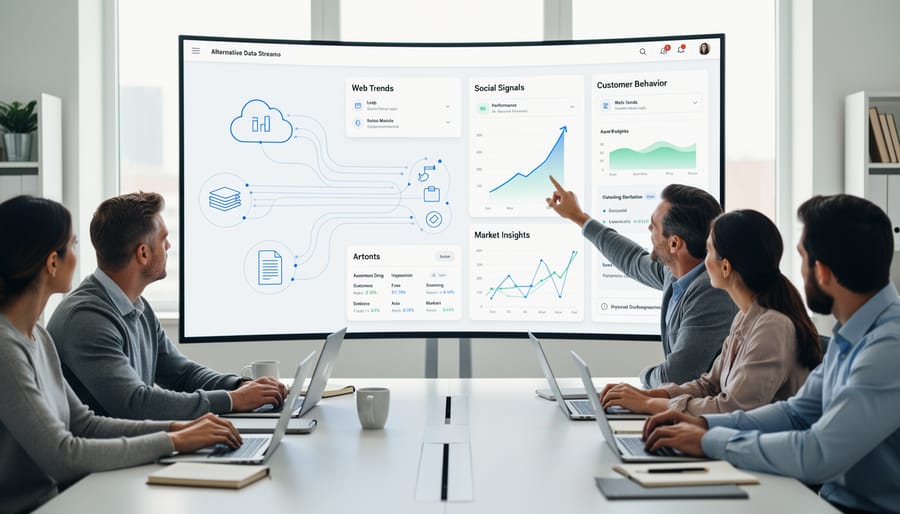
Raw data becomes valuable only when transformed into clear insights that drive decisions. The process begins with establishing what you’re trying to predict—whether that’s customer demand, pricing trends, or competitor movements. Start by cleaning your alternative data to remove inconsistencies and outliers that could skew your analysis.
Next, look for patterns and correlations. Compare your alternative data against historical sales figures or customer behavior. For instance, if social media sentiment around a product category spikes, cross-reference it with your past sales data to determine if sentiment typically translates into purchases. This validation step prevents you from acting on misleading signals.
Automation tools can streamline this analysis significantly. Modern platforms can process large volumes of data from multiple sources simultaneously, identifying trends that would take weeks to spot manually. Machine learning predictions can help you understand which data points matter most for your specific business outcomes.
The key is translating findings into concrete actions. If web traffic data shows increased interest in sustainable products, adjust your inventory accordingly. When location data reveals foot traffic patterns, optimize your staffing schedules or launch targeted local campaigns.
Create a simple dashboard that updates regularly, showing only the metrics that directly influence your business decisions. This keeps your team focused on actionable insights rather than drowning in data. Set threshold alerts—for example, when competitor pricing drops by a certain percentage or when search volume for your products increases beyond a benchmark.
Remember to document which data sources led to successful predictions. This builds a feedback loop, helping you refine your approach and prioritize the alternative data streams that deliver the most reliable forecasts for your specific market position.
Real-World Applications for SMBs and Marketing Teams

Predicting Seasonal Demand Before It Happens
Alternative data sources give you a significant advantage in predicting seasonal demand shifts weeks or even months before they become obvious in traditional sales reports. By monitoring real-time signals like social media sentiment, search volume trends, and weather pattern forecasts, you can prepare inventory, adjust marketing campaigns, and allocate resources before your competitors recognize the opportunity.
Start by tracking search query volumes related to your products or services. A spike in searches for “outdoor furniture” in February signals stronger spring demand ahead. Combine this with consumer behavior patterns from location-based mobile data to understand where interest is concentrating geographically.
Weather data providers offer extended forecasts that help retailers anticipate seasonal product needs earlier. An unusually warm winter prediction means adjusting your spring inventory timeline accordingly. Social media listening tools can identify emerging seasonal trends through hashtag analysis and conversation themes before they hit mainstream awareness.
The key is automating these data streams into a centralized dashboard that flags significant changes requiring action. This allows you to communicate proactive strategies to your team and clients rather than reactive adjustments when the season has already begun.
Identifying Emerging Competitors and Market Threats
Alternative data gives you an early warning system for competitive threats before they appear in quarterly reports or press releases. By monitoring job postings, you can spot when competitors are hiring for new product lines or expanding into your territory. A sudden increase in engineering roles at a rival company often signals upcoming product launches, giving you months of advance notice to adjust your strategy.
Social media sentiment analysis and web traffic patterns reveal shifts in customer preferences and emerging market disruptors. Track competitor website visits, app downloads, and online reviews to gauge their market momentum in real-time. When a new player starts attracting significant attention, you’ll see the signals in their digital footprint long before traditional market research catches up.
Supply chain data and shipping records can expose your competitors’ inventory movements and distribution strategies. This information helps you anticipate market saturation or shortages. Automated monitoring tools can flag these changes immediately, allowing your team to respond quickly rather than reacting after the fact. The key advantage is speed: while others wait for official announcements, you’re already adapting your approach based on concrete behavioral data that reflects actual market movements.
Optimizing Campaign Timing and Budget Allocation
Accurate market forecasting transforms how you allocate marketing resources. By understanding upcoming trends and seasonal patterns, you can concentrate budget during high-conversion periods rather than spreading resources evenly throughout the year. Start by analyzing historical campaign data alongside your forecasted demand curves. Identify when customer interest peaks and align your ad spend accordingly.
Set up automated budget allocation rules that shift resources based on real-time forecast updates. For instance, if data indicates rising interest in a product category, your system can automatically increase advertising investment for related campaigns. This eliminates delayed reactions to market shifts.
Timing matters as much as budget size. Launch campaigns 2-3 weeks before predicted demand spikes to build awareness before customers actively search. This proactive approach captures early-stage buyers and positions your brand ahead of competitors who react only after trends emerge.
Monitor campaign performance against forecasted expectations weekly. When actual results deviate significantly from predictions, investigate whether your forecast needs refinement or if external factors require immediate strategy adjustments. This feedback loop continuously improves both your forecasting accuracy and marketing efficiency.
Common Pitfalls and How to Avoid Them
While alternative data sources offer tremendous potential for forecasting market trends, several common pitfalls can derail your efforts if left unaddressed.
Data quality remains the primary concern. Unlike traditional data from established providers, alternative sources often lack standardization and verification. Social media posts contain noise, web scraping can capture outdated information, and crowdsourced data may reflect biased samples. Before integrating any alternative source, establish clear quality benchmarks. Test data accuracy against known outcomes, check for completeness, and verify the source’s reliability over time. Set up automated alerts to flag anomalies or sudden changes in data patterns.
Analysis paralysis poses another significant challenge. With access to countless alternative data streams, businesses often collect everything available without strategic focus. This approach overwhelms teams and delays decision-making. Instead, start with one or two sources directly tied to specific business questions. Measure their impact before expanding. Automated dashboards that filter and prioritize data help prevent information overload.
Privacy concerns and compliance issues cannot be ignored. Alternative data frequently involves customer behavior and personal information. Ensure your data collection methods comply with regulations like GDPR and CCPA. Purchase data only from reputable vendors who guarantee ethical sourcing. Document your data usage policies and communicate them transparently to clients and stakeholders.
Cost miscalculation surprises many businesses. While some alternative data appears free, processing and analyzing it requires significant technical infrastructure and expertise. Factor in storage costs, API fees, and personnel time when budgeting. Consider starting with affordable, ready-to-use platforms that aggregate alternative data before building custom solutions.
Finally, avoid confirmation bias by actively seeking data that challenges your assumptions. Alternative sources can reinforce incorrect beliefs if you only look for supporting evidence. Implement diverse data streams and establish regular review processes to question your interpretations and adjust forecasting models accordingly.
The competitive landscape has shifted dramatically. Businesses that continue relying solely on traditional market data are operating with incomplete information, while competitors leveraging alternative data sources gain clearer visibility into emerging trends and customer behavior patterns. This isn’t about replacing conventional analytics—it’s about enriching your decision-making framework with real-time signals that traditional methods simply can’t capture.
The good news? You don’t need to overhaul your entire forecasting infrastructure overnight. Start with one alternative data source that aligns closely with your industry and customer base. If you’re in retail, begin monitoring foot traffic data or social media sentiment. For B2B companies, web traffic patterns and job posting trends can reveal valuable insights about market expansion and competitor movements.
The key to success lies in balancing automation with strategic insight. Set up automated data collection and processing systems to handle the heavy lifting, freeing your team to focus on interpretation and strategic application. Remember that alternative data provides indicators, not absolute answers. Your expertise in understanding your market context remains irreplaceable.
Take action today. Identify one alternative data source, establish a simple collection process, and spend the next 30 days testing how it enhances your existing forecasting models. The businesses thriving in tomorrow’s market are the ones making these investments today. Your competitive advantage depends not just on having data, but on having the right data at the right time.
Leave a Reply