Why Your Email Subscribers Keep Unsubscribing (And How Preference Centers Fix It)

Give subscribers control over what they receive, and they’ll stay on your list longer. Email preference centers let contacts choose their communication frequency, content topics, and channel preferences instead of forcing an all-or-nothing unsubscribe decision. This simple shift transforms your email marketing from broadcast messaging into consent-based nurturing that respects individual preferences while protecting your sender reputation.
Most businesses lose subscribers unnecessarily because they offer only one option: unsubscribe completely. A preference center creates a middle ground where recipients can reduce email frequency from daily to weekly, opt into only relevant content categories, or pause communications temporarily. This approach typically reduces unsubscribe rates by 20-30% while simultaneously improving engagement metrics since people receive only what they’ve explicitly requested.
Implementation doesn’t require complex technology. Start by identifying 3-5 content categories your audience cares about, add frequency options ranging from real-time to monthly digests, and create a simple page where subscribers manage these choices. Connect these preferences to your email automation platform so every message respects individual selections automatically. The result is a more engaged list, better deliverability, and marketing that builds trust instead of eroding it.
What Email Preference Centers Actually Are
An email preference center is a dedicated webpage where subscribers can customize how they receive communications from your business. Unlike a basic unsubscribe page that offers only a single “opt-out” button, a preference center gives recipients granular control over their email experience.
Think of it as a communication dashboard for your subscribers. Instead of forcing an all-or-nothing choice, preference centers typically allow people to select the types of content they want to receive, choose how often they hear from you, update their contact information, or adjust which product lines or topics interest them. For example, a subscriber might opt out of promotional emails while continuing to receive important account updates and industry insights.
The distinction matters significantly for your business. When someone clicks “unsubscribe” on a traditional opt-out page, you lose that relationship entirely. With a preference center, that same person might simply reduce their email frequency from weekly to monthly, keeping them engaged with your brand on their terms.
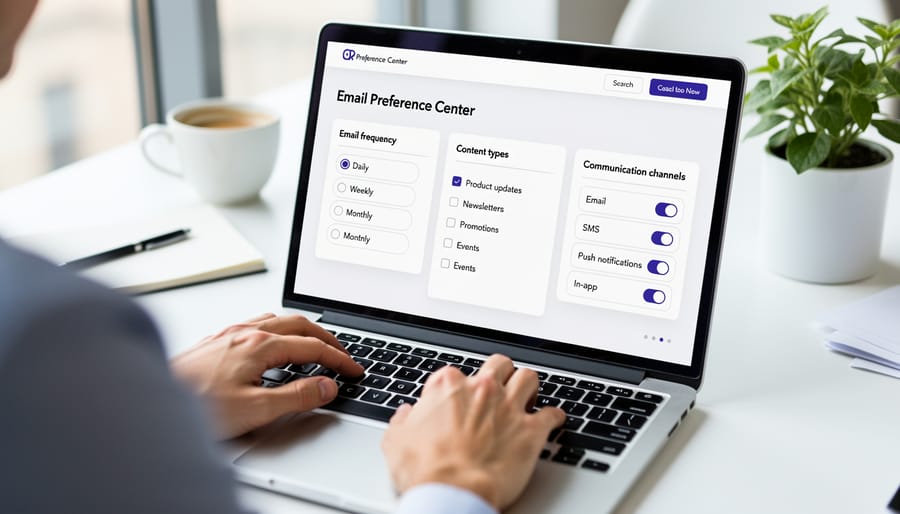
Most preference centers include several key elements: checkboxes for different email categories (newsletters, promotions, product updates), frequency options (daily, weekly, monthly), and fields to update personal information like name or job title. Some advanced versions also allow subscribers to set content preferences based on specific interests or industries relevant to your business.
This approach aligns perfectly with modern email marketing best practices because it respects subscriber autonomy while maintaining valuable communication channels. Rather than treating unsubscribes as inevitable losses, preference centers transform potential exits into opportunities for better-targeted, more relevant communication. The result is a healthier email list with subscribers who actively want to hear from you, leading to improved open rates and stronger client relationships over time.

The Business Case for Preference Centers
Keep More Subscribers on Your List
A preference center significantly reduces the likelihood of losing subscribers entirely. When someone clicks “unsubscribe,” they’re often frustrated with one specific aspect of your emails—perhaps the frequency is too high, or they’re receiving content that doesn’t match their interests. Without options, they have no choice but to leave your list completely.
By offering granular choices, you transform that all-or-nothing moment into a conversation. Subscribers can reduce email frequency from daily to weekly, opt out of promotional content while keeping educational newsletters, or pause emails temporarily rather than unsubscribing forever.
Data consistently shows that 30-60% of people who would otherwise unsubscribe choose a partial opt-out instead when given the option. This means you retain a significant portion of your audience who still want to hear from you—just on different terms.
These partially engaged subscribers remain valuable assets. They can re-engage with your brand when their circumstances change, and they continue receiving communications they actually want. This approach respects their preferences while keeping your communication channel open, creating a win-win scenario that protects your list size and maintains long-term relationship potential.
Send Emails People Actually Want to Read
When subscribers receive emails tailored to their specific interests, they’re significantly more likely to open and engage with them. Preference centers make this targeting possible by giving you direct insight into what your audience actually wants to hear about.
The results speak for themselves. Companies using segmenting based on preferences typically see open rates increase by 20-30% and click-through rates improve even more dramatically. Why? Because you’re no longer sending product updates to people who only want educational content, or promotional offers to subscribers interested solely in industry insights.
This targeted approach also reduces email fatigue. Instead of bombarding your entire list with every message, you send fewer, more relevant emails to each subscriber. They get value from what lands in their inbox, and you benefit from higher engagement metrics and stronger sender reputation.
The automation possibilities amplify these benefits further. Once preferences are set, your email system can automatically route subscribers into appropriate nurture sequences without manual intervention. This ensures consistent, personalized communication at scale while freeing your team to focus on strategy and content creation rather than list management.
Essential Elements Every Preference Center Needs
Email Frequency Controls
Frequency controls are among the most valuable options in your preference center. Rather than losing subscribers entirely, give them choices like daily digests, weekly roundups, or monthly summaries. This simple option can reduce unsubscribe rates by up to 30% while maintaining your connection with subscribers who want less frequent communication.
Offer clear, specific frequency options rather than vague terms. Instead of “more often” or “less often,” use concrete choices: “Weekly Product Updates” or “Monthly Newsletter Only.” This clarity helps subscribers make confident decisions about their inbox experience.
Consider segmenting frequency options by content type. A subscriber might want daily blog updates but only monthly promotional emails. By letting them customize each category independently, you demonstrate respect for their time and inbox space. This level of control builds trust and improves long-term engagement, as subscribers receive exactly what they want, when they want it, making your automated email workflows more effective and your client relationships stronger.
Content Type Selection
Content type selection gives subscribers control over what lands in their inbox by letting them choose specific topics or categories that match their interests. Instead of sending every message to your entire list, you can segment automatically based on these preferences.
Include clear category options that align with your business offerings. For example, an e-commerce store might offer product updates, sales announcements, educational content, and company news as separate choices. A B2B company could segment by industry topics, resource types, or solution areas.
Make selections visual and easy to understand with checkboxes or toggle switches. Allow multiple selections so subscribers can customize their experience without feeling restricted. This approach reduces unsubscribes because people opt out of specific content rather than your entire list.
The real power comes from connecting these preferences to your automated email workflows. When someone selects “product tutorials,” they automatically enter nurture sequences focused on education. Sales-focused subscribers receive promotional content without annoying those who prefer informational updates. This targeted approach improves open rates and engagement while building stronger client relationships through relevant communication.
Channel Preferences
Modern preference centers extend beyond email to give subscribers control over how they hear from you across multiple touchpoints. Include options for SMS notifications, push notifications, phone calls, and direct mail when relevant to your business model. This multichannel approach respects that your audience may prefer different channels for different types of content—someone might want promotional emails but prefer text messages for time-sensitive updates or order notifications.
By offering these choices upfront, you reduce the likelihood of complete opt-outs. A customer who finds your emails too frequent might stay engaged if they can switch to monthly SMS updates instead. Track preferences across all channels in your CRM to ensure consistent, coordinated communication. This prevents the common mistake of respecting email preferences while bombarding subscribers through other channels, which damages trust and increases overall opt-out rates. When subscribers feel they control the conversation across all channels, they’re more likely to remain engaged long-term.
Profile Update Options
Make updating profile information straightforward by including clearly labeled fields for common preferences. Allow subscribers to modify their email address, name, company details, and contact preferences without requiring multiple clicks or page loads. Include a single “Update Profile” button that saves all changes simultaneously.
Display current information in pre-filled fields so subscribers can see what you have on file and make corrections easily. This transparency builds trust and ensures your database stays accurate. When subscribers leverage subscriber data, clean information becomes your most valuable marketing asset.
Consider adding optional fields like job role, company size, or industry interests. These data points enable better segmentation without overwhelming subscribers. Keep optional fields clearly marked and explain how the information improves their experience. Send an automated confirmation email after profile updates to acknowledge changes and provide peace of mind that their preferences were saved successfully.
Connecting Preference Centers to Consent-Based Nurturing
Your preference center becomes exponentially more valuable when you connect it directly to your automated email campaigns. This connection transforms your email marketing from a one-size-fits-all approach into a personalized communication system that respects each subscriber’s choices.
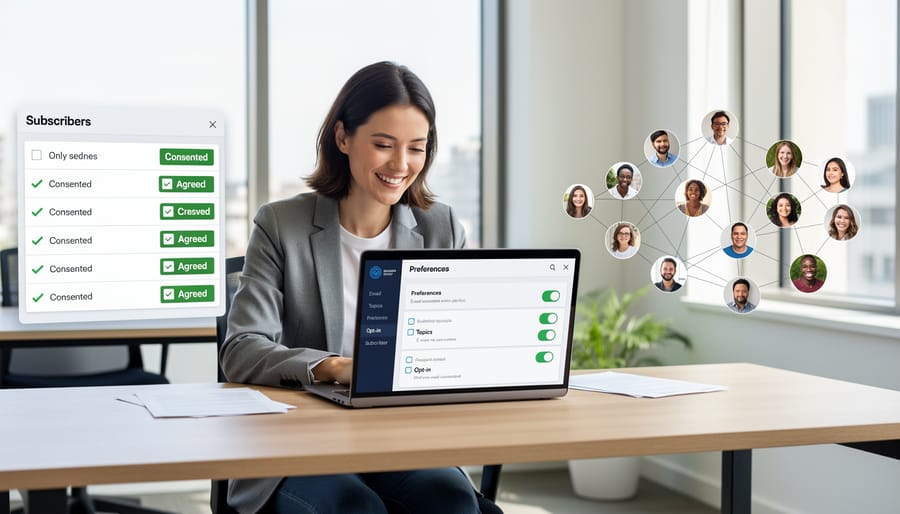
When someone updates their preferences, that information should immediately flow into your email automation platform. If a subscriber indicates they only want product updates, they should automatically be removed from your weekly newsletter sequence and added to your product announcement workflow. This real-time synchronization ensures you honor their choices without manual intervention.
The power of consent-based nurturing lies in this simple principle: only send emails that subscribers have explicitly agreed to receive. Instead of blasting your entire list with every campaign, you segment based on stated preferences. Someone interested in case studies receives case studies. Someone who wants monthly digests gets monthly digests. No exceptions.
This approach delivers measurable benefits. First, your open rates increase because people receive content they actually want. Second, your unsubscribe rates drop since subscribers feel in control of their inbox experience. Third, your engagement metrics improve as recipients interact more with relevant content. Finally, you build long-term trust that translates into better business relationships.
Implementation requires proper workflow setup. Map each preference option to specific email sequences in your automation platform. Create tags or custom fields that trigger the right campaigns. Build automation rules that add and remove subscribers based on their selections. Test thoroughly to ensure preference changes trigger the correct workflow updates.
Monitor how preference data affects campaign performance. Track which content types generate the most engagement. Identify preference combinations that correlate with higher conversion rates. Use these insights to refine your email strategy and create new preference options that better match subscriber interests.
The technical setup takes effort upfront, but the payoff is substantial. You transform your email program from interruptive to invited, from generic to personalized, from tolerated to welcomed. Subscribers appreciate the control, and your metrics reflect their satisfaction through improved performance across every meaningful email marketing indicator.
How to Automate Preference-Based Email Workflows
Once subscribers share their preferences, the real value comes from putting that data to work through automation. Here’s how to build preference-based workflows that respect consent while saving you time.
Start by connecting your preference center to your email marketing platform. Most modern platforms like Mailchimp, HubSpot, or ActiveCampaign can automatically create segments based on subscriber choices. When someone selects “weekly product updates” but opts out of promotional content, your system should tag them accordingly and route them into the appropriate email sequence.
Create distinct automated email workflows for each preference combination. For example, subscribers interested in educational content should receive your newsletter and blog digests, while those who selected product announcements get early access to new features. This segmentation happens automatically once you establish the rules.
Set up suppression lists to ensure subscribers never receive content they’ve explicitly declined. If someone opts out of promotional emails, your automation should exclude them from sales campaigns even if they meet other targeting criteria. This prevents accidental violations of their preferences and maintains trust.
Use dynamic content blocks within your emails to personalize messaging based on preferences. Rather than creating entirely separate emails, you can swap content sections depending on what each subscriber wants to see. This approach streamlines your workflow while still delivering relevant experiences.
Schedule regular preference confirmation emails every six to twelve months. Interests change, and giving subscribers opportunities to update their preferences keeps your segments accurate. Automate these check-ins as simple, one-click updates that require minimal effort from recipients.
Monitor engagement metrics by preference segment to identify which combinations drive the best results. This data helps you refine your offerings and suggests new preference options that might resonate with your audience.
Implementation Tips That Actually Work
Start by placing a clear link to your preference center in every email footer, right next to your unsubscribe button. This positioning turns a potential loss into an opportunity for engagement. When subscribers are frustrated enough to scroll to the bottom, give them a better option than leaving entirely.
Promote your preference center during the welcome sequence when engagement is highest. New subscribers are most receptive to setting preferences within their first week. Send a dedicated email explaining how they can customize their experience, emphasizing the control and value it provides.
Timing matters when encouraging adoption. If someone hasn’t opened emails in 30 days, send a re-engagement campaign that highlights your preference center. Frame it as “We want to send you content you actually want” rather than “Please don’t leave.” This approach respects their inbox and positions you as considerate rather than desperate.
Make the process ridiculously simple. Limit initial options to 3-5 clear categories rather than overwhelming subscribers with 20 checkboxes. You can always add granularity later. Each option should have a brief description explaining what they’ll receive and how often.
Test your preference center on mobile devices before launch. Over 60 percent of emails are opened on phones, and a clunky mobile experience defeats the purpose. Ensure buttons are large enough to tap easily and forms load quickly.
Avoid the common mistake of hiding preference updates behind login walls. Requiring subscribers to create passwords or remember credentials creates unnecessary friction. Use email authentication links instead for seamless access.
Finally, honor preference changes immediately in your automation workflows. Nothing erodes trust faster than sending promotional emails to someone who just opted out of promotions. Set up your system to sync preference updates across all platforms within minutes, not days.
Email preference centers represent more than just a technical feature in your marketing toolkit—they’re a fundamental statement about how you value your subscribers. By giving people control over what they receive and how often they hear from you, you’re building relationships based on respect rather than persistence. This approach naturally improves your list health, reduces unsubscribe rates, and increases engagement with the subscribers who matter most: those who genuinely want to hear from you.
The businesses that thrive in today’s email landscape are those that recognize subscriber autonomy as an asset, not an obstacle. A well-implemented preference center transforms your email program from a broadcast channel into a personalized communication system that adapts to individual needs.
Take a moment to evaluate your current email practices. Are you giving subscribers meaningful choices? Do you have automated processes in place to honor their preferences? If not, implementing a preference center could be the difference between losing subscribers forever and nurturing them into loyal customers. Start simple, test your approach, and refine based on the feedback your subscribers provide through their choices.
Leave a Reply