AI-Powered Social Media Analytics: Turn Social Data Into Business Gold

Social media analytics transforms vast amounts of online interactions into actionable business intelligence, enabling companies to make data-driven decisions that directly impact their bottom line. By tracking, measuring, and analyzing social media metrics – from engagement rates to sentiment analysis – businesses gain crucial insights into customer behavior, brand perception, and market trends in real-time.
In today’s digital landscape, where over 4.9 billion people actively use social media platforms, understanding these analytics has become essential for business survival and growth. Modern social media analytics combines traditional metrics with advanced AI capabilities, allowing organizations to process millions of data points instantly, predict consumer behavior patterns, and adapt marketing strategies on the fly.
This powerful combination of data collection, analysis, and interpretation helps businesses identify opportunities, mitigate risks, and measure ROI across their social media initiatives. Whether you’re a startup founder looking to establish market presence or an established brand aiming to enhance customer engagement, social media analytics provides the insights needed to make informed decisions and stay ahead of the competition.
The key difference between successful and struggling businesses often lies in how effectively they leverage these analytics tools to understand their audience, optimize their content strategy, and drive meaningful business outcomes.
What Makes Social Media Analytics Essential Today
The Core Components of Social Media Analytics
Social media analytics comprises three fundamental components that work together to provide meaningful insights for data analytics in business decision-making. These components include engagement metrics, audience insights, and content performance analysis.
Engagement metrics track interactions such as likes, shares, comments, and click-through rates. These quantitative measurements help businesses understand how their content resonates with their audience and drives user action. They serve as immediate indicators of content effectiveness and audience response.
Audience insights focus on demographic data, behavioral patterns, and preference analysis. This component reveals who your followers are, when they’re most active, and what content types they prefer. Understanding these patterns helps in creating targeted content strategies and improving audience engagement.
Content performance analysis examines the effectiveness of different content types, posting times, and messaging approaches. This component helps identify which content formats generate the most engagement, optimal posting schedules, and successful content themes. By analyzing these patterns, businesses can refine their social media strategy and maximize their return on investment.
Together, these core components provide a comprehensive framework for measuring and improving social media effectiveness.
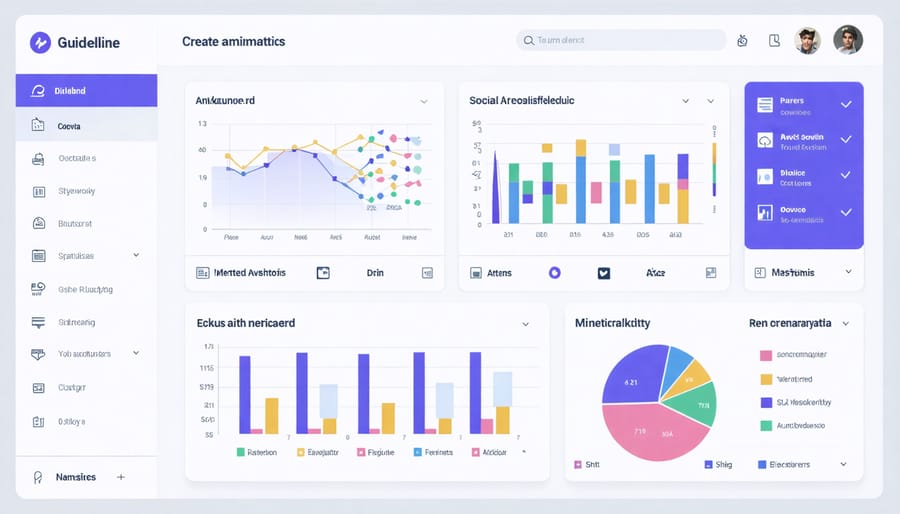
Real Business Impact of Social Analytics
Social media analytics has transformed how businesses make strategic decisions and engage with customers. Nike uses social listening to track product sentiment, which helped them identify and capitalize on the growing athleisure trend, resulting in a 30% increase in their lifestyle category sales. Similarly, Starbucks leverages analytics to test new product ideas, famously using social data to perfect their Pumpkin Spice Latte recipe based on customer feedback.
Small businesses also see significant impacts. A local restaurant chain in Chicago increased foot traffic by 45% after using social analytics to optimize their posting schedule and content types. They discovered their audience engaged most with behind-the-scenes kitchen videos posted during lunch hours.
Analytics also helps in crisis management. When faced with negative reviews, Dell uses social monitoring to identify and address customer concerns within hours, maintaining a 94% customer satisfaction rate. Companies like Glossier have built entire product lines based on social media conversations, demonstrating how analytics can drive product development.
The ROI is clear: businesses using social analytics report up to 20% reduction in customer service costs and a 15% increase in customer retention rates.

How AI Transforms Social Media Analytics
Advanced Pattern Recognition
Advanced pattern recognition in social media analytics leverages artificial intelligence to uncover insights that might escape human observation. These AI systems process vast amounts of social data to identify complex correlations, emerging trends, and subtle behavioral patterns across multiple platforms simultaneously.
Unlike manual analysis, AI can detect micro-trends before they become mainstream, giving businesses a competitive advantage. For example, AI algorithms can identify emerging hashtags, track sentiment shifts in real-time, and recognize when specific content types are gaining traction across different demographic groups.
The technology excels at discovering hidden relationships between seemingly unrelated data points. It might connect a surge in specific emoji usage with increased purchase intent, or link weather patterns to changes in customer engagement rates. These systems can also predict potential viral content by analyzing historical performance data and current engagement patterns.
For businesses, this means more accurate audience targeting, better content timing, and improved ROI on social media campaigns. The AI-driven pattern recognition continuously learns and adapts, becoming more precise as it processes more data, ultimately helping brands stay ahead of market trends and consumer preferences.
Predictive Analytics
Predictive analytics represents the next frontier in social media strategy, leveraging artificial intelligence to forecast trends, user behavior, and campaign outcomes. By analyzing historical data patterns and real-time metrics, predictive analytics in marketing enables businesses to make data-driven decisions before launching campaigns.
These AI-powered tools can forecast engagement rates, identify potential viral content, and predict the best times to post for maximum impact. For example, by analyzing past performance data, predictive analytics can determine which content types are likely to resonate with specific audience segments and when they’re most likely to engage.
Organizations can use these insights to optimize their content calendar, allocate resources more effectively, and stay ahead of emerging trends. The technology can also predict customer sentiment shifts, helping brands adjust their messaging proactively rather than reactively.
Key benefits include reduced marketing costs, improved ROI, and more precise targeting. By understanding what’s likely to happen next, businesses can focus their efforts on strategies with the highest probability of success.
Automated Sentiment Analysis
Modern social media analytics leverages artificial intelligence to streamline the process of analyzing audience sentiment across thousands of posts, comments, and interactions. This automated approach enables businesses to quickly understand how their audience feels about their brand, products, or services without manually reviewing each piece of feedback.
AI-powered sentiment analysis tools work by processing natural language and categorizing expressions as positive, negative, or neutral. They can detect subtle nuances in communication, including sarcasm, emojis, and context-specific phrases, providing a more accurate representation of customer feelings than traditional keyword-based analysis.
These tools offer real-time monitoring capabilities, allowing businesses to quickly identify and respond to emerging trends or potential crisis situations. They can track sentiment changes over time, measure the impact of marketing campaigns, and provide actionable insights for improving customer experience.
For businesses, this means faster decision-making, more efficient resource allocation, and better understanding of customer needs. The technology continues to evolve, becoming increasingly sophisticated in its ability to understand cultural contexts and industry-specific terminology.
Real-Time Processing
Real-time processing of social media data has revolutionized how businesses respond to market dynamics and customer sentiment. Through AI-powered analytics, companies can now monitor and analyze social media conversations as they happen, enabling immediate action and strategic adjustments.
This instant processing capability offers several key advantages. First, it allows businesses to identify and address potential crises before they escalate, protecting brand reputation and maintaining customer trust. Second, it enables organizations to spot emerging trends and capitalize on viral moments while they’re still relevant, maximizing engagement and reach.
Marketing teams can track campaign performance in real-time, making data-driven decisions to optimize content and ad spend on the fly. For customer service, real-time processing means identifying and responding to customer inquiries and complaints promptly, improving satisfaction rates and brand loyalty.
The technology also helps businesses monitor competitors’ activities and market shifts instantly, providing valuable insights for strategic planning. This immediate access to processed data transforms reactive strategies into proactive approaches, giving businesses a significant competitive advantage in today’s fast-paced digital landscape.
Implementing AI-Powered Social Analytics
Choosing the Right Tools
Selecting the right AI-powered social media tools is crucial for effective analytics implementation. Start by assessing your business objectives and the specific metrics you need to track. Consider factors like your budget, team size, and technical expertise when evaluating different platforms.
Look for tools that offer comprehensive dashboard customization, real-time monitoring capabilities, and automated reporting features. Key features should include sentiment analysis, competitor tracking, and trend identification. Ensure the platform integrates seamlessly with your existing social media channels and other marketing tools.
For small businesses, tools like Hootsuite Insights or Sprout Social provide user-friendly interfaces with essential analytics features. Mid-sized companies might benefit from more robust solutions like Brandwatch or Socialbakers, which offer deeper insights and advanced reporting capabilities.
Consider these essential criteria when choosing your analytics platform:
– Data accuracy and reliability
– Ease of use and interface intuitiveness
– Quality of customer support
– Integration capabilities
– Scalability options
– Price-to-feature ratio
– Report customization options
– Export and sharing capabilities
Remember to take advantage of free trials and demos before making a final decision. This hands-on experience will help ensure the tool meets your specific needs and aligns with your team’s workflow.

Integration Best Practices
To successfully implement social media analytics in your organization, start by establishing clear objectives and KPIs that align with your business goals. Create a standardized reporting framework that all team members can understand and follow, ensuring consistency in data collection and analysis.
Invest time in proper team training, focusing not just on tool functionality but also on data interpretation and strategic decision-making. Schedule regular workshops and knowledge-sharing sessions to keep the team updated on new features and best practices.
Develop a centralized dashboard that provides real-time access to relevant metrics, making it easier for team members to monitor and respond to social media trends. Implement automated alerts for significant changes in key metrics to enable prompt action when necessary.
Foster cross-departmental collaboration by sharing insights regularly with sales, customer service, and product development teams. This creates a more integrated approach to social media analytics and ensures insights are actionated across the organization.
Document your processes and create standard operating procedures for data collection, analysis, and reporting. This helps maintain consistency even as team members change and reduces the learning curve for new employees.
Finally, establish a feedback loop where team members can suggest improvements to the analytics process. Regular reviews of your analytics strategy ensure it remains effective and aligned with evolving business needs and social media trends.
Measuring Success with AI Analytics
To effectively measure the success of AI-powered social media analytics, businesses need a structured framework that combines traditional metrics with AI-specific indicators. The key lies in establishing clear benchmarks and monitoring both quantitative and qualitative improvements in your social media performance.
Start by tracking time savings and operational efficiency. AI analytics should significantly reduce the hours spent on manual data analysis while increasing the accuracy of insights. Monitor how quickly your team can now identify trends, respond to customer feedback, and adjust marketing strategies compared to previous methods.
Next, evaluate the quality of insights generated. AI analytics should provide deeper, more nuanced understanding of your audience behavior than traditional analytics. Look for improvements in:
– Prediction accuracy for content performance
– Sentiment analysis precision
– Customer segmentation detail
– Pattern recognition effectiveness
– Real-time decision-making capability
Financial metrics are equally important. Track your return on investment by measuring:
– Reduced customer acquisition costs
– Increased conversion rates
– Higher engagement rates
– Improved customer retention
– Better resource allocation
Create a dashboard that combines these metrics with AI-specific KPIs such as algorithm accuracy rates and automation success rates. Regular monitoring of these indicators helps ensure your AI analytics solution delivers tangible business value.
Remember to assess the impact on customer experience. Monitor improvements in response times, personalization accuracy, and customer satisfaction scores. The true measure of AI analytics success lies in its ability to enhance both operational efficiency and customer relationships.
Finally, implement a continuous improvement cycle. Regularly review and refine your AI models based on performance data. This ensures your analytics system becomes more accurate and valuable over time, providing increasingly sophisticated insights that drive better business decisions.
Social media analytics has become an indispensable tool for modern businesses seeking to maximize their online presence and engagement. Throughout this guide, we’ve explored how these analytics provide crucial insights into audience behavior, content performance, and campaign effectiveness. By leveraging social media analytics, organizations can make data-driven decisions that lead to improved ROI and stronger customer relationships.
To get started with social media analytics, begin by identifying your key business objectives and selecting the metrics that align with these goals. Implement a robust tracking system using appropriate tools and platforms, and establish a regular schedule for data collection and analysis. Remember to focus on actionable insights rather than getting overwhelmed by the vast amount of available data.
Consider starting with basic metrics like engagement rates and audience growth, then gradually expand your analysis to include more complex measurements such as sentiment analysis and conversion tracking. Regular monitoring and adjustment of your social media strategy based on analytical insights will help ensure continuous improvement and success.
The future of social media analytics lies in artificial intelligence and machine learning capabilities, which will provide even more sophisticated insights and automated optimization opportunities. Stay informed about emerging trends and technologies in this field to maintain a competitive edge in your social media marketing efforts.
By implementing these strategies and continuously refining your approach based on analytical data, you’ll be well-positioned to achieve your social media marketing objectives and drive meaningful business results.
Leave a Reply