Why Your Marketing Automation Misses Half Your Customers (And How Behavior Analysis Fixes It)

Track customer actions across your website, email campaigns, and social media platforms to identify patterns that reveal purchasing intent. Monitor metrics like page visit frequency, time spent on product pages, email open rates, and cart abandonment rates—these behaviors signal where prospects are in their buying journey and what messaging will move them forward.
Segment your audience based on behavioral triggers rather than demographics alone. Create groups around specific actions: repeat visitors who haven’t purchased, customers who browse but never add to cart, or buyers who consistently open emails but don’t click through. This behavioral segmentation enables you to deliver personalized messages that address the actual obstacles preventing conversion.
Connect customer behavior data directly to your marketing automation systems to trigger timely, relevant responses without manual intervention. When a customer abandons their cart, an automated email sequence begins. When they download a resource, they enter a nurture campaign tailored to their interests. This connection between observation and action transforms raw data into revenue-generating workflows.
Analyze the complete customer journey from first touchpoint to final purchase, identifying which behaviors correlate with successful conversions. Look for commonalities among your best customers—do they engage with specific content types, visit certain pages multiple times, or respond to particular offers? Understanding these patterns allows you to recognize high-value prospects earlier and allocate your marketing resources more effectively.
Customer behavior analysis moves you beyond guesswork, replacing assumptions about what your audience wants with concrete evidence of what they actually do. The businesses that master this approach don’t just market to customers—they respond intelligently to signals customers are already sending, creating experiences that feel personal because they are built on genuine understanding rather than broad generalizations.
What Customer Behavior Analysis Actually Tells You
The Difference Between Demographics and Behavior
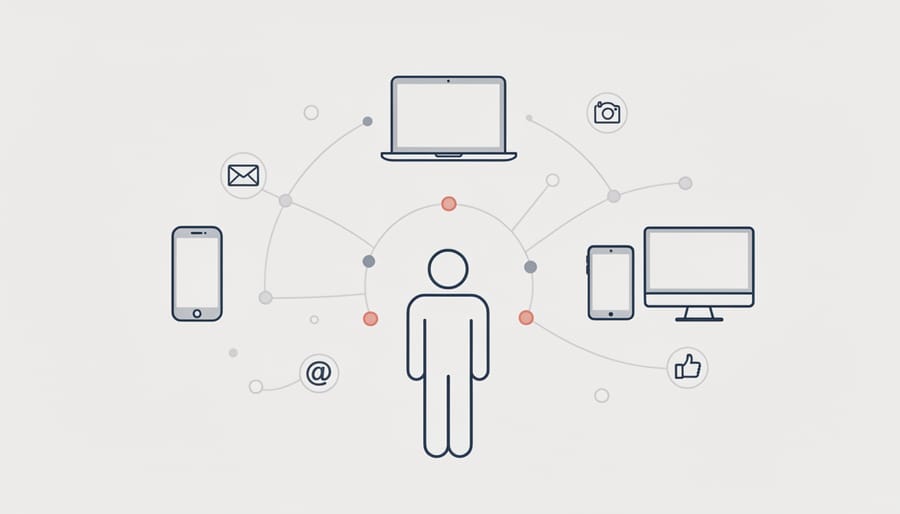
Demographics tell you who your customers are, while behavioral data reveals what they actually do. The distinction matters because actions predict future purchases far more accurately than static characteristics.
Consider two customers: both are 35-year-old marketing managers in mid-sized companies. Demographically identical, right? But one regularly opens your emails, downloads resources, and visits your pricing page monthly. The other hasn’t engaged in six months. Their purchase likelihood couldn’t be more different.
Demographic data provides useful context for segmentation. Knowing your customer’s industry, company size, or job title helps you craft relevant messaging. However, these attributes remain constant and don’t indicate buying intent. A CEO title doesn’t tell you if someone is actively researching solutions or merely passively aware of your brand.
Behavioral data captures engagement patterns: email opens, website visits, content downloads, feature usage, and purchase history. These actions signal interest level, pain points, and readiness to buy. Someone who visits your pricing page three times in a week shows stronger intent than someone who fit your ideal demographic profile but hasn’t visited your site in months.
The most effective customer analysis combines both. Use demographics to understand your audience segments, then layer behavioral data to identify who’s actually engaged and ready to convert. This approach lets you automate personalized communication based on real actions rather than assumptions about what certain demographic groups might want.
Real-Time vs. Historical Behavior Tracking
Modern customer behavior analysis relies on two complementary tracking approaches: real-time monitoring and historical pattern analysis. Understanding how these work together helps you make smarter marketing decisions and automate responses effectively.
Real-time tracking captures customer actions as they happen. When someone visits your pricing page, abandons their cart, or clicks a specific email link, automated systems can trigger immediate responses. This might include sending a targeted follow-up email, displaying a relevant popup, or alerting your sales team. The speed of real-time tracking makes it valuable for capturing high-intent moments when customers are actively considering a purchase.
Historical tracking analyzes patterns over weeks, months, or years. This long-term view reveals trends like seasonal buying habits, customer lifecycle stages, and which content types drive conversions. Historical data powers predictive analytics, helping you anticipate future behavior and plan campaigns accordingly.
Both tracking types matter because they serve different purposes. Real-time data enables responsive, personalized interactions that feel timely and relevant. Historical data provides context, showing you whether a current action represents a genuine buying signal or a one-time anomaly.
The most effective marketing automation combines both approaches. Your system might notice a customer viewing premium features (real-time) while also recognizing they’ve been gradually increasing engagement over three months (historical). This combined insight triggers a more sophisticated response than either data type alone could justify, leading to higher conversion rates and better customer experiences.
How Behavioral Analytics Powers Smarter Marketing Automation
Automated Segmentation Based on Actions
The most powerful aspect of behavior-based analysis is that it creates dynamic segments automatically. Instead of manually sorting contacts into categories and updating lists every week, your system does it for you based on what customers actually do.
Here’s how it works: when a customer takes a specific action, like clicking a particular link, downloading a resource, or abandoning a cart, they automatically enter a segment designed for that behavior. This triggers relevant follow-up communication without any manual intervention from your team.
For example, someone who browses your pricing page three times but doesn’t purchase automatically enters a “high-intent prospect” segment. They receive personalized messaging addressing common purchase objections. Meanwhile, a customer who hasn’t opened emails in 60 days moves into a re-engagement segment with different content entirely.
The key advantage is precision without effort. Traditional demographic segments remain static until you manually update them. Behavioral segments constantly evolve as customers interact with your business. Someone might be in your “active customer” segment today, move to “at-risk” next month based on declining engagement, and shift back to “active” after making another purchase.
This approach eliminates the guesswork from list management. You’re not deciding which customers seem interested or might be ready to buy. Their actions tell you directly, and your system responds accordingly.
To implement this effectively, start with three to five clear behavioral triggers that indicate customer intent or engagement level. Build automated workflows around each one. As you gather data, you’ll identify additional patterns worth tracking. The segments refine themselves over time, becoming more accurate as your system learns from ongoing customer interactions.
Trigger-Based Campaigns That Respond to Customer Intent
The most effective marketing automation responds to what customers do, not just who they are. Trigger-based campaigns activate automatically when customers display specific behavioral signals, delivering messages at the precise moment they’re most relevant.
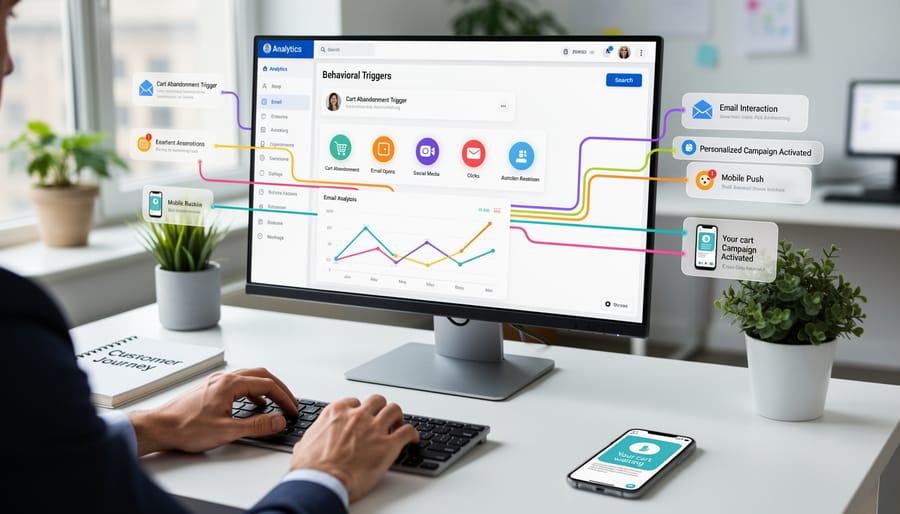
Cart abandonment represents one of the highest-value triggers you can implement. When a customer adds items to their cart but leaves without purchasing, an automated email sequence can recover that potential sale. The first message might go out within an hour, offering assistance. A follow-up 24 hours later could include a small incentive. This automated response converts browsers into buyers without requiring manual intervention from your team.
Repeat website visits signal growing interest. When someone returns to view the same product page multiple times, an automated campaign can provide additional information, customer reviews, or a limited-time offer. These visitors are clearly considering a purchase, and your timely response can provide the final push they need.
Content downloads and resource requests reveal specific interests. Someone who downloads a guide about email marketing automation is showing clear intent. An automated nurture sequence can follow up with related case studies, implementation tips, and eventually a consultation offer. Each message feels personalized because it directly relates to their demonstrated interest.
Browse abandonment works similarly to cart abandonment but catches prospects even earlier. When visitors spend time on specific product categories without taking action, automated follow-ups can showcase bestsellers from those categories or offer educational content related to their browsing behavior.
The key to successful trigger-based campaigns is timing and relevance. Automated systems monitor customer actions continuously and respond within minutes or hours, not days. This immediacy makes your communication feel attentive and personal, even though the entire process runs automatically. You’re simply letting customer behavior dictate when and what you send.
Five Customer Behaviors Every Business Should Track
Website Engagement Patterns
Website engagement patterns reveal how visitors interact with your digital content, providing crucial insights into customer interests and intent. By monitoring metrics like page visits, time spent on specific pages, and navigation paths through your site, you can identify which products, services, or topics resonate most with your audience.
These patterns become particularly valuable when automated systems track them in real-time. For example, when someone spends significant time on pricing pages but doesn’t convert, your marketing automation can trigger personalized follow-up emails addressing common purchase objections. Similarly, tracking which blog posts a visitor reads helps you segment audiences based on their specific pain points and interests.
Navigation paths show the customer journey from entry to exit. If prospects consistently visit your features page, then testimonials, then pricing before leaving, you’ve identified a clear decision-making sequence. This allows you to automate targeted communications at each stage, providing relevant information exactly when customers need it. The key is transforming raw engagement data into automated workflows that nurture prospects based on their demonstrated interests rather than generic assumptions.
Email Interaction Signals
Email interaction signals provide direct insight into how customers engage with your communications. By tracking open rates, click-through rates, and response times, you can automatically identify which customers are highly engaged versus those who’ve gone cold. Modern email platforms can monitor these behaviors in real-time, triggering automated follow-ups based on specific actions. For example, when a customer opens an email multiple times but doesn’t click through, the system can automatically send a simplified message with a clearer call-to-action. Similarly, customers who consistently click specific product categories can receive tailored content matching their interests. These automated responses, integrated with proven email marketing strategies, help refine your messaging without manual intervention, ensuring each customer receives relevant communications at optimal times while freeing your team to focus on high-value interactions.
Purchase and Browsing History
Purchase and browsing history provides the foundation for predictive marketing automation. By analyzing what products customers have bought and which pages they’ve viewed, you can identify patterns that reveal their preferences and future needs. This data enables automated systems to trigger timely recommendations without manual intervention.
For example, when a customer purchases running shoes, automation can schedule follow-up emails featuring complementary items like athletic socks or fitness trackers. Similarly, if someone browses winter coats but doesn’t buy, automated reminders can present those products again with personalized messaging.
The key is connecting browsing behavior to purchase intent. Frequent views of specific product categories signal genuine interest, allowing you to automate targeted campaigns that feel personalized rather than generic. This approach transforms historical data into actionable insights that drive repeat purchases and increase customer lifetime value through relevant, well-timed communication.
Social Media Engagement
Social media metrics reveal how your audience connects with your brand in real-time. By tracking likes, shares, comments, and follows, you gain immediate insight into which content truly resonates with your customers. This behavioral data goes beyond vanity metrics—it identifies your most engaged followers who actively advocate for your brand. When you notice certain topics or formats generating higher engagement rates, you can automate similar content delivery to maximize reach. Monitor comment sentiment to understand emotional responses, and track share patterns to identify what content your audience finds valuable enough to endorse. These engagement signals also help segment your audience automatically, allowing you to create targeted campaigns for high-engagement users versus passive followers. The key is connecting these interactions to your marketing automation platform, enabling triggered responses based on specific engagement thresholds and ensuring consistent communication with your most active community members.
Customer Journey Milestones
Customer journey milestones represent critical moments when customers transition between different relationship stages with your business. The first purchase milestone marks when a prospect becomes a buyer, triggering welcome sequences and onboarding communications. When customers make their second or third purchase, they cross into repeat buyer territory, qualifying them for loyalty programs and exclusive offers. The advocate milestone occurs when customers refer others or leave positive reviews, warranting recognition and rewards. By mapping these progression points, you can automate specific communications that arrive at precisely the right moment. For instance, a customer who hasn’t purchased in 60 days receives a re-engagement campaign, while someone making their fifth purchase automatically gets VIP status. This milestone-based approach ensures your messaging remains relevant to each customer’s current relationship with your brand, eliminating generic communications that miss the mark.
Setting Up Behavior Analysis in Your Marketing Automation System

Choose Your Priority Behaviors First
Resist the temptation to track every possible customer interaction from day one. Instead, identify the 2-3 behaviors that directly connect to your immediate business goals. If you’re struggling with cart abandonment, focus on checkout page behavior and email engagement. If lead quality is your challenge, prioritize form completion rates and content download patterns.
This focused approach delivers faster insights and prevents analysis paralysis. When you’re monitoring dozens of metrics simultaneously, it becomes nearly impossible to identify which behaviors truly drive results. Starting small allows you to establish baseline performance, test automated responses, and measure impact before expanding your tracking.
Consider your customer journey and ask: which specific actions indicate purchase intent or signal a need for intervention? A software company might track free trial activations and feature usage, while an e-commerce business focuses on product page visits and wishlist additions. These priority behaviors should align with your conversion funnel stages and represent clear opportunities for automated communication that guides customers toward purchase. Once you’ve mastered analyzing and responding to these core behaviors, you can gradually expand your tracking to capture additional nuances in customer activity.
Connect Your Data Sources
To gain a complete picture of customer behavior, you need to consolidate data from multiple touchpoints into a unified view. Start by integrating website analytics tools like Google Analytics with your CRM system to track how visitors navigate your site and convert into leads. Connect your email marketing platform to monitor open rates, click-throughs, and engagement patterns over time. Link your social media channels to understand which content resonates with your audience and drives interactions. When these data sources work together, you can identify behavioral patterns that reveal customer intent and preferences. This consolidated approach eliminates data silos and enables automated workflows that respond to specific customer actions across channels. For example, when someone downloads a resource from your website, your system can automatically trigger personalized email sequences based on their browsing history and previous interactions. The key is selecting platforms that offer native integrations or API connections to ensure smooth data flow without manual intervention.
Create Automated Responses
Once you understand what behaviors matter, the next step is creating automated responses that trigger without your involvement. Build if-then rules that connect specific customer actions to appropriate responses. For example, when a customer abandons their cart, automatically send a follow-up email within 24 hours. If someone downloads a specific resource, enroll them in a targeted email sequence relevant to that topic.
Start simple with high-impact scenarios. Identify the top three behaviors that indicate purchase intent or customer needs, then create automated workflows for each. Most marketing platforms and CRM systems offer rule-based automation tools that don’t require coding knowledge. Set clear conditions for when each response should trigger, what message to send, and what follow-up actions should occur.
The efficiency gains are substantial. Automated responses handle routine communications instantly while you focus on strategy and complex customer interactions. They ensure consistent follow-up that would be impossible to manage manually, especially as your customer base grows. Monitor your automation performance weekly at first, then adjust rules based on response rates and conversion data. This approach transforms customer behavior data into a self-running system that nurtures leads and retains customers around the clock.
Common Mistakes That Waste Your Behavioral Data
Even the most valuable behavioral data becomes worthless if you fall into common implementation traps. Here’s what to avoid when building your analysis strategy.
The first major mistake is tracking everything without a clear purpose. Many businesses start collecting dozens of data points because they can, not because they should. This creates overwhelming dashboards where critical insights get buried in noise. Instead, begin with three to five behaviors directly tied to your business goals. You can always expand later, but starting focused keeps your team from drowning in irrelevant metrics.
Equally problematic is collecting data but never acting on it. Analysis paralysis happens when businesses gather behavioral insights but lack automated systems to respond. If you notice customers abandoning carts at shipping cost revelation but don’t trigger a targeted follow-up email, you’re wasting that intelligence. Behavioral data should immediately inform automated responses, not sit in reports gathering dust.
Over-personalization creates another serious pitfall. When customers receive messages that feel invasively specific, they become uncomfortable rather than impressed. Referencing that someone viewed a product is helpful. Mentioning they looked at it seventeen times across three devices at 2 AM feels creepy. Balance personalization with respect for privacy boundaries, and always give customers control over their data preferences.
Finally, businesses frequently fail to test their automated responses before full deployment. An automated email sequence that sounds perfect in theory might irritate customers in practice. The timing could be off, the message tone might miss the mark, or the offer may not match customer intent. Always run small tests with limited audience segments before rolling out behavior-triggered automation to your entire customer base.
Avoiding these mistakes means your behavioral analysis actually drives revenue instead of just consuming resources. Start small, act on insights quickly, respect customer boundaries, and test everything before scaling. This practical approach ensures your data works for you, not against you.

Customer behavior analysis transforms marketing automation from one-size-fits-all messaging into intelligent, responsive conversations with your audience. Instead of broadcasting the same content to everyone, you’re delivering personalized experiences based on actual customer actions and preferences. The real power lies not just in understanding behavior, but in automating your response to it.
When properly implemented, automation handles the heavy lifting. Your system continuously monitors customer interactions, analyzes patterns, and triggers appropriate responses without manual intervention. This means a customer who abandons their cart receives a timely reminder, while engaged subscribers automatically progress through educational content. The system works 24/7, ensuring no opportunity slips through the cracks while you focus on what truly matters: building stronger client relationships and refining your overall strategy.
The businesses seeing the greatest success aren’t those with the most complex tracking systems. They’re the ones who start with clear objectives, track behaviors that align with those goals, and let automation do the analytical work. This approach removes the guesswork from marketing decisions and replaces it with data-driven actions that consistently move customers toward conversion.
Your next step is straightforward: audit your current tracking capabilities. Review what customer behaviors you’re currently monitoring and identify the gaps. Which actions matter most to your business goals? What automated responses could you implement today? Start small, test your workflows, and expand as you see results. The foundation you build now will compound in value as your customer base grows.
Leave a Reply