How 5G Is Transforming B2B Mobile Marketing (And What You Need to Do Now)

Leverage 5G’s reduced latency to deploy real-time mobile chat experiences that respond to B2B buyer inquiries within milliseconds, creating competitive advantages in customer communication that slower networks simply cannot match. Set up automated mobile messaging sequences that deliver high-resolution product demos, interactive 3D models, and AR experiences directly to decision-makers’ devices without buffering delays or quality degradation.
Implement location-based mobile marketing campaigns that trigger personalized content when prospects enter trade shows, business districts, or competitor locations, using 5G’s precise positioning capabilities to reach buyers at exactly the right moment. Configure your mobile analytics to track engagement metrics in real-time, measuring how prospects interact with video content, downloadable resources, and mobile landing pages with unprecedented granularity.
Redesign your mobile content strategy around 5G’s bandwidth capacity by replacing text-heavy emails with video proposals, virtual facility tours, and live-streamed product demonstrations that previously weren’t feasible on mobile networks. Build automated workflows that segment your B2B audience based on their mobile engagement patterns, then deliver increasingly sophisticated content formats as their interest levels rise.
Deploy mobile-first account-based marketing campaigns using 5G-enabled rich media that loads instantly, eliminating the friction points that caused prospects to abandon your content on 4G networks. Create mobile experiences that mirror desktop quality without compromising on interactivity, allowing sales teams to conduct meaningful product demonstrations entirely through smartphone interfaces while maintaining professional presentation standards.
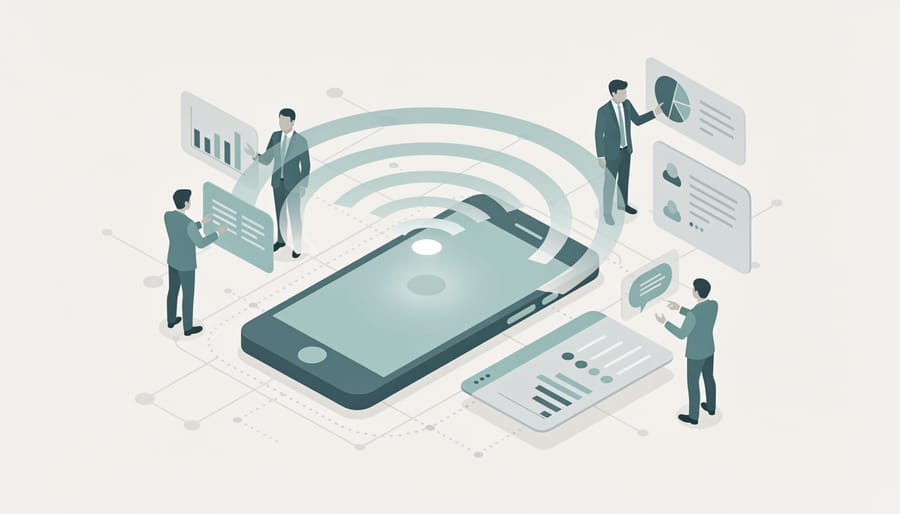
What Makes 5G Different for B2B Marketing
Speed That Actually Changes User Behavior
B2B buyers now expect the same instant gratification they experience in their consumer lives. Research shows that 53% of mobile users abandon sites that take longer than three seconds to load. In B2B contexts, where decision-makers are researching solutions during brief moments between meetings or while traveling, this impatience compounds significantly.
5G’s reduced latency and faster download speeds directly address this behavioral reality. When your product demos, case studies, and interactive content load instantly, prospects stay engaged long enough to move through your sales funnel. Every second of delay creates a decision point where potential clients can bounce to competitors.
The impact goes beyond simple page loads. Real-time chat support, instant document downloads, and seamless video consultations become friction-free experiences. This matters because B2B buyers typically consume 13 pieces of content before making a purchase decision. When each piece loads immediately, you’re removing 13 potential exit points from your customer journey.
For businesses implementing automated marketing workflows, 5G ensures your carefully crafted nurture sequences deliver content exactly when prospects are ready to consume it, without technical delays that break the engagement momentum. This speed advantage transforms passive mobile experiences into active conversion opportunities.
Real-Time Interaction Becomes the Standard
5G technology eliminates the frustrating lag that previously disrupted mobile business interactions. With near-zero latency, your sales team can now deliver product demonstrations that respond instantly to client input, creating a seamless experience that mirrors in-person meetings.
This shift fundamentally changes how B2B companies communicate with prospects. Virtual meetings now support real-time screen sharing without freezing or pixelation. Interactive product configurators let clients customize solutions on their devices while your team guides them through options without delay. Training sessions become truly collaborative, with participants engaging through instant polls, live Q&A, and synchronized content viewing.
The practical impact shows in shorter sales cycles. When prospects can experience your solution immediately without technical hiccups, they make faster buying decisions. Your automated follow-up systems can now include rich media content knowing recipients will access it smoothly on any device.
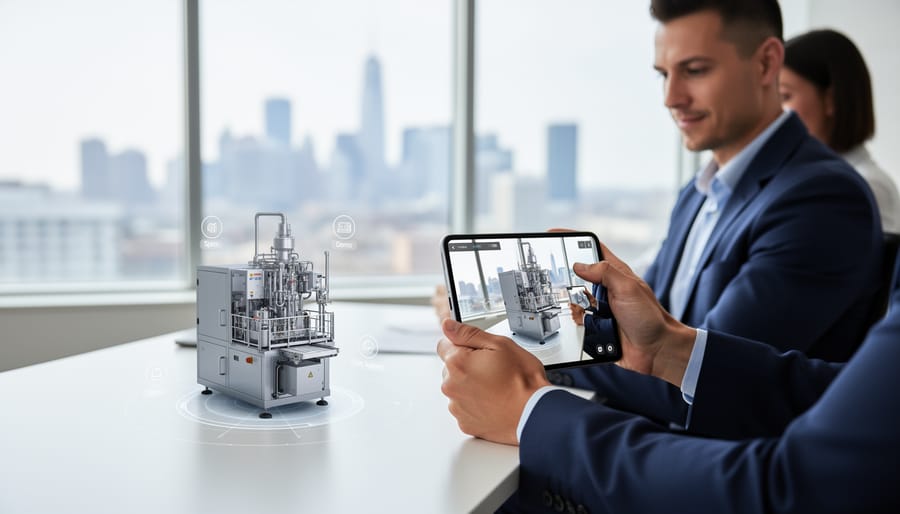
Consider augmented reality walkthroughs of facilities or equipment. What once required extensive planning and bandwidth now works reliably from any location. This capability particularly benefits companies selling complex machinery, software platforms, or facility-based services where visualization drives understanding and accelerates commitment.
B2B Mobile Marketing Opportunities 5G Unlocks
Enhanced Video Marketing and Virtual Demonstrations
5G technology fundamentally transforms how B2B companies showcase products through mobile devices. With dramatically reduced latency and increased bandwidth, businesses can now deliver cinema-quality video streams and interactive experiences that were previously impossible on mobile networks.
High-definition product demonstrations stream seamlessly to prospects’ smartphones without buffering or quality degradation. Your sales team can conduct real-time virtual factory tours, equipment walkthroughs, or software demonstrations while prospects remain in their offices. This immediacy removes friction from the sales process and accelerates decision-making timelines.
AR product demonstrations represent the next frontier in mobile B2B marketing. Prospects can visualize complex machinery in their actual facilities, rotate 3D models from every angle, and interact with product features—all through their mobile devices. This technology proves particularly valuable for companies selling large equipment or technical solutions where physical demonstrations are costly or logistically challenging.
Virtual showrooms accessible via mobile deliver immersive brand experiences without requiring dedicated apps or high-end devices. Prospects explore product catalogs, customize configurations, and request quotes directly from their phones. This approach reduces barriers to engagement while providing measurable analytics on prospect interest and behavior, enabling more targeted follow-up communication.
Location-Based Marketing That Actually Works
5G technology transforms location-based marketing from a guessing game into a precision instrument. With positioning accuracy within one meter compared to 10-50 meters with 4G, B2B marketers can now execute hyper-targeted campaigns at trade shows and conferences.
Picture this: Your sales team attends an industry conference. Using real-time location targeting, you can send personalized messages to prospects as they enter specific exhibit halls or attend competitor presentations. The low latency of 5G means these notifications arrive instantly, while attendees are still in the decision-making moment.
This approach works equally well for permanent locations. If your target accounts cluster in specific business districts, automated geofencing campaigns can trigger relevant content when key decision-makers enter those zones. The technology enables you to serve different messages to prospects visiting your office versus those near competitor locations.
The key is automation. Set up your geofencing parameters once, define your messaging rules, and let the system work. Track which locations generate the most engagement, then refine your approach based on actual behavior patterns rather than assumptions about where your prospects spend time.
Mobile-First Account-Based Marketing
Mobile-first account-based marketing takes on new dimensions with 5G connectivity. Target accounts now expect personalized experiences that load instantly on their smartphones, whether they’re reviewing content during a commute or between meetings. With 5G’s faster speeds and lower latency, you can deliver data-rich presentations, interactive product demos, and personalized video content directly to decision-makers’ mobile devices without buffering delays.
The automation advantage becomes clear when you combine mobile delivery with smart targeting. Your account-based marketing strategies can now trigger personalized mobile experiences based on real-time behavior signals. When a prospect from your target account list visits your mobile site, automated systems can immediately serve customized content that addresses their specific industry challenges and company size.
Consider implementing mobile-optimized microsites for your highest-value accounts. These dedicated experiences can feature company-specific case studies, custom ROI calculators, and one-tap meeting schedulers. 5G ensures these resource-intensive elements load seamlessly, eliminating the friction that traditionally plagued mobile ABM campaigns.
Track engagement metrics specific to mobile ABM efforts, including mobile session duration, content interaction rates, and conversion paths from mobile touchpoints. This data reveals which accounts engage most actively via mobile and helps you refine your approach. The key is maintaining consistent communication across all touchpoints while recognizing that mobile often serves as the primary research tool for busy executives making purchasing decisions.
Practical Implementation Steps for Your B2B Mobile Strategy
Audit Your Current Mobile Experience
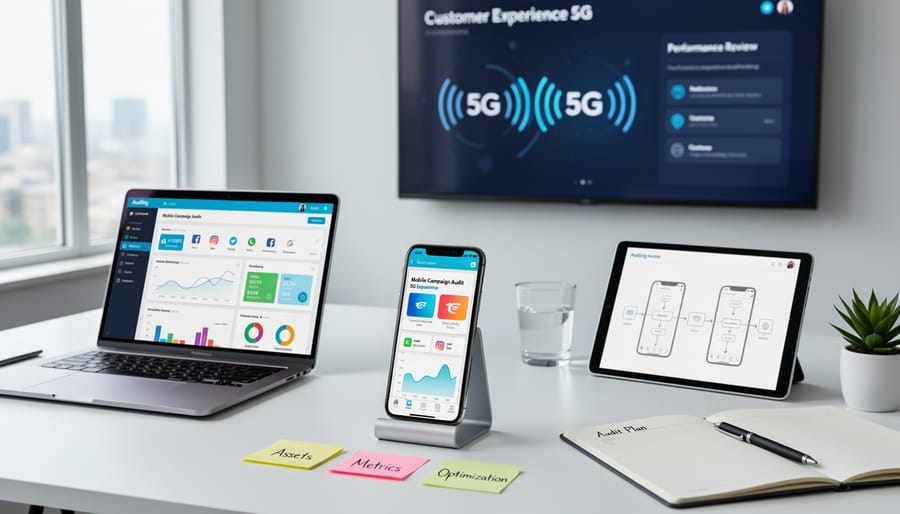
Before exploring 5G capabilities, assess where your mobile presence stands today. Start by testing your website’s mobile loading speed using free tools like Google PageSpeed Insights. If pages take longer than three seconds to load, you’re losing potential clients before they even see your content.
Evaluate how your content displays on mobile devices. Check whether forms are easy to complete on smartphones, if videos play smoothly, and whether product specifications remain readable on smaller screens. Many B2B companies overlook this step and wonder why their mobile traffic doesn’t convert.
Review your analytics to identify mobile user behavior patterns. Which pages do mobile visitors abandon most frequently? Where do they spend the most time? This data reveals immediate opportunities for improvement.
Examine your client communication channels. Can prospects easily contact you from mobile devices? Are automated responses working properly across all platforms? Test the entire customer journey from initial discovery through inquiry submission on an actual smartphone.
Document specific gaps: slow-loading resources, difficult navigation, missing click-to-call buttons, or PDFs that won’t open properly. These findings create your roadmap for mobile optimization and help you prioritize which improvements will deliver the strongest business impact.
Optimize Content for Higher Bandwidth Expectations
5G’s higher bandwidth creates opportunities to elevate your mobile content without the performance penalties that previously limited B2B marketers. You can now incorporate high-resolution product demonstrations, 360-degree facility tours, and interactive configurators that would have caused frustrating load times on 4G networks.
Start by auditing your existing mobile content. Replace static product images with short video clips showing your solutions in action. Manufacturing companies can showcase equipment in operation, while software providers can embed quick interface walkthroughs directly into mobile landing pages. These richer formats communicate value faster than text descriptions alone.
Interactive elements drive engagement and qualification simultaneously. Implement ROI calculators, product configurators, or assessment tools that prospects can use on mobile devices without lag. These tools collect valuable intent data while providing immediate value to your audience, supporting personalized content delivery in future interactions.
However, optimization remains essential. Use adaptive streaming for videos that adjust quality based on available bandwidth. Implement lazy loading so content appears progressively rather than all at once. Compress images using modern formats like WebP that maintain visual quality while reducing file sizes.
Consider automating content delivery based on connection quality. Your marketing automation platform can detect network conditions and serve appropriate content versions, ensuring every prospect gets the optimal experience regardless of their specific circumstances. This approach balances rich content with practical performance considerations.
Automate Your Mobile Marketing Workflows
Mobile marketing automation becomes essential as 5G capabilities generate more touchpoints and real-time interactions with your B2B prospects. Without proper automation systems, your team will struggle to manage the volume and speed of mobile engagement that 5G enables.
Start by implementing triggered messaging workflows that respond to specific mobile behaviors. When a prospect downloads your whitepaper on their smartphone, automatically send follow-up content tailored to their interests within minutes. 5G’s low latency means these interactions happen instantly, making timely automation critical for maintaining relevance.
Set up automated lead scoring based on mobile engagement patterns. Track which prospects watch your video content to completion, interact with mobile ads, or repeatedly visit your mobile site. This data allows your system to prioritize hot leads and automate mobile engagement with personalized responses while your sales team focuses on high-value conversations.
Deploy chatbots and AI assistants that handle initial mobile inquiries without human intervention. These tools can qualify leads, schedule meetings, and provide instant answers to common questions, all while learning from each interaction to improve future responses.
Create automated content delivery sequences that adapt based on device type, connection quality, and user behavior. If someone abandons a form on mobile, trigger a simplified version or offer assistance. If they engage during business hours, route them to live support; after hours, provide relevant resources automatically.
The goal is building systems that scale your mobile marketing efforts without proportionally scaling your team size, ensuring consistent and personalized experiences across every mobile touchpoint.
Common Pitfalls to Avoid
As B2B companies rush to leverage 5G capabilities, several common mistakes can undermine your mobile marketing efforts and waste valuable resources.
The most frequent error is over-engineering experiences that prioritize technology over business value. Just because 5G enables high-resolution 3D product demos doesn’t mean every product requires one. Before investing in advanced features, ask whether they solve a genuine client problem or simply showcase what’s technically possible. Your prospects care about solutions, not spectacle. Focus on enhancements that streamline decision-making, improve client communication, or automate repetitive processes rather than adding complexity for its own sake.
Another critical mistake is abandoning 4G users prematurely. Current data shows that 5G adoption varies significantly by region and industry, with many business professionals still relying on 4G networks. If your mobile experience requires 5G to function properly, you’re potentially excluding a substantial portion of your target audience. Always design with graceful degradation in mind—your content should work smoothly on 4G while offering enhanced experiences when 5G is available. This ensures you’re not sacrificing reach for cutting-edge features.
Failing to test across actual devices and network conditions represents another pitfall. What works perfectly on your office 5G network may perform differently in real-world scenarios. Automated testing tools can help, but nothing replaces manual testing on various devices, operating systems, and network conditions. Set up a testing protocol that includes different connection speeds and device types your clients actually use.
Finally, many B2B marketers neglect to establish clear success metrics before implementing 5G-enhanced features. Without baseline measurements, you can’t determine whether your investments are driving results. Define specific KPIs tied to business outcomes—lead quality, engagement time, conversion rates—rather than vanity metrics. This data-driven approach ensures your mobile strategy delivers measurable ROI and guides future optimization decisions.
Measuring Success in Your 5G-Enhanced Mobile Marketing
Tracking performance metrics for 5G-enhanced mobile campaigns requires a different approach than traditional mobile marketing. The increased capabilities mean you need to measure both standard engagement and the unique opportunities 5G provides.
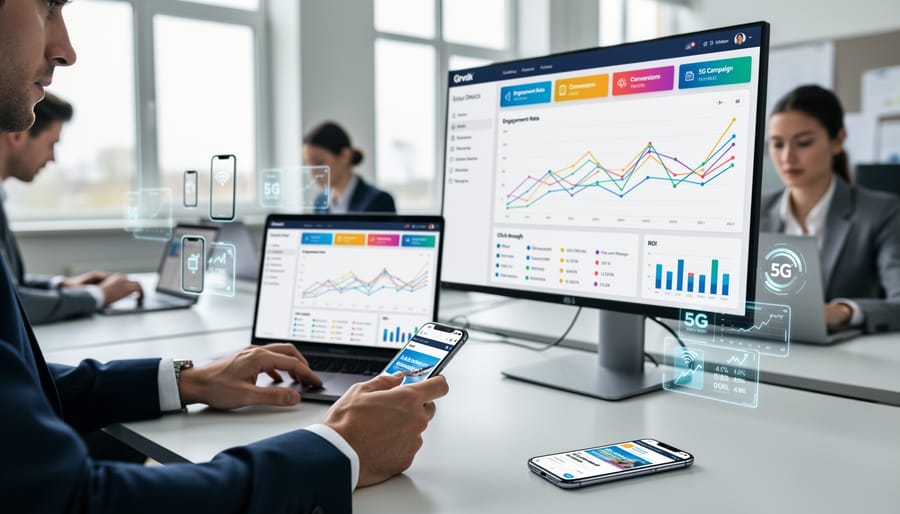
Start with load time metrics. Your 5G campaigns should deliver content in under one second. Track time-to-interactive and compare it against your pre-5G benchmarks. B2B buyers expect professional, fast experiences, and anything over two seconds significantly impacts engagement rates. Use tools like Google PageSpeed Insights or your existing analytics platform to monitor these numbers consistently.
Video engagement metrics become essential with 5G. Track completion rates for high-quality video content, with successful B2B campaigns typically achieving 60-70% completion for videos under two minutes. Monitor quality settings viewers select—if most choose lower resolutions despite 5G availability, your content may be too long or not compelling enough.
For interactive content like 3D product demonstrations or AR experiences, measure interaction depth. How many features do prospects explore? What’s the average session duration? Strong B2B campaigns see interaction times of 3-5 minutes for complex product visualizations, compared to 30-45 seconds for standard mobile content.
Conversion tracking remains your north star. Monitor how 5G-enhanced experiences impact lead quality and sales cycle length. Set up automated tracking for actions like demo requests, whitepaper downloads, and meeting bookings initiated through enhanced mobile experiences.
Compare cost-per-lead and cost-per-acquisition between 5G-optimized and standard campaigns. Early data suggests 5G campaigns can reduce CPL by 15-25% when properly executed, thanks to higher engagement and better qualification through interactive content.
Review these metrics weekly for the first month, then shift to bi-weekly analysis once patterns emerge. Automate reporting wherever possible to maintain consistent monitoring without consuming excessive team resources.
The window for 5G adoption isn’t on the horizon—it’s already open. Businesses implementing 5G-enhanced mobile marketing strategies today are securing measurable advantages while their competitors wait for “the right time.” That right time is now.
Your first step doesn’t require a complete overhaul of your marketing infrastructure. Start with one practical application: enable high-quality video consultations for your sales team, automate your lead qualification process with richer data capture, or launch an AR product demonstration for your top-performing product line. Each implementation builds momentum and demonstrates ROI that justifies expanding your 5G strategy.
The competitive landscape is shifting rapidly. Early adopters are already delivering superior client experiences through faster response times, more engaging content, and automated processes that free their teams to focus on relationship building. Within the next twelve months, 5G-enabled marketing capabilities will transition from competitive advantage to baseline expectation.
Choose one implementation step this week. Test it. Measure the results. Then scale what works. The businesses thriving in tomorrow’s B2B landscape are those taking action today.
Leave a Reply