How IoT Sensors Transform B2B Intent Data Into Revenue-Driving Insights

In today’s data-driven B2B landscape, intent data has become the cornerstone of precision marketing and sales acceleration. By capturing and analyzing digital signals from potential buyers – including research patterns, content consumption, and website interactions – businesses can now predict purchasing decisions with unprecedented accuracy. Recent studies show that companies leveraging intent data experience a 73% higher conversion rate and reduce their sales cycle by up to 40%.
This transformative technology enables organizations to identify in-market buyers before they even make contact, prioritize high-value prospects, and deliver personalized content at exactly the right moment. Through advanced AI and machine learning algorithms, modern intent data solutions aggregate behavioral signals across thousands of B2B websites, professional networks, and industry publications to create comprehensive buyer journey maps.
For sales and marketing teams, this represents a fundamental shift from reactive to proactive engagement. Rather than waiting for leads to raise their hands, businesses can now engage prospects during their critical research phase with targeted messaging that directly addresses their specific pain points and challenges. This strategic advantage is particularly crucial in today’s competitive B2B environment, where buying committees are larger and sales cycles are increasingly complex.
The Evolution of B2B Intent Data Collection
Traditional Intent Data Sources
Traditional intent data collection relies on several well-established methods that businesses have used for years to understand buyer behavior. Website tracking stands as one of the most common approaches, where companies monitor visitor activities, including page views, time spent on site, and navigation patterns. This data helps identify which products or services potential customers are interested in.
Form fills provide another valuable source of intent data, capturing direct information when prospects download whitepapers, register for webinars, or request product demonstrations. These actions clearly signal buying interest and help businesses understand where customers are in their purchasing journey.
Email engagement metrics, including open rates, click-through rates, and response patterns, offer additional insights into prospect interest levels. Similarly, CRM data from sales interactions and customer service touchpoints provides valuable context about buyer intentions and pain points.
Social media engagement and third-party event registrations round out the traditional intent data landscape, offering glimpses into how prospects interact with your brand across different platforms. While these methods remain useful, they often provide a limited view of the complete buyer journey, leading many businesses to seek more comprehensive solutions.
IoT’s Game-Changing Role
The Internet of Things (IoT) is revolutionizing how businesses collect and leverage intent data by creating unprecedented opportunities for real-time insight gathering. Smart devices and sensors now enable companies to capture customer behavior and preferences across multiple touchpoints, delivering a more comprehensive view of the buyer’s journey.
IoT devices seamlessly integrate into existing business infrastructures, collecting valuable data from physical interactions, digital engagements, and environmental factors. For example, smart office equipment can track usage patterns, while connected industrial machinery provides insights into operational preferences and maintenance needs. This enhanced data collection capability allows B2B companies to identify buying signals earlier and with greater accuracy.
The real power of IoT in intent data collection lies in its ability to automate the gathering process while maintaining data quality. Instead of relying solely on traditional methods like form fills and website tracking, IoT sensors provide continuous, unbiased data streams that reflect actual customer behavior and needs. This automated approach not only saves time but also reduces the risk of human error in data collection.
For B2B marketers, this means access to richer, more contextual data that can inform targeted marketing strategies and personalized customer experiences.

Real-Time B2B Intent Signals Through IoT
Types of IoT-Enabled Intent Signals
IoT devices have revolutionized how businesses collect and analyze intent signals, offering unprecedented insights into customer behavior and purchasing patterns. These devices generate several distinct categories of intent data that businesses can leverage for more targeted marketing and sales approaches.
Device interaction signals capture how users engage with connected products, including usage frequency, feature preferences, and operational patterns. For example, smart office equipment can track when and how often specific functions are used, indicating potential upgrade or maintenance needs.
Environmental data collected through IoT sensors provides contextual information about the conditions in which products are used. This includes temperature, humidity, location, and other environmental factors that might influence purchasing decisions or product requirements.
Performance metrics from IoT-enabled machinery and equipment offer valuable insights into operational efficiency and maintenance needs. These signals can indicate when customers might be ready for replacements or upgrades, allowing businesses to time their outreach effectively.
Consumption patterns tracked through smart devices reveal how customers use resources and supplies, enabling businesses to predict reorder timing and identify cross-selling opportunities. This is particularly valuable in inventory management and supply chain optimization.
Integration signals show how IoT devices interact with other systems and products, highlighting compatibility requirements and potential solution gaps that businesses can address. These signals help identify upsell opportunities and inform product development strategies.
By analyzing these various IoT-enabled intent signals collectively, businesses can develop more accurate customer profiles and anticipate needs before they arise, leading to more effective B2B marketing and sales strategies.
Processing and Analysis Methods
Raw intent data undergoes several sophisticated processing stages before it becomes actionable business intelligence. The journey begins with data collection from multiple touchpoints, including website interactions, email engagement, and IoT device signals. This data is then cleaned and normalized to ensure consistency across different sources and formats.
Advanced algorithms analyze these datasets to identify patterns and correlations that indicate buying intent. Machine learning models evaluate factors such as content consumption patterns, search behavior, and engagement frequency to generate intent scores. These scores help prioritize leads and predict purchase likelihood with increasing accuracy over time.
The processing pipeline includes data enrichment, where additional company information and contextual details are merged with behavioral data. This creates a more comprehensive view of potential customers and their journey. Through AI-driven personalization, the system can automatically segment audiences and tailor content recommendations based on observed intent signals.
Real-time processing capabilities ensure that intent insights are delivered when they’re most valuable. The system continuously updates intent profiles as new data flows in, allowing businesses to respond promptly to changing customer interests. Automated alerts notify sales teams when specific intent thresholds are met, enabling timely follow-up with qualified prospects.
Quality control measures and validation processes ensure the accuracy of intent signals, reducing false positives and improving the reliability of insights delivered to sales and marketing teams.
Practical Applications in B2B Marketing
Predictive Lead Scoring
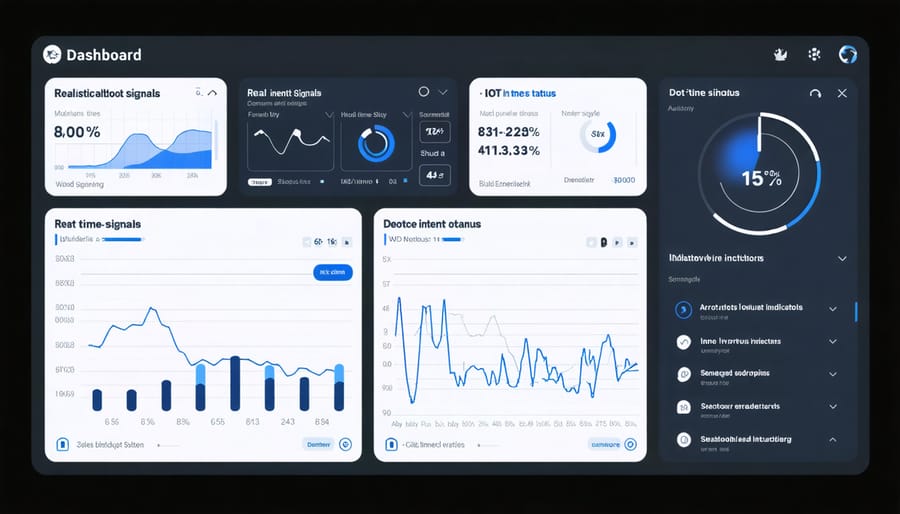
Predictive lead scoring leverages IoT intent data to transform raw prospect information into actionable insights, helping businesses identify and prioritize their most promising leads. By analyzing behavioral patterns captured through connected devices and digital touchpoints, companies can assign numerical values to prospects based on their likelihood to convert.
The process combines multiple data points, including website interactions, content engagement, device usage patterns, and offline behaviors tracked through IoT sensors. These signals are weighted according to their relevance to your specific business goals and integrated into a comprehensive scoring model.
For example, a manufacturing equipment supplier might assign higher scores to prospects who repeatedly access product specifications through their mobile devices, interact with pricing pages, or trigger IoT sensors at trade shows. This automated scoring system helps sales teams focus their efforts on leads most likely to convert, ultimately improving conversion rates and reducing sales cycles.
To implement effective predictive lead scoring:
– Define clear conversion goals
– Identify relevant IoT data points
– Establish scoring criteria
– Regular model refinement
– Integration with your CRM system
This data-driven approach ensures that your sales team prioritizes high-value prospects while maintaining efficiency in lead management.
Account-Based Marketing Enhancement
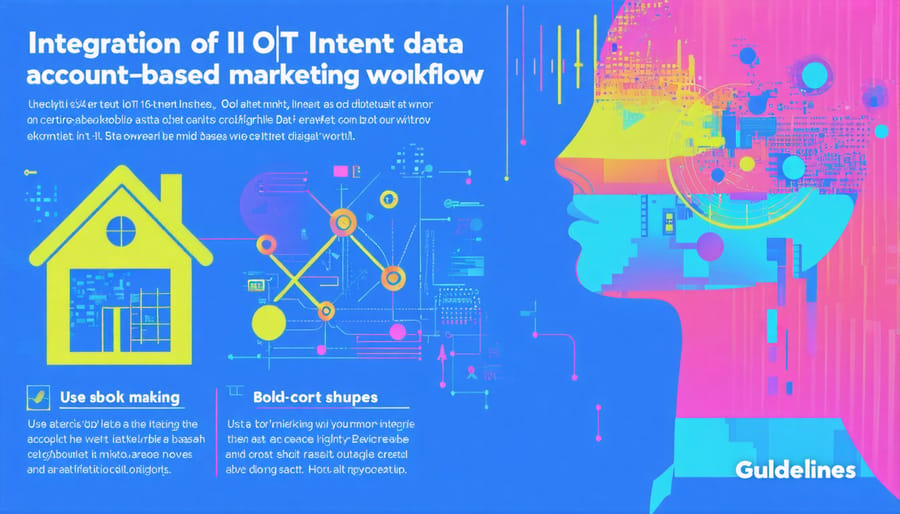
IoT technology has revolutionized how businesses gather and utilize intent data for Account-Based Marketing (ABM) strategies. By leveraging IoT sensors and connected devices, companies can now capture real-time behavioral signals from target accounts, creating more precise and personalized marketing campaigns.
The integration of IoT data streams enables marketers to track physical interactions with products, monitor usage patterns, and understand customer preferences at a granular level. This enhanced visibility, combined with predictive analytics in ABM, allows organizations to identify high-value accounts more accurately and engage them at the optimal moment in their buying journey.
For example, manufacturing equipment with IoT sensors can signal when maintenance is due, triggering targeted marketing campaigns for replacement parts or service contracts. Similarly, smart office devices can indicate when companies are expanding or upgrading their facilities, presenting timely opportunities for office solution providers.
To maximize ABM effectiveness using IoT insights:
– Monitor device usage patterns to identify potential pain points
– Create trigger-based campaigns that respond to specific IoT signals
– Develop personalized content based on real-world interaction data
– Align sales outreach with IoT-detected buying signals
– Measure campaign effectiveness through IoT-enabled engagement metrics
This data-driven approach ensures marketing resources are allocated efficiently while significantly improving conversion rates for target accounts.
Customer Journey Optimization
IoT devices provide valuable touchpoints throughout the B2B buyer’s journey, enabling companies to collect and analyze real-time interaction data for enhanced decision-making. By leveraging IoT sensors and connected devices, businesses can track how potential customers engage with their products, services, and digital assets across multiple channels.
This comprehensive data collection allows for more precise customer relationship optimization and personalized experiences. For example, IoT-enabled product demos can capture specific features that interest prospects, time spent examining different components, and common usage patterns. This information helps sales teams tailor their approach and address pain points more effectively.
Smart office equipment and connected devices can also reveal how businesses utilize products in their daily operations, providing insights into feature adoption and potential expansion opportunities. By analyzing this behavioral data, companies can:
– Identify optimal moments for engagement
– Customize product recommendations
– Streamline the purchasing process
– Anticipate customer needs
– Reduce friction points in the buying journey
Organizations that successfully implement IoT-driven journey optimization typically see increased conversion rates, shorter sales cycles, and improved customer satisfaction scores. The key is to focus on collecting meaningful data that drives actionable insights while maintaining transparency about data usage practices.
Implementation Challenges and Solutions
Data Privacy and Security
As B2B intent data becomes increasingly valuable, organizations must prioritize data privacy and security compliance. The collection and handling of intent data are subject to various regulations, including GDPR, CCPA, and industry-specific requirements. Companies must implement robust data protection measures and maintain transparency about their data collection practices.
To ensure compliance and maintain trust, businesses should:
– Obtain proper consent for data collection
– Implement encryption protocols for secure data transactions
– Regularly audit data handling processes
– Maintain detailed documentation of privacy practices
– Train staff on data protection protocols
When working with third-party intent data providers, it’s crucial to verify their compliance standards and data protection measures. Organizations should establish clear data governance policies that outline how intent data is collected, stored, and used. This includes implementing access controls, data retention policies, and incident response procedures.
Regular privacy impact assessments help identify potential risks and ensure ongoing compliance. Companies should also maintain transparency with their customers about how their data is being used and provide clear opt-out mechanisms when applicable. By prioritizing data privacy and security, organizations can build trust while maximizing the benefits of intent data in their B2B marketing efforts.
Integration Best Practices
To successfully integrate B2B intent data into your existing systems, follow these essential best practices. First, conduct a thorough audit of your current tech stack to identify integration points and potential data silos. This assessment will help determine the most efficient implementation approach.
Establish clear data governance policies before implementation. Define who has access to intent data, how it will be used, and what security measures need to be in place. This framework ensures compliance and maintains data integrity throughout the integration process.
Choose integration methods that align with your technical capabilities. API-based integrations offer flexibility and real-time data flow, while batch processing might be more suitable for smaller operations. Consider working with vendors who provide dedicated integration support and documentation.
Start with a pilot program focusing on one or two key use cases. This approach allows you to test the integration, measure results, and make necessary adjustments before full-scale deployment. Common starting points include lead scoring or account prioritization.
Ensure your CRM and marketing automation platforms are properly configured to receive and utilize intent data. Create custom fields for intent signals and establish automated workflows to route information to relevant teams. Regular system synchronization is crucial for maintaining data accuracy.
Finally, implement monitoring tools to track data quality and integration performance. Regular audits help identify issues early and ensure your intent data continues to deliver value across all connected systems. Remember to document all integration processes and maintain updated standard operating procedures for future reference.
B2B intent data has become an indispensable tool in modern marketing and sales strategies, revolutionizing how businesses understand and engage with potential customers. As we’ve explored throughout this article, the strategic implementation of intent data enables companies to make more informed decisions, optimize their marketing efforts, and significantly improve conversion rates.
The future of B2B intent data looks increasingly promising, with advances in artificial intelligence and machine learning set to enhance data accuracy and predictive capabilities. Organizations that embrace these technologies early will gain a considerable competitive advantage in their respective markets.
Key takeaways include the importance of selecting reliable data sources, implementing proper data integration systems, and maintaining data privacy compliance. Success lies in combining intent data with existing marketing strategies while ensuring consistent monitoring and optimization of your intent data program.
Looking ahead, we can expect to see more sophisticated intent data solutions emerging, offering deeper insights and more precise targeting capabilities. The integration of multiple data sources and improved analysis tools will provide even more valuable insights into buyer behavior and purchase intent.
For businesses yet to implement intent data strategies, now is the crucial time to begin. Start small, measure results, and gradually expand your intent data initiatives as you see positive outcomes. Remember that the key to success lies not just in collecting data, but in effectively analyzing and acting upon the insights it provides.
Leave a Reply