Why Your Suppliers Hold the Key to Real Sustainability (And How to Partner Better)

Your supply chain decisions directly impact your bottom line and environmental footprint, making supplier partnerships one of the most powerful levers for meaningful sustainability progress. The Suppliers Partnership for the Environment (SP4E) operates as a practical framework where companies collaborate to reduce environmental impacts across their supply networks while cutting costs and managing risks.
Established as a voluntary initiative, SP4E connects manufacturers, suppliers, and service providers who share environmental data, best practices, and innovative solutions. Rather than viewing sustainability as a compliance burden, member companies treat it as a competitive advantage—reducing waste, improving energy efficiency, and strengthening supplier relationships simultaneously.
The business case is straightforward: companies participating in environmental supplier partnerships typically see 15-30% reductions in supply chain emissions while uncovering operational savings. These partnerships help you identify which suppliers share your environmental commitments, create transparent communication channels about sustainability metrics, and access proven strategies without reinventing the wheel.
For business owners and procurement professionals, SP4E demonstrates that environmental responsibility and profitability aren’t opposing goals. The framework provides structured approaches to engage suppliers in sustainability initiatives, from simple data collection to comprehensive environmental management systems. Success requires genuine commitment to avoiding greenwashing and focusing on measurable improvements that benefit both parties.
This article breaks down how to implement similar supplier partnerships in your organization, overcome common obstacles, and achieve results that strengthen your supply chain while advancing environmental goals.
What Is the Suppliers Partnership for the Environment?
The Suppliers Partnership for the Environment (SP4E) is a nonprofit business consortium that has been connecting organizations with their suppliers to advance environmental sustainability since 1992. Originally launched as a regional initiative in the Detroit area, SP4E has grown into a nationally recognized platform that helps businesses of all sizes integrate environmental best practices throughout their supply chains.
At its core, SP4E operates on a straightforward principle: environmental improvements happen most effectively when buyers and suppliers work together rather than in isolation. The organization serves as a neutral facilitator, bringing together companies that share a commitment to reducing environmental impact while maintaining competitive business operations.
SP4E focuses on several key areas that directly affect supply chain sustainability. These include waste reduction and recycling initiatives, energy efficiency improvements, greenhouse gas emissions monitoring and reduction, water conservation strategies, and pollution prevention measures. Rather than promoting theoretical concepts, the organization emphasizes practical, actionable approaches that deliver measurable results.
What sets SP4E apart is its collaborative model. Member companies gain access to a network of peers facing similar environmental challenges, along with tools, resources, and case studies that demonstrate proven solutions. This peer-to-peer learning environment allows businesses to adopt tested strategies without starting from scratch, saving both time and resources.
The organization serves a diverse membership base, from multinational corporations to small and medium-sized enterprises. This diversity enriches the knowledge-sharing process, as companies can learn from various industries and implementation scales. SP4E facilitates regular workshops, webinars, and working groups where members exchange insights and develop joint solutions to common environmental obstacles.
For businesses seeking to strengthen their environmental credentials while maintaining operational efficiency, SP4E provides a structured framework that streamlines the process. The partnership model ensures that sustainability improvements align with business objectives, making environmental responsibility both achievable and economically viable for participating organizations.

The Business Case for Sustainable Supplier Partnerships
Cost Reduction Through Efficiency
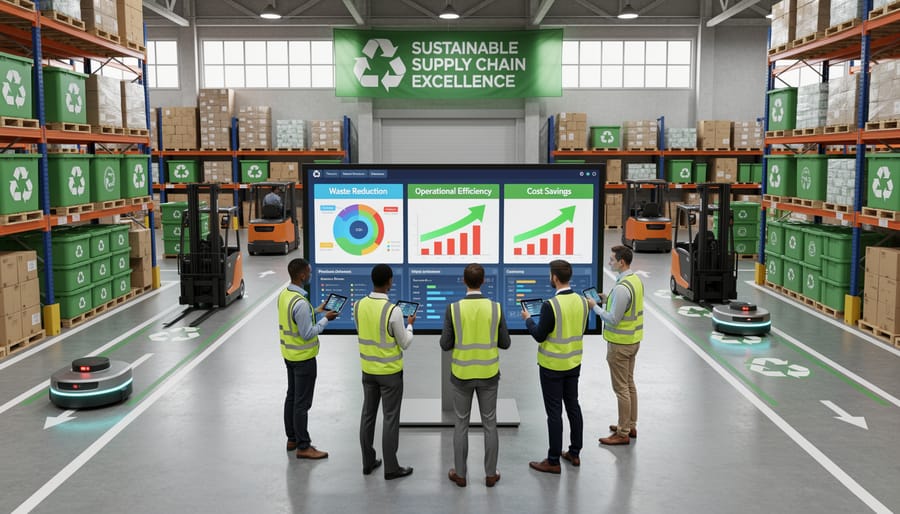
Collaborative sustainability initiatives create measurable financial benefits by streamlining operations and eliminating inefficiencies. When suppliers and buyers work together on environmental goals, they naturally identify opportunities to reduce waste throughout the production cycle. This partnership approach transforms sustainability from a cost center into a profit driver.
Shared investments in energy-efficient equipment and processes lower utility expenses for both parties. Suppliers who modernize manufacturing facilities reduce their operational costs while meeting buyer requirements for lower-carbon products. Meanwhile, companies adopting circular business models through supplier partnerships discover new revenue streams from materials previously discarded.
Automated tracking systems make these efficiency gains visible and scalable. Digital platforms enable real-time monitoring of resource consumption, waste generation, and carbon emissions across the supply chain. This data transparency helps identify bottlenecks quickly and measure improvement accurately.
The cost savings compound over time as continuous communication between partners reveals additional optimization opportunities. Companies report typical savings of 15-30% on materials costs and 10-25% on energy expenses within the first two years of implementing joint sustainability programs.
Risk Management and Compliance
Environmental supplier partnerships directly address three critical business risks that can impact your bottom line. First, regulatory compliance becomes more manageable when suppliers actively track environmental standards and maintain transparent reporting systems. By partnering with environmentally responsible suppliers, you reduce exposure to violations and potential fines that could arise from non-compliant practices anywhere in your supply chain.
Second, climate-related disruptions pose growing threats to supply continuity. Suppliers invested in environmental sustainability often demonstrate better risk assessment and business continuity planning. They’re more likely to have diversified sourcing strategies and resilient operations that can weather environmental challenges, protecting your business from costly production delays.
Third, reputational risk management requires proactive engagement. Today’s consumers and investors scrutinize entire supply chains, not just end products. A single supplier’s environmental incident can damage your brand reputation. Establishing clear environmental expectations through formalized partnerships creates accountability and enables automated monitoring of supplier performance metrics. Regular communication with suppliers about environmental standards helps identify potential issues before they escalate into public relations crises, while demonstrating your commitment to responsible business practices.
Competitive Advantage and Customer Expectations
Today’s buyers—both consumers and businesses—expect transparency about environmental practices throughout your supply chain. Research shows that 73% of consumers are willing to change purchasing habits to reduce environmental impact, while B2B buyers increasingly require sustainability credentials before signing contracts.
Partnering with environmentally responsible suppliers isn’t just about compliance anymore—it’s a competitive differentiator. Companies demonstrating genuine environmental commitment through verified supplier programs that drive growth can command premium pricing and win contracts that prioritize sustainability criteria.
The automation of sustainability tracking and reporting also streamlines client communication, allowing you to provide real-time data on environmental performance. This transparency proves invaluable for building customer trust and differentiating your business in crowded markets. Companies that proactively address supply chain sustainability position themselves ahead of regulatory changes while meeting the expectations that increasingly drive purchasing decisions.
How SP4E Helps Businesses Build Better Supplier Relationships
Free Tools and Resources
SP4E provides a comprehensive suite of no-cost resources designed to help businesses assess and improve their environmental performance quickly. The organization’s flagship tool is the Sustainability Assessment Template, which enables companies to evaluate their current practices across energy use, waste management, water consumption, and carbon emissions. This self-assessment creates a baseline for measuring progress and identifying priority areas for improvement.
Business owners can access step-by-step implementation guides covering specific topics like sustainable packaging, chemical management, and supply chain transparency. These guides break down complex environmental initiatives into manageable action items that even small teams can execute without requiring specialized expertise.
The partnership also offers benchmarking tools that allow companies to compare their performance against industry standards and competitors. This data-driven approach helps businesses set realistic goals and demonstrate measurable improvements to stakeholders.
Additionally, SP4E provides template questionnaires for supplier evaluation, streamlining the process of vetting potential partners on environmental criteria. These ready-to-use materials save time while ensuring thorough assessment of sustainability practices throughout your supply chain. All resources are regularly updated to reflect current regulations and best practices, giving businesses confidence they’re implementing relevant, effective strategies.
Collaborative Learning and Networking
SP4E creates significant value through its collaborative network model, connecting businesses facing similar sustainability challenges. The organization hosts regular member meetings, workshops, and working groups where companies share implementation experiences, discuss emerging environmental issues, and develop industry-specific solutions together.
This peer-learning approach accelerates progress by allowing members to learn from both successes and failures of other companies. Rather than reinventing solutions independently, businesses gain access to tested strategies and practical insights that have already delivered results in real-world applications.
The networking component extends beyond formal meetings. SP4E facilitates direct connections between companies at different stages of their sustainability journey, enabling mentorship relationships and knowledge transfer. Small and medium-sized enterprises particularly benefit from learning how larger corporations have navigated similar challenges, adapting proven approaches to their scale and resources.
Members also gain access to shared tools, templates, and assessment frameworks developed collaboratively by the network. This collective intelligence reduces the time and cost of implementing sustainable practices while increasing the likelihood of success. The community-driven model ensures solutions remain practical and business-focused rather than purely theoretical.
Streamlined Communication Frameworks
Effective supplier partnerships rely on clear, consistent communication channels that minimize administrative burden while maximizing engagement. Standardized communication frameworks provide templates, questionnaires, and reporting formats that suppliers can easily understand and complete, reducing confusion and improving response rates significantly.
Start by implementing automated survey tools that guide suppliers through environmental assessment questionnaires with pre-populated options and clear instructions. These platforms can track responses, send automatic reminders, and generate progress reports without manual intervention. Many organizations report response rate improvements of 40-60% when switching from email-based spreadsheets to dedicated supplier engagement platforms.
Create a communication calendar that outlines when suppliers can expect requests, updates, and feedback sessions. Predictability builds trust and allows suppliers to allocate resources appropriately. Consider establishing tiered communication approaches based on supplier size and environmental impact—high-risk suppliers may require quarterly check-ins, while lower-impact partners receive annual reviews.
Automation also enables better data management. Integrate supplier responses directly into your environmental tracking systems, eliminating manual data entry and reducing errors. This streamlined approach frees your team to focus on relationship-building and collaborative improvement initiatives rather than administrative tasks, ultimately strengthening your environmental partnership outcomes.
Actionable Steps to Start Building Sustainable Supplier Partnerships
Assess Your Current Supply Chain Impact
Before partnering with suppliers on environmental initiatives, you need a clear picture of where your supply chain creates the most impact. Start by categorizing your suppliers based on spend and volume—typically, 20% of your suppliers account for 80% of your environmental footprint. Focus your initial assessment on high-volume suppliers and those providing carbon-intensive materials or services like manufacturing, transportation, and packaging.
Request basic environmental data from your top suppliers, including energy consumption, waste generation, and greenhouse gas emissions. If suppliers can’t provide detailed metrics, begin with simpler questions about their current sustainability practices and certifications. Many companies use automated procurement systems to track this information efficiently, making it easier to identify patterns and priority areas.
Consider the entire lifecycle impact of products you source. Raw material extraction, manufacturing processes, and transportation distances all contribute differently to your overall footprint. Use this baseline assessment to set realistic improvement targets and determine which supplier partnerships will deliver the most significant environmental gains for your business.
Open the Conversation with Key Suppliers
Starting sustainability conversations with suppliers requires tact and preparation. Frame discussions as collaborative opportunities rather than demands or criticisms. Begin by expressing genuine interest in their current environmental initiatives and asking open-ended questions about their sustainability goals.
Position your inquiry as a partnership opportunity that benefits both parties. Try approaches like: “We’re exploring ways to reduce our environmental impact across our supply chain. What sustainability practices are you currently implementing?” or “Many of our customers are asking about our environmental commitments. How can we work together to strengthen our sustainability story?”
Share your own sustainability journey honestly, including challenges you’ve faced. This vulnerability builds trust and encourages suppliers to open up about their capabilities and constraints. Avoid presenting unrealistic timelines or making ultimatums during initial conversations.
Consider starting with suppliers who already show environmental awareness or have existing certifications. These early wins create momentum and provide case studies for engaging more hesitant partners later.
Schedule dedicated meetings focused solely on sustainability rather than adding it as an afterthought to procurement discussions. This demonstrates commitment and allows adequate time for meaningful dialogue. Prepare specific questions about their waste reduction, energy use, and materials sourcing while remaining flexible to discuss their priorities.
Document all conversations and follow up promptly with written summaries to maintain accountability and track progress.
Set Collaborative Goals and Track Progress
Successful environmental partnerships require clear, measurable objectives that benefit both parties. Start by identifying specific targets together—whether reducing carbon emissions by a certain percentage, achieving zero-waste milestones, or transitioning to renewable materials within defined timeframes.
Document these goals in a formal agreement that outlines responsibilities, timelines, and key performance indicators. This creates accountability and ensures everyone remains aligned throughout the partnership.
Leverage automated tracking systems to monitor progress without adding administrative burden. Modern supply chain management platforms can automatically collect data on emissions, waste reduction, energy consumption, and material sourcing. These systems generate real-time reports that both partners can access, eliminating manual data collection and reducing errors.
Schedule quarterly review meetings to assess progress against benchmarks. Use these sessions to celebrate wins, address challenges, and adjust strategies as needed. Automated dashboards make these discussions more productive by providing instant visibility into performance trends.
Maintain momentum by sharing updates with broader stakeholders. When suppliers see their environmental improvements recognized publicly or integrated into your sustainability reports, it reinforces their commitment. Similarly, communicate your own progress toward meeting supplier requirements.
Consider implementing automated alerts when metrics deviate from targets. Early warnings allow quick course corrections before minor issues become major setbacks. This proactive approach strengthens the partnership and demonstrates your commitment to shared success.

Common Challenges and How to Overcome Them
Supplier Resistance or Lack of Resources
Supplier hesitancy often stems from perceived costs, complexity, or limited internal capabilities. Start by segmenting suppliers based on their environmental maturity and focusing initial efforts on those most ready to engage. For resistant partners, lead with business benefits rather than compliance requirements—emphasize cost savings through energy efficiency, waste reduction, and enhanced brand reputation.
Provide practical support through automated data collection tools that simplify environmental reporting and reduce administrative burden. Share templates, best practices, and case studies demonstrating successful peer implementations. Consider tiered participation levels that allow smaller suppliers to start with basic commitments before advancing to comprehensive initiatives.
Maintain consistent communication through quarterly check-ins and collaborative problem-solving sessions. Offer capacity-building resources such as webinars, toolkits, or connections to sustainability consultants. When suppliers genuinely lack resources, explore co-investment opportunities or extended timelines that acknowledge their constraints while maintaining progress toward shared environmental goals. This phased approach builds trust and increases participation rates over time.
Data Collection and Transparency Issues
Collecting accurate environmental data from suppliers requires balancing transparency with legitimate confidentiality concerns. Start by implementing standardized reporting templates that focus on specific metrics like energy consumption, waste generation, and emissions rather than requesting proprietary manufacturing details. Automated data collection platforms streamline this process while maintaining consistency across your supply chain.
Build trust through clear communication about how you’ll use the information. Establish non-disclosure agreements when necessary and consider aggregate reporting methods that protect individual supplier details while providing meaningful insights. Many businesses find success using third-party verification services to validate data without exposing sensitive information.
Focus on creating collaborative frameworks rather than punitive ones. When suppliers understand that data collection supports mutual improvement goals rather than supplier evaluations alone, they’re more likely to provide accurate information. Regular check-ins help identify data collection challenges early and demonstrate your commitment to partnership over policing.
Scaling Sustainability Across Multiple Suppliers
Scaling environmental initiatives across your supplier network requires automated systems that eliminate manual, time-consuming processes. Start by implementing a centralized digital platform where suppliers can submit sustainability data, track progress, and access resources. This approach ensures consistency while reducing administrative burden on both parties.
Standardize your assessment criteria and reporting templates to enable easy comparison across suppliers. Create tiered engagement programs that automatically categorize suppliers based on their sustainability maturity, allowing you to allocate resources efficiently. Automated email workflows can deliver customized guidance to each tier without requiring individual outreach.
Integrate sustainability metrics into your existing procurement software to make environmental performance visible alongside cost and quality data. This integration reinforces that sustainability is a core business requirement, not a separate initiative. Regular automated reports keep stakeholders informed and align with broader sustainable marketing practices.
Establish clear communication protocols that suppliers can follow independently, reducing reliance on one-off conversations. Document best practices and create self-service resource libraries that empower suppliers to improve without constant guidance.
Building sustainable supplier partnerships isn’t reserved for Fortune 500 companies with unlimited budgets. Businesses of all sizes can make meaningful environmental progress by taking deliberate, manageable steps toward greener supply chains. The key lies in starting where you are, using available resources, and committing to continuous improvement.
The Suppliers Partnership for the Environment offers a proven roadmap through its collaborative framework, practical tools, and shared learning opportunities. Whether you’re a startup founder looking to build sustainability into your operations from day one or an established business seeking to transform existing relationships, the principles remain the same: transparency, collaboration, and measurable action.
Begin your journey today by conducting a simple assessment of your current supply chain. Identify one or two suppliers who share your environmental values and explore opportunities for collaboration. Visit the SP4E website to access their free resources, connect with other businesses on similar paths, and discover industry-specific guidance tailored to your needs.
Remember, every sustainable partnership started with a single conversation. The environmental impact of your business extends far beyond your immediate operations, and your choices today shape the marketplace of tomorrow. Take that first step now.
Leave a Reply