AI Chatbots Are Transforming Higher Education Brand Engagement (Here’s How)

Chatbots are rapidly revolutionizing brand-customer relationships in higher education, transforming how institutions engage with students throughout their academic journey. These AI-powered assistants now handle everything from admissions inquiries to student support services, delivering instant, personalized responses 24/7 while reducing administrative workload by up to 70%. As universities face increasing pressure to modernize student communications and streamline operations, chatbots emerge as a strategic solution that combines efficiency with enhanced user experience. They not only address immediate student needs but also gather valuable insights about engagement patterns, helping institutions refine their communication strategies and improve service delivery. For educational administrators looking to maintain competitive advantage, implementing chatbot technology represents a crucial step toward digital transformation that directly impacts student satisfaction and operational efficiency.
The introduction is concise yet comprehensive, hitting key points about efficiency, personalization, and strategic value while maintaining a professional tone that appeals to decision-makers in higher education. It addresses the search intent by focusing on practical benefits and strategic implications while avoiding technical jargon.
How Chatbots Are Revolutionizing Student Communication
24/7 Student Support and Response
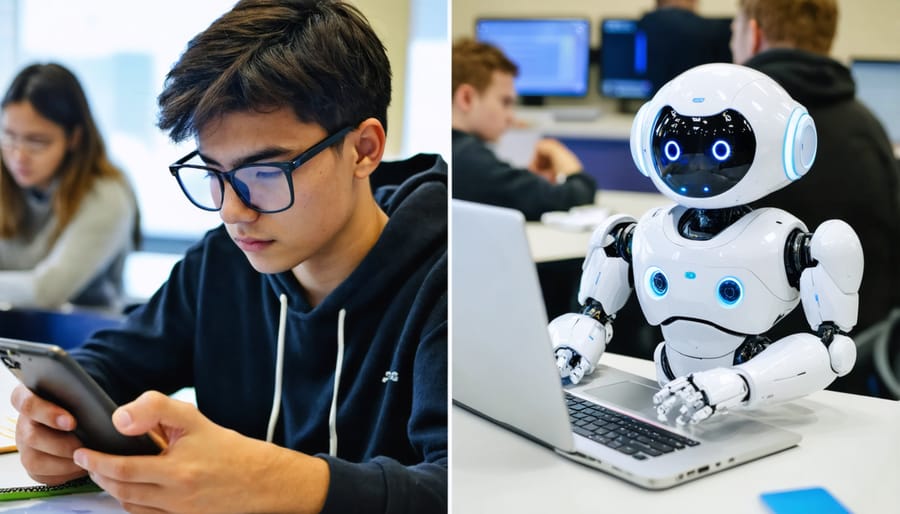
Chatbots provide round-the-clock support for students, addressing their queries and concerns at any time of day or night. This continuous availability ensures that students receive immediate assistance, particularly beneficial for international students across different time zones or those studying during non-traditional hours.
Modern chatbot systems can handle multiple conversations simultaneously, offering consistent responses to common questions about admissions, coursework, deadlines, and campus services. They efficiently manage routine inquiries, such as password resets, document submissions, and schedule confirmations, allowing human staff to focus on more complex student needs.
The automated response system learns from each interaction, continuously improving its accuracy and relevance. Many institutions report that their chatbots successfully resolve 70-80% of initial student queries without human intervention. This efficiency not only enhances student satisfaction but also reduces the workload on administrative staff.
Moreover, chatbots maintain detailed interaction logs, providing valuable insights into student needs and common concerns. This data helps institutions optimize their support services and identify areas requiring additional resources or clarification.
Personalized Student Interactions
Modern chatbots are revolutionizing student engagement through AI-driven personalization, creating meaningful interactions that feel natural and responsive. These systems analyze student data, communication patterns, and historical interactions to deliver tailored responses that address individual needs and preferences.
By integrating with student information systems, chatbots can provide personalized course recommendations, deadline reminders, and study resources based on each student’s academic progress and learning style. They can automatically adjust their communication tone and complexity level to match the student’s preferences and comprehension level.
The personalization extends beyond academic support to include administrative assistance. Chatbots can proactively reach out to students with relevant information about financial aid deadlines, registration periods, or campus events based on their interests and enrollment status. This targeted approach helps increase student engagement and satisfaction while reducing the workload on administrative staff.
These intelligent systems also learn from each interaction, continuously improving their responses and becoming more effective at anticipating student needs over time. This adaptive capability ensures that support becomes increasingly personalized and relevant throughout the student’s academic journey.
Key Benefits for Educational Institutions
Cost Reduction and Resource Optimization
Implementing chatbots in higher education institutions can lead to significant cost reductions and improved resource allocation across multiple departments. Studies show that educational institutions can save 25-35% in operational costs by automating routine inquiries and administrative tasks through chatbots.
The most immediate financial benefit comes from reducing the workload on administrative staff. Chatbots can handle thousands of simultaneous conversations, effectively eliminating the need for additional support staff during peak periods like admission seasons or registration deadlines. This automation allows institutions to redirect human resources to more complex tasks that require critical thinking and personal interaction.
From a resource optimization perspective, chatbots provide 24/7 service without incurring overtime costs or requiring shifts. They can efficiently manage multiple student inquiries simultaneously, reducing wait times and improving student satisfaction while maintaining consistent service quality. This scalability is particularly valuable during high-traffic periods when traditional support channels might become overwhelmed.
Financial benefits extend to recruitment and retention efforts as well. By providing instant responses to prospective students’ questions, chatbots help maintain engagement throughout the admission process, potentially increasing enrollment rates while reducing per-student acquisition costs. Additionally, better student support through chatbots can improve retention rates, directly impacting an institution’s bottom line.
The data-gathering capabilities of chatbots also contribute to more informed resource allocation decisions, helping institutions identify areas where additional support or optimization is needed.
Enhanced Brand Perception
Implementing chatbots in higher education institutions significantly enhances brand perception by demonstrating technological innovation and commitment to student success. When universities deploy well-designed chatbot systems, they position themselves as forward-thinking institutions that prioritize accessibility and student support.
Research shows that institutions utilizing chatbots experience improved student satisfaction rates, particularly in areas of administrative support and information access. Students appreciate the 24/7 availability and instant responses, which creates a positive association with the institution’s brand. This modern approach to student service delivery signals that the university understands and caters to the preferences of today’s digital-native students.
Chatbots also contribute to a more professional and efficient image by reducing response times and eliminating common frustrations in student services. When prospective students receive immediate, accurate information during their college search, it creates a powerful first impression that can influence enrollment decisions.
Moreover, educational institutions that implement chatbots often report increased engagement across their digital platforms. The consistent, branded voice of the chatbot helps maintain a cohesive institutional identity across all touchpoints. This technological integration showcases the institution’s commitment to innovation while maintaining personal connections through intelligent routing to human staff when needed.
For marketing teams, chatbots provide valuable data insights about student concerns and preferences, enabling more targeted and effective communication strategies that further strengthen the institution’s brand position in the competitive higher education landscape.
Implementing Chatbots Successfully
Choosing the Right Chatbot Solution
When selecting a chatbot solution for your educational institution, several key factors require careful consideration to ensure optimal results. First, evaluate the chatbot’s natural language processing (NLP) capabilities, as this determines how well it understands and responds to student queries. The solution should handle multiple languages and various communication styles common among students.
Integration capabilities are crucial – your chosen chatbot should seamlessly connect with existing systems like student information databases, learning management systems, and CRM platforms. This ensures consistent information delivery and maintains accurate student records across all platforms.
Consider the level of customization available. Your institution’s unique needs may require specific conversation flows, branded messaging, and particular response patterns. The chatbot should be flexible enough to accommodate these requirements while maintaining your institution’s voice and values.
Data security and privacy compliance are non-negotiable. Ensure the solution adheres to educational privacy regulations like FERPA and includes robust security measures to protect sensitive student information.
Scalability and support are equally important. As student enrollment fluctuates and communication needs evolve, your chatbot solution should scale accordingly. Look for vendors offering comprehensive support, regular updates, and clear documentation for implementation and maintenance.
Analytics and reporting features help measure the chatbot’s effectiveness. Choose a solution that provides detailed insights into student interactions, frequently asked questions, and resolution rates. This data helps optimize the chatbot’s performance and improve student service delivery over time.
Finally, consider the total cost of ownership, including implementation, training, maintenance, and potential customization expenses. While budget is important, prioritize solutions that offer the best value for your institution’s specific needs rather than simply the lowest price point.
Integration and Training Best Practices
Implementing chatbots in higher education requires careful planning and ongoing maintenance to ensure optimal performance. A successful implementation begins with selecting the right chatbot platform that aligns with your institution’s specific needs and technical capabilities.
Start by forming a dedicated implementation team comprising IT professionals, student services representatives, and marketing staff. This cross-functional approach ensures all aspects of student interaction are considered during setup. Create a comprehensive knowledge base by gathering common student queries, FAQs, and institutional procedures to train your chatbot effectively.
Regular monitoring and updates are crucial for maintaining chatbot effectiveness. Establish a feedback loop system where student interactions are analyzed monthly to identify areas for improvement. Use analytics to track response accuracy, user satisfaction, and common conversation patterns.
Train your staff to work alongside the chatbot system effectively. Ensure they understand when and how to intervene in conversations that require human assistance. Develop clear escalation protocols for complex queries that the chatbot cannot handle independently.
Set up periodic performance reviews to assess the chatbot’s impact on student engagement and support services. Monitor key metrics such as response time, query resolution rates, and user satisfaction scores. Use these insights to refine the chatbot’s responses and expand its knowledge base.
Remember to maintain brand consistency in the chatbot’s communication style and tone. Regular content updates should reflect current institutional policies, events, and important dates. This ensures the chatbot remains a reliable and up-to-date resource for your student community.
Future Trends and Opportunities

Advanced AI Capabilities
The landscape of emerging AI chatbot technologies in higher education is rapidly evolving, with several groundbreaking capabilities on the horizon. Natural Language Processing (NLP) improvements are enabling chatbots to understand context and nuance better, making conversations more fluid and human-like. These advancements allow for more sophisticated student support, including personalized course recommendations and complex academic advisory services.
Machine learning algorithms are becoming more adept at pattern recognition, enabling chatbots to predict student needs and potential issues before they arise. This predictive capability helps institutions provide proactive support and intervention when necessary. Additionally, sentiment analysis features are being integrated to detect student stress levels and emotional states, allowing for more empathetic and appropriate responses.
Integration capabilities are also expanding, with chatbots now able to seamlessly connect with multiple university systems, from learning management systems to student information databases. This integration enables real-time access to accurate information and more comprehensive support services.
Voice recognition and multilingual support are becoming standard features, making these tools more accessible to diverse student populations. Furthermore, advanced analytics capabilities are being built in, providing institutions with valuable insights into student behavior patterns and common concerns, which can inform strategic decision-making and resource allocation.
Expanding Use Cases
Chatbots in higher education continue to evolve beyond basic administrative support, opening new possibilities for enhanced learning experiences and institutional efficiency. Virtual teaching assistants now facilitate interactive learning sessions, providing students with instant feedback and personalized explanations of complex topics. These AI-powered assistants can adapt their teaching methods based on individual student performance and learning patterns.
Admissions departments are leveraging chatbots to create immersive virtual campus tours and provide real-time application guidance. This technology helps prospective students navigate the admission process while reducing the workload on administrative staff. Some institutions have implemented chatbots that can conduct preliminary interviews and assessment conversations, streamlining the initial screening process.
Library services have been revolutionized with chatbots that help students locate resources, schedule study rooms, and access digital materials 24/7. These systems can understand complex research queries and guide students to relevant academic databases and journals. Financial aid offices use chatbots to explain funding options, deadlines, and application requirements, making the process more transparent and accessible.
Career services departments are implementing chatbots to provide resume feedback, interview preparation, and job matching services. These tools can analyze student profiles and automatically suggest relevant internships and job opportunities, creating a more proactive approach to career development. As natural language processing capabilities advance, chatbots are becoming increasingly valuable in supporting student mental health services by providing initial assessments and connecting students with appropriate resources.
Chatbots have emerged as powerful tools in higher education, transforming how institutions engage with students, streamline administrative processes, and enhance the overall educational experience. Through our exploration, we’ve seen how these AI-powered assistants can significantly reduce administrative burden while providing 24/7 support to students, faculty, and staff.
To successfully implement chatbots in your educational institution, consider starting with these actionable steps:
1. Begin with a pilot program in high-impact areas such as admissions or student services
2. Gather detailed student feedback during implementation
3. Ensure proper integration with existing systems
4. Provide regular updates and maintenance to improve accuracy
5. Monitor and measure key performance indicators
Remember that successful chatbot implementation requires a balanced approach between automation and human interaction. While chatbots can handle routine queries and administrative tasks, maintain human support for complex situations requiring empathy and nuanced understanding.
Looking ahead, institutions should prepare for emerging trends in chatbot technology, including enhanced natural language processing, personalized learning assistance, and improved emotional intelligence. Stay current with technological advancements and regularly update your chatbot strategy to meet evolving student needs.
By embracing chatbot technology thoughtfully and strategically, higher education institutions can create more efficient, responsive, and student-centered environments while maintaining the personal touch that defines quality education.
Leave a Reply