VR & AR Marketing Analytics: Turn Immersive Data Into Real Sales

Marketing analytics in data-rich environments demands precision, real-time insights, and strategic adaptation to transform customer experience through data-driven decision making. Today’s digital landscape generates unprecedented volumes of customer interaction data, creating both opportunities and challenges for marketing professionals.
Master your marketing metrics by implementing three core strategies: First, establish unified data collection frameworks that integrate cross-channel customer touchpoints, from social media engagement to conversion events. Second, deploy automated analytics pipelines that process real-time data streams, enabling immediate response to market changes and customer behavior shifts. Third, leverage predictive modeling to forecast trends and optimize campaign performance across multiple channels simultaneously.
The key to success lies not in collecting more data, but in extracting actionable insights that drive measurable business outcomes. By focusing on metrics that directly impact revenue generation and customer retention, organizations can build a robust analytics framework that delivers clear ROI while maintaining agility in rapidly evolving digital environments.
This strategic approach to marketing analytics empowers businesses to make informed decisions quickly, adapt campaigns in real-time, and maximize marketing investment returns through data-driven optimization.
The New Frontier of Marketing Data Collection
Eye Tracking and Gaze Analysis
Eye tracking and gaze analysis in VR/AR environments have revolutionized how businesses understand customer attention and engagement. Modern VR/AR systems use sophisticated sensors to track eye movements, pupil dilation, and focus points, providing marketers with precise data about what captures user interest and for how long.
These technologies enable marketers to create heat maps showing where users focus most frequently, helping optimize product placement and content layout in virtual environments. The data collected includes fixation duration, saccadic movements (rapid eye movements), and areas of interest, offering insights into user behavior and decision-making patterns.
Real-time tracking capabilities allow businesses to measure immediate responses to marketing stimuli, while integrated analytics platforms translate this data into actionable insights. For example, retailers can determine which virtual shelf positions attract the most attention, and advertisers can assess the effectiveness of virtual billboards or product demonstrations.
The technology also helps identify potential friction points in user experience by revealing where customers struggle or lose interest. This information proves invaluable for refining marketing strategies and improving conversion rates in virtual environments.

Gesture and Interaction Metrics
In virtual and augmented reality environments, understanding how users interact with digital content has become crucial for marketing success. Gesture and interaction metrics track specific movements, click patterns, and engagement behaviors that reveal valuable insights about user preferences and content effectiveness.
Key interaction metrics include dwell time on virtual objects, gesture completion rates, and interaction depth levels. These measurements help marketers understand which elements of their virtual campaigns resonate most with users. For example, tracking hand movements and head positioning can indicate user interest and attention levels, while click-through patterns in virtual spaces reveal navigation preferences.
Heat mapping in virtual environments shows where users focus their attention, helping optimize content placement and design. Additionally, interaction flow analysis identifies common paths users take through virtual experiences, enabling marketers to streamline customer journeys and improve conversion rates.
Real-time tracking of these metrics allows for immediate campaign adjustments and personalization. By monitoring gesture patterns and interaction frequencies, businesses can create more engaging virtual experiences that drive meaningful engagement and boost ROI. This data-driven approach ensures virtual marketing initiatives remain targeted and effective.
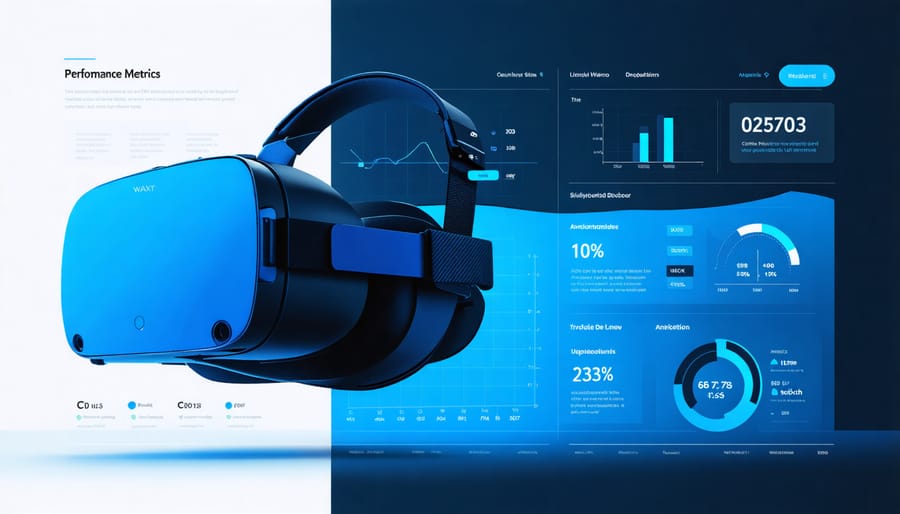
Key Performance Indicators in Virtual Environments
Immersion and Engagement Metrics
In today’s virtual and augmented reality environments, traditional engagement metrics must evolve to capture the unique aspects of immersive experiences. Understanding how users interact within these spaces requires specialized tracking methods and metrics that go beyond conventional analytics.
Key immersion metrics include dwell time in virtual environments, interaction depth (number and types of interactions with virtual objects), and viewport analysis (where users focus their attention). These measurements provide valuable insights into user behavior and the effectiveness of virtual marketing initiatives, including gamification strategies.
Heat mapping in virtual spaces tracks user movement patterns and interaction hotspots, helping marketers optimize placement of virtual assets and calls-to-action. Voice command analytics and gesture tracking provide additional layers of understanding user engagement, particularly in hands-free experiences.
To effectively measure immersion, consider these key metrics:
– Session duration and frequency
– Virtual object interaction rates
– Completion rates for virtual tasks
– Social interaction levels in shared spaces
– User movement patterns and navigation choices
Real-time tracking of these metrics enables marketers to make dynamic adjustments to virtual experiences, improving user engagement and conversion rates. When combined with traditional marketing analytics, these immersion metrics provide a comprehensive view of campaign performance across both physical and virtual touchpoints.
Remember to benchmark these metrics against business objectives and continuously refine virtual experiences based on user behavior data.
Conversion Tracking in VR/AR
Tracking conversions in virtual and augmented reality environments requires a specialized approach that differs from traditional web analytics. As more brands drive sales through AR, understanding user behavior and measuring success in these immersive spaces becomes crucial.
Key metrics to track include gaze duration, interaction points, and gesture completion rates. Set up virtual conversion funnels by defining specific user actions, such as product interactions, virtual try-ons, or completed purchases within the VR/AR environment. Implement event tracking for each meaningful interaction, from initial engagement to final conversion.
Use heat mapping tools designed for 3D spaces to visualize user movement patterns and identify potential friction points in the conversion path. Track drop-off rates at each stage of the virtual journey to optimize the experience. Consider implementing A/B testing for different virtual layouts, interaction methods, and call-to-action placements.
For accurate measurement, ensure your analytics setup captures both in-experience metrics and cross-platform conversions. Many users may explore products in VR/AR but complete purchases through traditional channels. Implement unique identifiers and cross-device tracking to maintain continuity in your conversion data.
Focus on micro-conversions specific to immersive environments, such as virtual product customization completion rates or social sharing of AR experiences. These indicators help build a comprehensive picture of user engagement and conversion potential in virtual spaces.
Real-Time Analytics and Decision Making
Dynamic Content Adaptation
Dynamic content adaptation leverages real-time analytics to create personalized, memorable brand experiences that resonate with individual users. By analyzing user behavior patterns, demographic data, and interaction metrics, businesses can automatically adjust virtual content to match visitor preferences and needs.
This adaptive approach uses machine learning algorithms to process incoming data streams and make instant adjustments to visual elements, messaging, and interactive features. For example, an e-commerce platform might modify product displays based on browsing history, while a virtual showroom could adjust lighting and layout according to user engagement patterns.
Key implementation strategies include:
– Real-time user behavior tracking
– Automated content optimization
– Personalized navigation paths
– Dynamic pricing adjustments
– Contextual recommendation systems
To maximize effectiveness, businesses should establish clear optimization goals, implement robust testing frameworks, and continuously monitor performance metrics. This ensures that content adaptations drive meaningful engagement while maintaining system performance and user experience quality.

Automated Response Systems
Automated response systems have revolutionized the way businesses handle VR/AR marketing campaigns by enabling real-time decision-making and personalization at scale. These AI-driven systems analyze user interactions within virtual environments to automatically adjust content, offers, and experiences based on behavioral patterns and engagement metrics.
Modern VR/AR platforms can now automatically segment audiences, trigger specific content sequences, and modify virtual experiences in real-time based on user responses. For example, when a customer shows increased interest in particular virtual products, the system can dynamically present related items or enhance product demonstrations without human intervention.
These systems excel at processing massive amounts of simultaneous user interactions, making split-second decisions about content delivery, and optimizing campaign performance through machine learning algorithms. By implementing automated response systems, marketers can ensure consistent engagement while reducing manual oversight.
Key benefits include reduced response times, improved personalization accuracy, and better resource allocation. However, successful implementation requires careful initial setup, regular monitoring of decision parameters, and occasional fine-tuning to maintain alignment with marketing objectives. Companies should start with basic automation rules and gradually expand complexity as they gather more user interaction data.
Privacy and Data Security in VR/AR Analytics
In the rapidly evolving world of VR and AR analytics, protecting user privacy while gathering meaningful data is paramount. Businesses must strike a delicate balance between collecting valuable insights and respecting user confidentiality. Here are essential practices to maintain this balance effectively.
First, implement data minimization principles by collecting only necessary information. Focus on aggregated behavioral data rather than personal identifiers. When tracking user movements and interactions in VR/AR environments, use anonymization techniques to strip away personally identifiable information (PII) before storage.
Create transparent data collection policies that clearly communicate what information you’re gathering and how it will be used. Make these policies easily accessible within your VR/AR applications and obtain explicit user consent before collecting any data. Consider implementing a tiered consent system that allows users to control the level of data they share.
Secure your data infrastructure using industry-standard encryption protocols for both data in transit and at rest. Regular security audits help identify and address potential vulnerabilities in your analytics systems. Consider using blockchain technology for enhanced data security and transparency in analytics tracking.
For location-based AR applications, implement geofencing protocols that limit data collection to specific areas and times. This approach helps prevent unauthorized tracking while still providing valuable insights about user behavior and engagement patterns.
Establish data retention policies that automatically purge unnecessary information after a specified period. This not only helps comply with privacy regulations but also reduces the risk of data breaches.
When working with third-party analytics providers, carefully review their security practices and ensure they align with your privacy standards. Create detailed data processing agreements that outline responsibilities and security requirements.
Regular staff training on privacy best practices and data handling procedures is essential. This includes understanding relevant regulations like GDPR and CCPA, and how they apply to VR/AR analytics.
Remember that privacy measures should be built into your analytics system from the ground up, not added as an afterthought. This “privacy by design” approach ensures sustainable and compliant data collection practices while maintaining the depth of insights needed for effective marketing analysis.
As we look to the future of marketing analytics in VR and AR environments, it’s clear that data-driven decision-making will become increasingly crucial for business success. The integration of advanced analytics tools with immersive technologies has opened new possibilities for understanding customer behavior and measuring campaign effectiveness in unprecedented ways.
The key takeaways from our exploration highlight the importance of real-time data collection, the value of behavioral insights in virtual environments, and the need for adaptive measurement frameworks. Businesses that successfully implement these analytics strategies will be better positioned to create more engaging experiences and achieve higher ROI from their VR/AR marketing initiatives.
Looking ahead, we can expect to see further developments in automated analytics tools specifically designed for virtual and augmented reality environments. Machine learning algorithms will become more sophisticated at interpreting user interactions, while privacy-compliant tracking methods will evolve to meet growing data protection requirements.
For marketing professionals and business owners, the path forward involves staying adaptable and embracing new measurement techniques as they emerge. Focus on building analytics frameworks that can scale with technological advances while maintaining a balance between data depth and actionable insights.
To succeed in this rapidly evolving landscape, organizations should invest in training their teams, establishing clear measurement protocols, and regularly reviewing their analytics strategies to ensure they align with business objectives and customer expectations.
Leave a Reply