Transform Your Website Project: A Proven Development Process That Actually Works

Transform your website from concept to reality through a proven, systematic development process that aligns business goals with user needs. While understanding the difference between web design vs development is crucial, success depends on executing each phase with precision and purpose.
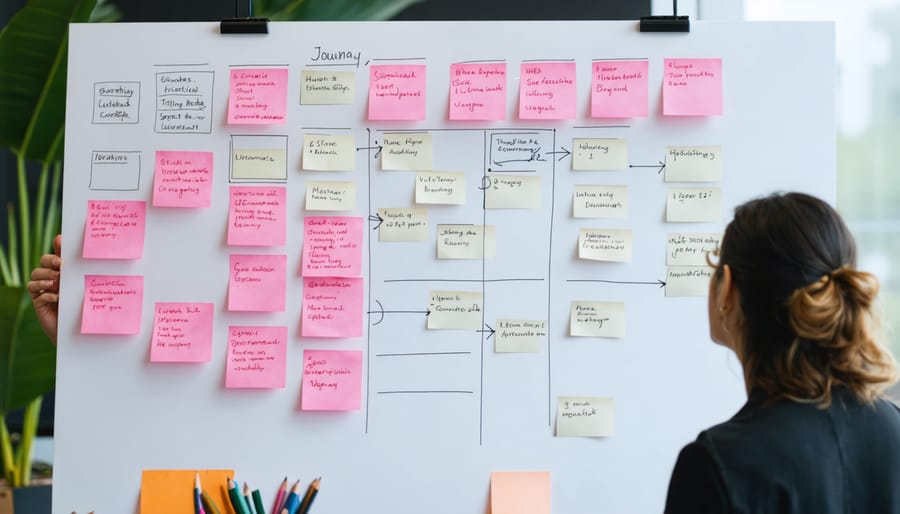
Modern web development demands a strategic approach: define clear project objectives, establish measurable KPIs, and create detailed user personas before touching a single line of code. Start with comprehensive discovery workshops to uncover unique business requirements, competitive advantages, and target audience behaviors. Map user journeys, wireframe key interactions, and prototype core functionalities to validate assumptions early.
This methodical process eliminates costly revisions, accelerates project timelines, and ensures delivery of websites that drive real business results. By embracing an iterative approach focused on continuous improvement and user feedback, organizations can launch powerful digital experiences that evolve with changing market demands and customer expectations.
Planning and Discovery Phase
Client Requirements Analysis
The foundation of any successful web design project lies in a thorough client requirements analysis. This crucial first step involves gathering detailed information about the client’s business objectives, target audience, and specific website needs through structured interviews and questionnaires.
Begin by scheduling an in-depth discovery meeting with key stakeholders to understand their vision, goals, and success metrics. Document essential information including the company’s unique selling proposition, competitor analysis, and desired functionality. Pay special attention to identifying both immediate needs and potential future requirements to ensure scalability.
Create a comprehensive requirements document that outlines:
– Business objectives and KPIs
– Target audience demographics and behaviors
– Required features and functionality
– Content requirements and management needs
– Technical specifications and constraints
– Budget and timeline expectations
Use collaborative tools to maintain clear communication channels with the client throughout this phase. Regular check-ins and feedback sessions help refine requirements and prevent misunderstandings. Consider implementing a requirements validation process where clients review and sign off on documented specifications before proceeding to the design phase.
Remember to prioritize requirements based on business impact and technical feasibility, creating a clear roadmap for the development process while managing client expectations effectively.
Project Scope Documentation
Project scope documentation serves as the foundation for successful web design development, outlining clear expectations and deliverables between clients and development teams. This crucial document typically includes detailed specifications about the website’s functionality, design requirements, content needs, and technical parameters.
Begin by defining the project’s objectives and key performance indicators (KPIs). Document specific features and functionalities required, such as e-commerce capabilities, contact forms, or user authentication systems. Include detailed information about target devices, browser compatibility requirements, and any third-party integrations needed.
Create a comprehensive timeline that breaks down the project into manageable phases, each with specific milestones and deadlines. This should account for client review periods, testing phases, and potential revision cycles. Consider dependencies between different project components and allocate resources accordingly.
Include budget considerations, listing both included services and potential additional costs. Clearly outline the roles and responsibilities of all stakeholders, including client obligations for content provision and approval processes. Document any technical constraints, hosting requirements, and maintenance plans post-launch.
Remember to keep the scope document flexible enough to accommodate minor changes while establishing clear boundaries for what constitutes a change request requiring additional resources or budget adjustments.
Design and Wireframing
User Experience Planning
User experience planning forms the backbone of an effective website, focusing on how visitors will interact with and navigate through your site. This phase begins with creating detailed user flows – visual representations of the paths users take to complete specific tasks on your website. These flows help identify potential bottlenecks and ensure a smooth journey from entry point to desired action.
Site architecture planning involves organizing your content in a logical, hierarchical structure that makes sense to both users and search engines. Start by listing all required pages and grouping them into main categories. Then, create a sitemap that shows how these pages connect and relate to each other. This structure should reflect your business goals while prioritizing user needs.
Consider implementing card sorting exercises with potential users to validate your navigation structure. This involves asking participants to organize content into categories that make sense to them, providing valuable insights into user expectations.
Key deliverables during this phase include:
– Detailed user flow diagrams
– Comprehensive sitemap
– Navigation structure
– Content hierarchy
– User journey maps
– Interaction models
Remember that effective user experience planning reduces development revisions later and ensures your website meets both business objectives and user needs. Regular stakeholder feedback during this phase helps align expectations and prevents costly adjustments during development.
Visual Design Development
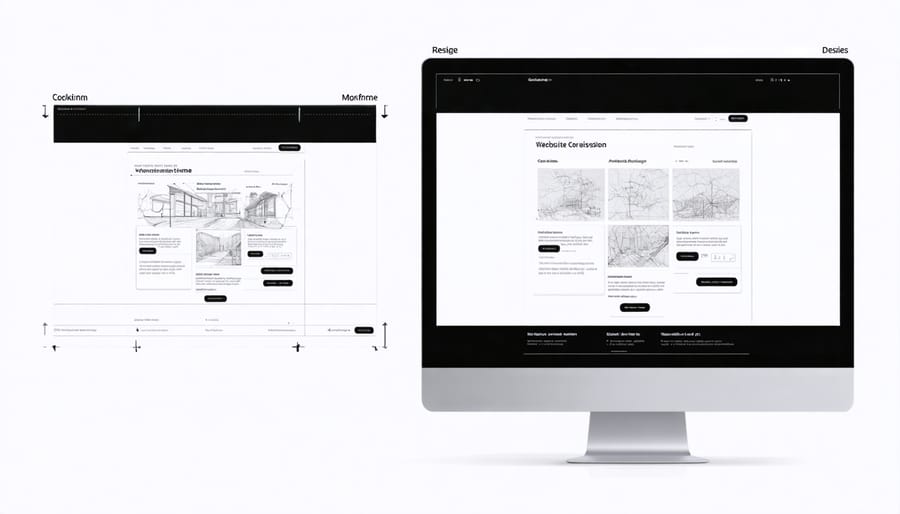
The visual design phase transforms wireframes into polished, branded mockups that showcase your website’s final appearance. Using industry-standard tools like Adobe XD or Figma, designers create high-fidelity mockups that incorporate your brand colors, typography, images, and other visual elements. This modern design process ensures that every visual element serves a purpose and enhances user experience.
During this stage, designers typically create multiple versions of key pages, presenting various design options for client review. These mockups include detailed elements such as hover states, animations, and responsive layouts for different screen sizes. The approval process usually involves structured feedback rounds, where clients can comment on specific design elements and request revisions.
To streamline client communication, many design teams use collaborative tools that allow real-time feedback and annotations directly on the mockups. This approach minimizes misunderstandings and speeds up the approval process. Once the client approves the final designs, they serve as the blueprint for the development team to build the actual website.
Remember to request feedback on crucial elements like brand consistency, visual hierarchy, and user interface components. This attention to detail during the visual design phase helps prevent costly changes during development and ensures the final website meets both aesthetic and functional requirements.
Development and Testing
Frontend Development
Frontend development transforms your website’s design into an interactive, user-friendly interface that visitors can engage with. During this phase, developers focus on creating responsive layouts that adapt seamlessly across different devices and screen sizes, ensuring optimal user experience for both desktop and mobile users.
The process begins with implementing the HTML structure, which serves as the foundation of your web pages. CSS styling is then applied to match your approved design mockups, including colors, typography, spacing, and visual elements. JavaScript functionality is integrated to add interactivity, animations, and dynamic content loading.
Responsive design implementation is crucial in today’s mobile-first world. Developers use flexible grids, fluid images, and media queries to ensure your website looks and functions perfectly on smartphones, tablets, and desktop computers. This includes testing breakpoints, adjusting navigation menus, and optimizing image displays for different screen sizes.
Throughout frontend development, special attention is paid to:
– Page load speed optimization
– Cross-browser compatibility
– Accessibility standards
– Interactive element functionality
– Form validation and user input handling
Regular testing and client feedback sessions are conducted to ensure the development aligns with your business objectives and user expectations. This iterative approach allows for quick adjustments and refinements before moving to the final testing phase.
Quality Assurance
Quality assurance is a critical phase that ensures your website functions flawlessly across all devices and platforms. This stage involves comprehensive testing procedures and systematic bug fixing to deliver a polished final product. Our approach combines automated testing tools with manual verification to catch both technical issues and user experience inconsistencies.
The testing process typically includes cross-browser compatibility checks, mobile responsiveness testing, and functionality verification of all interactive elements. We employ various website optimization techniques to ensure optimal performance and loading speeds. Special attention is given to form submissions, payment gateways, and crucial conversion points to prevent any potential revenue loss.
Our bug fixing protocol follows a structured approach:
1. Issue identification and documentation
2. Priority assessment based on impact
3. Systematic resolution and retesting
4. Client verification and approval
We maintain clear communication channels throughout this phase, providing regular status updates and detailed reports on resolved issues. A final quality assurance checklist ensures all project requirements are met before launch, including:
– Content accuracy and formatting
– Security measures implementation
– SEO elements verification
– Performance optimization
– Accessibility compliance
This methodical approach to quality assurance helps minimize post-launch issues and ensures a smooth transition to the live environment.
Launch and Maintenance
Pre-Launch Checklist
Before launching your website, conduct a thorough review using this comprehensive pre-launch checklist to ensure everything is functioning perfectly. Start by testing all forms, contact buttons, and call-to-action elements across different browsers and devices. Verify that all internal and external links are working correctly and pointing to their intended destinations.
Check that all content is properly formatted, free of spelling and grammatical errors, and optimized for search engines. Review meta descriptions, title tags, and image alt texts for SEO compliance. Ensure all images are compressed and loading quickly without compromising quality.
Run performance tests to verify page loading speeds and mobile responsiveness. Check that all integrations, including payment gateways, social media feeds, and third-party tools, are functioning as expected. Review your SSL certificate installation and ensure proper security measures are in place.
Finally, conduct a backup of all website files and databases. Create a staging environment for final testing before pushing changes to the live server. Have key stakeholders perform a final review to confirm that all requirements have been met and the website aligns with the original project objectives.
Post-Launch Support
A successful website requires ongoing attention and maintenance after launch to ensure optimal performance and user experience. We recommend implementing a comprehensive post-launch support strategy that includes regular security updates, performance monitoring, and content updates.
Establish a maintenance schedule that covers routine tasks such as security patches, plugin updates, and backup verification. Monitor your website’s performance using analytics tools to identify potential issues before they impact users. Regular speed tests and security scans help maintain your site’s health and protect against vulnerabilities.
Consider implementing a content update strategy to keep your website fresh and relevant. This might include blog posts, product updates, or seasonal content changes. Stay responsive to user feedback and make necessary adjustments to improve navigation and functionality.
Set up automated monitoring systems to alert you of any downtime or performance issues. We recommend scheduling quarterly reviews of your website’s performance metrics, user feedback, and business goals to ensure your site continues to meet your objectives and maintain its competitive edge.
Remember to maintain clear communication channels with your development team or support provider for quick resolution of any issues that arise.
Performance Monitoring
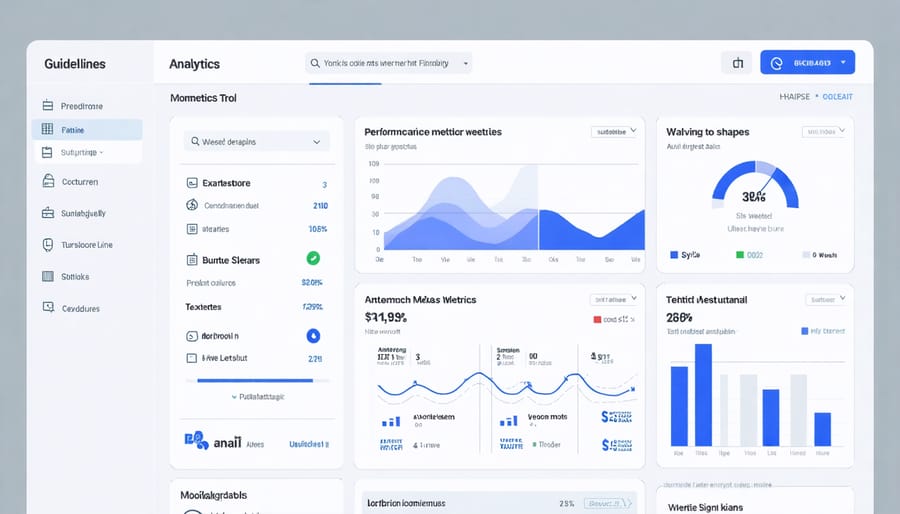
Performance monitoring is crucial for ensuring your website delivers optimal user experience and meets business objectives. Using tools like Google Analytics, PageSpeed Insights, and GTmetrix helps track essential metrics such as page load times, bounce rates, and user behavior patterns. These performance monitoring strategies provide valuable insights into areas that need improvement.
Regular monitoring should include checking server response times, mobile responsiveness, and conversion rates. Set up automated alerts for performance issues and conduct monthly audits to identify trends. Key metrics to track include:
– Page load speed across different devices
– Server uptime and reliability
– User engagement metrics
– Conversion funnel performance
– Mobile responsiveness scores
– Search engine rankings
Use heat mapping tools to understand how visitors interact with your site and identify potential bottlenecks. Implement A/B testing to optimize high-traffic pages and ensure your website maintains peak performance. Remember to document all performance issues and their resolutions for future reference and continuous improvement.
A well-structured web design development process is essential for creating successful websites that meet business objectives and user needs. By following a systematic approach, organizations can minimize risks, maintain project timelines, and deliver high-quality results while staying within budget.
Throughout this process, we’ve seen how each phase builds upon the previous one, from initial discovery and planning to the final launch and maintenance. The key to success lies in thorough research, careful planning, collaborative design, meticulous development, comprehensive testing, and strategic deployment. This structured methodology ensures that all stakeholders remain aligned and that project goals are consistently met.
Communication plays a vital role throughout the entire process. Regular client updates, team collaboration, and clear documentation help prevent misunderstandings and keep projects on track. Additionally, the iterative nature of modern web development allows for continuous improvement and adaptation based on user feedback and changing business needs.
Remember that while the process may seem complex, it’s designed to create efficiency and predictability in website creation. By investing time in each phase and following established best practices, you’ll be better positioned to create websites that not only look great but also deliver measurable business results.
Consider this process as a framework that can be customized to suit your specific project needs while maintaining the core principles that ensure consistent success in web development.
Leave a Reply