Don’t Let Legal Mistakes Kill Your Live Video Marketing
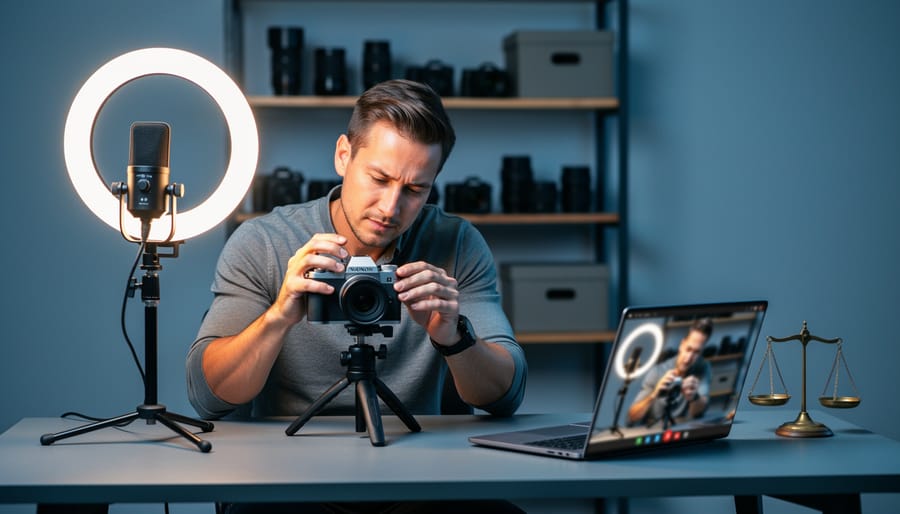
Verify your platform’s terms of service before going live, as each social network has distinct rules about commercial content, contests, and endorsements that could result in account suspension or content removal. Document explicit consent from every person who appears on camera by using digital release forms or verbal agreements recorded at the start of your stream—this protects you from privacy claims and right of publicity lawsuits that can emerge months after broadcast.
Implement FTC disclosure requirements by clearly stating sponsored relationships within the first 30 seconds of your live video and maintaining visible text overlays throughout paid promotions, ensuring compliance with federal advertising regulations. Create a pre-broadcast checklist that includes copyright verification for all music, graphics, and third-party content you plan to use, since copyright strikes can permanently damage your channel’s standing and expose you to costly infringement claims.
Establish clear data collection protocols if you’re capturing viewer information through live video interactions, forms, or chat features, as privacy laws like GDPR and CCPA require transparent disclosure about how you use personal data. When you optimize your live streams for discovery, integrate compliance checks into your workflow rather than treating legal requirements as an afterthought—this approach prevents disruptions to your marketing momentum and builds trust with your audience.
Set up automated recording systems for all live broadcasts to maintain an archive that serves as evidence of compliance and provides protection if disputes arise about what was actually said or shown during your stream.
Why Live Video Marketing Demands Extra Legal Attention
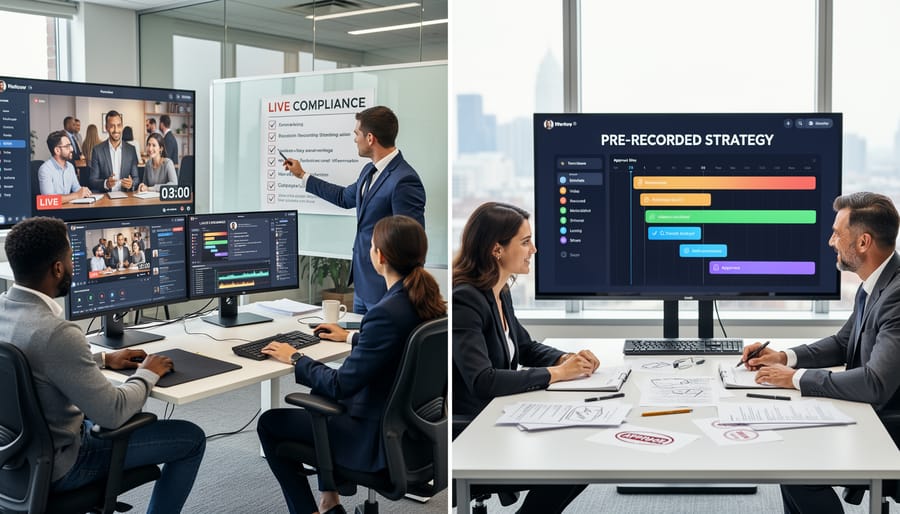
Live video marketing operates in fundamentally different territory than pre-recorded content, creating legal challenges that catch many businesses off guard. The most significant difference is simple: you can’t take it back. Once something airs during a live broadcast, it’s out there, potentially captured by viewers through screenshots or recordings before you can react.
This real-time nature eliminates your safety net. With pre-recorded videos, you have multiple opportunities to review content, consult legal advisors, and make edits before publication. Live streaming removes these checkpoints entirely. A single unscripted moment can expose your business to copyright claims, privacy violations, or false advertising accusations within seconds.
Regulatory bodies have taken notice. The Federal Trade Commission scrutinizes live video more intensely precisely because of its perceived authenticity. When influencers or brand representatives make claims during live streams, regulators view these statements as particularly influential on consumer behavior. The spontaneous, conversational format doesn’t excuse you from compliance requirements—it actually increases expectations for transparency.
Platform algorithms compound these risks. Social media networks prioritize live content, meaning your legal missteps reach larger audiences faster than traditional posts. A compliance violation during a live stream can generate thousands of views before you even realize there’s a problem.
The interactive element adds another layer of complexity. Viewer comments, questions, and reactions during live broadcasts can introduce unexpected legal issues. Someone might post copyrighted material in the chat, or your team might inadvertently disclose confidential information while responding to questions in real time.
Understanding these vulnerabilities isn’t about avoiding live video marketing—it’s about approaching it with appropriate safeguards. Smart businesses recognize that the engagement benefits of live streaming require proportional investment in compliance preparation and risk management.
Privacy Laws and Consent Requirements You Can’t Ignore
When You Need Explicit Consent
Understanding when explicit consent is required protects your business from legal complications. In two-party consent states like California, Florida, and Illinois, you must obtain permission from all participants before recording conversations or interactions during live streams. This applies even if only one person is visible on camera while others are speaking.
If your live video features customer testimonials, interviews, or behind-the-scenes footage with employees, always secure written consent beforehand. Create a simple consent form that outlines how you’ll use the footage, where it will be distributed, and for how long. This documentation becomes essential if disputes arise later.
International viewers add another layer of complexity. GDPR regulations in the European Union require explicit consent for collecting and processing personal data, including video footage. If you’re targeting or expect international audiences, implement clear opt-in mechanisms and provide transparent privacy notices before going live.
Children under 13 require special attention under COPPA regulations. Never feature minors in your marketing videos without verifiable parental consent. When hosting live events or store demonstrations, establish clear boundaries and obtain proper authorization forms from guardians before any child appears on camera.
Creating Compliant Disclosure Statements
Creating effective disclosure statements for live video requires balancing legal compliance with viewer experience. Your disclosures must be clear, conspicuous, and accessible throughout your broadcast.
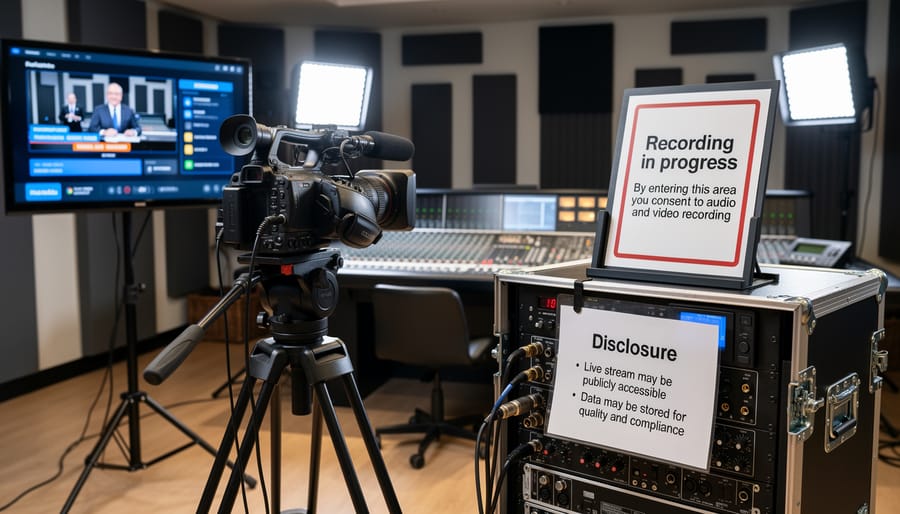
Start with a standardized disclosure template that covers essential privacy elements. Include statements about data collection, recording practices, viewer consent, and how you’ll use captured information. For example: “This live stream is being recorded. By participating, you consent to being recorded and acknowledge our privacy policy available at [URL].” Display this prominently at the beginning of each broadcast and keep it visible for at least 30 seconds.
Position your disclosures strategically within the video frame. Place text overlays in the lower third of the screen where they won’t obstruct key content but remain easily readable. Use high-contrast colors and legible font sizes that work across all devices, from smartphones to desktop screens.
Implement automated disclosure processes to ensure consistency. Configure your streaming software to display standard privacy notices automatically when you go live. This eliminates manual errors and ensures every broadcast maintains compliance from start to finish.
For interactive sessions, verbally acknowledge privacy terms during your introduction. State clearly that the session is recorded and participants may appear in future marketing materials. Keep a timestamped log of these verbal disclosures as documentation.
Store your disclosure templates in an accessible location for quick updates when regulations change. Review and refresh your statements quarterly to reflect current privacy laws and platform requirements. This proactive approach protects your business while maintaining transparent communication with your audience.
Copyright and Intellectual Property Protection
Music and Background Content Rights
Background music, images, and video clips can significantly enhance your live streams, but using copyrighted content without permission exposes your business to serious legal risks. Copyright infringement claims can result in takedown notices, platform penalties, and costly lawsuits.
Every piece of music, image, or video clip is automatically protected by copyright. Simply finding content online doesn’t mean you can use it freely. Even short clips require proper licensing. Many businesses mistakenly believe that crediting the creator is sufficient, but attribution alone doesn’t grant legal permission.
For music, consider royalty-free licensing platforms like Epidemic Sound, Artlist, or AudioJungle. These services offer affordable subscriptions specifically designed for commercial use. Alternatively, Creative Commons licensed music may work if you comply with the specific license terms and usage restrictions.
Stock footage and image libraries such as Shutterstock, Pexels, or Unsplash provide visual content with clear licensing terms. Always read the license agreement carefully, as some restrict commercial use or require attribution.
Platform-native music libraries offered by Facebook, Instagram, and YouTube provide another safe option, though availability varies by stream type and monetization status.
Create a simple tracking system documenting every asset you use, including license details and expiration dates. This automated approach ensures compliance while protecting your business from unexpected legal challenges during live broadcasts.
Protecting Your Own Live Video Assets
Protecting your original live video content starts with establishing your copyright. In most jurisdictions, copyright protection is automatic upon creation, but registering your work with your national copyright office provides stronger legal protection and enables you to pursue statutory damages if infringement occurs.
Create a paper trail by documenting your video production process. Save timestamps, production files, scripts, and behind-the-scenes materials that prove you’re the original creator. Add copyright notices to your video descriptions and overlay watermarks on your content to deter unauthorized use.
Monitor where your content appears online using reverse image search tools and specialized video monitoring services. Set up automated Google Alerts for your brand name and video titles to catch unauthorized republishing quickly. When you discover infringement, act promptly by sending DMCA takedown notices to platforms hosting your stolen content.
If you’re incorporating user-generated content into your live streams, secure written permission from contributors and clarify who retains copyright ownership. Include terms in your submission guidelines that grant you necessary usage rights.
Platform-specific tools can help enforce your rights. YouTube’s Content ID system and Facebook’s Rights Manager automatically detect and manage unauthorized uses of your content. Configure these tools to either monetize, track, or block infringing videos based on your business objectives. Consider consulting with an intellectual property attorney to develop a comprehensive content protection strategy.
FTC Disclosure Requirements for Promotional Content
The Federal Trade Commission requires clear and conspicuous disclosure of material connections between endorsers and brands in all video content, including live broadcasts. This applies whenever you receive compensation, free products, or any benefit in exchange for discussing a product or service on camera.
Your disclosures must appear both visually and verbally during live streams. Place text overlays directly on the video screen using phrases like “Paid Partnership,” “Sponsored,” or “Ad” in a font size and color that viewers can easily read on mobile devices. Audio disclosures should occur at the beginning of the broadcast and whenever you mention the sponsored product, not buried in the description box where viewers might miss them.
For shoppable live streams featuring affiliate links, disclose your commission relationship before directing viewers to purchase links. A simple statement like “I earn a commission when you purchase through my links” satisfies this requirement. This disclosure must remain visible throughout product demonstrations and purchase discussions.
Implement these practical strategies to maintain compliance across your live video campaigns. Create disclosure templates as part of your broadcast checklist, ensuring consistency across all streams. Train every team member who appears on camera about FTC requirements and appropriate disclosure language. Set reminders to verbally disclose partnerships every 10-15 minutes during longer broadcasts, as new viewers continuously join live streams.
Document all sponsorship agreements and keep records of how disclosures appeared in your broadcasts. Save video recordings with visible timestamps showing when and how you disclosed material connections. This documentation protects your business if questions arise about compliance.
Avoid ambiguous hashtags like “collab” or placing disclosures where platform features might hide them. The FTC evaluates disclosure effectiveness from a typical consumer’s perspective, meaning your audience shouldn’t need to click, scroll, or search to find material connection information. When in doubt, make your disclosure more prominent rather than less visible.
Platform-Specific Terms of Service and Restrictions
Each major platform maintains distinct requirements that affect how you conduct live video marketing. Understanding these differences protects your business from account suspension and content removal.
Facebook Live enforces strict commercial content policies. Your broadcasts must clearly indicate sponsored content through platform tools, and you cannot include pre-recorded video segments exceeding four hours in 24-hour periods. Facebook’s Rights Manager automatically scans for copyright violations, so ensure you have proper licenses for all music and visual content. The platform prohibits misleading health claims and requires prior approval for financial services promotions.
YouTube Live demands adherence to advertiser-friendly content guidelines if you plan to monetize streams. The platform’s Content ID system automatically flags copyrighted material, often muting audio or blocking videos entirely. You must enable appropriate age restrictions for mature content and cannot promise giveaways without clear official rules. YouTube also requires disclosure of paid promotions through built-in tools, not just verbal mentions.
Instagram Live limits commercial use more restrictively than other platforms. You cannot save and repurpose Lives containing branded content without proper partnership tags enabled before streaming. Instagram’s automated systems flag repetitive content and promotional language, potentially limiting your reach. The platform prohibits direct sales pitches during Lives unless you use approved Shopping features.
LinkedIn Live maintains the strictest professional standards, requiring pre-approval for broadcasting access. Content must provide genuine professional value rather than direct sales pitches. LinkedIn’s review team manually evaluates reported violations, and infractions can result in permanent feature removal.
Implementing multi-platform streaming requires understanding these overlapping requirements. Create a compliance checklist covering the strictest requirements across all platforms you use. Many businesses utilize automated compliance tools like Loom for content scanning or StreamYard for built-in FTC disclosure overlays. These solutions reduce manual oversight while maintaining consistent compliance across simultaneous broadcasts.
Document your platform-specific approval processes and maintain backup content plans for flagged material. This preparation prevents disrupted campaigns and maintains professional credibility with your audience.

Building a Compliant Live Video Marketing Process
Your Pre-Stream Compliance Checklist
Before you press that “Go Live” button, run through this systematic checklist to ensure your broadcast stays compliant. Start by verifying you have written consent from anyone appearing on camera, including employees, customers, or bystanders. If you’re featuring minors, confirm you have parental permission documented.
Next, review your script or talking points to ensure all product claims are truthful and substantiated. Remove any superlatives like “best” or “guaranteed” unless you can back them with evidence. Double-check that your affiliate disclosures are clearly visible and stated verbally within the first few minutes of your stream.
Confirm your music and graphics are either original, licensed, or royalty-free. A quick audit of your background visuals can prevent costly copyright strikes. Review the platform’s terms of service one final time, particularly regarding prohibited content and advertising restrictions.
Set up your automated disclosure overlays to appear at regular intervals throughout your stream. Test your moderation tools and filters to ensure inappropriate comments are automatically flagged or removed. Finally, designate a team member to monitor the live chat for any compliance issues that require immediate attention.
Document this entire process in a simple template you can replicate for every live session, transforming compliance from a stressful scramble into a streamlined routine.
Managing Risk During the Broadcast
Live video broadcasts require immediate response protocols to protect your business from legal exposure. Establish a moderation team with clear escalation procedures before going live. Designate at least one person to monitor comments and viewer interactions exclusively, separate from your presenter duties.
Implement automated moderation tools that filter profanity, spam, and inappropriate content in real-time. Most streaming platforms offer built-in filters, but third-party solutions provide more robust protection. Set up keyword blocklists that automatically flag or remove comments containing sensitive terms related to your industry.
Create a kill-switch protocol that allows you to end the broadcast immediately if serious legal issues arise. Train your team on scenarios that warrant immediate termination, such as accidental disclosure of confidential information, copyright violations appearing on screen, or unauthorized individuals entering the frame.
Use real-time analytics to monitor viewer behavior and engagement patterns that might signal problems. Unusual spikes in certain comments or sudden traffic surges can indicate coordinated attacks or unauthorized content sharing.
Maintain a broadcast delay of 10-30 seconds when possible. This buffer gives your moderation team precious seconds to catch issues before they reach viewers. Document all moderation decisions and incidents during the broadcast for post-event review and compliance verification.
Legal compliance isn’t a barrier to your video marketing success—it’s the foundation that protects and enables sustainable growth. When you establish proper compliance practices from the start, you eliminate the risk of costly violations, platform penalties, and reputation damage that can derail even the most promising campaigns. More importantly, compliant marketing builds trust with your audience, creating stronger client relationships that translate directly to business results.
The good news is that compliance doesn’t require perfection on day one. Start with one immediate improvement today. Review your current live video disclosures and ensure they’re clearly visible and properly worded. Update your privacy policy to reflect your video data collection practices. Add copyright checks to your content creation workflow. Each small step reduces your risk and moves you closer to fully compliant operations.
For straightforward compliance issues, the frameworks and checklists in this guide provide everything you need to get started. However, if you’re dealing with complex situations—such as multi-jurisdictional campaigns, healthcare or financial services marketing, or significant influencer partnerships—professional legal guidance becomes invaluable. An attorney specializing in digital marketing can review your specific circumstances and provide tailored advice that protects your business while maximizing your marketing effectiveness.
Don’t let compliance concerns stop you from leveraging live video’s powerful engagement potential. Take action today, implement automated compliance processes where possible, and build a marketing operation that grows confidently within legal boundaries.
Leave a Reply