Edge Computing and 5G: The Game-Changer for Modern Media Platforms

The convergence of edge computing and 5G technology is revolutionizing how businesses process, analyze, and deliver data in real-time. By moving computational power closer to data sources, organizations can slash latency from seconds to milliseconds while reducing bandwidth costs by up to 30%. This powerful combination enables everything from autonomous vehicles and smart manufacturing to augmented reality experiences and IoT deployments at unprecedented scales.
For business leaders, the edge computing-5G partnership represents a strategic imperative that’s reshaping competitive advantages across industries. Companies leveraging these technologies are seeing dramatic improvements in operational efficiency, customer experience, and innovation capabilities. With global edge computing market value projected to reach $87.3 billion by 2026, understanding and implementing these technologies is no longer optional for organizations seeking to maintain their competitive edge.
This technological shift is particularly critical for data-intensive applications where speed and reliability are non-negotiable. Whether you’re running a manufacturing facility, managing a retail network, or developing next-generation applications, edge computing and 5G provide the foundation for future-proof digital transformation.
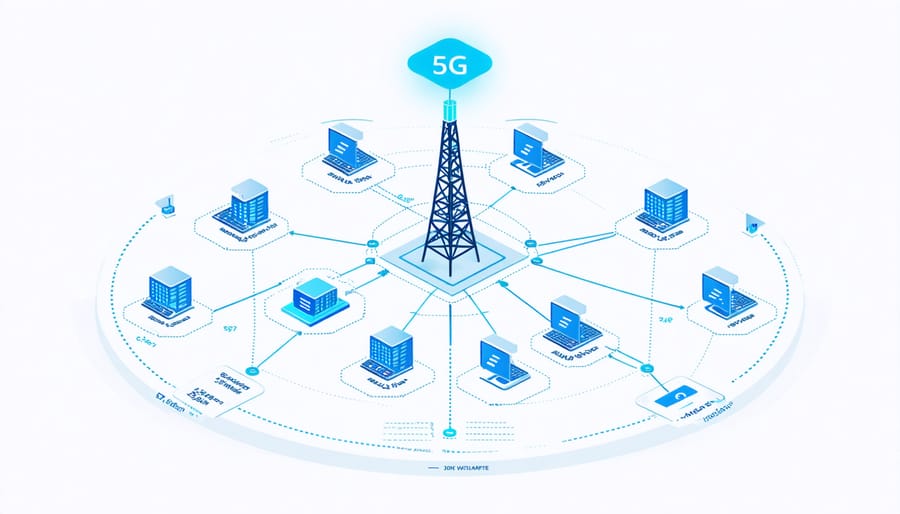
How Edge Computing Supercharges 5G Media Delivery
Real-Time Content Processing
Edge computing dramatically transforms how businesses process and deliver content in real-time by bringing computational power closer to end-users. When combined with 5G technology capabilities, this infrastructure enables near-instantaneous content processing and delivery, reducing latency to mere milliseconds.
For businesses streaming video content or running interactive applications, this means seamless user experiences without buffering or delays. Instead of routing data to distant centralized servers, edge computing processes information at nearby nodes, enabling immediate responses to user actions and real-time content adjustments.
This architecture is particularly valuable for applications requiring split-second decisions, such as autonomous vehicles, augmented reality experiences, and live video streaming. Marketing campaigns can now deliver personalized content instantly, adapting to user behavior as it happens. Content delivery networks (CDNs) leveraging edge computing can automatically optimize media formats, adjust streaming quality, and cache popular content locally, ensuring optimal performance even during peak usage periods.
The result is a more responsive, efficient content delivery system that maintains quality while reducing bandwidth costs and server load.
Bandwidth Optimization
Edge computing significantly enhances bandwidth management in 5G networks by processing data closer to its source, reducing the strain on network resources. This optimization happens through intelligent data routing and filtering, ensuring only necessary information travels across the network. For businesses, this means faster response times and reduced operational costs.
By implementing edge computing solutions, organizations can prioritize critical data transmission while filtering out redundant information at the source. For example, a manufacturing facility can process machine sensor data locally, sending only relevant alerts and summaries to the cloud, rather than streaming raw data continuously.
The bandwidth benefits are particularly noticeable in high-traffic scenarios. When multiple devices connect to a 5G network simultaneously, edge computing helps maintain consistent performance by distributing the processing load across local nodes. This approach not only reduces latency but also cuts down on bandwidth costs, as businesses pay only for essential data transmission.
For optimal results, companies should identify which applications require real-time processing and implement edge computing solutions strategically at these points. This targeted approach ensures maximum bandwidth efficiency while maintaining service quality.
Business Benefits for Media Companies
Cost Efficiency
Edge computing combined with 5G technology offers significant cost advantages for businesses through optimized resource allocation and reduced operational expenses. By processing data closer to its source, organizations can minimize bandwidth costs associated with transmitting large volumes of data to centralized cloud servers.
The reduction in latency leads to faster processing times, which directly translates to lower computing costs and improved resource utilization. Businesses can expect to see up to 30% reduction in cloud storage costs as edge computing allows for more selective data transmission and storage.
Energy consumption also decreases significantly as edge computing reduces the need for constant data center processing. This efficiency is particularly notable in IoT deployments, where smart devices can process data locally, leading to reduced power consumption and extended device lifespans.
Furthermore, the deployment of edge computing infrastructure alongside 5G networks enables businesses to scale their operations more cost-effectively. Rather than investing in extensive centralized infrastructure, companies can implement smaller, distributed computing nodes as needed, resulting in better capital expenditure management.
Maintenance costs are also reduced through automated monitoring and predictive maintenance capabilities, ensuring optimal performance while minimizing downtime and service interruptions.
Enhanced User Experience
The convergence of edge computing and 5G technology significantly enhances user experience across digital platforms, leading to measurable improvements in customer satisfaction and engagement metrics. Through effective digital platform optimization, businesses can leverage these technologies to deliver faster, more responsive services to their customers.
Real-world data shows that organizations implementing edge computing with 5G infrastructure experience up to 60% reduction in application latency and a 40% increase in user engagement rates. This translates to higher customer satisfaction scores, longer session durations, and improved conversion rates across digital touchpoints.
Key benefits include near-instantaneous load times for content-heavy applications, seamless video streaming without buffering, and real-time interactive features that maintain consistent performance even during peak usage periods. For businesses operating in competitive markets, these improvements can lead to significant advantages in customer retention and brand loyalty.
Mobile applications particularly benefit from this technological combination, showing marked improvements in user satisfaction metrics, including a 45% decrease in app abandonment rates and a 30% increase in average session duration. These improvements directly contribute to higher customer lifetime value and enhanced brand perception.

Implementation Strategies for Businesses
Technical Requirements
To effectively implement edge computing with 5G technology, organizations need to establish specific technical infrastructure components. The foundation begins with a robust 5G infrastructure deployment, including strategically placed small cells and macro base stations to ensure comprehensive coverage.
Essential hardware requirements include edge servers, which should be positioned close to data sources and end-users. These servers need sufficient processing power and storage capacity to handle real-time data processing. Organizations should plan for both on-premises and cloud-based edge nodes to create a flexible hybrid architecture.
Network requirements encompass high-bandwidth connections, ultra-low latency capabilities, and reliable backhaul infrastructure. Security components must include advanced firewalls, encryption protocols, and identity management systems to protect data at the edge.
Software requirements include:
– Edge computing platforms and management tools
– Virtualization software for resource optimization
– Container orchestration systems
– Real-time analytics capabilities
– Network slicing management software
Organizations should also consider implementing redundancy measures and failover systems to ensure business continuity. Additionally, monitoring tools and management platforms are necessary to oversee the entire edge computing ecosystem effectively.
These technical requirements should be scalable to accommodate future growth and adaptable to emerging technologies and business needs.

Integration Best Practices
To successfully integrate edge computing with 5G infrastructure, follow these proven implementation steps while maintaining operational efficiency:
Start by conducting a thorough assessment of your current network infrastructure and identifying specific use cases that would benefit from edge computing. This evaluation should include analyzing data processing requirements, latency needs, and bandwidth constraints.
Develop a clear deployment strategy that prioritizes:
– Network segmentation and security protocols
– Hardware and software compatibility
– Resource allocation and scaling capabilities
– Performance monitoring systems
When implementing the integration:
1. Begin with a small-scale pilot project to test functionality
2. Establish robust security measures at every edge point
3. Deploy edge nodes strategically based on user concentration
4. Implement automated monitoring and management tools
5. Ensure redundancy and failover systems are in place
Partner with experienced vendors who understand both edge computing and 5G technologies. Ensure your team receives proper training on new systems and establish clear protocols for maintenance and updates.
Regular performance assessments are crucial. Monitor key metrics such as:
– Latency reduction
– Bandwidth optimization
– Processing efficiency
– System reliability
– Energy consumption
Finally, maintain flexibility in your implementation approach. As edge computing and 5G technologies evolve, your infrastructure should be adaptable enough to accommodate new capabilities and requirements while ensuring consistent service delivery.
Future-Proofing Your Media Platform
To stay competitive in today’s rapidly evolving digital landscape, businesses must prepare their media platforms for the convergence of edge computing and 5G technologies. Start by conducting a thorough assessment of your current infrastructure and identifying potential bottlenecks that could hinder future scaling.
Invest in modular architecture that allows for easy updates and expansion. This approach enables you to integrate new edge computing capabilities without overhauling your entire system. Consider implementing containerization solutions that facilitate seamless deployment across different edge locations while maintaining consistent performance.
Data management will be crucial. Develop a comprehensive strategy that addresses both real-time processing needs and long-term storage requirements. Include provisions for data security and compliance, particularly as regulations around data privacy continue to evolve.
Partner with providers who demonstrate a clear roadmap for 5G and edge computing integration. Look for vendors offering flexible subscription models that allow you to scale resources based on demand. This helps optimize costs while ensuring access to the latest technologies.
Train your team to handle the new technological landscape. Focus on developing skills in areas such as edge analytics, network optimization, and security protocols. Create documentation and standard operating procedures that can evolve with your platform.
Finally, establish clear metrics for measuring performance improvements and ROI. Monitor factors like latency reduction, bandwidth usage, and user engagement to validate your investment and guide future upgrades. Regular assessment of these metrics will help you stay ahead of market demands and maintain a competitive edge.
Edge computing and 5G technology are transforming how businesses operate in the digital landscape. By leveraging these technologies together, organizations can achieve faster data processing, enhanced security, and improved customer experiences. The key to successful implementation lies in starting small, identifying specific use cases, and gradually scaling operations based on business needs and ROI.
To get started, assess your current infrastructure and determine which processes would benefit most from edge computing and 5G integration. Partner with experienced vendors who understand your industry requirements and can provide tailored solutions. Remember to prioritize security measures and ensure compliance with relevant regulations.
Moving forward, stay informed about emerging trends and continue to evaluate new opportunities for optimization. The combination of edge computing and 5G will remain crucial for businesses aiming to maintain competitive advantage in an increasingly connected world.
Leave a Reply