Perfect Email Timing: Send Less, Engage More With Your Subscribers

Email frequency can make or break your marketing success. Studies show that 69% of subscribers unsubscribe due to receiving too many emails, while businesses that optimize their sending frequency see up to 40% higher engagement rates.
Strike the perfect balance between staying top-of-mind and avoiding inbox fatigue. Smart email frequency optimization starts with understanding your audience’s behavior patterns and leveraging data-driven insights to determine the optimal sending schedule. Whether you’re managing a newsletter, promotional campaigns, or automated sequences, the right timing and cadence directly impact open rates, click-through rates, and ultimately, your bottom line.
Modern email marketing demands a sophisticated approach to frequency management. By combining audience segmentation, A/B testing, and engagement metrics, businesses can develop a dynamic sending strategy that adapts to subscriber preferences while maximizing ROI. The key lies not just in how often you send emails, but in delivering value-packed content that your audience eagerly anticipates.
This guide explores proven strategies for determining the ideal email frequency for your business, backed by industry research and real-world case studies. Learn how to craft a sending schedule that keeps your subscribers engaged without overwhelming their inboxes.
The Real Cost of Over-Emailing Your Subscribers
Unsubscribe Rates and Brand Fatigue
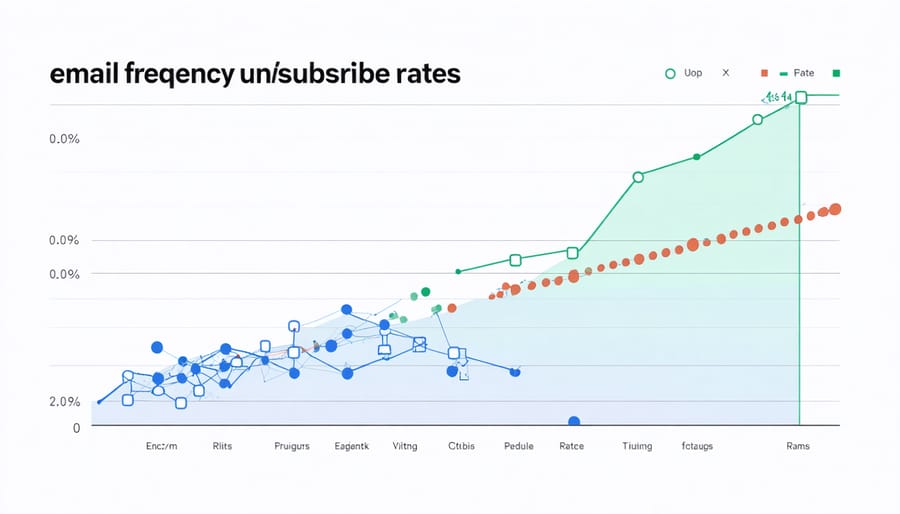
Recent studies show a direct correlation between email frequency and unsubscribe rates. According to industry data, sending more than one email per day can increase unsubscribe rates by up to 27%. When businesses bombard subscribers with daily messages, they risk creating brand fatigue – a phenomenon where customers become overwhelmed and disengaged with your communications.
The sweet spot for most businesses lies between 2-4 emails per week. Companies that maintain this frequency typically see unsubscribe rates below 0.5%, while those sending daily emails often experience rates exceeding 1%. However, these numbers can vary significantly based on industry and audience engagement levels.
Brand fatigue manifests in several ways: declining open rates, reduced click-through rates, and ultimately, higher unsubscribe rates. Marketing data reveals that subscribers who receive too many emails are 45% more likely to mark messages as spam, even if they initially opted in to receive communications.
To combat brand fatigue, implement engagement-based segmentation and monitor key metrics like unsubscribe rates, spam complaints, and open rates. This data-driven approach helps maintain healthy subscriber relationships while maximizing email marketing effectiveness.
Impact on Email Deliverability
Email frequency directly impacts your sender reputation and inbox placement rates. When you send too many emails in a short period, internet service providers (ISPs) may flag your behavior as suspicious, potentially marking your messages as spam. This is particularly true if your sudden increase in email volume coincides with lower engagement rates.
Maintaining a consistent sending schedule helps establish a positive sending reputation with ISPs. They learn to recognize your regular patterns, which can improve deliverability rates. However, sudden spikes or irregular sending patterns can trigger spam filters and damage your sender score.
Engagement metrics also play a crucial role. If recipients regularly open and interact with your emails, ISPs are more likely to continue delivering your messages to the inbox. Conversely, when you send too frequently and engagement drops, it signals to ISPs that your content may be unwanted, leading to more messages being filtered to spam folders.
To protect your deliverability, monitor bounce rates, spam complaints, and unsubscribe rates. If these metrics increase with higher sending frequency, it’s a clear signal to adjust your email cadence downward.
Finding Your Optimal Email Frequency
Audience Segmentation and Preferences
Effective email marketing starts with understanding your audience through detailed subscriber behavior analysis. Begin by dividing your email list into distinct segments based on key factors such as purchase history, engagement levels, and demographic data.
Consider creating primary segments based on interaction frequency: highly engaged subscribers who open most emails, moderately engaged users who open occasionally, and low-engagement subscribers who rarely interact. This classification helps determine appropriate email frequencies for each group.
Track and analyze engagement patterns across different subscriber segments. Monitor metrics like:
– Open rates across different times and days
– Click-through rates on various content types
– Time spent reading emails
– Preferred email formats
– Purchase behavior following email communications
Use automated tools to track these metrics and adjust sending frequencies accordingly. For instance, highly engaged subscribers might welcome daily updates, while monthly communications might be more appropriate for less active users.
Remember to factor in subscriber preferences explicitly stated through preference centers or surveys. Allow subscribers to choose their preferred frequency and content types, demonstrating respect for their inbox while improving engagement rates.
Regularly review and update these segments as subscriber behaviors evolve. This dynamic approach ensures your email frequency remains aligned with audience expectations and maximizes engagement across all subscriber groups.
Industry Benchmarks and Best Practices
Email frequency benchmarks vary significantly across industries, but research and market data provide valuable insights for optimizing your sending schedule. The retail and e-commerce sector typically sees success with 2-3 emails per week, with increased frequency during sales events and holidays. B2B companies generally maintain a more conservative approach, sending 1-2 emails per week to maintain professional relationships without overwhelming busy executives.
For SaaS companies, a hybrid approach works best: 1-2 product updates or feature announcements monthly, combined with weekly educational content. Media and publishing companies can sustain daily newsletters due to their content-heavy nature, while professional services firms typically limit their communications to 2-4 times per month.
Best practices suggest starting conservative and scaling up based on engagement metrics. A common approach is:
– Welcome series: 2-3 emails in the first week
– Regular newsletters: Weekly or bi-weekly
– Promotional content: 1-2 times per month
– Transactional emails: As needed
– Re-engagement campaigns: Monthly for inactive subscribers
Industries with longer sales cycles, such as real estate or consulting, benefit from lower frequencies (1-2 times per month) but with more personalized content. Seasonal businesses should adjust their frequency based on peak periods, potentially increasing emails during high season and reducing during off-peak times.
Remember that these benchmarks serve as starting points. Your specific audience engagement, content quality, and business goals should ultimately drive your email frequency decisions.
Automated Email Frequency Management

Smart Scheduling Tools
Modern email marketing platforms offer sophisticated scheduling tools that take the guesswork out of timing your email campaigns. These tools leverage data analytics and machine learning to determine the optimal send times for your audience. By analyzing recipient behavior patterns, email automation triggers can be set up to deliver messages when subscribers are most likely to engage.
Leading platforms like Mailchimp, HubSpot, and Constant Contact provide built-in send-time optimization features that automatically adjust delivery times based on past engagement metrics. These tools analyze factors such as open rates, click-through rates, and conversion data across different time zones and audience segments.
Key features to look for in scheduling tools include:
– A/B testing capabilities for send times
– Time zone intelligence
– Engagement-based scheduling
– Campaign calendar integration
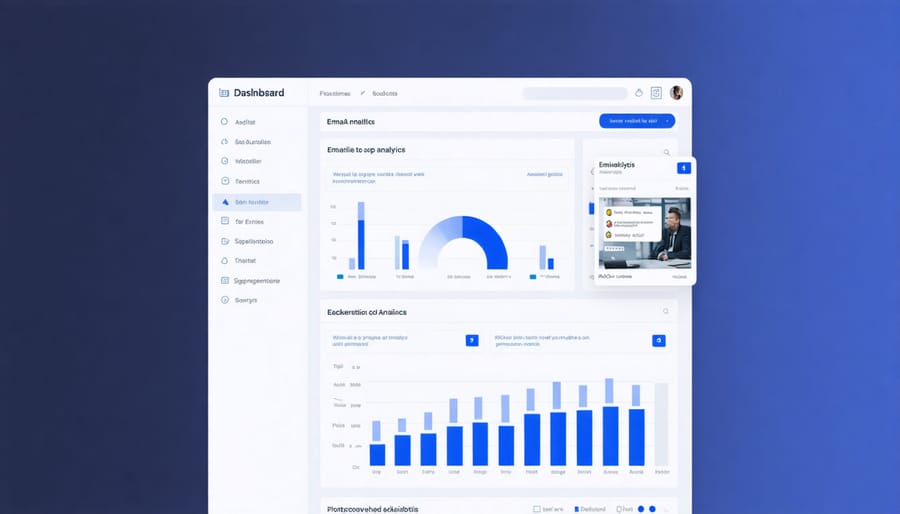
– Performance analytics dashboards
Most importantly, these tools allow you to maintain consistent communication while respecting your audience’s preferences. They help prevent email fatigue by spacing out your messages appropriately and can automatically pause campaigns when engagement metrics indicate potential subscriber burnout. This data-driven approach ensures your email frequency remains optimal while maximizing the impact of each message.
Engagement-Based Sending
Engagement-based sending revolutionizes email frequency management by automatically adjusting how often subscribers receive your emails based on their interaction patterns. This data-driven approach ensures that highly engaged subscribers receive more frequent communications while less active ones receive fewer emails, reducing the risk of fatigue and unsubscribes.
To implement engagement-based sending, start by segmenting your audience according to their engagement levels. Track key metrics such as open rates, click-through rates, and conversion activities. Create rules that automatically adjust sending frequency based on these behaviors. For example, subscribers who consistently open and click through emails might receive communications three times per week, while those who rarely engage might only receive monthly updates.
Many email marketing platforms now offer automated engagement scoring features that simplify this process. These tools analyze subscriber behavior over time and automatically adjust sending frequencies without manual intervention. Consider implementing a system that:
– Increases frequency for subscribers who engage with multiple emails
– Maintains standard frequency for moderate engagers
– Reduces frequency for subscribers showing declining engagement
– Triggers re-engagement campaigns for inactive subscribers
This personalized approach typically results in higher overall engagement rates, improved deliverability, and stronger customer relationships. Monitor your results regularly and adjust your engagement rules as needed to optimize performance.
Measuring and Adjusting Your Email Strategy
Key Metrics to Monitor
To effectively gauge the success of your email frequency strategy, monitoring key performance indicators is essential. Start by tracking your email analytics and response rates to understand how frequency changes impact engagement.
Focus on these critical metrics:
– Open Rate: Monitor how it fluctuates with different sending frequencies
– Click-Through Rate (CTR): Track engagement levels across various time intervals
– Unsubscribe Rate: Watch for spikes that might indicate frequency fatigue
– Conversion Rate: Measure how frequency affects actual business outcomes
– Delivery Rate: Ensure your emails consistently reach inboxes
– Time of Day Performance: Analyze when your emails generate the best response
– List Growth Rate: Track how frequency affects subscriber retention
Set benchmarks for each metric and regularly compare results against industry standards. Pay special attention to segmented data, as different audience groups may respond differently to various sending frequencies. Use automation tools to collect and analyze this data systematically, enabling quick adjustments to your strategy when metrics indicate the need for change.
Testing and Optimization Framework
To effectively optimize your email frequency, implement a systematic testing framework that combines data analysis with customer feedback. Start by establishing baseline metrics for your current email performance, including open rates, click-through rates, and conversion rates. Then, develop a hypothesis about optimal frequency based on your audience segments and business goals.
Begin A/B testing your email strategy by creating control and test groups. Test different sending frequencies with similar content across these groups for at least 4-6 weeks to gather statistically significant data. Monitor key performance indicators (KPIs) such as engagement rates, unsubscribe rates, and revenue generated per email.
Implement a progressive testing approach:
1. Test frequency variations (e.g., daily vs. weekly)
2. Analyze engagement patterns across different days and times
3. Monitor subscriber fatigue indicators
4. Track revenue impact per frequency level
5. Collect direct feedback through surveys
Use automation tools to segment your audience based on engagement levels and adjust frequency accordingly. Regular analysis of these metrics will help you identify the sweet spot for email frequency while maintaining subscriber satisfaction and maximizing ROI.
Finding the right email frequency is crucial for maintaining engagement while avoiding subscriber fatigue. Through careful testing and monitoring, you can establish a balanced approach that works for your specific audience. Start by segmenting your email list based on engagement levels and customer preferences, then implement a testing schedule to measure response rates at different frequencies.
Remember to monitor key metrics like open rates, click-through rates, and unsubscribe rates to gauge the effectiveness of your email frequency. When you notice declining engagement, adjust your sending schedule accordingly. Consider implementing automation tools to help maintain consistent communication while respecting subscriber preferences.
Take action today by:
1. Analyzing your current email metrics
2. Creating subscriber segments based on engagement
3. Developing a testing calendar for different frequencies
4. Setting up automated tracking systems
5. Establishing clear benchmarks for success
Regular review and adjustment of your email frequency strategy will help maximize engagement and minimize list fatigue. Stay flexible and responsive to your audience’s needs, and don’t hesitate to make changes when the data suggests it’s necessary. Remember, the goal is to maintain meaningful connections with your subscribers while respecting their inbox preferences.
Leave a Reply