Marketing Analytics That Actually Drive Your Search Strategy Forward

Marketing analytics transforms raw data from your campaigns into measurable insights that drive revenue growth. At its core, it’s the practice of tracking, measuring, and analyzing how your marketing efforts perform across channels—from paid search clicks to email open rates—so you can allocate budget to what actually works and cut what doesn’t.
For businesses investing in search marketing, analytics answers three critical questions: which keywords and campaigns generate qualified leads, what your true cost per acquisition is across channels, and where prospects drop off in your conversion funnel. Without this visibility, you’re essentially making marketing decisions blind, relying on guesswork rather than evidence.
The practical value lies in automation and efficiency. Modern analytics platforms collect performance data continuously, eliminating manual spreadsheet updates and providing real-time dashboards that show exactly where your marketing dollars go. This automated approach means you spend less time gathering numbers and more time acting on insights—adjusting bids, refining targeting, and communicating clear ROI to stakeholders. When implemented properly, marketing analytics doesn’t just measure success; it becomes the foundation for scaling what works and confidently eliminating what wastes budget.
What Marketing Analytics Really Means for Your Business
Marketing analytics is the systematic practice of measuring, managing, and analyzing your marketing performance data to understand what’s working and what isn’t. Think of it as your business’s scoreboard—but instead of just showing the final score, it reveals exactly which plays drove results and which ones fell flat.
At its core, marketing analytics transforms raw numbers from your campaigns into data-driven insights that guide smarter decisions. When you track website traffic, conversion rates, customer acquisition costs, and campaign performance, you’re not just collecting information—you’re building a roadmap for improving your return on investment.
Here’s what this means in practical terms: Instead of guessing which marketing channels deserve more budget, you’ll know exactly where your best customers come from. Rather than wondering if your latest campaign succeeded, you’ll have concrete metrics showing its impact on revenue. This clarity eliminates wasteful spending and helps you double down on strategies that actually generate results.
For business owners and marketing professionals, marketing analytics answers critical questions like: Which channels drive the most qualified leads? What’s the true cost of acquiring a customer? How do different campaigns compare in terms of ROI? These insights allow you to allocate resources more effectively, communicate results to stakeholders with confidence, and continuously refine your marketing strategy based on real performance data rather than hunches.
Why Search Marketing Analytics Matter More Than Ever
In today’s competitive digital landscape, search marketing analytics have become essential rather than optional. The ability to measure and understand your SEO and SEM performance directly impacts your bottom line and determines whether your marketing budget delivers real returns.
Analytics transform search marketing from guesswork into a precise science. When you run PPC campaigns, analytics show exactly which keywords generate conversions and which drain your budget without results. For SEO efforts, tracking tools reveal which content ranks well, how users interact with your site, and where opportunities for improvement exist. This data-driven approach means you spend money on tactics that work and eliminate those that don’t.
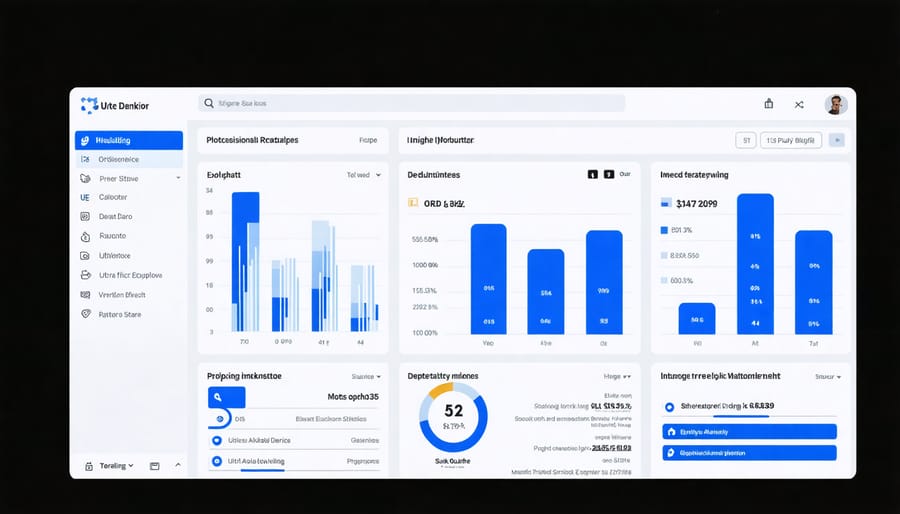
The real value lies in automated tracking systems that gather data continuously without manual intervention. Instead of spending hours compiling spreadsheets, your team can focus on strategic decisions that move your business forward. Modern analytics platforms collect information on click-through rates, conversion paths, bounce rates, and user behavior patterns automatically, giving you instant access to actionable insights.
This automation creates a significant competitive advantage. Businesses that leverage analytics make faster, smarter decisions based on actual customer behavior rather than assumptions. You can identify emerging trends before competitors, adjust campaigns in real-time, and allocate resources to channels that deliver the highest return on investment.
Perhaps most importantly, analytics enable clear communication with stakeholders. When you can demonstrate that specific search marketing efforts generated measurable revenue, securing budget approval and proving marketing value becomes straightforward. The numbers tell a story that everyone understands, building confidence in your marketing strategy and justifying continued investment.

Core Search Marketing Metrics You Should Track
Traffic Metrics That Show Who’s Finding You
Traffic metrics reveal the story of how people discover and interact with your website. Organic traffic measures visitors arriving through unpaid search results, showing how well your content ranks and attracts searchers naturally. Paid traffic tracks visitors from advertising campaigns, helping you evaluate your investment in search ads and other paid channels.
Bounce rate indicates the percentage of visitors who leave after viewing just one page. A high bounce rate often signals that your content isn’t matching visitor expectations or that your landing pages need improvement. However, context matters—a blog post that answers a question completely might naturally have a higher bounce rate.
Pages per session reveals how many pages visitors view during a single visit. Higher numbers suggest strong engagement and effective internal linking, while lower numbers may indicate navigation issues or content that doesn’t encourage further exploration.
Together, these metrics paint a clear picture of your search visibility and whether visitors find value once they arrive. By monitoring trends over time, you can identify which marketing efforts drive quality traffic and where adjustments are needed to improve user engagement and conversion potential.
Conversion Metrics That Prove ROI
While website traffic matters, conversion metrics reveal whether your marketing actually drives revenue. These measurements connect your marketing spend directly to business results, making them essential for proving ROI to stakeholders.
Conversion rate tracks the percentage of visitors who complete desired actions, whether that’s making a purchase, filling out a contact form, or signing up for a newsletter. A 2% conversion rate means two out of every 100 visitors take action. This metric helps you understand how effectively your site turns interest into outcomes.
Cost per acquisition (CPA) shows exactly how much you spend to gain each new customer. Calculate it by dividing your total marketing costs by the number of conversions. If you spent $1,000 and gained 20 customers, your CPA is $50. This figure must stay below your customer lifetime value to ensure profitability.
Goal completions measure specific actions aligned with your business objectives. These might include demo requests, phone calls, or downloads. Setting up automated tracking for these goals eliminates manual reporting and provides real-time insights into campaign performance.
Together, these metrics transform abstract marketing activities into concrete business outcomes, helping you allocate budget to channels that deliver actual returns rather than just generating activity.
Keyword Performance Indicators
Keyword performance indicators reveal how well your content ranks in search results and whether it’s attracting clicks. Three core metrics matter most: keyword rankings show where your pages appear in search results for target terms, click-through rates measure the percentage of people who see your listing and actually click it, and impression share indicates how often your content appears compared to total available opportunities.
These metrics work together to paint a complete picture. You might rank on page one for a valuable keyword, but if your click-through rate is low, your title or meta description needs improvement. Conversely, high impression share with poor rankings tells you there’s search volume to capture if you can climb higher in results.
Modern analytics platforms automate tracking of these indicators, eliminating manual rank checking. Instead of guessing which optimization tactics work, you can identify which keywords drive traffic, which pages need attention, and where competitors are gaining ground. This data guides practical decisions about content updates, technical fixes, and resource allocation, ensuring your optimization efforts focus on changes that actually move the needle for your business.
Engagement Signals Search Engines Care About
Search engines measure how users interact with your content to determine its quality and relevance. Dwell time—the duration visitors spend on your page before returning to search results—signals whether your content delivers value. Pages with higher dwell times typically rank better because they satisfy user intent.
Return visitor rate demonstrates content quality and brand trust. When users bookmark your site or return directly, search algorithms interpret this as a strong relevance signal. This metric becomes particularly valuable for businesses building long-term customer relationships.
Social signals, including shares and engagement on platforms like LinkedIn and Twitter, provide indirect ranking benefits. While not direct ranking factors, they increase content visibility and drive traffic, which search engines do track. Monitor these engagement metrics through your analytics platform to identify which content resonates with your audience. Strong engagement patterns reveal what topics and formats work best, allowing you to refine your content strategy based on actual user behavior rather than assumptions.
How to Turn Analytics Into Action
Collecting data is one thing—using it to improve results is another. The key to turning analytics into action lies in establishing a systematic review process that focuses on strategic decision-making rather than drowning in numbers.
Start by scheduling regular performance reviews, whether weekly or monthly, depending on your campaign scale. During these sessions, look for three critical elements: trends over time, sudden anomalies, and performance patterns across different channels. For example, if your conversion rate drops significantly on mobile devices, that’s a clear signal to investigate your mobile user experience.
The most effective approach involves comparing performance against benchmarks. Set baseline metrics for click-through rates, cost per acquisition, and conversion rates based on your historical data. When current performance deviates from these benchmarks by 15-20 percent or more, investigate immediately. This early detection prevents small problems from becoming expensive mistakes.
Automation plays a crucial role here by handling the heavy lifting of data collection and reporting. Modern analytics platforms can automatically generate reports, send alerts when metrics fall outside normal ranges, and compile data from multiple sources. This frees your time for strategic interpretation—asking why certain changes occurred and what actions will drive improvement.
Connect performance data to business outcomes by understanding attribution models. When you know which channels and touchpoints contribute most to conversions, you can allocate budget more effectively.
Implement a simple three-step action framework: identify the metric that needs improvement, hypothesize what might be causing the issue, and test one change at a time. For instance, if your landing page conversion rate is below target, test different headlines, calls-to-action, or form lengths—but change only one element per test to understand what drives results.
Document your findings and actions taken. This creates institutional knowledge and prevents repeated mistakes, especially valuable for small teams where one person may handle multiple responsibilities.

Common Analytics Mistakes That Waste Your Budget
Even with the best analytics tools in place, certain mistakes can drain your budget without delivering results. Here are the most common pitfalls and how to avoid them.
Vanity metrics trap marketers into celebrating numbers that don’t impact revenue. Tracking total page views or social media followers feels good, but these metrics rarely translate to business growth. The fix: Connect every metric to a specific business outcome. Instead of celebrating 10,000 site visits, measure how many became qualified leads or customers.
Broken conversion tracking is surprisingly common and devastating. Without proper tracking, you’re essentially flying blind, unable to identify which campaigns generate revenue. Quick fix: Test your conversion tracking monthly by completing a purchase or form submission yourself. Set up automated alerts to notify you if tracking stops working.
Ignoring data segmentation means treating all traffic equally when it clearly isn’t. A visitor from a competitor researching your pricing behaves differently than a ready-to-buy prospect. The solution: Segment your data by traffic source, device type, geographic location, and user behavior. This reveals which segments deliver the highest ROI, allowing you to allocate budget more effectively.
Making decisions on incomplete data leads to costly mistakes. Many businesses optimize campaigns after just a few days or base strategies on a single data source. Better approach: Establish minimum sample sizes before drawing conclusions. Cross-reference multiple data sources to validate findings. Implement automated reporting systems that aggregate data from all your marketing channels, ensuring you see the complete picture before making budget decisions.
These fixes don’t require advanced technical skills—just consistent attention to what matters and automated processes that keep your analytics accurate and actionable.
Getting Started With Search Marketing Analytics
Getting started with search marketing analytics doesn’t require a data science degree. Begin by setting up Google Analytics and Google Search Console—two free tools that provide essential insights into your website traffic and search performance. Connect these platforms to your website and verify you’re collecting data correctly by checking that page views are being recorded.
Next, define what success looks like for your business. Are you focused on increasing website traffic, generating more leads, or driving online sales? Establish three to five key performance indicators that align with these goals. For search marketing, common KPIs include organic traffic growth, keyword rankings for target terms, conversion rate from organic search, and cost per acquisition if you’re running paid campaigns.
Document your baseline metrics—where you stand today. Record your current monthly organic traffic, top-performing keywords, and conversion rates. This benchmark allows you to measure progress accurately over time.
Create a simple review schedule. Weekly check-ins should focus on real-time analytics to catch any sudden changes or issues. Monthly reviews provide the bigger picture, revealing trends and patterns that inform strategy adjustments.
Start small and build consistency. Use a simple spreadsheet or dashboard to track your core metrics each month. As you become comfortable with the basics, you can layer in more sophisticated analysis. The goal is developing a regular habit of checking your data and using those insights to guide decisions, not drowning in numbers from day one.
Marketing analytics have evolved from a competitive advantage to an absolute necessity. If you’re running search marketing campaigns without tracking performance data, you’re essentially flying blind—wasting budget on tactics that may not work while missing opportunities that could transform your results.
The good news? You don’t need to track everything at once. Start with the metrics that directly impact your business goals: conversion rates, cost per acquisition, and organic traffic trends. Set up automated reporting processes that deliver insights without consuming hours of manual work. This approach keeps your team focused on strategy while maintaining clear communication with stakeholders about what’s working.
Data should guide your decisions, not complicate them. The most successful search marketing strategies are built on consistent measurement, honest analysis, and willingness to adjust based on what the numbers reveal.
Ready to put marketing analytics to work? Begin by identifying your three most important business outcomes, then determine which metrics connect directly to those goals. Start tracking today, and let the data show you where to invest tomorrow.
Leave a Reply