How Advocacy Resources Transform One-Time Customers Into Loyal Brand Champions

Build a customer advocacy resource library by compiling email templates, social media share buttons, and review request workflows that your satisfied customers can use immediately to recommend your business. Start with three essential templates: a testimonial request email, a referral program explainer, and a LinkedIn recommendation guide that customers can complete in under two minutes.
Automate your advocacy touchpoints by setting triggers at key milestones—after successful project completion, positive support interactions, or product usage achievements. These automated requests catch customers when satisfaction peaks, increasing response rates by 40-60% compared to random outreach.
Create tiered incentives that reward different advocacy actions proportionally. Pair your advocacy resources with loyalty programs that offer points for reviews, referrals, case study participation, and social media mentions, making it easy for customers to see immediate value from their advocacy efforts.
Establish a simple measurement framework that tracks three core metrics: advocacy participation rate, qualified referrals generated, and retention rate among active advocates versus non-advocates. This data proves ROI and identifies which resources drive actual business outcomes rather than vanity metrics.
Package your resources into a dedicated advocacy portal where customers can access templates, track their referral status, and claim rewards without requiring manual intervention from your team. This self-service approach scales your program while maintaining personal connections through automated yet personalized communications at each advocacy stage.
What Advocacy Resources Actually Are (And Why Most Businesses Get Them Wrong)

The Three Pillars of Effective Advocacy Resources
Successful advocacy programs rely on three interconnected pillars that work together to transform satisfied customers into active promoters. Understanding these components helps you build a comprehensive strategy that drives measurable results.
The first pillar consists of education materials that equip your advocates with knowledge about your products, services, and brand story. These resources include product guides, industry insights, case studies, and talking points that make sharing easy and authentic. When customers understand your value proposition clearly, they communicate it more effectively to their networks. Create downloadable one-pagers, FAQ documents, and short video explainers that advocates can reference quickly.
Sharing tools form the second pillar, providing the practical mechanisms advocates need to spread your message. These include referral link generators, email templates, social media graphics, and pre-written content snippets. Automation plays a critical role here—implement systems that generate unique tracking links, automatically credit referrals, and streamline the sharing process. The simpler you make it for advocates to take action, the more frequently they’ll engage.
The third pillar encompasses recognition systems that acknowledge and reward advocacy efforts. This includes point-based rewards, tiered status levels, exclusive perks, and public acknowledgment of top advocates. Recognition doesn’t always require monetary incentives—featuring customer stories, offering early access to new products, or providing VIP support can be equally motivating. Track participation metrics and engagement levels to identify your most active advocates and personalize recognition accordingly.
These three pillars work synergistically: education empowers advocates, tools enable action, and recognition sustains momentum. When implemented with clear communication and automated processes, they create a self-reinforcing cycle that continuously generates new referrals and strengthens customer relationships.
Building Your Advocacy Resource Library Without Overwhelming Your Team
Essential Resources Every Advocacy Program Needs
Building an effective advocacy program doesn’t require dozens of resources. Focus on these high-impact essentials that deliver results without overwhelming your team.
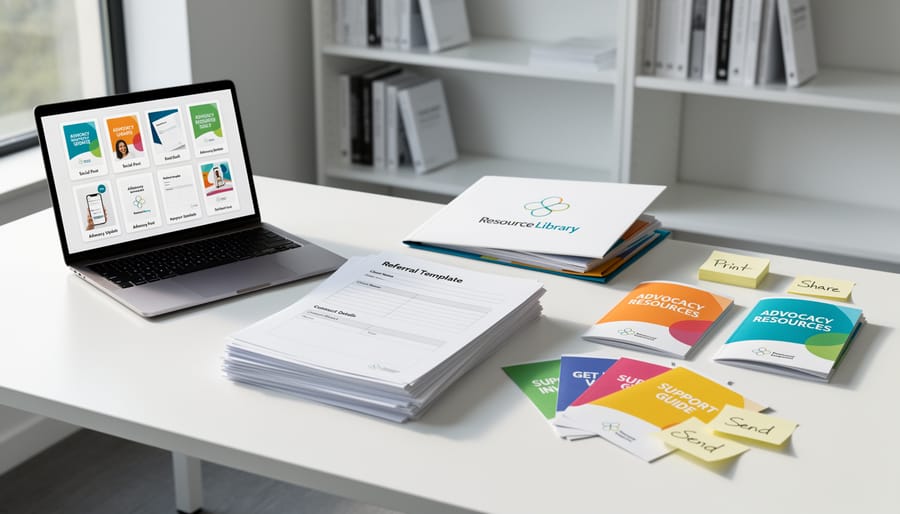
Start with referral templates that remove friction from the sharing process. Create 3-5 pre-written email templates your advocates can personalize and send directly to their contacts. Include the key value proposition and a clear call-to-action. These templates should integrate with your existing communication tools for seamless automation.
Social sharing content is your next priority. Develop ready-to-post messages for LinkedIn, Twitter, and Facebook that advocates can share with one click. Include eye-catching visuals and compelling copy that highlights specific benefits. Package these assets in a simple digital folder that’s always accessible.
Customer success stories provide the proof your advocates need to make convincing referrals. Document 5-10 case studies showing measurable results from working with your company. Keep them concise with clear before-and-after metrics. These stories become powerful ammunition for your advocates when speaking with prospects.
Branded materials round out your essential toolkit. Create simple one-pagers, presentation slides, and product sheets that advocates can share professionally. Ensure everything is properly branded but easy to customize for different audiences.
The priority here is simple: start with referral templates and social content since they require minimal effort but generate immediate sharing activity. Add success stories next as they build credibility. Save branded materials for last unless your industry demands formal documentation upfront.
Automate distribution of these resources through your customer communication platform. Set up triggered emails that deliver the right resource at the right moment in your customer journey, ensuring advocates always have what they need without manual intervention.
Automating Resource Delivery for Consistent Engagement
Manual resource distribution quickly becomes unsustainable as your customer base grows. Automation transforms advocacy resource delivery from a time-intensive task into a strategic system that operates consistently without constant oversight.
Start by mapping your customer journey to identify critical touchpoints where advocacy resources create the most impact. New customers benefit from getting started guides and community invitations within their first week, while experienced users respond better to case studies and referral opportunities after demonstrating product engagement. Build automated workflows that trigger resource delivery based on specific customer actions or milestones rather than arbitrary timelines.
Email marketing platforms and customer relationship management systems offer the infrastructure needed to automate this process. Set up drip campaigns that deliver educational content progressively, ensuring customers receive information when they’re ready to act on it. For example, send referral program details only after customers have logged multiple sessions or completed key actions that indicate satisfaction.
Segmentation enhances automation effectiveness. Group customers by industry, company size, usage patterns, or engagement level, then tailor resource delivery accordingly. A healthcare client needs different case studies than a retail business, and power users want advanced tips while beginners need foundational support.
Monitor delivery metrics to refine your automated systems. Track open rates, click-through rates, and subsequent customer actions to determine which resources resonate and when. This data-driven approach allows you to continuously optimize timing and content selection without adding manual work. The result is consistent engagement that scales with your business while freeing your team to focus on strategic initiatives rather than repetitive distribution tasks.
Making Your Advocacy Resources Actually Work for Retention
Timing Your Resource Deployment for Maximum Impact
The timing of your advocacy resource deployment directly impacts customer engagement and retention outcomes. Strategic introduction of these materials throughout the customer journey ensures maximum value at each touchpoint.
During onboarding (days 1-30), focus on educational resources that reduce friction and accelerate time-to-value. Welcome guides, quick-start videos, and product walkthroughs help new customers achieve early wins. Automated email sequences can deliver these resources at predetermined intervals, ensuring consistent communication without manual effort.
The engagement phase (months 2-6) presents opportunities to introduce community access, case studies relevant to their industry, and best practice guides. This period is ideal for inviting customers to participate in your referral program, as they’ve experienced enough value to speak credibly about your solution. Set up automated triggers based on usage milestones or satisfaction scores to deploy these resources precisely when enthusiasm peaks.
As customers approach renewal periods (60-90 days before), provide ROI calculators, success metrics reports, and expansion guides. These resources reinforce the value delivered and open conversations about additional needs. Automated reporting tools can generate personalized performance summaries without requiring manual compilation.
For long-term advocates (post-renewal), deploy exclusive content like beta access, advisory board invitations, and co-marketing opportunities. These premium resources recognize their loyalty and deepen the relationship.
The key is matching resource intensity to customer readiness. Automated systems track engagement signals and trigger appropriate resource delivery, ensuring you provide valuable support at scale without overwhelming your team or your customers.
Personalizing Resources Based on Customer Behavior
Not all customers interact with your brand the same way, so your advocacy resources shouldn’t treat them identically. Segmenting resources based on customer behavior significantly increases participation rates and delivers better retention outcomes.
Start by categorizing customers into distinct groups using purchase history. High-value customers who make frequent purchases deserve exclusive content like advanced product guides, early access to new features, or premium referral incentives. First-time buyers benefit from educational resources that help them maximize their initial purchase and understand your brand’s value proposition.
Engagement level provides another critical segmentation dimension. Active community members and social media engagers respond well to user-generated content opportunities, case study participation invitations, and ambassador program access. Less engaged customers need simpler, lower-commitment resources like one-click review requests or straightforward referral links.
Leverage automated systems to deliver personalized communications based on these segments. Set up triggers that automatically send relevant advocacy resources when customers hit specific milestones—after their third purchase, when they reach a spending threshold, or following positive support interactions.
Track which segments respond best to different resource types. You’ll likely discover that B2B customers prefer detailed case studies while B2C audiences engage more with social sharing tools. Use these insights to refine your segmentation strategy continuously, ensuring every customer receives advocacy opportunities matched to their behavior patterns and preferences. This targeted approach maximizes both participation rates and the quality of advocacy actions customers take.
Measuring What Matters: Tracking Advocacy Resource Performance

Key Metrics That Predict Long-Term Loyalty
Tracking the right metrics helps you identify which advocacy resources actually drive retention. Start with resource engagement rates—monitor how frequently customers access your case studies, guides, and training materials. High engagement typically indicates customers actively seeking value from your brand, which correlates with longer retention periods.
Referral quality matters more than referral quantity. Measure the conversion rate of referred customers and their lifetime value compared to other acquisition channels. Customers who refer high-value clients demonstrate genuine advocacy and tend to remain loyal themselves. Track how many referrals convert to paying customers and how long they stay.
Repeat purchase patterns reveal advocacy program effectiveness. Analyze purchase frequency, average order value, and product adoption rates among program participants versus non-participants. Customers who consistently repurchase typically exhibit stronger brand loyalty and are more likely to advocate naturally.
Advocacy program participation metrics include enrollment rates, active contribution levels, and sustained engagement over time. Monitor how many customers join your advocate community, submit testimonials, participate in review campaigns, or engage in social media amplification. These customer behavior patterns signal investment in your brand relationship.
Combine these metrics into a loyalty score to predict retention risk. Customers scoring high across engagement, referrals, and participation rarely churn, while declining scores trigger intervention opportunities. Review these metrics monthly and adjust your advocacy resources based on what drives the strongest retention results for your specific customer base.
Common Advocacy Resource Mistakes That Kill Retention
Even well-intentioned advocacy programs fail when common mistakes undermine advocate engagement. Understanding these pitfalls helps you build resources that actually drive retention.
The first mistake is creating overly complex programs. When advocates need to navigate multiple tiers, confusing point systems, or lengthy approval processes, participation drops. Solution: Streamline your program to three simple actions advocates can take. Use automated workflows to handle the backend complexity while keeping the advocate experience straightforward. If explaining your program takes more than two minutes, it’s too complicated.
Misaligned incentives represent another critical error. Offering rewards that don’t match what your advocates actually value creates disengagement. A software company offering Amazon gift cards when advocates would prefer extended licenses or exclusive feature access misses the mark. Solution: Survey your top customers to understand what motivates them. Test different incentive structures and track which ones generate the most advocacy activity. Align rewards with the effort required and the value advocates provide.
Poor communication kills programs before they gain traction. Many businesses launch advocacy resources without clear onboarding, regular updates, or feedback loops. Advocates feel ignored and stop participating. Solution: Implement automated communication sequences that welcome new advocates, provide regular program updates, and share impact metrics showing how their efforts matter. Schedule quarterly check-ins to gather feedback and adjust your approach.
The final mistake is neglecting advocate recognition. Your advocates invest time and credibility promoting your business. Without acknowledgment, they feel taken for granted. Solution: Create public recognition opportunities through social media shoutouts, featured advocate stories, or exclusive community badges. Automate monthly recognition emails highlighting top contributors. Small gestures of appreciation dramatically improve long-term retention among your advocate base.
Avoiding these mistakes transforms advocacy resources from administrative burdens into retention-driving assets that grow with your business.
Advocacy resources represent one of the most cost-effective investments you can make in customer retention. By equipping satisfied customers with the tools to share their experiences, you create a sustainable growth engine that operates continuously without constant intervention.
The key is starting small and building strategically. Begin with one or two automated resources that align with your existing customer communication processes. A simple email template requesting feedback or a streamlined referral form integrated into your post-purchase sequence can generate immediate results. These foundational elements require minimal setup but deliver measurable impact on both retention rates and customer lifetime value.
Focus on removing friction from the advocacy process. The easier you make it for customers to refer others or share testimonials, the more likely they are to follow through. Automation ensures consistency while allowing you to scale without proportionally increasing your workload.
Take action by auditing your current customer touchpoints and identifying three opportunities to introduce advocacy resources this quarter. Track referral conversions and retention metrics from the start to demonstrate ROI and refine your approach. Remember, the most successful advocacy programs evolve based on real customer behavior, not assumptions about what might work.
Leave a Reply