Why Your Customers Aren’t Buying (And How Games Can Fix It)

Online shoppers abandon 70% of their carts, but gamification transforms passive browsers into engaged buyers by triggering the same psychological rewards that make games addictive. By integrating point systems, progress bars, and achievement badges into your checkout process, you tap into fundamental human motivations—competition, accomplishment, and status—that drive purchasing decisions.
Gamification works because it creates emotional investment in your store beyond product interest. When customers earn points toward rewards, unlock exclusive discounts through challenges, or see their progress toward VIP status, they’re experiencing dopamine releases that build brand loyalty and increase average order values. This isn’t manipulation; it’s strategic psychology applied to commerce.
The most effective ecommerce gamification strategies don’t require complex development or massive budgets. Simple implementations like spin-to-win discount wheels, tiered loyalty programs with visible progress tracking, or limited-time challenges that reward specific behaviors generate measurable results within weeks. The key is aligning game mechanics with your specific business goals—whether that’s increasing repeat purchases, boosting average cart size, or reducing abandonment rates.
This guide breaks down exactly which gamification tactics work for different store types, how to implement them without overwhelming your customers, and the metrics you should track to measure ROI. You’ll learn to automate these processes so they run continuously without constant management, freeing you to focus on broader business strategy while engagement and revenue grow systematically.
What E-commerce Gamification Actually Means for Your Business
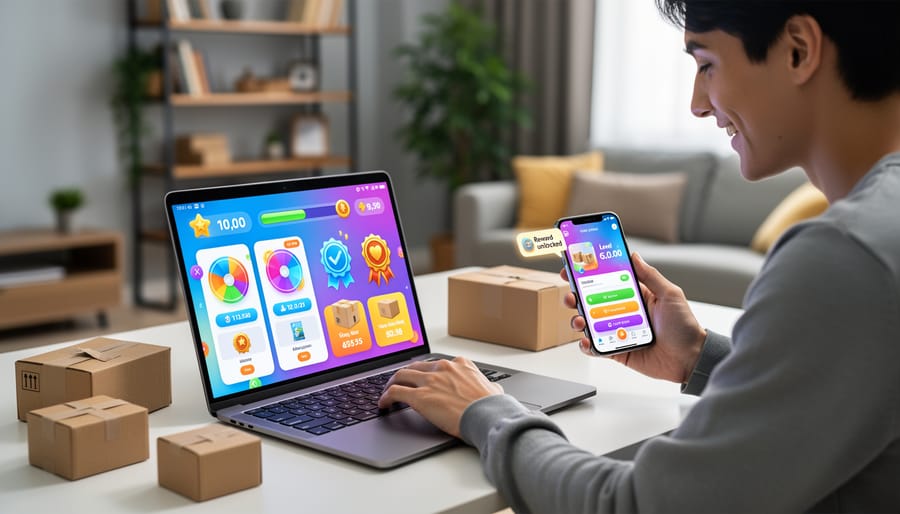
E-commerce gamification transforms ordinary shopping experiences into engaging, game-like interactions that motivate customers to take specific actions. Instead of simply browsing products and checking out, customers earn points, unlock badges, complete challenges, or compete on leaderboards. Think of it as applying the addictive elements that make mobile games compelling to your online store.
The distinction between gamification and traditional loyalty programs lies in immediate feedback and emotional engagement. Traditional programs typically reward past purchases with future discounts—a delayed gratification model. Gamification creates instant psychological rewards through progress bars, achievement notifications, and visual milestones that tap into our intrinsic desire for accomplishment and status.
The psychology behind gamification’s effectiveness centers on three core human motivations: autonomy, competence, and relatedness. When customers see their progress toward a free shipping threshold through a visual progress bar, they experience competence. When they choose which challenges to complete for bonus points, they feel autonomous. When they share achievements or see how they rank against other shoppers, they satisfy the need for social connection.
This approach aligns perfectly with conversion-centered design principles because it reduces decision friction and creates clear pathways toward desired actions. Customers aren’t just accumulating points in some distant future reward system—they’re actively participating in an experience that feels rewarding in the moment.
For your business, this means higher engagement rates, increased average order values, and stronger customer retention. Gamification turns passive browsers into active participants who return more frequently and spend more time exploring your offerings, ultimately driving measurable revenue growth without relying solely on discounts.
The Real Benefits: Why This Matters to Your Bottom Line
Gamification isn’t just about making shopping fun—it delivers tangible financial results that directly impact your profitability. Understanding these concrete benefits helps you make informed decisions about which strategies deserve your investment.
First, expect conversion rate improvements between 15-30% when implementing point-based reward systems. Customers who participate in gamified experiences demonstrate significantly higher purchase intent because they’ve already invested time and effort in your brand. This psychological commitment translates directly into completed transactions rather than abandoned carts.
Average order values typically increase by 20-40% when you introduce tiered rewards or progress bars that unlock benefits at specific spending thresholds. Customers naturally add items to reach the next reward level, effectively encouraging them to spend more per transaction without aggressive sales tactics.
Customer retention sees the most dramatic improvement. Gamification can boost repeat purchase rates by up to 50% because customers return to maintain their status, collect points, or continue progress toward rewards. This creates predictable revenue streams and reduces your customer acquisition costs significantly. When combined with personalization strategies, retention rates climb even higher as customers receive relevant challenges and rewards.
Data collection becomes seamless through gamified interactions. Customers willingly share preferences, browsing habits, and demographic information when they perceive value in exchange. This first-party data proves invaluable for refining marketing campaigns and product offerings without expensive market research.
Email engagement rates improve by 25-35% when incorporating game elements like exclusive challenges or point notifications. This keeps your brand top-of-mind and drives traffic back to your store through automated processes that require minimal ongoing effort.
The key advantage: these benefits compound over time. As customers progress through your gamified system, their lifetime value increases while your operational costs decrease, creating sustainable growth that scales with your business.

Proven Gamification Strategies That Drive Sales
Points and Rewards Systems That Actually Work
A points-based rewards system works best when customers clearly understand how to earn and redeem points. Start by establishing a simple earning structure: assign points for purchases (typically 1 point per dollar spent), account creation, social media shares, product reviews, and referrals. The key is making the value proposition transparent—customers should immediately grasp that 100 points equals $5 off, for example.
To encourage higher spending, implement tiered point multipliers. Customers who spend over $100 might earn 1.5x points, while those exceeding $200 earn 2x points. This creates a natural incentive to increase cart values without feeling manipulative.
Automation is essential for managing rewards at scale. Modern ecommerce platforms offer plugins that automatically track points, send notification emails when customers reach redemption thresholds, and apply discounts at checkout. Set up automated triggers for point expiration reminders (60 and 30 days before expiry) to drive repeat purchases without manual intervention.
Structure your redemption tiers strategically. Offer small rewards at low point thresholds (250 points for free shipping) to provide quick wins, mid-tier rewards (500 points for $10 off) to maintain momentum, and aspirational rewards (2000 points for exclusive products) to encourage long-term engagement.
Track three metrics to measure effectiveness: redemption rate (aim for 20-30%), time between purchases (should decrease), and average order value (should increase among program members). If redemption rates fall below 15%, your thresholds are too high. Above 40% means you’re giving away too much margin.
Progress Bars and Achievement Badges
Progress bars tap into the human desire for completion, making them powerful tools for driving customer behavior. When shoppers see they’re 75% toward free shipping or have completed three out of five profile fields, they’re psychologically motivated to finish what they started.
Implement progress bars at strategic touchpoints. Show cart value progress toward free shipping thresholds directly on product pages and in the shopping cart. Display profile completion percentages on account dashboards, breaking down exactly which information is missing. Use tier-based systems that visualize how close customers are to VIP status or exclusive perks.
Achievement badges work similarly but focus on rewarding completed actions. Award badges for first purchases, review submissions, referrals, or milestone purchases. Make these visible on customer profiles and shareable on social media to encourage both participation and word-of-mouth marketing.
The key to effective implementation is setting achievable goals. If your free shipping threshold is $50, display the progress bar starting at $35 purchases. Use clear, encouraging language like “Only $15 away from free shipping!” rather than generic statements. Automate badge delivery through your ecommerce platform to ensure instant gratification when customers hit milestones, maintaining engagement without manual intervention.
Spin-to-Win and Interactive Discount Games
Spin-to-win wheels and interactive discount games tap into our natural desire for instant rewards, making them powerful tools for capturing email addresses and boosting conversions. When visitors land on your site, a well-timed popup offering a chance to win a discount creates excitement while collecting valuable contact information.
Timing is critical for success. Display your spin-to-win game after 15-30 seconds of browsing or when detecting exit intent. This allows visitors to understand your offerings before presenting the opportunity. Avoid showing it immediately upon arrival, which can feel intrusive and increase bounce rates.
Structure your prize wheel with realistic offerings: include 10-15% discounts as common wins, 20% as moderate prizes, and free shipping or 25% off as rare rewards. Always ensure every spin wins something to maintain positive engagement. A mix of 60% small wins, 30% medium discounts, and 10% premium prizes creates balanced expectations while protecting your margins.
Make redemption straightforward with automated email delivery of discount codes and clear expiration dates (typically 24-48 hours) to encourage immediate purchases. This combination of instant gratification, email capture, and urgency drives measurable conversion increases while building your marketing list with engaged prospects who’ve already shown purchase intent.
Referral Challenges and Social Sharing Rewards
Referral programs become significantly more effective when you apply gamification elements that transform customer advocacy into an engaging challenge. By implementing tiered reward systems—where customers unlock increasingly valuable benefits as they refer more friends—you create sustained motivation beyond single-transaction incentives.
Start with automated referral tracking that provides real-time progress updates. Show customers visual dashboards displaying their current tier, points earned, and proximity to the next reward level. This transparency keeps advocates engaged and encourages continued participation.
Create time-limited referral competitions where top performers win exclusive prizes or recognition. Leaderboards tap into competitive instincts while providing social proof that others are actively participating. Many successful retail gamification strategies incorporate milestone celebrations—sending congratulatory emails when advocates reach new achievement levels.
Social sharing rewards should be easy to claim. Integrate one-click sharing buttons that pre-populate messages for platforms like Facebook, Instagram, and WhatsApp. Award immediate micro-rewards (bonus points, early access) for social shares, even before conversions occur.
Make referral status visible through badges or special designations in customer accounts. These recognition elements cost nothing but significantly boost program participation by satisfying the human need for status and accomplishment.
Time-Limited Challenges and Flash Events
Time-limited challenges create powerful psychological triggers that encourage immediate action from your customers. Flash sales with gamified elements—like countdown timers, progress bars showing inventory levels, or point multipliers—transform ordinary promotions into engaging experiences that drive conversions.
Consider implementing 24-hour challenges where customers earn double points or unlock exclusive rewards. Seasonal competitions aligned with holidays or events add relevance while creating natural urgency. For example, a “Summer Treasure Hunt” might hide special discount codes throughout your site for three days, encouraging exploration and repeated visits.
The key to success lies in automation and clear communication. Set up your ecommerce platform to automatically trigger these events at strategic intervals—monthly flash sales, weekly challenges, or quarterly competitions. This reduces manual workload while maintaining consistency.
Always communicate the limited-time nature upfront. Use email notifications, website banners, and push notifications to alert customers when events start. Display clear countdowns and real-time updates showing how many participants are competing or how many rewards remain. This transparency builds trust while amplifying urgency.
Track participation rates and conversion metrics for each event type. Use this data to refine your approach, focusing on challenges that deliver the strongest business outcomes while keeping your audience engaged.
Tier-Based VIP Programs
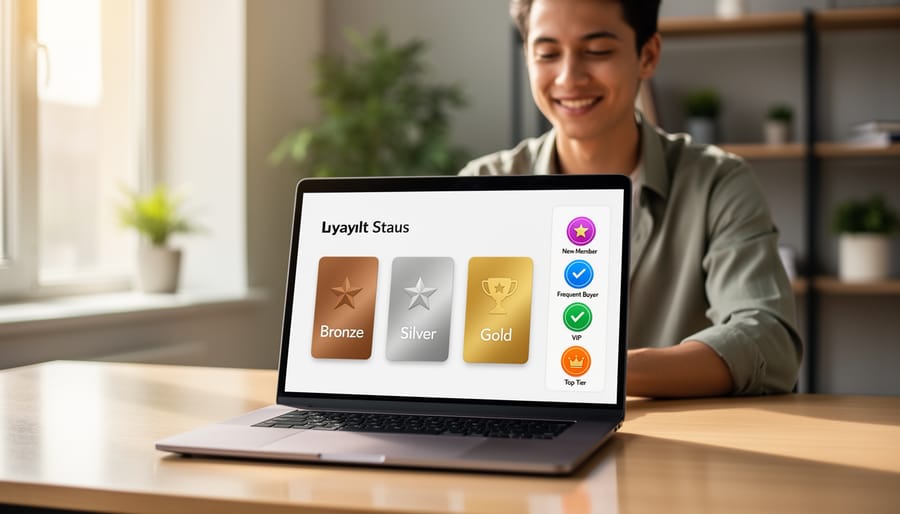
Tier-based VIP programs create clear achievement pathways that motivate customers to increase their purchase frequency and order values. By establishing bronze, silver, and gold membership levels (or creative alternatives aligned with your brand), you give shoppers tangible goals to work toward while making them feel recognized for their loyalty.
The key is setting realistic thresholds that encourage progression without seeming unattainable. A customer who spends $500 annually might reach bronze status, unlocking free shipping, while $1,500 earns silver with early sale access, and $3,000 achieves gold with dedicated customer service and exclusive products.
Automate the entire process through your ecommerce platform by integrating loyalty software that tracks purchases and automatically upgrades customers when they hit spending milestones. Send personalized emails celebrating their new status and clearly communicate how much more they need to spend to reach the next tier. This transparency transforms abstract loyalty into concrete achievement, driving repeat purchases while building emotional investment in your brand. Display tier status prominently in customer accounts and at checkout to reinforce their VIP identity with every interaction.
How to Choose the Right Strategy for Your Store
Selecting the right gamification strategy starts with understanding your current business position. Consider these four key factors before implementing any tactics.
First, assess your business size and available resources. If you’re running a small operation with limited budget, start with low-tech solutions like simple point systems or discount codes for repeat purchases. These require minimal investment and can run through your existing email platform. Larger businesses with dedicated marketing teams can explore more sophisticated options like mobile apps with achievement badges or interactive quizzes.
Your customer base matters significantly. Analyze your demographics and shopping behaviors. Younger audiences typically respond well to social sharing challenges and leaderboards, while professional buyers might prefer straightforward loyalty rewards and exclusive access programs. Review your analytics to identify what motivates your specific customers.
Product type influences which strategies work best. High-ticket items benefit from milestone-based rewards that acknowledge the customer journey, while frequent purchase products suit daily login bonuses or streak-based incentives. Consider your average order value and purchase frequency when designing your approach.
Start small and test one or two tactics before expanding. Launch a basic points program, measure engagement for 30-60 days, then adjust based on results. This approach minimizes risk and provides valuable data about what resonates with your audience.
As you scale, implement automated systems to reduce manual workload. Modern ecommerce platforms offer built-in gamification features or integrate with specialized apps that automatically track points, send reward notifications, and update customer profiles. Automation ensures consistency while freeing your team to focus on strategy and customer communication rather than administrative tasks.
Remember, successful gamification aligns with your brand identity and genuinely adds value to the customer experience rather than feeling forced or gimmicky.
Implementation Without the Headaches
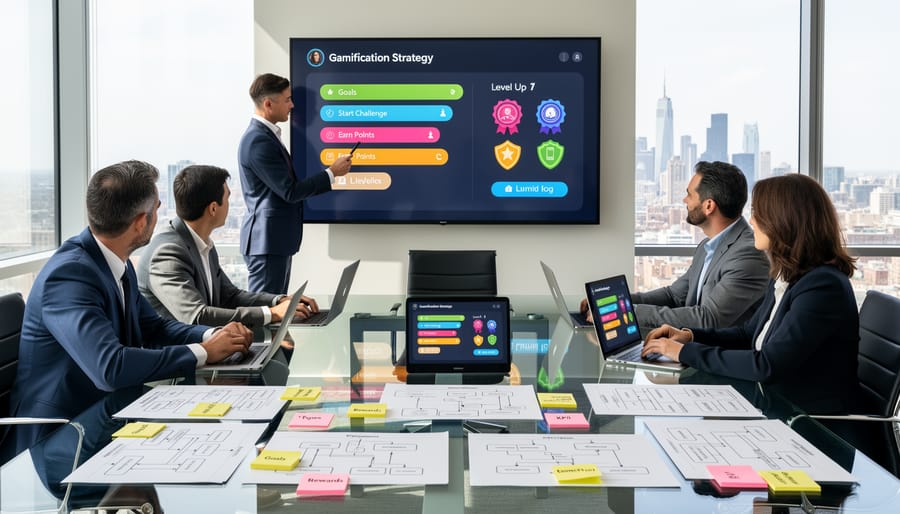
Rolling out gamification doesn’t require a complete platform overhaul or months of development. Start by choosing one feature that aligns with your primary business goal—whether that’s a points program for repeat purchases or a progress bar for free shipping. This focused approach lets you test effectiveness before expanding.
Select a gamification platform that integrates directly with your existing ecommerce system. Most modern solutions offer plug-and-play options for Shopify, WooCommerce, and other major platforms, with setup times measured in hours rather than weeks. Look for tools that automate point tracking, badge distribution, and reward fulfillment without requiring manual oversight.
Before launch, prepare your customer base through email announcements that clearly explain how the new system benefits them. Avoid complicated rules—customers should understand how to earn and redeem rewards within 30 seconds of reading your explanation.
During rollout, monitor key metrics daily for the first two weeks. Track participation rates, technical issues, and customer feedback through your support channels. This data helps you quickly adjust reward thresholds or clarify confusing elements.
Maintain open communication throughout the process. Send follow-up messages highlighting early wins, like “500 customers earned their first reward this week.” Address questions promptly and use feedback to refine your approach. The smoothest implementations happen when businesses treat gamification as an evolving system rather than a one-time installation, making incremental improvements based on real customer behavior and automated performance data.
Measuring Success: What to Track and Why
Track the right key performance indicators to ensure your gamification efforts deliver real business value. Start with engagement metrics: monitor participation rates in your gamified features, time spent on site, and pages visited per session. These reveal whether customers actually interact with your game elements.
Next, measure direct revenue impact through conversion rate improvements, average order value changes, and repeat purchase frequency. Compare these metrics before and after implementing gamification to quantify results. Customer lifetime value is particularly important since gamification builds long-term relationships.
Don’t overlook behavioral indicators like points redeemed, badges earned, and leaderboard activity. Low redemption rates signal your rewards need adjustment, while high badge completion suggests effective motivation.
Calculate ROI by comparing implementation costs against revenue increases and customer retention savings. Most ecommerce platforms offer automated tracking dashboards that compile these metrics in real-time, eliminating manual data collection. Set up weekly reports to identify trends early and adjust your strategy accordingly. Remember, what gets measured gets optimized—focus on metrics that directly connect to revenue growth and customer loyalty rather than vanity numbers.
Common Mistakes That Kill Gamification Results
Even well-intentioned gamification strategies can backfire when businesses make these common errors. Understanding these pitfalls helps you avoid wasting resources on campaigns that fail to engage customers.
Overcomplicating the experience ranks among the most frequent mistakes. When customers need extensive instructions to understand your point system or rewards structure, they’ll simply abandon the effort. Keep mechanics intuitive—if it takes more than 30 seconds to explain, simplify it. A straightforward “earn 10 points per dollar spent” beats a convoluted tier system with multiple variables.
Poor reward structures also undermine results. Offering prizes that require excessive effort relative to their value discourages participation. Test your economics: can customers realistically achieve rewards within a reasonable timeframe? If earning a $10 discount requires $500 in purchases, you’ve created frustration rather than motivation.
Neglecting mobile optimization proves costly, as most ecommerce traffic now comes from smartphones. Gamification elements must function seamlessly on smaller screens with touch interfaces. Buttons should be appropriately sized, progress bars visible, and animations smooth across devices.
Finally, misaligning game mechanics with your brand identity creates disconnect. A luxury retailer implementing cartoon-style badges damages credibility, while a youth-focused brand using formal leaderboards misses the mark. Your gamification should feel like a natural extension of your existing customer experience, not a jarring addition.
Prevent these issues by starting small, gathering customer feedback early, and refining based on actual usage data rather than assumptions.
Gamification isn’t another passing marketing fad—it’s a proven strategy that leverages fundamental human psychology to drive measurable business results. The numbers speak for themselves: companies implementing gamification see significant increases in engagement, customer retention, and revenue. As consumer expectations continue to evolve, creating interactive, rewarding shopping experiences has shifted from nice-to-have to essential.
The best part? You don’t need a massive budget or technical team to get started. Begin with one strategy that aligns with your business goals—whether that’s a points program, spin-to-win wheel, or simple progress bars. Test it, measure the results, and expand from there. Modern automated solutions have democratized gamification, making sophisticated engagement tools accessible to businesses of all sizes.
The key is taking action. Choose one gamification element, implement it consistently, and maintain clear communication with your customers about how it benefits them. As you build momentum and see results, layer in additional strategies to create a comprehensive engagement ecosystem. Your competitors are already exploring these tactics—the question isn’t whether to implement gamification, but when you’ll start and how quickly you can gain the competitive advantage it offers.
Leave a Reply