How Multimodal Data Fusion Predicts What Your Customers Want Before They Do

Your competitors are already combining customer reviews, social media sentiment, website analytics, and sales data to spot market shifts weeks before they appear in traditional reports. This approach, called multimodal data fusion, transforms disconnected information streams into a unified intelligence system that reveals patterns invisible to single-source analysis.
Most businesses sit on goldmines of untapped data. Your CRM holds purchase histories, your social channels capture real-time customer sentiment, your website analytics show browsing behavior, and industry reports provide macro trends. Separately, each tells part of the story. Together, they create a complete picture of where your market is heading and how customers will behave next quarter.
The challenge isn’t collecting this data—you already have it. The challenge is connecting it in ways that generate actionable insights without requiring a data science team or months of manual analysis. Traditional approaches force you to jump between dashboards, manually correlate findings, and rely on gut instinct to fill the gaps.
Multimodal data fusion solves this by automatically combining different data types—text from reviews, numbers from sales reports, images from social media, time-series from web traffic—into synchronized insights. This means you can identify emerging product preferences by correlating social mentions with purchase patterns, or predict seasonal demand by analyzing historical sales alongside search trends and weather data.
The result is faster, more confident decisions backed by comprehensive evidence rather than isolated data points.
What Multimodal Data Actually Means for Your Marketing Strategy
Multimodal data simply means combining different types of information from multiple sources to get a complete picture of your market. Instead of looking at numbers in a spreadsheet or customer feedback in isolation, you’re bringing together text, images, video, audio, and numerical data to understand what’s really happening with your customers and competitors.
Think of it this way: a customer review tells you someone loves your product. But when you also analyze the images they posted on social media showing how they use it, the time they spend watching your tutorial videos, and the tone of voice in their customer service calls, you gain far deeper insight into their experience and needs.
Here’s what multimodal data looks like in practice. Text data includes customer reviews, social media comments, email responses, and survey feedback. Visual data comes from product photos customers share, Instagram stories featuring your brand, or screenshots of competitor offerings. Video engagement metrics show which product demonstrations hold attention and where viewers drop off. Audio data from customer service calls reveals frustration points and common questions that written transcripts alone might miss.
The reason combining these alternative data sources matters is simple: customers don’t interact with your brand through just one channel. They read reviews, watch videos, browse images, and speak with support teams. Analyzing these data types separately gives you fragments of truth. When you fuse them together, patterns emerge that single-source analysis misses entirely.
For example, you might notice positive text reviews but declining video engagement, signaling that while existing customers are satisfied, your marketing isn’t attracting new prospects effectively. Or you could spot customers posting images of creative product uses you never anticipated, revealing new market opportunities. This comprehensive view enables smarter decisions about product development, marketing messaging, and customer experience improvements.

The Business Case: Why Single-Source Data Keeps You One Step Behind
Picture this: Your website analytics show steady traffic, so you assume your business is healthy. Meanwhile, your competitor notices the same traffic pattern but also monitors social media sentiment—discovering that customers are increasingly frustrated with slow checkout processes. They fix the issue while you’re blindsided by declining sales three months later.
This scenario plays out daily across industries. Relying on single-source data creates dangerous blind spots that competitors can exploit.
Consider a retail business tracking only sales numbers. The data shows a 15% revenue increase, suggesting success. But without monitoring customer service conversations, they miss a critical trend: their best-selling product is generating complaints about quality. By the time returns spike and reviews plummet, the damage to brand reputation is already done.
Or take a B2B company monitoring only LinkedIn engagement metrics. Their posts generate impressive likes and shares, creating an illusion of effective marketing. Without connecting this data to actual lead quality and sales pipeline velocity, they waste months on content that entertains but doesn’t convert.
The competitive disadvantage compounds quickly. While you’re celebrating website traffic gains, forward-thinking competitors are correlating that traffic with customer support tickets, email campaign responses, and industry news trends. They spot emerging opportunities and potential problems weeks or months before you do.
Single-source data doesn’t lie—it just doesn’t tell the whole truth. In today’s fast-moving markets, partial truth creates the same outcome as being completely uninformed. Your competitors aren’t necessarily smarter; they’re just seeing the complete picture while you’re working with fragments. That information gap translates directly into lost market share, missed opportunities, and reactive crisis management instead of proactive growth strategies.
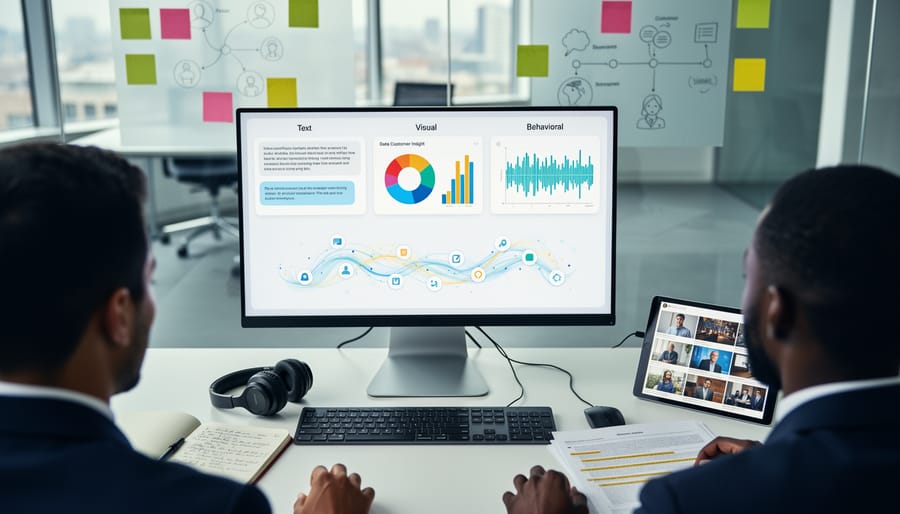
Four Data Types That Transform Market Trend Analysis
Text Data: Beyond Keywords
Text data represents one of the richest sources of customer intelligence available to businesses today. Customer reviews, social media comments, support tickets, and survey responses contain valuable insights that go far beyond simple keyword tracking. The real power lies in understanding sentiment and context.
AI-powered sentiment analysis can automatically process thousands of text entries to identify emotional tone, frustration points, and emerging needs. A surge in negative sentiment around shipping times, for example, signals an operational issue before it impacts retention rates. Similarly, repeated mentions of desired features across support tickets reveal product development priorities.
Context matters equally. Automated text analysis identifies patterns in how customers discuss your products compared to competitors, revealing positioning opportunities. When combined with purchase data and web behavior, text data transforms from anecdotal feedback into actionable market intelligence that drives strategic decisions.
Visual Data: What Images and Videos Tell You
Visual content reveals market preferences that text alone cannot capture. Product photos on Instagram, unboxing videos on TikTok, and customer-submitted images show exactly what resonates with your audience. When analyzed systematically, these visual patterns predict emerging trends before they hit mainstream awareness.
Social media analytics platforms now track which colors, styles, and product features generate the most engagement. A sudden spike in minimalist product photography might signal shifting design preferences. Video completion rates tell you which demonstrations hold attention and drive purchase intent.
User-generated content provides authentic market intelligence. When customers consistently photograph your product in unexpected contexts, they’re showing you new use cases and market segments. Automated visual analysis tools can identify these patterns across thousands of images, tracking everything from background settings to facial expressions in customer testimonials. This visual data, combined with sales figures and demographic information, creates a complete picture of market movement and consumer sentiment shifts.
Behavioral Data: The Actions Behind the Words
Your customers’ actions frequently tell a different story than their survey responses. Behavioral data analysis reveals what people actually do—their click patterns, navigation paths, time spent on specific pages, and purchase sequences.
This data type captures the truth. Someone might say they value detailed product information, yet their behavior shows they spend mere seconds on specifications before clicking “buy now.” They claim price matters most, but their cart reveals they consistently choose premium options.
Modern analytics platforms automatically track these behavioral signals across your digital properties. They monitor which email links generate clicks, what content keeps visitors engaged, and which product combinations convert best.
The real power emerges when you compare behavioral data against what customers tell you. These contradictions aren’t deceptive—they’re revealing. People often don’t consciously understand their own decision-making processes. Their actions provide the honest feedback that shapes effective marketing strategies and product development.
Audio Data: Voice of the Customer in Real Time
Audio data captures what written text often misses: the human element behind every customer interaction. Call center recordings reveal not just what customers say, but how they say it. A frustrated tone during a product inquiry signals problems that survey responses might never capture. Voice search queries show the natural, conversational way people actually think about your products versus formal keyword searches.
Beyond traditional customer service channels, audio from podcasts and video content provides unfiltered market sentiment. When industry influencers discuss your brand or category, their tone conveys enthusiasm, skepticism, or concern that transcripts alone can’t communicate.
Modern speech analytics tools automatically process these audio sources to detect emotional patterns and sentiment shifts. This technology identifies stress levels, urgency, and satisfaction without manual review of thousands of recordings. For businesses focused on improving client communication, audio analysis reveals exactly where conversations break down and what language resonates best.
The practical advantage is immediate: you can identify emerging concerns before they become widespread complaints, adjust messaging based on how customers naturally speak about your offerings, and train teams using real examples of successful interactions.
How Data Fusion Creates the Complete Picture
Think of data fusion as assembling a jigsaw puzzle. Each data source provides pieces, but only when combined do you see the complete picture. The reason this works is simple: different data types capture different dimensions of the same reality, and patterns emerge at their intersection that remain hidden when sources are analyzed separately.
Consider how one retail company discovered an unexpected product trend. Their text analytics showed a 15% increase in social media mentions of “sustainable packaging” in customer comments. Separately, their visual analysis of Instagram posts revealed customers frequently photographed their unboxing experiences, with eco-friendly packaging appearing in 23% more images over three months. Meanwhile, behavioral data showed these same customers had a 40% higher repeat purchase rate.
Individually, each data point was interesting but not actionable. Text data suggested growing environmental awareness. Visual data indicated packaging was photo-worthy. Behavioral data showed loyal customers. But here’s where fusion creates value: when combined, these signals revealed that sustainable packaging wasn’t just a nice-to-have feature—it was actively driving customer loyalty and word-of-mouth marketing among their highest-value segment.
This insight was invisible to single-source analysis because no single data type told the complete story. Text alone couldn’t measure business impact. Visuals couldn’t explain why customers shared. Behavioral data couldn’t identify what motivated the loyalty.
The power of data fusion lies in correlation and context. When text sentiment aligns with visual sharing behavior and both correlate with purchase patterns, you’ve moved from observation to understanding. You’re not just seeing what customers say or do—you’re understanding why they behave certain ways and what drives their decisions.
This is why businesses that implement automated multimodal analysis gain competitive advantages. They spot emerging trends earlier, understand customer motivations deeper, and make decisions backed by comprehensive evidence rather than partial snapshots. The complete picture simply reveals opportunities that fragmented data cannot.
Automating Multimodal Analysis Without the Technical Headaches
The good news? You don’t need a team of data scientists to harness multimodal data fusion. Modern automation tools have transformed what was once a complex technical challenge into a manageable business process.
Start by identifying platforms that integrate multiple data sources automatically. Many customer relationship management systems now combine social media engagement, email response rates, and website behavior without manual intervention. These tools run scheduled analyses and deliver insights directly to your dashboard, eliminating the need for constant technical oversight.
Focus on solutions that offer template-based workflows. Rather than building analysis frameworks from scratch, choose platforms where you can select pre-configured templates for common business objectives like customer sentiment tracking or competitive positioning. This approach reduces setup time from weeks to hours.
The key is connecting your existing tools rather than replacing them. Look for integration-friendly platforms that pull data from your current analytics software, customer databases, and communication channels. This strategy minimizes disruption while maximizing the value of investments you’ve already made.
Address resource concerns by starting small. Begin with two data types that directly impact your immediate business goals. For instance, combine customer purchase history with support ticket sentiment to identify at-risk accounts. Once this process runs smoothly, expand to additional data sources incrementally.
Automation particularly shines in recurring analysis tasks. Set up machine learning prediction models that automatically flag market shifts, competitive threats, or emerging customer preferences. Your team receives alerts only when action is needed, freeing them to focus on strategic response and client communication rather than data processing.
Most modern platforms include visual dashboards that translate complex multimodal findings into clear, shareable reports. This feature proves invaluable when communicating insights to stakeholders who need actionable recommendations, not technical explanations.
The investment typically pays for itself within months through improved customer retention and more targeted marketing spend. The technical complexity you’re worried about? It’s largely been automated away.

Three Real-World Applications for Your Business
Predicting Product Launches and Seasonal Campaigns
Predicting when customers will actually buy requires more than guessing based on last year’s numbers. By combining search trends with social media imagery and actual purchase data, you create a three-dimensional view of market demand that single metrics simply can’t provide.
Here’s what this looks like in practice: rising search volume for “outdoor furniture” signals initial interest, Instagram posts showing backyard makeovers confirm the trend is gaining momentum, and purchase patterns reveal the exact week buying peaks. Together, these signals let you stock inventory and launch campaigns precisely when demand hits.
Automated multimodal analysis tracks these patterns continuously, alerting you to emerging opportunities weeks before competitors notice. A skincare brand might detect increasing searches for “glass skin,” spot corresponding tutorial videos gaining traction on TikTok, and see related product purchases climbing—all indicating it’s time to feature those items prominently.
This approach eliminates the costly mistake of launching campaigns too early or too late. You’re responding to verified demand signals across multiple channels rather than relying on historical patterns that may no longer apply.
Optimizing Content Strategy Across Channels
Understanding what content works requires looking beyond single metrics. Multimodal analysis combines text engagement data, visual performance metrics, and user behavior patterns to reveal the complete picture of content effectiveness.
When you track how audiences respond to blog posts, social media images, and video content separately, you miss critical connections. Automated multimodal systems identify patterns across channels—discovering, for instance, that educational videos drive higher email open rates, or that certain image styles consistently lead to longer website visits.
This integrated approach eliminates guesswork from content planning. Instead of relying on assumptions about what resonates, you gain concrete evidence showing which combinations of messaging, visuals, and formats generate real business results. The data reveals optimal posting times, preferred content formats for different audience segments, and which topics deserve more investment.
Modern automated platforms continuously analyze these cross-channel patterns, providing regular insights without manual data compilation. This means you can adapt your content strategy based on proven performance rather than industry generalizations, directing resources toward approaches that demonstrably work for your specific audience.
Identifying Emerging Customer Segments
Multimodal data helps you spot emerging customer segments long before they appear in quarterly reports or demographic studies. By analyzing patterns across social media conversations, browsing behavior, customer service interactions, and purchase timing simultaneously, you can identify shifts in preferences and needs as they develop.
For example, combining sentiment from online reviews with browsing session data might reveal a growing segment of environmentally conscious buyers who haven’t yet formed a distinct demographic category. These early signals appear first in how people communicate and search, not in what they ultimately purchase.
This early detection advantage allows you to adjust messaging, develop new offerings, or refine your positioning before competitors recognize the opportunity. Automated monitoring systems can track these cross-channel patterns continuously, flagging unusual combinations of behaviors that suggest a new customer group is forming. The key is looking beyond single data sources to spot correlations that reveal changing customer needs and emerging market niches worth pursuing.
Getting Started: Your First Steps Toward Better Market Intelligence
You don’t need a massive infrastructure or six-month implementation plan to start benefiting from multimodal data fusion. The key is beginning with what you already have and building from there.
Start by auditing your current data sources. Most businesses already collect customer reviews, website analytics, social media engagement, and sales figures. These represent different data types: text, behavioral metrics, and quantitative performance data. Your first step is simply connecting these dots rather than analyzing them in isolation.
Identify one specific question you want answered. For example: “Why did sales drop in Q3?” Instead of looking only at transaction data, combine it with customer feedback from that period, website behavior patterns, and competitor social media activity. This small-scale multimodal analysis often reveals insights you’d miss examining each source separately.
Expect to see initial results within 2-4 weeks when starting simple. Early wins might include identifying a product issue mentioned repeatedly in reviews that correlates with declining conversion rates, or discovering that positive social sentiment doesn’t translate to sales because your checkout process has friction points.
Once you’ve proven value with manual analysis, introduce automation gradually. Many affordable tools can aggregate data from multiple sources and flag patterns requiring attention. This reduces the time investment from hours to minutes while maintaining the insights quality.
Plan for a 3-6 month timeline to establish a reliable multimodal analysis process. The first month focuses on data collection and basic integration, months 2-3 on refining your analysis approach, and months 4-6 on implementing automated workflows.
Remember, imperfect action beats perfect planning. Start combining two data sources this week rather than waiting to build the ideal system. You’ll learn what works for your specific business context faster through experimentation than preparation.
Remember when understanding your market meant piecing together disconnected reports and hoping you caught the right signals? You no longer have to settle for that fragmented view. Multimodal data fusion gives you the competitive edge you need by revealing insights that single-source analysis simply cannot provide. The challenge of staying ahead in rapidly changing markets becomes manageable when you can see patterns across customer behavior, social sentiment, sales data, and market indicators simultaneously.
The best part? These tools are now accessible to businesses of all sizes, not just enterprises with massive budgets. Cloud-based platforms have democratized sophisticated analytics, and automated processes mean you don’t need a data science team to get started. Small and medium-sized businesses are already using these approaches to compete effectively against larger competitors.
Your next step is straightforward: identify one business question you’re struggling to answer with your current data sources. Then explore which additional data types could provide context. Start small with two complementary sources, measure the impact on your decision-making, and expand from there. The sooner you begin integrating multiple data streams, the faster you’ll uncover the actionable insights that drive real business growth.
Leave a Reply