How 5G and Edge Computing Transform Your Digital Business (Without the Tech Headaches)

Recognize that 5G and edge computing aren’t separate technology investments—they’re interdependent pillars of modern enterprise architecture that deliver their greatest value when strategically aligned. Business leaders who treat these as standalone initiatives miss the fundamental shift: 5G provides the high-speed, low-latency connectivity while edge computing processes data closer to its source, creating a powerful combination that transforms how your business operates in real-time.
Map your current customer touchpoints to identify where milliseconds matter. Manufacturing floors, retail environments, and field service operations generate massive data streams that traditional cloud architecture can’t handle efficiently. Edge computing nodes process this information locally, while 5G ensures seamless connectivity between distributed locations and central systems. This architecture reduces digital transformation complexity by creating a clear framework for technology deployment.
Prioritize use cases where immediate data processing creates competitive advantage. Customer experience platforms benefit dramatically when edge devices analyze behavior patterns in real-time, enabling personalized interactions without cloud round-trip delays. Marketing automation systems can trigger contextual campaigns based on physical location data, while sales teams access updated customer insights instantly during client meetings.
Evaluate your existing enterprise architecture through the lens of data gravity—where information is created, where it needs processing, and where decisions get made. This assessment reveals which business processes gain measurable improvement from edge-enabled 5G deployment versus those better served by traditional cloud infrastructure, ensuring your technology investments align directly with revenue-generating activities rather than following industry hype.
Why Digital Transformation Needs a New Architecture Now
The Speed Gap Your Customers Already Notice
Your customers notice the lag, even if you don’t think they do. When a customer submits an inquiry through your website at 9 PM and doesn’t receive an automated acknowledgment until the next business day, that’s a speed gap. When your sales team can’t access real-time inventory data during a client call, forcing them to promise a callback, that’s a speed gap. When your marketing automation runs on overnight batch processing instead of responding to customer actions instantly, that’s a speed gap.
These delays stem from legacy infrastructure that processes information in queues rather than in real time. Traditional cloud systems route data through distant servers, adding latency that compounds with each interaction. Your enterprise architecture might have worked five years ago, but customer expectations have accelerated faster than your systems.
The business impact is measurable: abandoned carts during checkout delays, lost leads who choose faster competitors, and decreased customer satisfaction scores. Modern customers expect instant responses and personalized experiences that require split-second data processing. Every moment of delay is an opportunity for competitors to capture attention and market share.
What Changed in the Last 24 Months
The landscape has shifted dramatically. Just two years ago, 5G and edge computing were enterprise-exclusive technologies with prohibitive costs and limited infrastructure. Today, they’re accessible to businesses of any size.
Major carriers now offer 5G coverage in most urban and suburban markets at competitive rates. This widespread availability means your business can leverage ultra-fast, low-latency connections without specialized infrastructure investments. Edge computing providers have followed suit, launching managed services that eliminate the need for in-house technical expertise. You can now deploy edge nodes through straightforward monthly subscriptions rather than capital-intensive hardware purchases.
The game-changer for small and medium-sized enterprises is the emergence of pre-configured solutions designed specifically for common business scenarios. Marketing automation platforms now integrate edge capabilities for real-time customer data processing. Point-of-sale systems leverage edge computing to maintain operations during network interruptions while syncing instantly when connected.
Cost barriers have collapsed too. What required six-figure investments in 2022 now starts at accessible monthly rates comparable to standard cloud services. This democratization means you can implement automated processes and enhance client communication without the enterprise-level budgets that were once mandatory. The technology has matured from experimental to practical, making this the right moment to evaluate how these tools fit your digital transformation strategy.
Enterprise Architecture Basics: What It Means for Your Business
Think of It as Your Digital Blueprint
Think of enterprise architecture as the master blueprint for your business—similar to how an architect creates plans before constructing a building. It’s the comprehensive framework that maps out how your technology, processes, people, and data work together to achieve your business goals.
Just as you wouldn’t start a construction project without detailed plans, successful digital transformation requires a clear architectural roadmap. This blueprint shows you which systems need to communicate, how customer data flows through your organization, and where automation can streamline your operations.
For business owners, enterprise architecture answers critical questions: Which tools should connect to your CRM? How will your marketing platforms share data with sales teams? Where are the bottlenecks slowing down client communication?
When you’re implementing technologies like 5G and edge computing, enterprise architecture becomes even more essential. It ensures these powerful tools integrate seamlessly with your existing systems rather than creating disconnected silos. Without this blueprint, you risk investing in technology that doesn’t align with your business strategy or support your team’s actual needs.
The bottom line: enterprise architecture transforms abstract technology decisions into concrete business advantages.
Where Your Marketing Tech Fits In
If you’re already using marketing automation platforms, CRM systems, or customer data platforms, you’re further along in your digital transformation journey than you might realize. These tools form the foundation of a modern enterprise architecture—they’re not separate initiatives but interconnected components of your digital ecosystem.
Your CRM system serves as your central customer intelligence hub, storing interaction history and preferences. Your marketing automation platform orchestrates communications across channels. Your customer data platform consolidates information from multiple touchpoints. When properly integrated within an enterprise architecture framework, these systems work together seamlessly rather than operating in silos.
Here’s where 5G and edge computing amplify what you’re already doing. Real-time customer behavior captured through mobile interactions can instantly trigger personalized marketing campaigns. Location-based services can activate contextual offers when customers are near your physical locations. Customer service inquiries processed at the edge can automatically update your CRM, triggering follow-up workflows without delay.
The key is ensuring your existing marketing tech stack communicates effectively. Enterprise architecture provides the blueprint for these integrations, defining how data flows between systems, where processing happens, and how automated processes trigger across platforms. This isn’t about replacing your current tools—it’s about orchestrating them more intelligently. Focus on building APIs and integration points that let your marketing systems leverage faster connectivity and distributed computing power, transforming isolated tools into a cohesive customer engagement engine.

5G’s Real Impact on Your Digital Operations
Faster Than Fast: What 5G Actually Delivers
5G delivers download speeds between 1-10 Gbps—up to 100 times faster than 4G—but speed is just the beginning. The real business advantage lies in ultra-low latency, dropping from 50 milliseconds to just 1 millisecond. This means real-time video conferencing without lag, instant data syncing across multiple locations, and seamless cloud application performance.
For your business, this translates into concrete improvements. Customer service teams can access complete client histories instantly during calls. Sales representatives can demonstrate product catalogs with high-resolution 3D models on mobile devices without buffering. Automated marketing systems can process customer interactions and trigger personalized responses in real-time rather than with delays.
The network capacity increase is equally significant. 5G supports up to one million connected devices per square kilometer compared to 4G’s 100,000. This density enables businesses to deploy extensive IoT sensor networks for inventory tracking, automated customer flow analysis in retail spaces, and connected point-of-sale systems—all operating simultaneously without network congestion. These capabilities directly support automated processes that reduce manual workload while improving client communication speed and accuracy.
Real-Time Customer Experiences Become Standard
Today’s customers expect immediate responses and personalized experiences at every touchpoint. 5G networks make this possible by eliminating the delays that previously hindered real-time digital interactions. With latency reduced to milliseconds, businesses can deliver instant product recommendations based on live browsing behavior, provide immediate chatbot responses that feel genuinely conversational, and enable seamless video consultations without frustrating lag times.
For marketing professionals, this translates to automated campaigns that adjust in real-time based on customer actions. If a visitor abandons their cart, your system can instantly trigger a personalized offer while they’re still engaged. Customer support teams can leverage live co-browsing features to guide clients through complex processes without technical hiccups.
Small and medium-sized businesses particularly benefit from these capabilities through cloud-based platforms that were previously too slow for practical use. You can now implement sophisticated customer relationship management systems that update instantly across all team members, ensuring everyone has current information during client communications.
The competitive advantage is clear: businesses that respond in real-time build stronger customer relationships and close more sales than those relying on delayed, batch-processed systems.
Mobile-First Operations That Actually Work
Mobile-first operations transform how businesses serve customers beyond traditional office boundaries. Field service teams equipped with 5G-connected tablets access real-time inventory data, customer histories, and automated workflow instructions, reducing service delays by up to 40%. Remote sales representatives leverage cloud-based CRM applications that sync instantly, enabling immediate quote generation and contract signing at client locations. This connectivity eliminates the productivity gaps that previously hampered mobile workers.
Customer engagement applications now deliver instant response capabilities through mobile chat systems and video consultations. Retail apps process transactions seamlessly while providing personalized recommendations based on automated behavior analysis. The technology stack supporting these operations requires minimal infrastructure investment—businesses implement progressive web applications that work across devices without expensive native app development. For growing companies, this approach means reaching customers wherever they are, automating routine communications, and maintaining consistent service quality regardless of employee location or connectivity challenges.
Edge Computing: Processing Power Where You Need It Most
Why Moving Data to the Cloud Isn’t Always the Answer
While cloud computing offers tremendous benefits, cloud-only approaches can create significant challenges for businesses managing real-time operations. When every data transaction must travel to distant cloud servers and back, latency becomes a serious bottleneck. For applications requiring split-second responses—think autonomous delivery systems, interactive customer experiences, or real-time inventory management—even milliseconds matter.
Edge computing addresses these limitations by processing data closer to its source. Instead of sending information hundreds of miles to centralized data centers, edge devices handle critical computations locally. This approach dramatically reduces response times while lowering bandwidth costs.
Privacy and compliance concerns also favor edge solutions. Processing sensitive customer data locally means less information traveling across networks, reducing exposure to security threats. For businesses in regulated industries, keeping certain data on-premises while leveraging cloud benefits for other functions provides the flexibility needed to meet compliance requirements.
The most effective strategy combines both: cloud infrastructure for scalable storage and complex analytics, with edge computing handling time-sensitive operations and privacy-critical processes. This hybrid approach delivers the responsiveness modern customers expect while maintaining operational efficiency.
Smarter Automation Without the Wait
Edge computing transforms automation from a back-office function into a real-time competitive advantage. By processing data closer to where it’s generated, your automated systems can make split-second decisions without waiting for information to travel to distant data centers and back.
Consider customer service automation. Traditional cloud-based systems introduce noticeable delays when processing requests or personalizing responses. With edge computing, chatbots and automated support tools access local processing power to deliver instant, context-aware interactions. Your customers receive immediate assistance, and your team handles only the complex issues that truly require human expertise.
This architecture particularly benefits marketing automation and sales processes. Product recommendations update in real-time based on customer behavior. Inventory systems automatically adjust promotions based on local demand patterns. Email campaigns trigger instantly based on specific customer actions, not minutes or hours later when the moment has passed.
The practical impact extends beyond speed. Edge-enabled automation reduces bandwidth costs by processing routine decisions locally rather than sending every data point to the cloud. Your systems become more resilient too, continuing automated operations even during network disruptions. For businesses managing multiple locations or mobile operations, this means consistent customer experiences regardless of connectivity challenges.
Data Privacy That Your Customers Will Appreciate
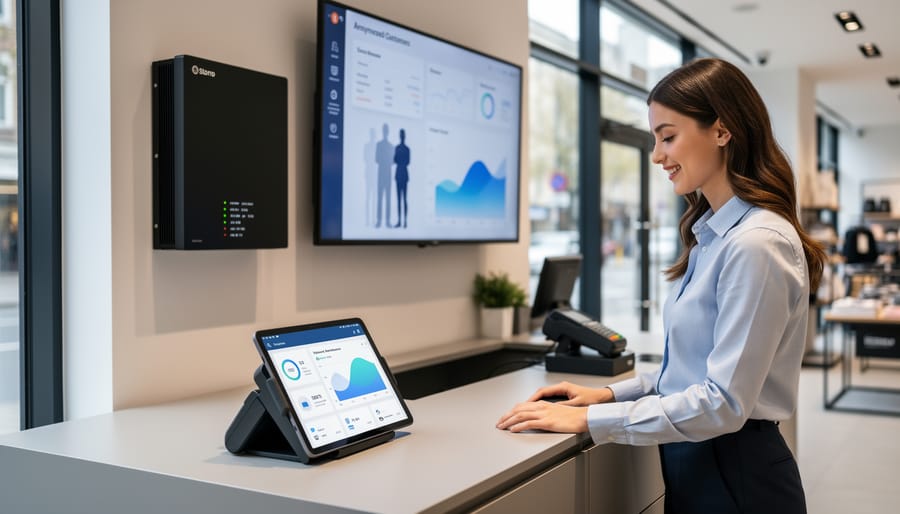
Edge computing addresses a growing concern for your customers: data privacy. By processing sensitive information at the network’s edge rather than sending it to distant cloud servers, you keep customer data closer to home. This localized approach means personal information, transaction details, and behavioral data remain within your controlled infrastructure or even on customers’ devices. For businesses operating across multiple jurisdictions, edge computing simplifies compliance with regulations like GDPR, CCPA, and industry-specific requirements. You can automate data handling processes to ensure information stays within required geographic boundaries without manual oversight. This isn’t just about avoiding penalties—it’s a competitive advantage. When customers know their data isn’t traveling across continents or sitting in shared cloud environments, they trust you more. That trust translates directly into higher conversion rates and stronger customer relationships, particularly for businesses handling financial, healthcare, or personal identification data.
Building Your Edge-Ready Enterprise Architecture
Start With Your Customer Journey, Not Your Tech Stack
Before investing in 5G infrastructure or edge computing solutions, map your actual customer experience. Start by documenting every touchpoint where customers interact with your business—from browsing your website to receiving support after purchase. Identify friction points where delays, disconnections, or poor experiences currently exist.
Focus on three critical questions: Where do customers abandon their journey? Which interactions generate the most complaints? What would provide immediate competitive advantage if improved? These answers reveal your highest-impact opportunities.
For example, if customers frequently abandon purchases due to slow mobile checkout, 5G-enabled edge computing can reduce processing time from seconds to milliseconds. If field service technicians waste hours waiting for remote diagnostics, edge processing can provide instant equipment data analysis.
This customer-first approach prevents the common mistake of implementing impressive technology that solves problems nobody has. Document specific pain points with measurable metrics—response times, abandonment rates, customer satisfaction scores. Then evaluate which combination of 5G connectivity and edge computing directly addresses these issues. This methodology ensures your technology investments deliver quantifiable returns rather than becoming expensive experiments that miss the mark.

The Hybrid Approach That Works for Growing Businesses
The most effective digital transformation strategies don’t force an all-or-nothing choice between infrastructure models. Instead, successful growing businesses adopt a hybrid approach that positions workloads where they perform best and deliver the most value.
Start by evaluating your specific business requirements. Customer-facing applications that demand real-time responses work well at the edge, while sensitive financial data might stay on-premise for compliance reasons. Cloud infrastructure handles scalable marketing campaigns and automated customer communications that need to flex with demand.
This strategic placement reduces costs while improving performance. A retail business might process payment data on-premise, use edge computing for in-store personalized experiences, and leverage cloud platforms for inventory management and customer relationship automation.
The key is matching infrastructure to business outcomes rather than technology trends. Begin with a clear assessment of where your data originates, how quickly it needs processing, and what regulatory requirements apply. This practical framework lets you build incrementally, testing what works before committing significant resources. Your infrastructure should adapt as your business grows, not constrain it.
Automation Opportunities You Can Implement Today
5G and edge computing create immediate opportunities to streamline operations that previously required manual intervention. Start with customer communication workflows—deploy AI chatbots that operate on edge servers to deliver instant responses with zero latency, dramatically improving response times during peak inquiry periods. These systems handle routine questions automatically, freeing your team for complex interactions that drive revenue.
Inventory management transforms with real-time automated processes powered by edge computing. Sensors track stock levels continuously, triggering automatic reorders when thresholds are reached. For marketing teams, this means synchronized campaigns that never promote out-of-stock items, protecting your brand reputation and customer trust.
Consider implementing automated quality control systems that process visual inspections at the edge, identifying defects instantly without sending data to distant servers. This reduces waste and maintains production flow. Additionally, deploy geofencing applications that automatically adjust pricing, promotions, or service offerings based on customer location—perfect for retail and service businesses looking to personalize experiences without adding staff overhead. These implementations deliver measurable ROI within months, not years.
What This Means for Your Marketing and Customer Experience
Personalization That Happens in Milliseconds
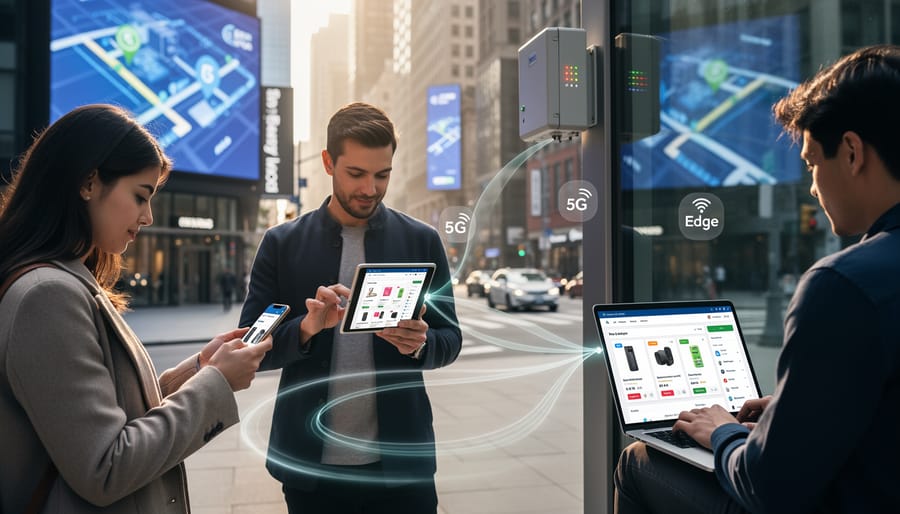
Modern customers expect experiences tailored to their preferences the moment they interact with your brand. Edge computing makes this possible by processing data at the network’s edge—closer to where customer interactions actually happen. Instead of sending information to distant data centers, edge-enabled architecture analyzes user behavior and delivers personalized content in under 100 milliseconds.
This speed matters tremendously for conversion rates. When a customer visits your website, edge servers instantly evaluate their browsing history, location, device type, and current context to serve relevant product recommendations, pricing, or promotional content. An automated system can adjust messaging based on whether someone is a first-time visitor or returning customer without any delays that might interrupt their experience.
The practical application extends beyond websites. Email campaigns, mobile apps, and digital advertising all benefit from real-time personalization powered by edge computing. Your marketing team can deploy sophisticated segmentation strategies that respond to customer actions as they happen, not hours later. This immediate responsiveness transforms customer communication from reactive to genuinely anticipatory, creating competitive advantages that traditional cloud-only architectures simply cannot match at scale.
Better Data for Better Decisions
The combination of 5G and edge computing creates a powerful foundation for better analytics capabilities that directly impact your bottom line. When data processing happens closer to its source through edge computing, and 5G provides the speed to transmit insights in real-time, you gain access to information that was previously impossible to capture or too slow to act upon.
Consider how this changes customer interactions. Retail businesses can now analyze shopping patterns as they happen, adjusting inventory displays or promotions based on real-time foot traffic data. Service companies can monitor equipment performance and predict maintenance needs before failures occur, improving customer satisfaction while reducing costs. Marketing teams receive immediate feedback on campaign performance across multiple channels, enabling rapid adjustments that maximize return on investment.
The automated data collection and processing these technologies enable means your team spends less time gathering information and more time applying insights. Edge devices continuously monitor relevant metrics, from customer behavior to operational efficiency, feeding clean, processed data directly into your decision-making systems.
This isn’t about collecting more data for the sake of it. The key advantage is actionable intelligence delivered when it matters most. You can respond to market shifts, customer preferences, and operational challenges in hours instead of weeks. For businesses competing on customer experience and operational excellence, this speed advantage translates directly into competitive differentiation and revenue growth.
Making the Business Case: Costs vs. Benefits
What You’ll Actually Spend
For most SMEs, a realistic digital transformation budget starts at $50,000-$150,000 for initial implementation, though you can begin smaller with targeted pilots. The key is phasing your investment strategically rather than attempting everything simultaneously.
Start with a foundation phase focused on cloud infrastructure and basic edge capabilities, typically requiring 3-6 months and $25,000-$50,000. This establishes your core architecture without overextending resources. Next, layer in automated processes for client communication and data management, adding another $20,000-$40,000 over the following quarter.
Your largest ongoing cost will be talent—whether hiring specialists or upskilling existing team members. Budget $80,000-$120,000 annually for dedicated technical resources or consider managed service partnerships at $3,000-$8,000 monthly.
The smartest approach? Identify one high-impact use case—perhaps real-time customer engagement or inventory optimization—and prove ROI there first. This typically requires just 15-20 percent of your total transformation budget but delivers measurable results within 6-9 months. Once you demonstrate value, securing budget for broader implementation becomes significantly easier. Remember, phased implementation isn’t slower—it’s smarter, reducing risk while building organizational confidence and capability.
Where You’ll See Returns First
Your initial returns will appear in areas with immediate operational impact. Customer service operations typically show measurable improvements within 3-6 months, as edge computing reduces response times for chatbots and automated support systems. You’ll notice faster data processing for customer inquiries and smoother real-time interactions across communication channels.
Inventory management and supply chain visibility follow closely, with ROI becoming apparent within 6-9 months. Real-time tracking powered by edge devices and 5G connectivity eliminates delays in stock updates and shipment monitoring, reducing costly errors and improving client communication about order status.
Marketing automation sees returns within the first year, particularly in personalized customer experiences. The ability to process customer data at the edge enables instant content customization and targeted messaging based on real-time behavior, improving conversion rates and engagement metrics.
Field operations and remote workforce productivity deliver quick wins too. Mobile teams benefit immediately from reliable, high-speed connectivity, enabling seamless access to cloud applications and real-time collaboration tools.
Focus your initial investments on these high-impact areas rather than attempting organization-wide transformation. This staged approach demonstrates value to stakeholders while building momentum for broader digital initiatives.
Modern enterprise architecture powered by 5G and edge computing isn’t reserved for Fortune 500 companies with unlimited budgets. The competitive advantage lies in understanding that this transformation is fundamentally about improving how you serve customers and operate your business, not just adopting the latest technology trends.
Businesses that approach digital transformation through strategic action rather than reactive technology adoption consistently outperform their competitors. This means starting with clear business objectives—whether that’s reducing customer service response times, personalizing marketing campaigns, or automating routine processes—and then building your architecture to support those goals.
The good news is that implementation can be scaled to match your organization’s size and resources. You don’t need to overhaul your entire infrastructure overnight. Begin with a pilot project in one area of your business where improved speed and data processing will have immediate impact. Measure the results, refine your approach, and expand strategically.
With proper planning and a focus on business outcomes rather than technology for its own sake, companies of all sizes can leverage these powerful tools to enhance client communication, streamline operations, and create experiences that set them apart in their markets. The question isn’t whether you can afford to transform your enterprise architecture—it’s whether you can afford not to.
Leave a Reply