How AI-Powered Hyper Personalization Is Reshaping Marketing Success

In today’s data-driven marketing landscape, hyper-personalization has evolved from a competitive advantage to a fundamental necessity. Companies leveraging artificial intelligence and real-time analytics are seeing up to 40% higher revenue compared to those using basic personalization techniques. This shift goes far beyond simply addressing customers by name – it’s about creating uniquely tailored experiences across every touchpoint of the customer journey.
Modern consumers now expect brands to anticipate their needs, preferences, and behaviors with unprecedented accuracy. By combining behavioral data, purchase history, browsing patterns, and contextual information, marketers can craft individualized messages that resonate on a deeply personal level. This sophisticated approach to personalization delivers relevant content, product recommendations, and offers at precisely the right moment in the customer journey.
The stakes are clear: businesses that master hyper-personalization see increased customer loyalty, higher conversion rates, and significant improvements in customer lifetime value. However, success requires a strategic blend of technology, data analytics, and human insight. As we explore the transformative power of hyper-personalization, we’ll examine how leading brands are revolutionizing their marketing approaches and delivering experiences that feel uniquely crafted for each customer.

The Power of Predictive Analytics in Hyper Personalization
Real-Time Data Processing
Real-time data processing serves as the backbone of hyper-personalization, enabling businesses to deliver tailored experiences at the exact moment they matter most. Modern marketing platforms can instantly collect, analyze, and transform raw data into insights, making split-second decisions about content, offers, and messaging.
This dynamic approach utilizes various data points, including browsing behavior, purchase history, location data, and device information, to create personalized experiences on the fly. For example, when a customer visits your website, the system can immediately adjust product recommendations based on their current session activity combined with historical data.
The real-time processing capability means businesses can respond to customer actions as they happen. If a shopper abandons their cart, automated systems can trigger personalized recovery emails within minutes. Similarly, when customers engage with specific content, the system can instantly adapt subsequent touchpoints to reflect their demonstrated interests.
This immediate responsiveness isn’t just about speed—it’s about relevance. By processing data in real-time, businesses can ensure their personalization efforts remain current and meaningful, significantly improving customer engagement and conversion rates.
Behavioral Pattern Recognition
Modern AI-powered personalization systems excel at identifying and interpreting complex patterns in customer behavior, revolutionizing how businesses understand customer buying decisions. These sophisticated systems continuously monitor and analyze various data points, including browsing history, purchase patterns, time spent on specific pages, and interaction with content.
By processing this wealth of information, AI algorithms can detect subtle patterns that might escape human observation. For instance, they can identify when customers are most likely to make purchases, which product combinations frequently appear together, and how seasonal factors influence shopping behavior.
The real power lies in the system’s ability to adapt and learn in real-time. As customers interact with your platform, the AI refines its understanding of their preferences and adjusts recommendations accordingly. This dynamic approach ensures that personalization becomes increasingly accurate over time, leading to more relevant product suggestions and better-timed communications.
For businesses, this means moving beyond basic demographic segmentation to truly understanding individual customer journeys and anticipating needs before they arise.
Implementing Hyper Personalization Algorithms
Customer Data Integration
Effective customer data integration requires a systematic approach to combining information from multiple touchpoints into unified, actionable profiles. Start by identifying your primary data sources, including CRM systems, website analytics, social media interactions, and purchase histories. Establish a centralized data warehouse that can handle both structured and unstructured data while maintaining secure customer data management practices.
Create a standardized format for data collection and storage to ensure consistency across all channels. Implement data cleaning procedures to remove duplicates, correct errors, and validate information accuracy. Use unique customer identifiers, such as email addresses or customer IDs, to link different data points to the same individual.
Deploy integration tools that can automatically sync data from various sources in real-time. This might include API connections, ETL (Extract, Transform, Load) processes, or specialized customer data platforms (CDPs). Ensure your integration system can handle data privacy compliance requirements and customer consent management.
Establish data governance policies to maintain data quality and consistency over time. Regular audits of your integrated data will help identify gaps or inconsistencies that need addressing. Finally, create automated processes for updating customer profiles as new information becomes available, ensuring your personalization efforts always reflect the most current customer insights.
Machine Learning Models
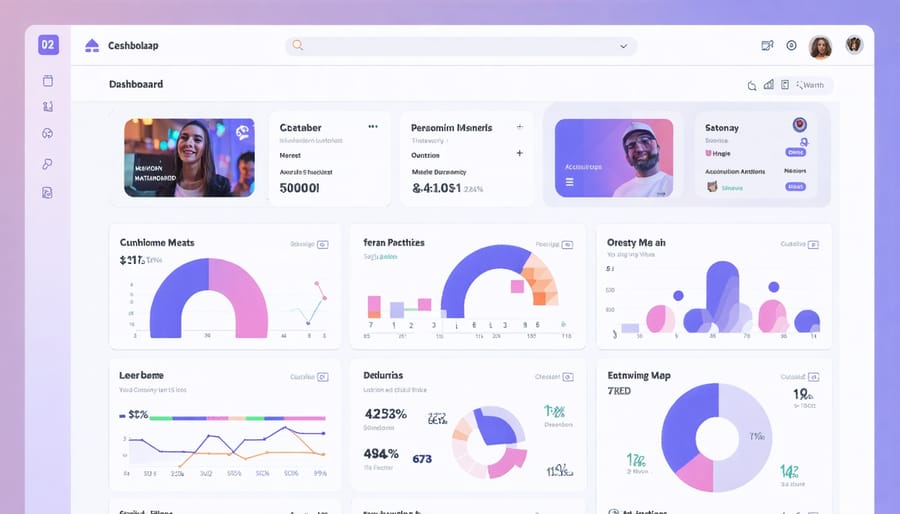
Several machine learning models play crucial roles in delivering personalized marketing experiences. Collaborative filtering algorithms analyze customer behavior patterns to make product recommendations, similar to how Netflix suggests shows based on viewing history. Content-based filtering systems examine product attributes and user preferences to create targeted suggestions, making them particularly effective for e-commerce platforms.
Natural Language Processing (NLP) models help understand customer communications, social media posts, and reviews, enabling brands to generate AI-powered consumer insights that drive personalization strategies. These models can detect sentiment, identify trends, and extract valuable customer feedback automatically.
Decision trees and random forests help segment customers based on multiple variables, creating detailed customer profiles for targeted marketing campaigns. Meanwhile, deep learning networks excel at processing complex data types like images and videos, enabling visual recognition for personalized content delivery.
Predictive analytics models forecast customer behavior, helping businesses anticipate needs and optimize timing for marketing communications. These models analyze historical data, purchase patterns, and engagement metrics to determine the best time and channel for reaching each customer.
For real-time personalization, reinforcement learning models continuously adapt to user interactions, refining recommendations and content delivery based on immediate feedback. This ensures marketing efforts remain relevant and effective as customer preferences evolve.
Measuring Success and ROI
Key Performance Indicators
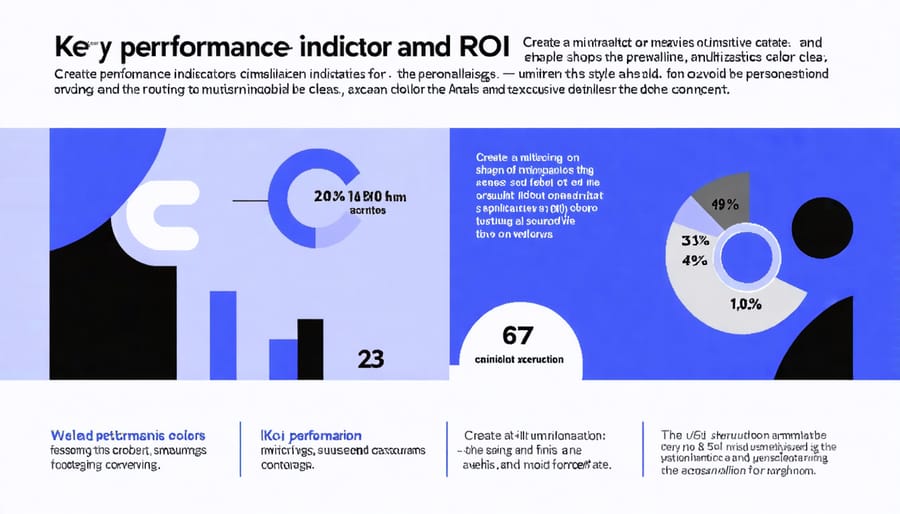
To effectively measure the success of hyper-personalization efforts, businesses must track specific Key Performance Indicators (KPIs). Customer Lifetime Value (CLV) serves as a fundamental metric, showing how personalization impacts long-term customer relationships. Similarly, conversion rates across different customer segments help identify which personalization strategies drive the most sales.
Engagement metrics like click-through rates, time spent on site, and bounce rates provide insights into how well personalized content resonates with visitors. Cart abandonment rates and average order value indicate the effectiveness of personalized product recommendations and pricing strategies.
Customer satisfaction scores and Net Promoter Score (NPS) reveal the impact of personalization on overall customer experience. Response rates to personalized communications, such as email open rates and social media engagement, demonstrate campaign effectiveness.
Return on Investment (ROI) calculations should factor in personalization technology costs against revenue increases. Additionally, customer acquisition costs and retention rates help measure the financial efficiency of personalization strategies.
Monitor these KPIs regularly and adjust your approach based on the data to optimize your personalization efforts continually.
Testing and Optimization
Testing and optimizing your hyper-personalization strategies should be an ongoing process to ensure maximum effectiveness. Start by implementing A/B testing on different personalization elements, such as product recommendations, email subject lines, and content variations. Monitor key performance indicators (KPIs) like conversion rates, click-through rates, and customer engagement levels to measure the impact of your personalization efforts.
Use data analytics tools to track user behavior and identify areas where personalization can be refined. Pay attention to customer feedback and engagement metrics to understand which personalized experiences resonate most with your audience. Regularly update your customer segments based on new data and emerging patterns in customer behavior.
Consider implementing a systematic approach to optimization:
– Test one variable at a time to clearly measure impact
– Set clear success metrics before starting tests
– Allow sufficient time for statistically significant results
– Document all findings and insights for future reference
– Adjust algorithms based on test results
Remember to balance personalization with privacy concerns. Regularly audit your data collection and usage practices to ensure compliance with regulations while maintaining effectiveness. As you optimize, focus on creating value for customers rather than just pushing for immediate conversions.
Hyper personalization has evolved from a cutting-edge trend to an essential marketing strategy. As customer expectations continue to rise, businesses that embrace data-driven personalization will maintain a competitive edge. The future points toward even more sophisticated AI and machine learning applications, enabling deeper customer insights and more precise targeting. Success will depend on striking the right balance between automation and human touch, while maintaining strict data privacy standards. For businesses just starting their personalization journey, the key is to begin with small, measurable steps and gradually expand based on results. Those who adapt to this new marketing paradigm while prioritizing customer trust and value will thrive in the increasingly personalized digital landscape.
Leave a Reply