How Edge Data Processing Transforms Every Customer Interaction Into Revenue

Your customer just abandoned their cart because your promotional email arrived three hours too late. This scenario plays out thousands of times daily for businesses relying on traditional data processing systems that batch customer information overnight or send it to distant cloud servers for analysis.
Edge data processing solves this timing problem by analyzing customer interactions the moment they happen, right where the action occurs—whether that’s your website, mobile app, or point-of-sale system. Instead of waiting for data to travel to a central server, get processed, and return with insights, edge processing delivers instant intelligence that lets you respond to customer behavior in real-time.
The business impact is straightforward: when a customer shows purchase intent, you can engage immediately with personalized offers, support messages, or product recommendations while they’re still actively interested. This isn’t about complex technical infrastructure—it’s about eliminating the delay between customer action and your response.
For small and medium-sized businesses, edge data processing has become accessible through platform solutions that handle the technical complexity behind the scenes. You’re not building data centers or hiring specialized engineers. You’re implementing systems that automatically process customer signals and trigger appropriate responses without human intervention.
The competitive advantage comes from speed. While your competitors send data to distant servers and wait for batch processing results, you’re already engaging customers based on their current behavior. In markets where customer attention spans measure in seconds and cart abandonment rates hover around 70%, processing data at the edge transforms how quickly you can act on customer intent. The question isn’t whether edge processing matters—it’s whether you can afford to keep operating without it.
What Edge Data Processing Actually Means for Your Business
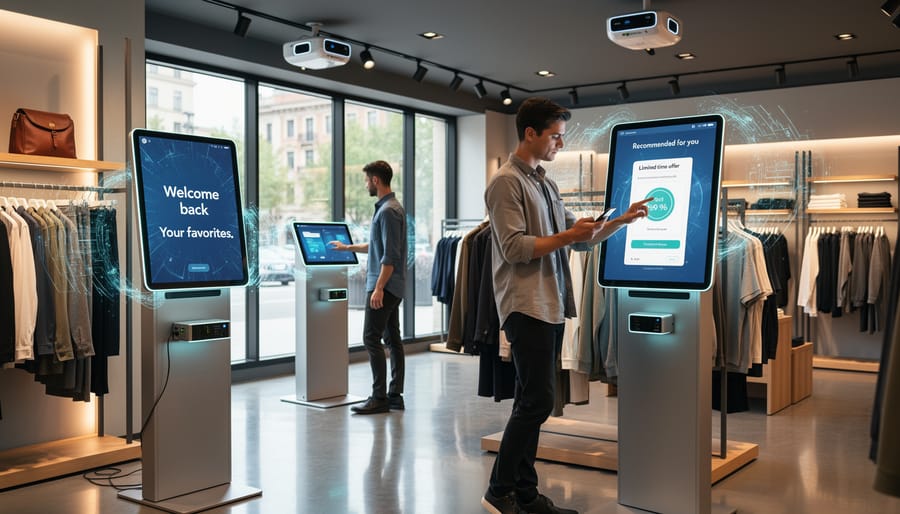
The Traditional Approach (And Why It’s Costing You Customers)
Most businesses today rely on a traditional cloud-only approach to process customer data. Here’s what happens: a potential customer visits your website, clicks “add to cart,” and that information travels to a distant data center for processing before returning with a response. This journey takes precious seconds—seconds that directly impact your bottom line.
Research shows that a one-second delay in page load time can reduce conversions by 7%. When your customer data must make a round trip to the cloud and back, these delays compound quickly. The customer waiting for their cart to update? They’re already considering closing the tab. The lead form that takes too long to submit? Abandoned before completion.
Consider these real-world scenarios playing out daily: A customer tries to apply a discount code, but the system lags for three seconds while validating it against your cloud database. They assume it’s broken and leave. A chat widget delays responding to a simple product question because it’s processing the inquiry remotely. The customer moves on to a competitor’s site. Your personalization engine takes too long to load recommended products based on browsing history, displaying generic content instead.
These aren’t isolated incidents—they’re systematic problems with cloud-dependent processing. Each delay creates friction in the customer journey, and friction costs you money. Your competitors who eliminate these delays win the customers you’re losing to latency.
How Edge Processing Changes the Game
Edge processing fundamentally transforms how businesses interact with customers by eliminating the frustrating delays that plague traditional data systems. Instead of waiting for information to travel to distant servers and back, decisions happen instantly where customer interactions occur.
Consider the difference in real-world scenarios. A customer browsing your website receives product recommendations based on their current behavior within milliseconds, not minutes. Your email campaigns adapt content based on real-time engagement signals as recipients interact with them. Your customer service team sees updated profiles and preferences the moment a client reaches out, enabling truly personalized responses.
This ultra-low latency approach delivers measurable business outcomes. Conversion rates improve because recommendations appear while customer interest peaks. Cart abandonment decreases when personalized incentives trigger at the precise moment hesitation occurs. Customer satisfaction scores rise because every interaction feels tailored and responsive.
The competitive advantage becomes clear when comparing customer experiences. While competitors send generic follow-ups hours later, your automated systems respond within seconds with relevant, personalized communications. When a customer’s browsing pattern indicates purchase intent, your system can instantly adjust messaging, pricing displays, or promotional offers.
For growing businesses, this means competing effectively against larger enterprises without massive IT investments. Edge processing automates the kind of responsive, personalized customer engagement that previously required extensive manual effort or enterprise-scale infrastructure. The result is customer experiences that feel attentive and personalized, driving loyalty and revenue growth through improved engagement at every touchpoint.
Four Ways Edge Data Processing Improves Customer Experience Right Now
Instant Personalization That Actually Converts
Edge processing enables AI-driven personalization that responds to customer actions as they happen, not after the opportunity has passed. When a customer browses specific products on your e-commerce site, edge technology processes that behavior instantly and adjusts product recommendations, pricing displays, or promotional messaging in real-time—before they click away.
For service businesses, this means automated appointment scheduling systems that recognize returning customers and immediately surface their preferred service times and staff members. An HVAC company can display emergency service options to customers visiting during evening hours, while showing maintenance packages to those browsing during business hours.
The conversion impact is measurable. Online retailers using real-time personalization see customers viewing 40% more products per session because recommendations match their immediate interests. Local service providers report 25% higher booking rates when offers adapt to customer behavior patterns within seconds rather than sending follow-up emails hours later. This immediate response creates seamless experiences that feel attentive rather than intrusive, turning more browsers into buyers without requiring additional manual effort from your team.
Smart Chatbots That Understand Context Immediately
Edge processing transforms chatbot interactions by eliminating the frustrating delays that cause customers to abandon conversations. Traditional cloud-based chatbots send customer queries to distant servers, creating noticeable lag times that interrupt natural conversation flow. With edge data processing, AI-powered customer service chatbots analyze customer intent and retrieve relevant information locally, delivering responses in milliseconds rather than seconds.
This immediate responsiveness means your chatbot can understand conversation context without customers repeating themselves or waiting for delayed responses. When a customer asks about product availability, the edge-enabled chatbot instantly accesses your inventory data and provides accurate information while the customer’s attention remains focused. This seamless experience significantly reduces bounce rates, as customers no longer navigate away during those critical waiting moments.
The business impact is measurable. Faster response times directly correlate with higher satisfaction scores and increased conversion rates. Your customer service team also benefits, as the chatbot handles routine inquiries efficiently, freeing your staff to address complex issues that require human expertise. This automated process creates a scalable customer communication system that maintains quality as your business grows.
Location-Based Marketing Without the Lag
Edge computing transforms location-based marketing from a nice-to-have into a powerful conversion tool. When customers walk past your store or browse your website from a nearby location, edge processing enables you to deliver personalized offers instantly—without the delays that make promotions irrelevant.
Traditional cloud-based systems process location data with a lag time that can miss critical moments. A customer standing outside your coffee shop doesn’t need a discount notification five minutes after they’ve walked away. Edge data processing analyzes location signals in real-time, triggering automated messages while the purchase intent is still active.
This technology works seamlessly with IoT customer data, combining foot traffic patterns with browsing behavior to identify high-intent moments. Your system can automatically send a welcome message when a repeat customer enters your store, or surface relevant product information based on which aisle they’re browsing.
The result is marketing that feels helpful rather than intrusive. You’re responding to customer needs in the moment, creating positive experiences that build loyalty while capturing sales that would otherwise slip away.
Real-Time Analytics for Campaign Adjustments
Traditional marketing reports arrive hours or even days after campaigns launch, making it nearly impossible to capitalize on momentum or prevent budget waste. Edge data processing changes this dynamic by analyzing customer interactions the moment they happen, enabling your team to make informed decisions while opportunities are still fresh.
Real-time analytics powered by edge processing allows automated systems to detect emerging patterns instantly. If a particular ad creative suddenly generates higher engagement, the system can automatically allocate more budget to that variant without waiting for manual review. Conversely, underperforming elements can be paused before consuming significant resources.
This immediate responsiveness extends to customer communication as well. When potential clients interact with your content, edge processing identifies their interests and triggers relevant follow-up messages within minutes, not hours. This speed dramatically improves conversion rates because you’re engaging prospects while their interest peaks.
The automation handles routine adjustments continuously, freeing your marketing team to focus on strategy and creative development rather than constant monitoring.
The Automated Advantage: Setting Up Edge Processing to Run Itself
What to Automate at the Edge
Not every customer data task belongs at the edge, but certain processes deliver exceptional value when automated in real-time. Understanding which tasks to prioritize helps you maximize impact without overcomplicating your systems.
Lead scoring benefits enormously from edge automation. When a prospect visits your pricing page three times in one day, downloads a case study, and clicks through your email within minutes, that behavioral pattern signals buying intent. Edge processing evaluates these actions immediately and updates lead scores without delay, ensuring your sales team can reach out while interest peaks.
Behavioral triggers represent another prime candidate for edge automation. When customers abandon shopping carts, stop using key features, or hit usage milestones, instant automated responses make the difference between retention and churn. Edge processing identifies these moments and fires personalized emails, SMS messages, or in-app notifications within seconds, not hours.
Segmentation updates work best when they happen continuously rather than in nightly batch runs. As customers interact with your business, their preferences and behaviors evolve. Edge automation adjusts segment membership in real-time, ensuring every subsequent interaction reflects their current status and interests.
Personalization rules thrive at the edge because they directly impact customer experience. Whether you’re customizing website content, product recommendations, or email subject lines, edge processing applies personalization logic instantly based on the freshest data available. This creates the responsive, individualized experience modern customers expect without requiring manual intervention from your team.

Keeping the Human Touch Where It Matters
Edge data processing doesn’t replace the human element in your business—it amplifies it. By automating the data-heavy lifting at the point of collection, your team gains something invaluable: time to focus on what actually builds lasting customer relationships.
When systems automatically process customer interactions and trigger appropriate responses in real-time, your staff isn’t buried in spreadsheets or manual data entry. They’re freed up to handle complex customer questions, resolve unique concerns, and have genuine conversations that strengthen loyalty. The technology handles routine pattern recognition and basic personalization, while your team tackles the nuanced situations that require empathy and creative problem-solving.
This balance is where sustainable growth happens. Automated edge processing ensures no customer interaction goes unnoticed or unanalyzed, maintaining consistency at scale. Meanwhile, your people invest their energy where it creates the most impact—building trust through personalized communication that no algorithm can replicate. The result is a customer experience that feels both efficient and genuinely human, giving you a competitive advantage that pure automation or manual processes alone cannot deliver.
Is Edge Data Processing Right for Your Business?
Edge data processing isn’t a universal solution, and that’s perfectly fine. The right approach depends on your specific business circumstances and customer engagement needs.
Consider your customer interaction volume first. If you’re handling hundreds or thousands of customer touchpoints daily across multiple channels, edge processing becomes increasingly valuable. You’re managing email responses, website behaviors, social media interactions, and purchase patterns simultaneously. Real-time processing helps you respond appropriately while customers are still engaged. However, if your business serves a smaller customer base with primarily offline interactions, traditional data processing methods may serve you adequately.
Business size matters, but not how you might expect. Edge data processing isn’t exclusively for large enterprises. Small and medium-sized businesses often benefit significantly because they need efficient automation to compete without massive marketing teams. The question isn’t about company size but rather about growth trajectory and customer communication complexity.
Evaluate your marketing sophistication level honestly. Are you currently struggling to send timely follow-ups? Do customer inquiries sit unanswered for hours or days? Are you manually segmenting customers for different campaigns? These pain points signal readiness for edge processing solutions. Conversely, if you’re still establishing basic email marketing or haven’t automated simple customer communications, focus there first.
Ask yourself these practical questions: Do you lose sales because responses arrive too late? Would immediate personalization improve conversion rates? Can your team handle current customer communication volume effectively? Are you planning significant growth in the next year?
If you answered yes to multiple questions, edge data processing likely fits your business needs. If most answers were no, you may not need this level of sophistication yet. Focus on foundational marketing automation first, then revisit as your business scales.
Getting Started Without Overwhelming Your Team
First Steps: Pick One Customer Interaction to Improve
Before investing in new technology, identify where edge data processing will deliver the most immediate value. Start by reviewing your current customer touchpoints and pinpoint where delays or generic responses hurt engagement.
Focus on high-volume, time-sensitive interactions first. Email open rates, website behavior tracking, and abandoned cart scenarios are ideal starting points because they generate substantial data and require rapid response. If customers frequently abandon purchases, prioritizing real-time cart recovery messages processed at the edge can yield quick wins.
Assess your current pain points honestly. Are you losing leads because follow-up emails arrive too late? Do customers receive irrelevant product recommendations? These frustrations signal opportunities where processing customer data closer to the interaction point makes a measurable difference.
Choose one specific interaction to improve rather than attempting a complete overhaul. A focused approach allows you to measure results clearly and refine your automated processes before expanding. For most small to medium-sized businesses, personalizing welcome emails or optimizing product recommendations based on browsing behavior offers manageable complexity with significant impact on customer communication quality and conversion rates.
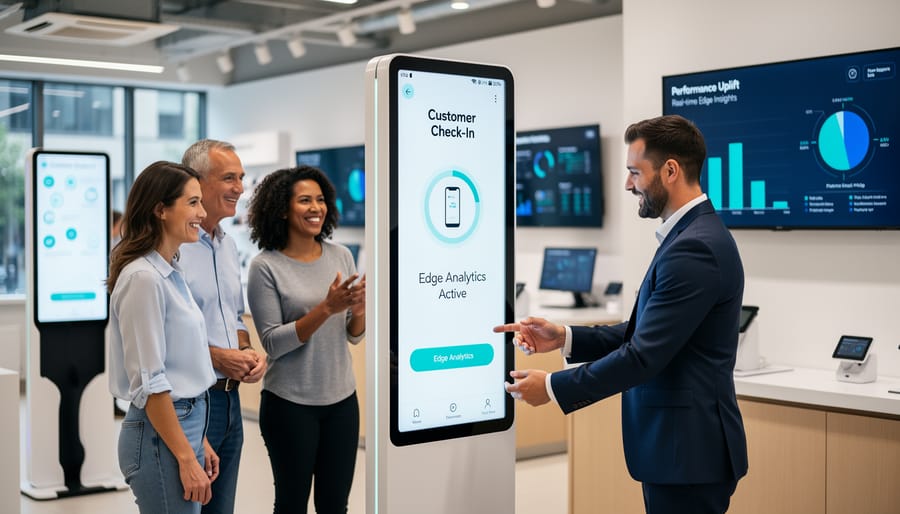
Working with Your Existing Marketing Stack
Good news: implementing edge data processing doesn’t mean scrapping your current marketing tools. Modern edge solutions are designed to work alongside your existing customer relationship management systems, email platforms, and analytics dashboards through standard integrations and APIs.
Most edge processing platforms connect seamlessly with popular tools like HubSpot, Salesforce, Mailchimp, and Google Analytics. The edge layer sits between your customer touchpoints and your marketing stack, processing data in real-time before feeding refined insights into your existing systems. This means your team continues using familiar interfaces while benefiting from faster, more accurate customer data.
The integration typically involves simple configuration rather than custom development. Your current workflows remain intact, but they become more responsive. For example, your email automation tool still sends campaigns as usual, but now it receives real-time behavioral triggers from the edge layer instead of waiting for batch processing updates.
Before implementation, request a compatibility audit from potential vendors. Reputable providers will map out exactly how their solution connects with your specific tools, identify any potential conflicts, and provide clear timelines for integration. This transparency ensures smooth adoption without disrupting your ongoing marketing operations or requiring your team to learn entirely new systems.
In today’s competitive landscape, faster customer data processing isn’t a luxury—it’s a business imperative. Your competitors are already making decisions in milliseconds while outdated systems struggle to keep pace. The businesses that win customer loyalty are those that respond instantly, personalize accurately, and engage at precisely the right moment.
Edge computing isn’t some distant technological future. It’s a practical solution addressing real problems you’re likely facing right now: slow website performance driving customers away, delayed personalization that misses the moment, and frustrated teams waiting for insights that arrive too late to matter. Whether you’re running targeted ad campaigns, managing customer communications, or trying to deliver seamless experiences across multiple touchpoints, processing speed directly impacts your bottom line.
The good news? You don’t need a massive budget or technical expertise to benefit from edge data processing. Many solutions scale specifically for small to medium-sized businesses, offering automated processes that integrate with your existing marketing tools and improve client communication without requiring dedicated IT staff.
Your next step is straightforward: evaluate your current data processing speeds. How long does it take for customer actions to trigger responses? Are you losing conversions during page loads? Is your personalization engine working with fresh data or yesterday’s insights? Identify these gaps, measure the impact on customer experience, and explore edge solutions designed for businesses at your scale. The competitive advantage goes to those who act now, not those who wait for perfection.
Leave a Reply