Industrial Digital Twins Are Changing How Smart Businesses Compete
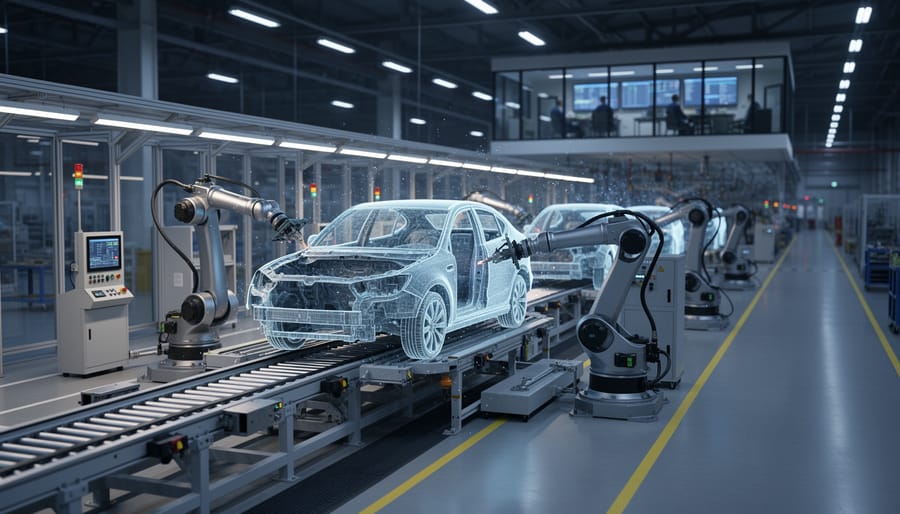
Industrial digital twins are transforming how manufacturers predict equipment failures, optimize production lines, and reduce operational costs—often delivering ROI within 12-18 months of implementation. These virtual replicas of physical assets, processes, or entire facilities use real-time data to simulate scenarios, test changes without disrupting operations, and identify inefficiencies before they become expensive problems.
The business case is straightforward: companies using digital twins report 25-50% reductions in unplanned downtime, 10-20% improvements in production efficiency, and significant decreases in maintenance costs. A automotive manufacturer can test new assembly line configurations virtually before investing in physical changes. A chemical plant can predict when a critical pump will fail and schedule maintenance during planned shutdowns rather than emergency stops that cost thousands per hour.
What makes digital twins accessible now is the convergence of affordable sensors, cloud computing, and user-friendly platforms that don’t require extensive technical expertise to operate. You don’t need a team of data scientists or a massive IT infrastructure to get started. Many businesses begin with a single critical asset or production line, prove the value, then expand systematically.
The technology answers three essential questions every operations leader asks daily: What is happening right now? What will happen next? What should we do about it? For decision-makers evaluating digital transformation initiatives, industrial digital twins offer measurable outcomes, manageable implementation timelines, and clear paths to scaling across operations.
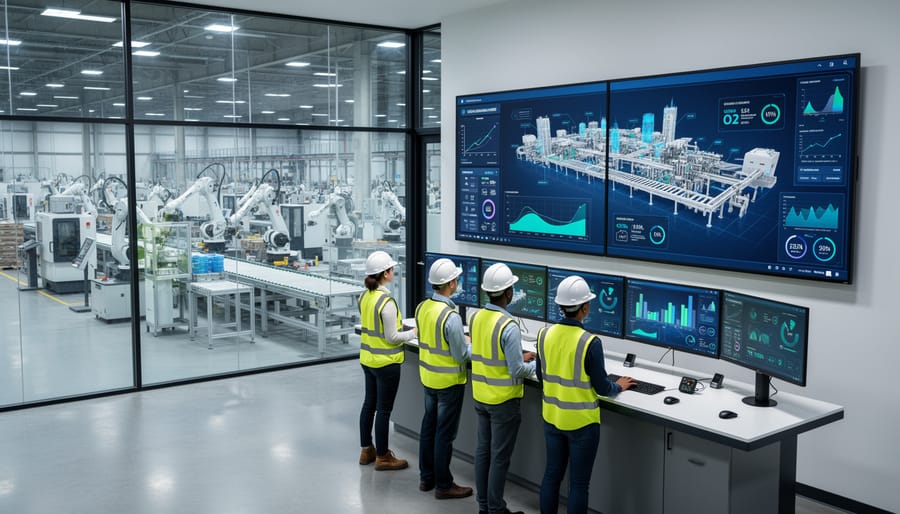
What Industrial Digital Twins Actually Do for Your Business
The Three Types That Matter Most
Industrial digital twins come in three distinct categories, each serving different business purposes. Understanding these types helps you identify which approach delivers the most value for your operations.
Asset twins replicate individual physical objects or equipment. Think of a manufacturing company creating a digital replica of their packaging machine. This twin monitors performance in real-time, predicts when maintenance is needed, and tests adjustments virtually before implementing them on the actual equipment. For a small manufacturer, this means preventing costly breakdowns and reducing downtime from hours to minutes.
Process twins model entire workflows rather than single pieces of equipment. A beverage company might create a digital twin of their entire bottling line, from filling to labeling to packaging. This allows them to identify bottlenecks, optimize production speed, and test new product runs without stopping their physical operations. The result is faster client turnaround times and reduced waste from failed experiments.
System twins represent the most comprehensive approach, replicating entire facilities or operations. A warehouse operation could build a system twin showing how inventory, robotics, staff, and shipping interact. This bird’s-eye view reveals opportunities for automation that wouldn’t be visible when examining individual components. These insights often connect directly to IoT business models that generate recurring revenue through efficiency gains.
Most businesses start with asset twins because they’re simpler to implement and prove value quickly. Once you demonstrate ROI on a single critical asset, expanding to process or system twins becomes an easier sell to stakeholders. The key is matching the twin type to your specific business challenge rather than pursuing complexity for its own sake.
Real Business Problems Industrial Digital Twins Solve
Preventing Expensive Downtime Before It Happens
Equipment failures don’t just happen. They announce themselves through subtle changes in temperature, vibration, and performance patterns that humans often miss. Digital twins capture these signals in real-time, analyzing millions of data points to predict maintenance needs weeks or months before a breakdown occurs.
This shift from reactive to predictive maintenance delivers measurable financial impact. Instead of emergency repairs that halt production lines and require expedited parts shipping, you schedule maintenance during planned downtime. The difference shows up immediately in your bottom line: reduced repair costs, extended equipment lifespan, and eliminated revenue loss from unexpected shutdowns.
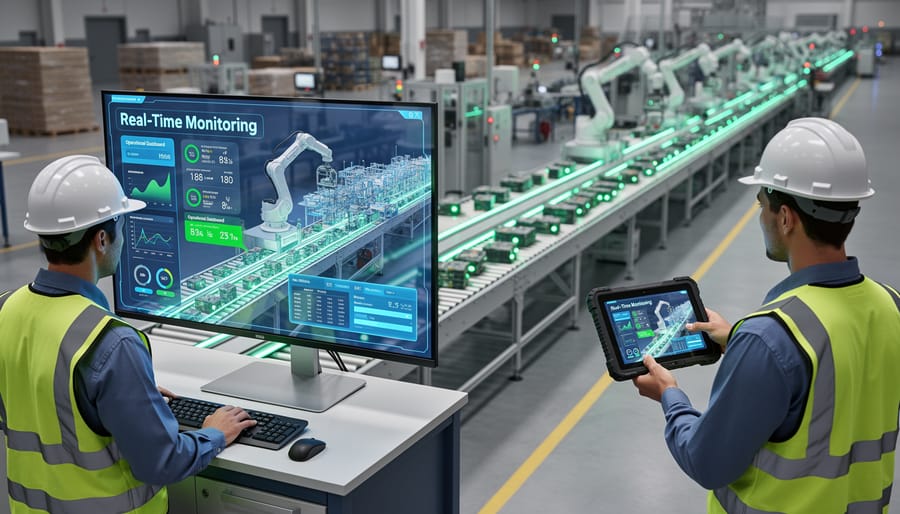
Automated monitoring through digital twins transforms maintenance from a constant worry into a managed process. The system continuously tracks equipment health across your entire operation, flagging anomalies and sending alerts when intervention is needed. Your maintenance team works from data-driven priorities rather than guesswork or rigid schedules that waste resources servicing equipment that doesn’t need attention.
The operational efficiency gains extend beyond maintenance. Digital twins provide real-time visibility into how each piece of equipment affects overall production. You can identify bottlenecks, optimize workflows, and make informed decisions about capacity planning. When you understand exactly how your machinery performs under different conditions, you allocate resources more effectively and communicate realistic timelines to clients.
For small to medium-sized manufacturers, this automated approach levels the playing field. You gain enterprise-level insights without requiring dedicated data scientists or complex monitoring infrastructure that larger competitors traditionally monopolized.
Testing Changes Without Risking Real Operations
Digital twins function as sophisticated virtual laboratories where you can experiment with operational changes before committing real resources. Think of it as A/B testing for your manufacturing floor or supply chain—you test variables in a risk-free environment to determine what actually works.
This capability transforms business process reengineering from theoretical planning into data-driven decision-making. Instead of implementing a new production schedule and hoping it improves efficiency, you can simulate it first. Run the digital twin through various scenarios: peak demand periods, equipment failures, supply chain disruptions. The system reveals bottlenecks and inefficiencies before they cost you money.
The practical applications are extensive. Test new equipment configurations without halting production. Evaluate different maintenance schedules to find the optimal balance between uptime and costs. Simulate the impact of adding a new product line to existing workflows. Each scenario provides concrete performance data—throughput rates, energy consumption, labor requirements—enabling informed decisions rather than educated guesses.
This approach significantly reduces implementation risk. When you eventually roll out changes, you’ve already validated them against realistic conditions. Your team knows what to expect, potential issues have been identified and addressed, and you can communicate these improvements to clients with confidence. The result is faster deployment, fewer costly mistakes, and measurable performance gains that directly impact your bottom line.
Making Faster, Data-Backed Decisions
Industrial digital twins transform decision-making by delivering real-time operational insights that eliminate guesswork from your business strategy. Instead of waiting days or weeks for reports, you gain immediate visibility into equipment performance, production efficiency, and potential issues before they escalate into costly problems.
This immediate access to accurate data enables leadership teams to make data-backed decisions confidently. When a production line shows signs of slowing down, you can quickly identify the root cause and implement corrective measures within hours rather than days. This responsiveness directly impacts your bottom line by minimizing downtime and optimizing resource allocation.
The benefits extend beyond internal operations. Digital twins enhance client communication by providing concrete, visual evidence of progress and performance metrics. When clients ask about project status or production timelines, you can share precise, real-time data rather than estimates. This transparency builds trust and positions your business as professional and accountable.
For automated processes, digital twins act as an early warning system. They continuously monitor equipment and alert your team to anomalies that could disrupt operations. This proactive approach allows you to schedule maintenance during planned downtime, preventing emergency repairs that could delay client deliveries.
The result is a more agile organization that responds quickly to market changes, client needs, and operational challenges while maintaining clear communication channels with all stakeholders.
Who’s Already Winning With Industrial Digital Twins
Real companies across industries are already seeing measurable results from industrial digital twins, and the benefits extend far beyond Fortune 500 manufacturers.
A mid-sized automotive parts manufacturer in Michigan reduced unplanned downtime by 32% within eight months of implementing a digital twin system. By creating virtual replicas of their assembly lines, they could predict equipment failures before they happened, saving approximately $2.3 million annually in lost production time. The system paid for itself in less than a year, and their team required only two weeks of training to use the platform effectively.
In the logistics sector, a regional distribution center handling food products cut energy costs by 18% using digital twin technology. They modeled their entire cold storage operation virtually, identifying inefficiencies in their cooling systems and optimizing temperature zones without risking actual inventory. The result was $420,000 in annual savings and improved product quality through better temperature control. Their facility manager, with no technical background, now runs simulations to test operational changes before implementing them on the warehouse floor.
A commercial property management company overseeing twelve office buildings transformed their maintenance approach with digital twins. Instead of reactive repairs, they now predict HVAC failures up to three weeks in advance. Tenant satisfaction scores increased by 24%, while maintenance costs dropped by 21%. Their small operations team can monitor all buildings from a single dashboard, automating routine checks and freeing up time for strategic improvements.
Even smaller operations are finding value. A specialty chemical producer with just 85 employees uses a simplified digital twin to optimize batch production. They’ve reduced material waste by 15% and improved production consistency, directly impacting profit margins in a competitive market. The initial setup took six weeks with support from their existing equipment vendors.
These examples share common threads: clear return on investment within the first year, minimal technical expertise required, and improvements in metrics that directly affect the bottom line. The technology has matured to the point where companies of various sizes can implement solutions tailored to their specific needs and budgets.
Getting Started Without Overwhelming Your Team
Start With One High-Impact Process
Don’t try to digitize your entire operation at once. Instead, identify one process where pain points are obvious and measurable. Look for operations where downtime costs you real money, where maintenance is reactive rather than planned, or where quality issues create waste.
The best first candidates share three characteristics: high operational costs, frequent failures or disruptions, and availability of existing data. A production line that frequently stops due to equipment issues is ideal. You already feel the pain, you can measure current performance, and you likely have maintenance logs to build from.
Start by documenting current costs. Calculate actual downtime hours, emergency repair expenses, and lost production value. These numbers become your baseline for measuring ROI. A digital twin that reduces unplanned downtime by even 20 percent will pay for itself quickly when you’re losing thousands per hour.
Focus on processes where you can demonstrate results within three to six months. Quick wins build internal support and justify expanding to other areas. Your first digital twin should prove the concept and create momentum, not showcase every possible feature.
Choose Tools That Fit Your Current Systems
Selecting the right digital twin platform starts with evaluating how well it connects with your existing systems. Your chosen solution should integrate seamlessly with current manufacturing execution systems, ERP platforms, and IoT sensors without requiring extensive custom development. Poor compatibility forces your team into manual data transfers and workarounds that defeat the automation purpose.
Before committing to a vendor, request proof of integration capabilities specific to your technology stack. Ask for documented case studies from companies in similar industries rather than generic demonstrations. Watch for vendors who promise “easy integration” without providing clear technical specifications or API documentation.
Prioritize platforms that offer automated data synchronization and real-time updates between your operational systems and the digital twin. This automation eliminates manual data entry, reduces errors, and frees your team to focus on analysis rather than data management. The right tool should pull information from multiple sources automatically and present unified dashboards that require minimal configuration.
Avoid locked ecosystems that make future system changes difficult. Look for open standards and flexible APIs that protect your investment as your operations evolve. Your digital twin should adapt to your business processes, not force you to redesign workflows around the software’s limitations.
Build Internal Buy-In Early
Digital twin success hinges on building stakeholder support before implementation begins. Start by identifying champions across departments—operations, IT, and finance—who understand how real-time simulation impacts their workflows. Create a clear communication plan that explains benefits in business terms: reduced downtime translates to revenue protection, predictive maintenance means budget certainty, and process optimization drives competitive advantage. Schedule regular briefings with department heads to address concerns and gather input on implementation priorities. Share quick wins from pilot projects to demonstrate tangible value. Just as effective client communication drives project success, internal alignment ensures your team embraces the technology rather than resists it. Document feedback loops and establish clear channels for questions throughout the rollout process.
What This Means for Your Business Transformation Strategy
Industrial digital twins represent more than a technological upgrade—they’re a strategic asset that can reshape how you compete in your market. When integrated into broader digital transformation initiatives, these virtual replicas become powerful enablers of business growth and customer satisfaction.
The competitive advantage comes from speed and precision. While competitors rely on gut feelings or delayed reporting, your digital twin provides real-time insights that inform faster, smarter decisions. This translates directly into reduced downtime, optimized resource allocation, and the ability to pivot quickly when market conditions change.
From a marketing perspective, digital twins give you compelling proof points for customer communications. You can demonstrate predictive capabilities, showcase efficiency improvements with concrete data, and differentiate your business as forward-thinking and technologically mature. This resonates particularly well with enterprise clients who value innovation and reliability.
Customer experience improvements follow naturally. When your operations run smoother through digital twin optimization, you deliver more consistent quality, meet deadlines reliably, and can offer transparent updates about project status or delivery timelines. This builds trust and positions you as a partner who invests in excellence.
The key is viewing digital twins as business transformation tools rather than IT projects. Start by identifying where improved visibility and prediction would create the most customer value. Perhaps it’s reducing lead times, improving product quality, or enabling customization at scale. Then build your digital twin strategy around these business outcomes, ensuring every technical capability maps to a tangible competitive advantage that your sales and marketing teams can articulate clearly to prospects and clients.
Industrial digital twins aren’t reserved for Fortune 500 companies with unlimited budgets. This technology has evolved into an accessible business tool that scales to fit operations of all sizes. Whether you’re running a small manufacturing facility, managing a warehouse, or overseeing production processes, digital twin technology can deliver measurable improvements in efficiency, cost reduction, and client communication.
The key is starting small and strategic. Look at your current operations and identify one process that’s causing recurring problems—maybe it’s equipment downtime, production bottlenecks, or quality control issues. That single pain point is your entry opportunity. By focusing on one area, you can test the technology, measure results, and build confidence before expanding to other processes.
Modern digital twin platforms offer flexible implementation options, from basic simulations to comprehensive systems. Many providers now design solutions specifically for mid-market businesses, with pricing models that align with your growth trajectory rather than requiring massive upfront investments.
The competitive landscape is shifting rapidly. Businesses that adopt digital twin technology today position themselves ahead of competitors still relying on reactive management and guesswork. You’re not just optimizing current operations—you’re building the foundation for sustained competitive advantage as markets become increasingly data-driven.
Take action now. Identify that one process, research solutions that fit your scale, and take the first step toward smarter operations. Your future market position depends on the decisions you make today.
Leave a Reply