Smart Marketing Tech That Saves Money (And The Planet)

Sustainable technology revolutionizes modern business operations while protecting our planet’s future. From AI-powered smart grids to zero-waste manufacturing processes, innovative eco-friendly solutions are transforming how companies operate and market themselves. Sustainable practices in digital marketing have become essential for businesses seeking both environmental responsibility and competitive advantage.
Leading organizations implement three key sustainable technology categories:
1. Energy-Efficient Systems: Smart lighting controls, renewable energy installations, and energy management software reduce operational costs while minimizing carbon footprints.
2. Waste Reduction Technologies: Digital document management, cloud-based collaboration tools, and recyclable materials processing systems eliminate physical waste and streamline operations.
3. Resource Optimization Tools: IoT sensors, predictive maintenance software, and automated inventory management systems maximize resource efficiency while reducing environmental impact.
These solutions offer immediate ROI through reduced operational costs, enhanced brand reputation, and improved customer loyalty. By adopting sustainable technologies, businesses position themselves at the forefront of environmental stewardship while driving measurable business growth.
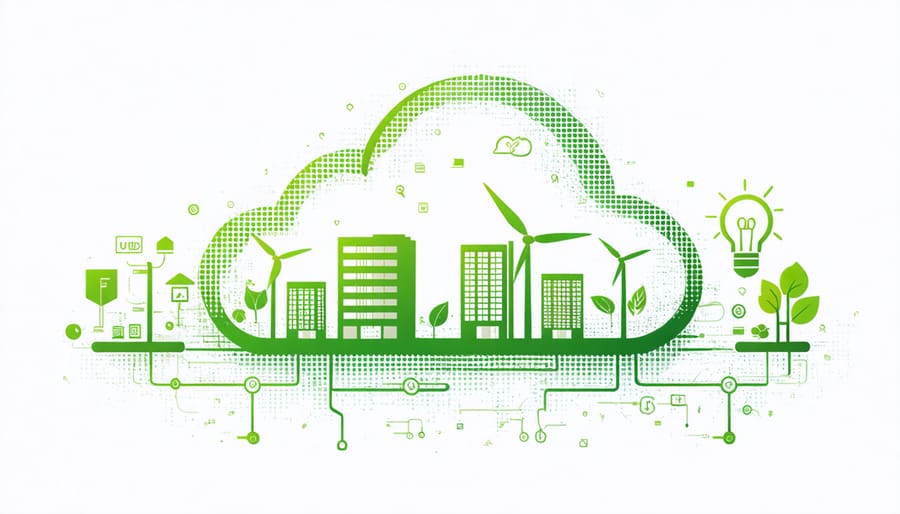
Cloud-Based Marketing Solutions That Cut Energy Waste
Smart Automation Platforms
Smart automation platforms have revolutionized how businesses implement sustainable marketing strategies while minimizing resource consumption. These intelligent systems leverage AI and machine learning to optimize marketing campaigns, reducing energy usage and digital waste while maximizing impact.
Modern automation platforms excel at streamlining resource-intensive processes like email marketing, social media management, and customer relationship management. By automatically scheduling content delivery during peak engagement times, these systems eliminate the need for constant manual monitoring and reduce server load. They also employ smart algorithms to prevent duplicate content distribution and optimize digital asset usage.
Key features of sustainable automation platforms include:
– Intelligent content recycling that repurposes high-performing materials
– Automated A/B testing to identify the most effective campaigns with minimal resource waste
– Smart scheduling that reduces server demands during off-peak hours
– Data-driven insights that help eliminate ineffective marketing efforts
Many platforms now incorporate energy-usage monitoring and carbon footprint tracking, allowing businesses to measure and optimize their digital environmental impact. By automating routine tasks and eliminating redundant processes, these systems not only save time and resources but also contribute to a more sustainable digital marketing ecosystem.
To maximize effectiveness, businesses should choose platforms that align with their specific needs and integrate seamlessly with existing systems, ensuring optimal resource utilization while maintaining marketing performance.
Virtual Meeting and Collaboration Tools
Virtual meeting and collaboration tools have emerged as game-changers in reducing businesses’ environmental impact while enhancing productivity. Platforms like Zoom, Microsoft Teams, and Google Workspace have transformed how companies operate, eliminating the need for frequent business travel and reducing carbon emissions significantly.
These digital solutions offer comprehensive features that make remote collaboration seamless. Video conferencing, real-time document editing, virtual whiteboards, and project management tools enable teams to work effectively from anywhere. For instance, a single virtual meeting with ten participants from different cities can save approximately 5.5 metric tons of CO2 emissions compared to in-person meetings requiring air travel.
Besides environmental benefits, these tools offer substantial cost savings. Businesses report up to 30% reduction in travel expenses and associated costs. The adoption of cloud-based collaboration platforms also minimizes the need for physical storage, paper documentation, and office space, further reducing resource consumption.
To maximize sustainability benefits, companies should:
– Implement a digital-first meeting policy
– Use cloud storage for document sharing
– Utilize virtual training and onboarding programs
– Enable asynchronous collaboration features
– Track and report carbon savings from reduced travel
When selecting collaboration tools, prioritize platforms that offer energy-efficient data centers and demonstrate commitment to sustainability in their operations. This ensures your digital transformation aligns with broader environmental goals while maintaining business efficiency.
Eco-Friendly Digital Marketing Tools
Green Web Hosting Solutions
Green web hosting has emerged as a crucial solution for businesses looking to reduce their digital carbon footprint. These hosting services power their data centers with renewable energy sources like solar, wind, and hydroelectric power, significantly reducing the environmental impact of your online presence.
Leading providers in this space offer various sustainable hosting packages that cater to different business needs. Some notable features include energy-efficient servers, carbon offset programs, and eco-friendly facility management practices. These services typically use advanced cooling systems and energy-efficient hardware to minimize power consumption while maintaining optimal performance.
When selecting a green hosting provider, look for certifications such as Green Power Partnership (EPA) or renewable energy certificates (RECs). These credentials verify the provider’s commitment to sustainable practices. Many providers also offer detailed reports on their environmental impact, allowing you to track and communicate your business’s sustainability efforts to stakeholders.
The cost of green hosting has become increasingly competitive with traditional hosting services, making it a viable option for businesses of all sizes. While some providers may charge a slight premium, the long-term benefits often outweigh the initial investment. These benefits include enhanced brand reputation, lower operating costs through energy efficiency, and alignment with corporate sustainability goals.
To maximize the impact of green hosting, combine it with other sustainable web practices like optimizing image sizes, implementing efficient coding practices, and using content delivery networks (CDNs) to reduce server load.
Energy-Efficient Content Management Systems
Content Management Systems (CMS) are evolving to meet sustainability challenges, with new platforms designed specifically to minimize energy consumption while maintaining optimal performance. These energy-efficient CMS solutions incorporate several key features that reduce server load and decrease overall power usage.
Modern energy-efficient CMS platforms utilize advanced caching mechanisms that significantly reduce the number of database queries and server requests. This not only improves website loading speeds but also decreases the energy required to serve content to visitors. Some platforms have reported energy savings of up to 40% compared to traditional CMS solutions.
Key features of energy-efficient CMS platforms include:
– Static site generation capabilities that minimize server processing
– Automated image optimization to reduce bandwidth usage
– Cloud-based content delivery networks (CDNs) that distribute server load
– Database optimization tools that reduce query intensity
– Built-in analytics for monitoring energy consumption
Business owners can implement these systems by choosing CMS platforms that offer green hosting options and energy-efficient features. Popular choices include platforms that use static site generation or headless CMS architectures, which typically consume less energy than traditional dynamic systems.
To maximize efficiency, businesses should regularly audit their CMS performance, optimize media assets, and implement caching strategies. These practices not only reduce energy consumption but also improve website performance, leading to better user experience and potentially higher conversion rates.
Sustainable Email Marketing Platforms
Email marketing remains a crucial business communication tool, but traditional platforms can contribute significantly to digital carbon footprints through energy-intensive data centers and server operations. Fortunately, several innovative platforms are leading the charge in sustainable email marketing.
Ecosender stands out for its use of renewable energy-powered servers and intelligent sending algorithms that reduce unnecessary data transmission. Their platform automatically optimizes email delivery times to coincide with periods of lower grid demand, reducing peak energy consumption.
Green Mail offers a carbon-neutral email marketing solution by combining energy-efficient infrastructure with tree-planting initiatives to offset remaining emissions. Their simplified template designs minimize data transfer while maintaining professional aesthetics.
SendGreen takes sustainability further by implementing data compression technologies that reduce storage requirements and transmission loads by up to 40%. They also provide detailed environmental impact reports, helping businesses track and improve their email marketing sustainability metrics.
Key features to look for in sustainable email marketing platforms include:
– Renewable energy-powered servers
– Smart sending algorithms
– Compressed data storage
– Energy usage analytics
– Carbon offset programs
– Optimized template designs
When selecting a sustainable email marketing platform, consider both environmental impact and marketing effectiveness. Most eco-friendly platforms now offer comprehensive features comparable to traditional services, making the switch to sustainable email marketing a practical choice for environmentally conscious businesses.
Measuring Your Marketing Tech’s Environmental Impact
Carbon Footprint Tracking Tools
Modern businesses are increasingly adopting carbon footprint tracking tools to monitor and reduce their environmental impact. These digital solutions provide detailed insights into energy consumption, resource usage, and emissions across various business operations, making carbon footprint reduction more manageable and measurable.
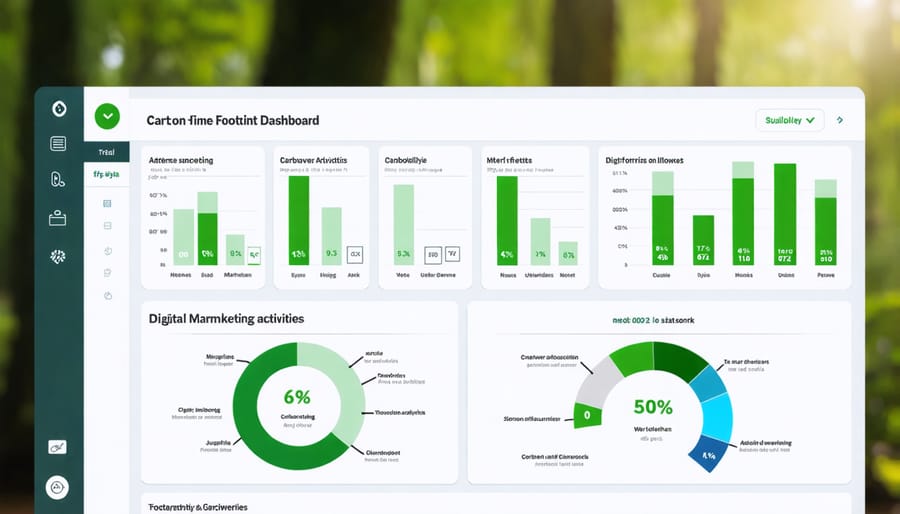
Popular tracking platforms like GHG Protocol Calculator and Carbon Analytics offer user-friendly interfaces that help businesses measure their direct and indirect emissions. These tools typically monitor key metrics such as electricity usage, transportation emissions, waste management, and supply chain impacts. Real-time dashboards and automated reporting features make it easier for companies to track progress and identify areas for improvement.
Many of these platforms integrate with existing business software, including marketing automation tools and CRM systems, to provide a comprehensive view of environmental impact across all operations. Some advanced solutions even incorporate artificial intelligence to predict future emission patterns and suggest optimization strategies.
For marketing teams, these tools are particularly valuable in measuring the environmental impact of digital campaigns, event marketing, and promotional materials. They can help quantify the carbon footprint of various marketing activities, from email campaigns to website hosting, enabling more sustainable decision-making in marketing strategy development.
Most importantly, these tracking tools provide the data needed for transparent environmental reporting, helping businesses maintain accountability and demonstrate their commitment to sustainability to stakeholders and customers.
Optimization Strategies
To minimize your digital marketing’s environmental impact, focus on implementing these proven optimization strategies. Start by conducting a comprehensive audit of your current digital assets and identifying resource-heavy elements that can be optimized. Compress images and videos without compromising quality, using modern formats like WebP and efficient compression tools.
Implement lazy loading for media elements to reduce initial page load and server requests. This not only saves energy but also improves user experience. Consider adopting a “green hosting” provider that uses renewable energy sources and optimize your website’s code to minimize server processing power.
For email marketing campaigns, clean your subscriber lists regularly to avoid sending to inactive addresses, reducing unnecessary data transmission. Use AMP for email to create interactive experiences that don’t require multiple page loads.
In social media marketing, focus on creating evergreen content that can be repurposed across platforms, reducing the need for constant content production and storage. Schedule posts during off-peak hours when data centers typically use less energy.
Implement a content delivery network (CDN) to reduce server load and optimize content delivery. Regular monitoring of your digital marketing metrics can help identify areas where efficiency can be improved while maintaining campaign effectiveness.
Consider adopting AI-powered tools for campaign optimization, as they can help reduce resource waste by targeting only the most relevant audiences and optimizing delivery times.
Real Business Benefits of Sustainable Marketing Tech
Implementing sustainable marketing technology isn’t just about environmental responsibility – it’s a smart business decision that delivers measurable returns. Companies that embrace eco-friendly marketing solutions often see significant cost reductions and improved operational efficiency. Studies show that businesses focusing on green marketing ROI typically experience 15-30% lower operational costs compared to traditional marketing methods.
Digital-first marketing approaches eliminate the need for printed materials, reducing both costs and waste. Cloud-based marketing platforms consume less energy than on-premise solutions, leading to reduced utility bills and smaller carbon footprints. Marketing automation tools streamline workflows and reduce resource consumption while improving campaign effectiveness.
The business benefits extend beyond direct cost savings:
– Enhanced brand reputation and customer loyalty
– Increased market share among environmentally conscious consumers
– Better compliance with emerging environmental regulations
– Improved employee satisfaction and retention
– Access to green business incentives and tax benefits
Real-world examples demonstrate these advantages. Companies using digital content distribution instead of printed materials report marketing cost reductions of up to 40%. Email marketing automation reduces staff hours while maintaining personalized customer communication. Virtual events and webinars slash travel-related expenses and emissions while reaching broader audiences.
Data analytics platforms that optimize campaign targeting reduce wasted ad spend and improve conversion rates. Cloud-based customer relationship management systems minimize hardware requirements while enabling remote work capabilities. These sustainable technologies not only support environmental goals but also drive business growth through improved efficiency and effectiveness.
By investing in sustainable marketing technology, businesses position themselves for long-term success while contributing to environmental preservation. The initial investment in these solutions typically pays for itself through reduced operational costs and increased revenue from environmentally conscious consumers.
Implementing sustainable marketing technology doesn’t have to be overwhelming. Start by assessing your current digital infrastructure and identifying areas where eco-friendly solutions can make the most impact. Consider adopting cloud-based marketing platforms to reduce energy consumption, implement paperless communication systems, and leverage analytics tools that optimize resource usage. Remember to measure and track your sustainability efforts using dedicated monitoring software to demonstrate ROI and environmental impact. Begin with small, manageable changes like switching to energy-efficient hardware and implementing digital-first marketing strategies. As your organization grows more comfortable with sustainable practices, gradually expand your eco-friendly technology adoption. By taking these steps, you’ll not only reduce your environmental footprint but also position your business as a forward-thinking, responsible brand that resonates with today’s environmentally conscious consumers.
Leave a Reply