When Brands Collapse: Real Crisis Examples That Changed Content Strategy Forever

Study the missteps of major brands before disaster strikes your own company. Every business, regardless of size or industry, sits one poor decision, one social media post, or one product failure away from a full-blown crisis. Understanding how established companies have navigated—or fumbled—critical moments provides the blueprint for protecting your brand’s reputation and bottom line.
Real-world brand crises reveal patterns that every business owner and marketing professional must recognize. When United Airlines forcibly removed a passenger from an overbooked flight, when Pepsi’s tone-deaf protest advertisement sparked outrage, or when BP’s oil spill devastated the Gulf Coast, each scenario demonstrated how quickly public trust evaporates without strategic resilience and proper crisis management protocols.
The examples examined in this article span different industries, crisis types, and company sizes—from social media blunders to product recalls and leadership scandals. Each case study breaks down what went wrong, how leadership responded, and the measurable impact on brand value and customer loyalty. More importantly, you’ll discover the specific frameworks and communication strategies that separate companies that recover from those that never regain consumer confidence.
These aren’t abstract corporate cautionary tales. They’re practical lessons that translate directly into actionable crisis management systems you can implement today, ensuring your team knows exactly how to respond when—not if—your brand faces its defining moment.
What Makes a Brand Crisis Different from a Bad Day
Not every negative comment or customer complaint qualifies as a brand crisis. Understanding the distinction between routine business challenges and genuine crises is essential for allocating your resources appropriately and responding with the right level of urgency.
A true brand crisis has three defining characteristics that set it apart from everyday setbacks. First, it generates widespread attention that extends beyond your existing customer base. This means the issue has broken through to social media platforms, news outlets, or industry publications where people who’ve never heard of your brand are now forming negative opinions about it. A handful of unhappy customers on your review page is manageable; thousands of shares on Twitter calling for a boycott is a crisis.
Second, a brand crisis carries the potential for significant long-term damage to your reputation, revenue, or operational capacity. While a bad day might cost you a few sales or require some customer service follow-up, a crisis threatens your brand’s core equity and market position. The impact extends beyond immediate financial losses to affect customer trust, employee morale, investor confidence, and partnership opportunities.
Third, multiple stakeholder groups express concern simultaneously. During a crisis, you’re not just managing customer dissatisfaction. You’re fielding questions from employees, investors, partners, media representatives, and possibly regulators. This multi-directional pressure creates complexity that demands coordinated communication across all channels.
The key differentiator is velocity and scale. Bad days resolve themselves with standard procedures. Crises escalate rapidly, demand executive attention, and require immediate strategic response through your content channels to control the narrative before it controls you. Recognizing this distinction early determines whether you’ll successfully navigate the situation or watch it spiral beyond your control.

Five Brand Crises That Shook the Marketing World

United Airlines: When Customer Experience Goes Viral
In April 2017, United Airlines faced one of the most damaging brand crises in modern aviation history when security forcibly removed Dr. David Dao from an overbooked flight. Passengers captured the violent incident on smartphones, and videos went viral within hours, amassing millions of views across social media platforms.
United’s initial response worsened the situation dramatically. CEO Oscar Munoz released a statement defending employees and describing the passenger as “disruptive and belligerent,” showing zero empathy for the victim. This tone-deaf response triggered massive public backlash, with customers boycotting the airline and destroying loyalty cards on camera.
The crisis escalated because United failed to grasp a fundamental principle: in the digital age, your response window is measured in hours, not days. By the time the airline issued a genuine apology two days later, the damage was done. United’s stock dropped significantly, and the brand became synonymous with poor customer service.
The key lessons are clear. First, acknowledge incidents immediately and express authentic concern for those affected. Second, avoid corporate-speak and defensive language when customers are hurt. Third, implement automated monitoring systems to catch emerging crises before they explode. United’s delayed, defensive communication turned a serious incident into a global brand catastrophe that could have been mitigated with faster, more human crisis response.
Pepsi’s Kendall Jenner Ad: Tone-Deaf Content Strategy
In 2017, Pepsi released an advertisement featuring Kendall Jenner that became an instant brand crisis. The commercial depicted the model joining a protest march and offering a Pepsi to a police officer, seemingly resolving tension with a soft drink. The problem? It trivialized the Black Lives Matter movement and serious social justice issues by reducing meaningful protest to a marketing opportunity.
The backlash was immediate and overwhelming. Social media erupted with criticism pointing out how the ad co-opted genuine activism and minimized real struggles faced by marginalized communities. Critics highlighted the tone-deafness of using a privileged celebrity to portray activism while glossing over the authentic voices and risks of actual protesters.
Pepsi pulled the ad within 24 hours and issued an apology, stating they “missed the mark.” The company acknowledged the content was a misstep and apologized to Kendall Jenner for putting her in that position.
The key lesson here centers on cultural awareness in content strategy. Before launching campaigns that touch on sensitive social issues, brands must involve diverse perspectives in the creative process. This means conducting thorough reviews with team members from different backgrounds and implementing automated approval workflows that flag potentially problematic content before it goes live. Understanding your audience’s lived experiences isn’t optional—it’s essential for avoiding preventable crises that damage both reputation and trust.
Johnson & Johnson Tylenol Crisis: The Gold Standard Response
In September 1982, seven people died after taking cyanide-laced Tylenol capsules in Chicago. This crisis could have destroyed Johnson & Johnson, but their response became the textbook example of effective crisis management.
Within hours of discovering the tampering, J&J immediately issued nationwide warnings and halted all Tylenol advertising. The company recalled 31 million bottles worth over $100 million—an unprecedented move that prioritized public safety over short-term profits. CEO James Burke appeared in media interviews, communicating transparently about what the company knew and the steps being taken.
J&J established a direct communication line with consumers and medical professionals, providing regular updates throughout the investigation. This open dialogue prevented misinformation from spreading and demonstrated the company’s commitment to accountability.
Most remarkably, J&J didn’t just manage the immediate crisis—they redesigned their entire product packaging. They introduced tamper-resistant bottles and caplets, innovations that became industry standards and actually strengthened consumer trust.
The result? Tylenol regained its market-leading position within a year. J&J’s transparent communication, swift action, and genuine concern for customer safety transformed a potentially fatal brand crisis into a demonstration of corporate responsibility. The key lesson: immediate, honest communication paired with concrete protective measures can not only salvage your reputation but enhance it.
Facebook’s Cambridge Analytica Scandal: Trust Erosion
The Cambridge Analytica scandal represents one of the most damaging brand crises in tech history. In 2018, Facebook faced massive backlash when reports revealed that the data of 87 million users had been harvested without consent and used for political advertising purposes.
Facebook’s crisis response was inadequate from the start. The company waited five days before CEO Mark Zuckerberg addressed the issue publicly—an eternity in crisis management terms. This delayed response allowed the narrative to spiral out of control across media channels, with each day of silence amplifying public distrust.
The consequences were severe and long-lasting. Facebook faced congressional hearings, regulatory fines totaling billions of dollars, and a significant erosion of user trust that persists today. The hashtag #DeleteFacebook trended globally as users abandoned the platform in protest.
Key lessons from this crisis include the critical importance of immediate acknowledgment when issues emerge. Automated monitoring systems can help detect brewing problems before they escalate, but human judgment remains essential for crafting authentic responses. Facebook’s initial defensive posture, rather than accepting responsibility, compounded the damage. For business owners, this case demonstrates that transparency and swift action aren’t optional during privacy-related crises—they’re essential for maintaining client trust and avoiding regulatory scrutiny that can fundamentally alter your business operations.
Domino’s Pizza: Turning Crisis into Opportunity
In 2009, two Domino’s employees posted a disturbing video showing unsanitary food handling practices. The video went viral, accumulating over one million views within days and triggering massive public outrage. This incident represents one of the first major brand crises in the social media age.
Domino’s response demonstrated how transparency and speed matter during digital crises. Within 48 hours, then-president Patrick Doyle released a video apology on YouTube, directly addressing customers and outlining immediate corrective actions. The company didn’t hide behind corporate statements or delay their response—they met customers where the conversation was happening.
The recovery strategy included three critical elements: firing the employees involved, implementing new quality control procedures, and launching the “Pizza Turnaround” campaign that openly acknowledged product shortcomings. This radical transparency reversed customer perception and demonstrated accountability.
The key lesson for business owners is straightforward: social media crises require social media responses. Traditional press releases won’t suffice when your reputation is deteriorating in real-time across digital platforms. Domino’s showed that acknowledging mistakes quickly, communicating through the same channels where problems originated, and implementing visible changes can transform a potentially devastating crisis into an opportunity for authentic brand rebuilding. Their sales actually increased following the incident, proving that honest communication resonates with consumers.
The Anatomy of Effective Crisis Response in Your Content Strategy
Speed and Acknowledgment: The First 24 Hours
The first 24 hours of a brand crisis determine whether you’ll control the narrative or lose public trust. When United Airlines forcibly removed a passenger in 2017, their delayed response amplified the backlash exponentially. Speed matters because silence creates a vacuum that angry customers, media, and competitors will fill with their own interpretations.
Set up automated monitoring tools like Google Alerts, Mention, or Brandwatch to detect unusual spikes in brand mentions, negative sentiment, or specific crisis keywords. Configure alerts to notify your team immediately via SMS or Slack when thresholds are exceeded. This early warning system gives you precious hours to assess and respond before a situation spirals.
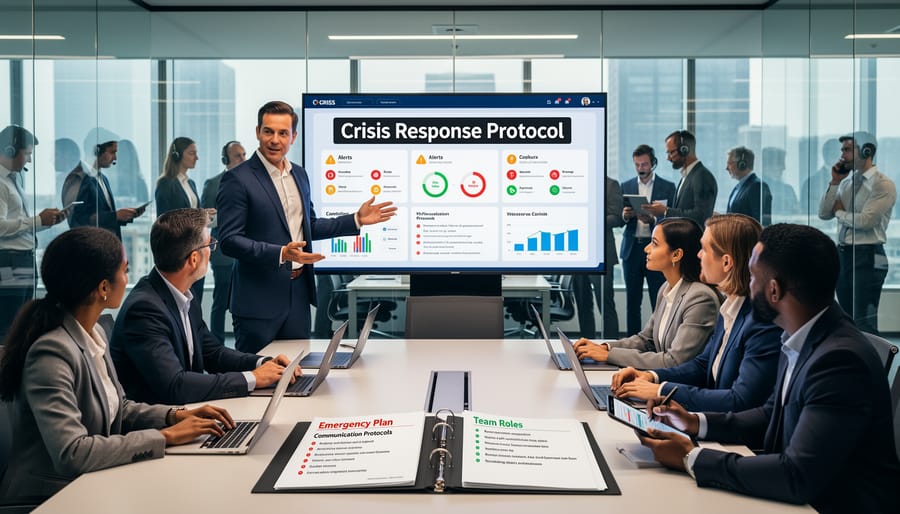
Your initial acknowledgment doesn’t need all the answers—it needs to demonstrate awareness and concern. Use this template: “We’re aware of [situation] and take this matter seriously. We’re investigating and will provide updates as we learn more. [Contact information for affected parties].” This simple statement buys time while showing responsiveness. Avoid defensive language or minimizing the issue. Post this acknowledgment on the platform where the crisis emerged, then amplify across your primary communication channels. Document everything from the start—timestamps, decisions, and communications—as this record proves invaluable for post-crisis analysis.
Channel Selection and Message Consistency
During a brand crisis, selecting the right communication channels can determine whether you regain control or amplify the problem. Focus on platforms where your audience is already active and where the crisis originated. If complaints surface on Twitter, respond there first, then cascade information to your other channels. Don’t ignore any platform where stakeholders might seek updates.
Message consistency across all channels is non-negotiable. Draft a core crisis statement that can be adapted for different platforms while maintaining the same facts, tone, and commitment to resolution. A contradictory message on Instagram versus your website creates confusion and erodes trust.
Leverage your existing content infrastructure for rapid deployment. If you already have email templates, social media scheduling tools, and website update protocols in place, you can respond within hours instead of days. Set up automated systems that allow you to push urgent updates simultaneously across platforms. Pre-approved crisis communication templates save precious time when every minute counts, enabling your team to focus on resolution rather than formatting.
Transparency and Authenticity Over PR Spin
When a crisis hits, your first instinct might be to craft a carefully worded corporate statement. Resist that urge. Audiences today have finely tuned BS detectors, and they can spot PR spin from miles away.
The companies that navigate crises successfully share one common trait: they speak like humans. When KFC faced a chicken shortage in the UK, they didn’t hide behind corporate language. They ran a full-page ad rearranging their letters to spell “FCK” with a simple apology underneath. This honest, self-deprecating approach turned potential disaster into brand affinity.
Admitting mistakes effectively requires three elements. First, acknowledge the specific problem without minimizing it. Second, take clear ownership without passing blame to partners, suppliers, or circumstances. Third, outline concrete steps you’re taking to fix the issue, with realistic timelines.
Your content during a crisis should focus relentlessly on solutions. When Buffer experienced a security breach, they published transparent updates every few hours detailing exactly what happened, what data was affected, and what they were doing to resolve it. No deflection, no corporate-speak, just facts and action plans.
This approach works because it rebuilds the foundation of any business relationship: trust. When you communicate transparently, you’re treating your audience as intelligent stakeholders who deserve the truth. Set up automated communication workflows beforehand so you can respond quickly when issues arise, but always ensure the message itself comes from a real person who understands the situation and cares about making it right.
Building Brand Resilience Before Crisis Strikes

Create Your Crisis Communication Playbook
A comprehensive crisis communication playbook transforms panic into process when disaster strikes. Start by designating primary and backup spokespersons who understand your brand voice and can communicate under pressure. These individuals need media training and clear authority to speak on your company’s behalf.
Develop pre-approved response templates for common crisis scenarios like data breaches, product recalls, or customer service failures. These templates should include statement frameworks, social media responses, and email communications that your team can quickly customize. Include approval workflows that balance speed with accuracy—knowing exactly who needs to sign off prevents delays when every minute counts.
Consider implementing automation tools to streamline your emergency publishing process. Automated systems can instantly push approved messages across multiple channels, send notifications to stakeholders, and schedule follow-up communications without manual intervention. This ensures consistent messaging and frees your team to focus on strategic decisions rather than technical execution.
Your playbook should also document escalation triggers that determine when to activate crisis protocols, contact lists for internal teams and external partners, and monitoring procedures to track crisis evolution. Keep this document accessible, regularly updated, and practiced through simulation exercises so your team knows exactly what to do when real trouble hits.
Build Trust Through Consistent, Value-Driven Content
The most effective crisis prevention strategy isn’t a reactive plan—it’s the trust you build beforehand. Companies that consistently publish value-driven content create a reservoir of goodwill that protects them when problems arise. This means sharing helpful resources, addressing customer pain points, and maintaining transparent communication even when there’s no crisis looming.
Consider establishing automated content workflows that keep your brand visible and valuable to your audience. Regular blog posts, client updates, and educational materials demonstrate commitment beyond just selling. When crisis strikes, audiences who’ve received consistent value are more likely to give you the benefit of the doubt.
Transparency matters even more. Share your company’s decision-making process, admit mistakes openly, and show the human side of your business. This authenticity builds brand equity that acts as a buffer during difficult times. Brands with established credibility can weather storms that might sink less-trusted competitors. The lesson from successful crisis management isn’t just about damage control—it’s about the trust deposits you make every single day through genuine, helpful content.
Monitor Brand Mentions and Sentiment Continuously
The most effective way to prevent brand crises is catching problems before they escalate. Automated monitoring tools like Brandwatch, Mention, or Google Alerts track every mention of your company across social media, review sites, news outlets, and forums in real-time. Set up alerts for your brand name, key products, executive names, and common misspellings to ensure comprehensive coverage.
Pay close attention to sentiment analysis within these tools. A sudden shift from positive to negative mentions signals potential trouble brewing. When you notice unusual spikes in mentions or sentiment changes, investigate immediately rather than waiting to see if issues resolve themselves.
Beyond automated monitoring, maintain active engagement with your audience. Respond promptly to comments, questions, and concerns on all platforms where your brand has a presence. This ongoing dialogue builds trust and often allows you to address grievances privately before they become public complaints.
Establish clear thresholds for when monitoring data should trigger crisis protocols. For example, if negative mentions increase by 300% within 24 hours or if a complaint receives significant traction, activate your response team immediately. Early detection paired with swift action prevents minor issues from becoming tomorrow’s cautionary tale.
What Small and Medium Businesses Can Learn from Corporate Crises
While multinational corporations make headlines when crises strike, small and medium businesses face similar challenges with far fewer resources. The good news? The same crisis management principles that guide Fortune 500 companies apply to businesses of any size.
The key difference lies in execution, not strategy. Large corporations have dedicated crisis teams and substantial budgets, but SMBs have advantages too: faster decision-making, closer customer relationships, and greater agility. A small business can pivot its response within hours, while larger organizations might take days to navigate internal approvals.
Start by establishing a simple crisis response framework before problems arise. Identify who makes final decisions, who communicates with customers, and who monitors your online presence. This doesn’t require a 50-page manual. A one-page document outlining roles and basic response protocols works perfectly for most SMBs.
Automate your monitoring processes using free or low-cost tools. Set up Google Alerts for your brand name, use social media monitoring features built into platforms like Facebook and Instagram, and check review sites regularly. Early detection gives you time to respond thoughtfully rather than reactively.
Prioritize transparent client communication above all else. When issues arise, reach out directly to affected customers before they discover problems on their own. A personal email or phone call costs nothing but demonstrates accountability and builds trust.
Remember that your customers don’t compare your crisis response to major corporations. They evaluate whether you communicated honestly, took responsibility, and resolved issues promptly. A authentic apology from a business owner often carries more weight than a polished corporate statement.
Finally, document every crisis and your response. This creates institutional knowledge that protects your business as you grow. What you learn from handling a product shortage or customer complaint today becomes your playbook for larger challenges tomorrow.
The examples we’ve explored reveal an essential truth: no brand is immune to crisis. What separates resilient companies from those that crumble isn’t perfection—it’s preparedness. The difference lies in having a robust content strategy framework and automated processes ready to activate the moment issues emerge.
Brand resilience isn’t built during a crisis. It’s cultivated through daily practices of transparency, responsive communication, and authentic customer focus. Companies that navigate crises successfully have already established trust through consistent messaging, clear communication channels, and systems that enable rapid response. They’ve automated their monitoring processes, designated crisis teams, and created response templates that can be quickly adapted to specific situations.
The question isn’t whether your brand will face a challenge—it’s whether you’ll be ready when it happens. Your crisis response capability depends on the foundation you’re building today. Are your communication channels tested and reliable? Do you have automated alerts for brand mentions and sentiment shifts? Can your team access approved messaging quickly? Have you practiced your response protocols?
Take action now. Audit your current crisis preparedness. Identify gaps in your monitoring systems, communication processes, and response capabilities. Build resilience into your content strategy before you need it. The brands that emerge stronger from crises are those that invested in preparation during quieter times. Don’t wait for a crisis to discover what you’re missing.
Leave a Reply