Why Digital Biometrics Will Transform How You Connect With Customers

Your customers are already unlocking their phones with their faces and authorizing payments with their fingerprints. Digital biometrics—the technology that identifies people through their unique physical and behavioral characteristics—has moved beyond security applications into a powerful marketing tool that’s reshaping how businesses connect with their audiences.
This technology now enables marketing teams to personalize customer experiences at unprecedented levels, verify user identities without friction, and gather consent-based behavioral insights that traditional analytics miss. From facial recognition in retail stores that identify VIP customers as they enter, to voice biometrics that streamline customer service calls, to fingerprint authentication that reduces cart abandonment in mobile checkout—these applications directly impact your bottom line.
The opportunity is immediate. Businesses implementing biometric authentication report 30-50% reductions in account takeover fraud and significant improvements in customer satisfaction scores. Social media platforms and emerging channels are integrating biometric features that allow marketers to create more secure, personalized campaigns while maintaining customer trust.
The challenge isn’t whether to adopt digital biometrics, but how to implement it strategically while navigating privacy regulations like GDPR and CCPA. Understanding the practical applications, compliance requirements, and integration methods will determine whether you’re leading the conversation with your customers or watching competitors capture their attention. This guide breaks down exactly what you need to know to make informed decisions about biometric technology in your marketing strategy.
What Digital Biometrics Actually Means for Your Marketing Strategy
Digital biometrics refers to the automated recognition and analysis of human characteristics through digital channels. In practical marketing terms, this means your campaigns can now respond to how users look, speak, behave, and even feel when they interact with your content.
The most common biometric technologies in marketing today include facial recognition, which identifies users through their physical features and can gauge attention levels during video ads. Voice analysis goes beyond simple commands to detect tone, sentiment, and emotional states during customer service calls or voice-activated shopping experiences. Behavioral biometrics tracks how users interact with devices—their typing patterns, scroll speed, and navigation habits—creating unique digital fingerprints. Emotion detection uses facial coding and physiological signals to measure real-time reactions to advertisements, product displays, or website designs.
These technologies integrate seamlessly into platforms you already use. Social media networks employ facial recognition for photo tagging and content personalization. Mobile apps utilize voice biometrics for secure authentication and hands-free shopping experiences. Digital advertising platforms leverage emotion detection to optimize ad creative based on viewer reactions, automatically pausing campaigns that generate negative responses or scaling those that drive positive engagement.
The practical benefit is precision. Instead of guessing whether your audience connects with your message, biometric data provides concrete feedback. You can identify which product images hold attention longest, which voice prompts frustrate customers, or which checkout processes cause hesitation based on behavioral patterns.
For your business, this translates to automated optimization. Marketing platforms can adjust content delivery based on user engagement signals without manual intervention. Customer service systems can route calls based on detected stress levels in a caller’s voice. Mobile apps can simplify navigation based on behavioral friction points.
The key is understanding that digital biometrics functions as an enhancement layer over your existing marketing infrastructure, providing deeper insights into customer responses and enabling more responsive, personalized communication at scale.
Where Biometric Data Lives in Today’s Media Channels
Social Media Platforms and AR Filters
Social media platforms have transformed facial recognition technology into powerful marketing tools through biometric data collection. Facebook, Instagram, and Snapchat deploy sophisticated algorithms that map facial features in real-time, enabling AR filters while simultaneously gathering valuable demographic and behavioral insights.
These platforms analyze biometric markers including facial structure, expressions, and engagement patterns to refine ad targeting capabilities. When users interact with filters, the technology captures data points that inform advertiser audiences, improving campaign precision and conversion rates.
For marketers, this presents actionable opportunities. First, create branded filters that encourage user interaction, generating organic engagement while building your data profile. Second, leverage platform analytics to understand which demographics engage most with visual content. Third, use biometric-informed targeting options to reach audiences based on verified age ranges and interests rather than self-reported data.
Privacy compliance remains essential. Ensure your campaigns align with platform policies and regional regulations. Focus on transparent data usage and provide clear value exchange when users engage with your branded content. This approach builds trust while maximizing the commercial benefits of biometric-enhanced social advertising.
Voice-Activated Marketing Through Smart Devices
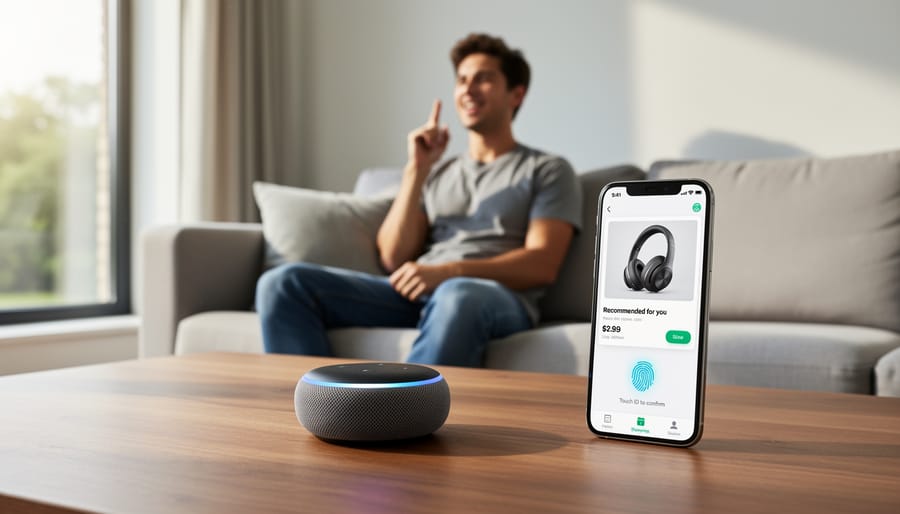
Voice biometrics technology is transforming how businesses interact with customers through smart speakers and virtual assistants. Devices like Amazon Alexa, Google Home, and Apple’s Siri now use voiceprints to identify individual users, enabling highly personalized marketing experiences that were previously impossible.
When customers interact with voice-activated marketing platforms, these systems analyze unique vocal characteristics including pitch, tone, and speech patterns. This identification allows businesses to deliver customized product recommendations, remember user preferences, and streamline purchasing processes without requiring manual login credentials.
For customer service applications, voice biometrics eliminates the need for security questions and passwords. Customers can authenticate themselves simply by speaking, reducing call handling times by up to 45 seconds per interaction while improving security measures.
Smart businesses are integrating voice biometrics into their customer communication strategies to create seamless shopping experiences. Users can reorder products, check account balances, or schedule appointments through natural conversation. This automation reduces operational costs while maintaining the personal touch customers expect, making it particularly valuable for small to medium-sized enterprises looking to compete with larger competitors.
Mobile Apps and In-Store Experience Integration
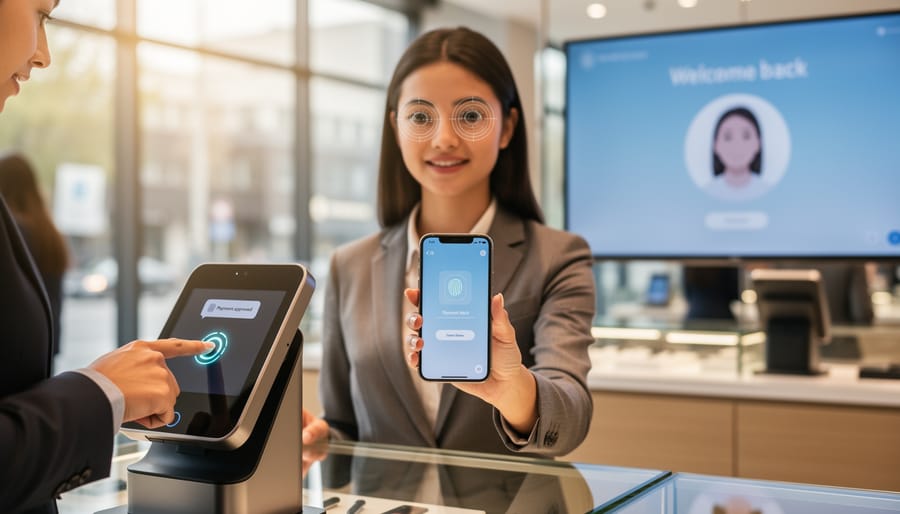
Retail and service businesses are transforming customer interactions by linking biometric authentication with personalized experiences across mobile platforms and physical stores. This integration allows customers to use facial recognition or fingerprint scans through mobile apps to verify their identity, access loyalty rewards, and complete purchases without traditional checkout processes.
Major retailers are implementing systems where customers authenticate once on their mobile app, then receive personalized product recommendations and targeted promotions as they move through physical store locations. The biometric data stays secure on the customer’s device while enabling seamless communication between digital and physical touchpoints. This approach eliminates friction from the purchasing process while gathering valuable insights about customer preferences and shopping patterns.
Coffee chains, grocery stores, and fashion retailers are leading this integration, allowing customers to simply scan their face or fingerprint at checkout rather than fumbling with wallets or payment cards. The technology automatically applies relevant discounts, tracks purchase history, and suggests complementary products based on previous buying behavior.
For business owners, this integration creates opportunities to build stronger customer relationships through automated, personalized communication. You can send timely offers when customers enter your location, streamline the checkout experience, and gather actionable data about shopping behaviors. The key is implementing systems that prioritize customer convenience while maintaining transparent data practices. Start small by integrating biometric payment options into your existing mobile app, then expand to personalized in-store experiences as customer adoption grows.
The Real Business Benefits You Can Measure
Digital biometrics delivers measurable business outcomes that directly impact your bottom line. When implemented strategically, this technology transforms how you acquire, convert, and retain customers while reducing operational costs.
The most immediate benefit appears in fraud reduction. Businesses using biometric authentication report fraud losses decreasing by 60-90% within the first year of implementation. Every prevented fraudulent transaction saves not just the transaction value, but also the time and resources spent on dispute resolution. For e-commerce businesses, this translates to thousands of dollars saved monthly while building customer trust.
Conversion rates improve significantly when friction disappears from the customer journey. Traditional password-based authentication abandons 25-40% of potential customers at checkout. Biometric authentication completes in under two seconds, reducing cart abandonment by up to 35%. This creates personalized marketing ROI improvements that compound over time as returning customers experience faster, smoother transactions.
Customer acquisition costs decrease through more precise targeting capabilities. Biometric data enables you to understand genuine user behavior patterns, eliminating bot traffic and fake accounts from your analytics. Marketing teams gain accurate insights into which campaigns attract real, valuable customers rather than making decisions based on inflated metrics. This clarity typically reduces wasted ad spend by 20-30%.
The automation efficiency gains are substantial. Biometric systems eliminate password reset requests, which cost businesses an average of $70 per incident when accounting for support time. Companies report 40-60% reductions in customer service inquiries related to account access, freeing your team to focus on revenue-generating activities.
Customer lifetime value increases through streamlined customer experiences. When customers can access their accounts instantly across devices without remembering credentials, engagement rates climb. Businesses track 25-45% increases in repeat purchase frequency after implementing biometric login options.
These benefits multiply across your marketing ecosystem. Automated processes reduce manual touchpoints, your team communicates with customers more effectively with accurate data, and you make strategic decisions based on verified user behavior rather than assumptions. The technology pays for itself through fraud prevention alone, while the efficiency gains and conversion improvements create ongoing value that grows with your business.
Privacy Regulations You Need to Know Before You Start
Before launching any biometric marketing campaign, you need to understand three critical regulatory frameworks that govern this data: GDPR in Europe, CCPA in California, and state-specific biometric privacy laws in the United States.
The General Data Protection Regulation (GDPR) classifies biometric data as a special category of personal information requiring explicit consent. This means you cannot collect facial recognition data, fingerprints, or voice patterns without clear opt-in from users. You must also provide transparent information about how you’ll use this data and allow users to withdraw consent at any time.
California’s Consumer Privacy Act (CCPA) gives residents the right to know what biometric information businesses collect and the right to request deletion. If you’re running digital campaigns targeting California consumers, you need clear privacy notices and accessible opt-out mechanisms. The financial penalties for non-compliance can reach $7,500 per intentional violation.
States like Illinois, Texas, and Washington have enacted specific biometric privacy laws with even stricter requirements. Illinois’ Biometric Information Privacy Act (BIPA), for example, requires written consent before collecting biometric identifiers and mandates data retention schedules. BIPA has resulted in significant lawsuits against major companies, making compliance non-negotiable.
Here’s how to turn compliance into a competitive advantage. First, build consent mechanisms directly into your campaign workflows. Make privacy notices clear and accessible, not hidden in fine print. Second, implement automated data retention policies that delete biometric information once it’s no longer needed for your stated purpose. Third, maintain detailed documentation of your compliance procedures to demonstrate good faith efforts.
Fourth, consider privacy-by-design principles when selecting biometric tools. Choose vendors who process data locally on devices rather than transmitting it to servers. This minimizes risk and often falls outside stricter regulatory requirements.
Companies that proactively communicate their biometric privacy protections build consumer trust faster than competitors. When users see you’re transparent about data handling, they’re more likely to opt in and engage with your campaigns. Compliance isn’t just about avoiding fines; it’s about establishing credibility in an increasingly privacy-conscious market.
How to Start Integrating Biometric Data Without Overhauling Everything
Assess Your Current Tech Stack and Customer Touchpoints
Before implementing biometric technology, conduct a systematic review of your existing customer journey. Start by mapping every point where customers interact with your business—website login, mobile app access, checkout processes, customer service portals, and physical locations if applicable. Identify friction points where customers currently experience delays, security concerns, or abandonment.
Next, evaluate your current authentication methods. Are customers frustrated with password resets? Do you see high cart abandonment during checkout? Are you losing leads during lengthy registration processes? These pain points signal opportunities for biometric solutions.
Consider your customer demographics and device usage patterns. Review analytics to understand what devices your audience uses and whether they have biometric capabilities built-in. Most modern smartphones support fingerprint or facial recognition, making these options immediately accessible.
Assess your technical infrastructure’s readiness. Can your current systems integrate with biometric APIs? Do you have proper data encryption and storage capabilities? Review your customer communication channels—email, SMS, chatbots—and determine where streamlined biometric authentication could reduce response times and improve service quality.
Finally, prioritize integration points based on business impact. Focus on high-traffic areas where biometric authentication delivers immediate value through reduced friction, enhanced security, or improved conversion rates. This targeted approach ensures practical implementation without overwhelming your resources.

Choose the Right Tools and Partners
Selecting the right biometric-enabled marketing platforms requires careful evaluation of several key factors. Start by assessing automation capabilities—look for platforms that can automatically process biometric data and trigger personalized marketing actions without constant manual intervention. This saves time and ensures consistent customer experiences.
Prioritize vendors with proven track records in data security and compliance. Ask potential partners about their encryption methods, data storage practices, and adherence to privacy regulations. Request case studies from businesses similar to yours to verify their expertise.
Implementation ease matters significantly. Choose solutions with intuitive dashboards, clear documentation, and responsive technical support. The best platforms offer guided setup processes and training resources that enable your team to launch campaigns quickly without extensive technical knowledge.
Evaluate integration capabilities with your existing marketing stack. The platform should connect seamlessly with your CRM, email marketing tools, and analytics software to create unified customer profiles. Test the API documentation and ask about pre-built integrations.
Finally, consider scalability and pricing transparency. Select partners that can grow with your business and offer flexible pricing models aligned with your budget and expected usage levels.
Test, Automate, and Scale
Start with a controlled pilot program to test biometric features on a single channel where you have strong customer engagement. Set clear success metrics—whether that’s reduced cart abandonment, improved login rates, or faster authentication times. Run the pilot for 30-60 days, gathering both quantitative data and qualitative customer feedback through surveys or support interactions.
Once you’ve validated the approach, automate the successful elements using your existing marketing and CRM platforms. Most biometric solutions integrate with standard authentication systems, allowing you to streamline the customer experience without manual intervention. Focus on automating enrollment prompts, fallback authentication methods, and data syncing across your systems.
Scale gradually by expanding to additional channels based on priority and technical readiness. Begin with platforms where customers already expect seamless experiences, like mobile apps and account portals, before moving to newer touchpoints. Maintain consistent communication with your customers throughout the rollout, explaining benefits and providing easy opt-in processes. Monitor performance continuously and adjust your automation rules based on real-world usage patterns to optimize both security and convenience.
The competitive landscape rewards businesses that adopt biometric technology early, but the perceived complexity shouldn’t hold you back. Starting small is not only acceptable—it’s the recommended approach. Begin with one channel where your audience is most engaged, whether that’s implementing voice authentication for customer service or testing facial recognition features in your mobile app. Automation tools now handle much of the technical heavy lifting, making integration far more manageable than most business owners expect.
Concerns about privacy and implementation costs are valid, but they’re also solvable. Modern biometric platforms prioritize user consent and data protection by design, and many solutions operate on scalable pricing models that fit growing businesses. The key is choosing partners who understand compliance requirements and can guide your team through the process.
Your next step is straightforward: identify one customer touchpoint that would benefit from enhanced security or personalization. Test a biometric solution there, measure the results, and expand based on what works. The businesses gaining market share aren’t necessarily the largest—they’re the ones willing to experiment with technologies that improve client communication and streamline operations. Don’t wait for perfect conditions. Start exploring how biometric integration can differentiate your business today.
Leave a Reply