Why Your Amazon Prime Products Aren’t Selling (And How to Fix It Fast)

Amazon Prime sellers who optimize their marketplace presence see conversion rates up to 3x higher than non-Prime competitors. The difference lies in strategic positioning and automated efficiency.
Qualify your products for Fulfillment by Amazon (FBA) to unlock Prime badges automatically. This single step grants access to over 200 million Prime members while Amazon handles storage, packing, shipping, and customer service. Your inventory reaches customers in one to two days without building your own logistics network.
Price competitively within the Buy Box algorithm parameters by maintaining healthy profit margins while staying within 5-10% of the lowest Prime offer in your category. Monitor competitor pricing daily and adjust automatically using repricing tools that respond to market changes in real-time.
Optimize product listings with high-resolution images, keyword-rich titles under 200 characters, and bullet points that address specific customer pain points. Amazon’s A9 algorithm prioritizes listings that convert, so focus on search terms customers actually use rather than stuffing keywords.
Maintain inventory levels that prevent stockouts, as even temporary unavailability damages your ranking permanently. Set automated reorder points at 30 days of remaining stock to account for manufacturing and shipping lead times.
The Prime marketplace rewards sellers who combine Amazon’s fulfillment infrastructure with data-driven listing optimization. Success requires understanding how Prime eligibility, competitive pricing, and inventory management work together to capture the Buy Box and drive consistent sales growth. Master these fundamentals before expanding to advanced advertising strategies.
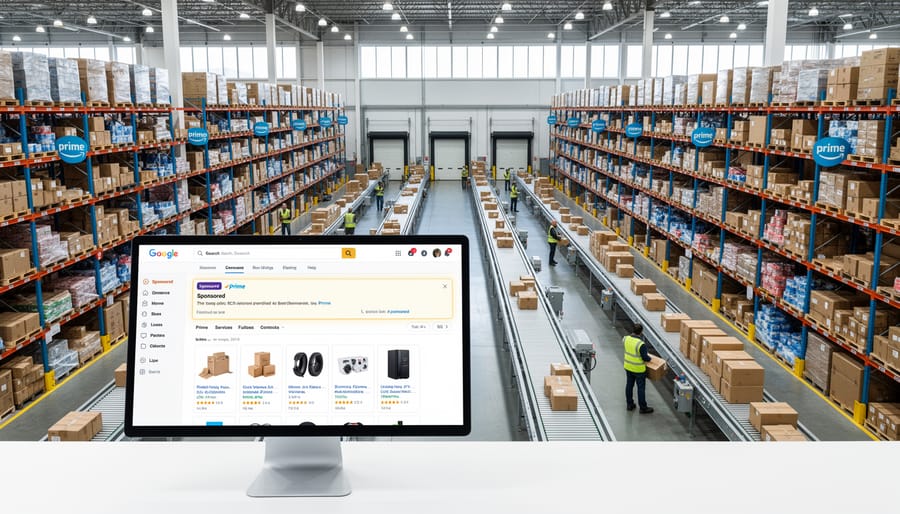
What Makes Amazon Prime Marketplace Different
The Prime Badge Advantage (And Its Limitations)
The Prime badge delivers three measurable advantages for marketplace sellers. First, it significantly boosts product visibility in search results, as Amazon’s algorithm prioritizes Prime-eligible listings. Second, conversion rates typically increase 20-50% compared to non-Prime products, since customers trust the guaranteed two-day shipping and easy returns. Third, you gain immediate credibility with Amazon’s 200+ million Prime members who actively filter search results to show only Prime-eligible items.
However, the badge alone won’t guarantee success. Many sellers mistakenly believe that enrolling in Fulfillment by Amazon automatically translates to higher sales. The reality is more nuanced. Without competitive pricing, your Prime products will still lose to better-priced alternatives. Poor product photography and weak descriptions diminish the badge’s impact regardless of shipping speed. Low inventory levels can trigger Amazon’s automated systems to suppress your listings, effectively neutralizing your Prime status.
The badge also doesn’t protect you from negative reviews or account health issues. A single policy violation can result in listing suspension, making your Prime eligibility irrelevant. Additionally, FBA fees consume 30-40% of your revenue on average, meaning thin-margin products may actually lose money despite increased visibility.
Think of the Prime badge as a door opener rather than a complete solution. It gets customers to your listing, but your product quality, pricing strategy, and optimized content determine whether they actually buy. Smart sellers combine Prime eligibility with automated repricing tools and inventory management systems to maximize the badge’s potential while maintaining profitability.
How Amazon’s A10 Algorithm Ranks Prime Products
Amazon’s A10 algorithm determines which Prime products appear at the top of search results, directly impacting your sales potential. Unlike earlier versions, A10 places greater emphasis on organic sales velocity and customer satisfaction metrics rather than sponsored advertising alone.
The algorithm evaluates three primary categories when ranking Prime listings. First, relevance factors assess how well your product matches customer searches. This includes understanding customer search intent through optimized titles, bullet points, descriptions, and backend keywords. Your product must align with what shoppers actually want, not just contain generic terms.
Second, performance metrics measure your product’s success rate. The algorithm tracks click-through rates, conversion rates, and sales velocity. Products that convert browsers into buyers receive preferential ranking. Amazon rewards listings that demonstrate consistent sales patterns, particularly organic purchases that occur without heavy advertising spend.
Third, customer satisfaction signals carry substantial weight in A10 rankings. These include product reviews, star ratings, return rates, and seller feedback scores. Prime products with higher ratings and lower return rates gain algorithmic advantages. The system also considers fulfillment performance, order defect rates, and response times to customer inquiries.
Recent algorithm updates prioritize seller authority and account health. Established sellers with strong performance histories receive modest ranking boosts compared to newer accounts. The system also evaluates inventory management, penalizing frequent stockouts that disappoint customers.
To leverage these ranking factors effectively, focus on automated inventory management systems that prevent stockouts while maintaining healthy stock levels. Implement processes for collecting customer feedback promptly and addressing concerns quickly. Monitor your performance metrics dashboard regularly to identify optimization opportunities before they impact your rankings significantly.
The Core Elements of Amazon Prime Search Optimization
Keyword Strategy for Prime Listings
Optimizing your Prime listings starts with understanding how customers search for Prime-eligible products. Prime shoppers often include terms like “prime eligible,” “fast shipping,” or “two day delivery” in their searches, even though Amazon’s filtering handles this automatically. Your keyword research strategy should account for these behavioral patterns while focusing on product-specific terms that convert.
Begin by analyzing your Brand Analytics Search Query Performance report in Seller Central. This tool reveals exactly which search terms customers use before purchasing products in your category. Focus on high-conversion keywords with manageable competition rather than chasing high-volume generic terms. Prime customers typically search with purchase intent, so prioritize commercial keywords over informational ones.
Your product title should include your primary keyword within the first 80 characters, along with essential product attributes. Amazon’s algorithm weighs title keywords heavily, but avoid keyword stuffing that reduces readability. Prime customers make quick decisions, so clarity trumps keyword density.
Backend search terms deserve equal attention. Use all available character space for relevant synonyms, alternate spellings, and related terms that don’t fit naturally in your listing. Include common misspellings, abbreviations, and regional terminology. Avoid repeating words already in your title or bullet points since Amazon automatically indexes visible content.
Leverage Amazon’s auto-suggest feature by typing relevant terms into the search bar. These suggestions reflect actual customer queries and provide insight into seasonal trends and emerging search patterns. Monitor these regularly and update your backend terms quarterly.
Consider implementing an automated keyword tracking system to monitor your rankings for target terms. This removes manual checking while providing consistent performance data. When keywords slip in rankings, you can quickly adjust your listing or advertising strategy.
Test different keyword combinations in your sponsored product campaigns. The search term reports from these campaigns reveal which phrases drive conversions, informing both your organic listing optimization and future advertising investments.
Product Title Optimization That Converts
Your product title is the first thing Prime shoppers see, and it directly impacts both Amazon’s algorithm and customer click-through rates. The key is creating titles that satisfy search requirements while remaining scannable and appealing to human buyers.
Start with your primary keyword in the first 80 characters. Amazon’s mobile display often truncates titles, so front-load the most important information. Include your brand name, core product type, and one key differentiator right away. For example: “Premium Yoga Mat – Non-Slip Extra Thick Exercise Mat with Carrying Strap.”
Follow a proven title structure: Brand + Product Type + Key Feature + Size/Quantity + Color/Variant. This framework ensures you capture essential search terms without creating keyword-stuffed gibberish. Prime shoppers expect professionalism, so avoid ALL CAPS or excessive punctuation that screams desperation.
Incorporate relevant modifiers that Prime customers actively search for, such as “pack of,” “bundle,” “set,” or specific measurements. These terms improve discoverability while providing practical information buyers need. Research your category’s top sellers to identify commonly used phrases that resonate with your target audience.
Test title variations systematically through Amazon’s automated tools or your own split-testing process. Track click-through rates and conversion data to identify which structures perform best. Effective e-commerce optimization requires continuous refinement based on actual performance metrics, not assumptions.
Remember that Amazon limits titles to 200 characters in most categories. Use this space strategically, prioritizing clarity over cramming every possible keyword into your title.

Bullet Points and Descriptions That Drive Action
Prime customers expect comprehensive, accurate information delivered efficiently. Your bullet points serve as the critical bridge between customer questions and conversion decisions, so structure them strategically.
Begin with your most compelling Prime-specific benefits in the first two bullets. Highlight fast delivery compatibility, premium quality features, or exclusive advantages that justify the Prime customer’s membership value. These shoppers scroll quickly and make snap decisions based on immediate relevance.
Each bullet point should address specific customer concerns while naturally incorporating search terms. Instead of generic statements like “high quality material,” write “Commercial-grade stainless steel construction resists corrosion for outdoor use.” This approach answers the customer’s durability question while improving searchability for relevant terms.
Structure your five bullets following this proven formula: start with dimension and compatibility details, follow with primary features and benefits, then address common pain points your product solves. Prime customers particularly value time-saving features and convenience factors, so emphasize these elements clearly.
Your product description should expand on bullet points without redundancy. Address questions that automation tools and customer reviews frequently highlight. Include use cases, technical specifications, and comparison points that help customers confirm their purchase decision quickly.
Avoid vague promotional language. Prime shoppers are experienced buyers who value specificity over marketing fluff. Replace “best in class” with measurable attributes like “30% lighter than standard models” or “includes 5-year manufacturer warranty.”
Remember that your product details feed Amazon’s search algorithm while serving customer needs. Strategic keyword placement in natural, helpful sentences improves visibility without compromising readability. Test and refine based on search term reports to continuously improve performance.

Image Standards Prime Customers Expect
Prime customers scroll quickly through search results, making your product images the decisive factor in whether they click or keep scrolling. Amazon requires at least one image at 1000 pixels or larger on the longest side to enable zoom functionality, but meeting minimum requirements won’t differentiate your listing from competitors.
Your main image must show the product on a pure white background (RGB 255, 255, 255) and fill at least 85% of the frame. Avoid lifestyle shots or text overlays for this primary image. Prime shoppers expect professional, clear visuals that showcase exactly what they’re purchasing.
Secondary images offer opportunities to demonstrate value. Include size comparison shots, detailed close-ups highlighting quality features, and images showing the product in use. Infographics that communicate key benefits perform exceptionally well, particularly when they address common customer questions before they’re asked.
Mobile optimization matters significantly since most Prime members shop from their phones. Test your images on smaller screens to ensure critical details remain visible. High-resolution images that maintain clarity when zoomed separate mediocre listings from top performers.
Consistency across your product catalog builds trust with repeat Prime customers. Establish image standards as part of your automated listing processes to maintain quality as you scale. Products with seven or more high-quality images consistently outperform those with fewer, directly impacting conversion rates and Prime visibility.
Automated Systems for Prime Marketplace Management
Pricing Automation for Prime Competitiveness
Automated repricing tools are essential for maintaining Buy Box competitiveness without sacrificing your margins. Rather than manually adjusting prices multiple times daily, implement repricing software that responds to market changes in real-time while respecting your minimum profit thresholds.
Start by establishing clear pricing rules within your automation platform. Set your floor price based on actual costs including FBA fees, referral fees, and your target profit margin. Configure your repricing strategy to compete aggressively for the Buy Box during high-traffic periods while maintaining conservative pricing during slower times to protect profitability.
Use velocity-based repricing that adjusts according to inventory levels. When stock is high, allow more aggressive pricing to increase turnover. As inventory depletes, gradually raise prices to maximize revenue per unit sold. This approach prevents overstocking fees while optimizing cash flow.
Monitor competitor pricing patterns through your automation tools to identify opportunities. If competitors frequently run out of stock, your system can automatically raise prices during these windows. Similarly, track repricing frequency to avoid unnecessary price wars that erode everyone’s margins.
Regular performance reviews are critical. Schedule weekly audits of your repricing rules to ensure they align with current market conditions and profitability goals. Adjust parameters based on actual Buy Box win rates and conversion data, creating a feedback loop that continuously improves your competitive position.
Inventory Management That Protects Your Rankings
Running out of stock doesn’t just mean lost sales—it directly impacts your search rankings and can jeopardize your Prime eligibility. Amazon’s algorithm prioritizes products with consistent availability, and stockouts signal unreliability to both the platform and potential customers.
Automated inventory management systems provide the solution by continuously monitoring your stock levels and triggering reorders before you hit critical thresholds. These systems connect directly to your supplier network, creating a seamless replenishment cycle that maintains your inventory buffer without manual intervention.
The ranking protection comes from maintaining what Amazon calls “in-stock rate”—a metric that significantly influences your position in search results. Products with frequent stockouts get pushed down in favor of reliable competitors, even if your listing is otherwise optimized. For Prime sellers, the stakes are higher: repeated stockouts can result in losing your Prime badge entirely.
Modern inventory automation also accounts for sales velocity fluctuations, adjusting reorder points based on seasonal trends and promotional activities. This predictive approach ensures you stay stocked during high-demand periods when visibility matters most. The system handles the complex calculations while you focus on growing your business, maintaining the consistent availability that keeps your rankings strong and your Prime status secure.
Amazon Advertising for Prime Products
When to Use Sponsored Ads for Prime Listings
Not every Prime-eligible product requires advertising support. Use this practical framework to make informed decisions about when to invest in sponsored ads versus relying on organic optimization alone.
Start with advertising for newly launched products that lack reviews and sales history. Sponsored ads accelerate initial visibility and help you gather crucial customer feedback faster. Products with profit margins above 30% typically justify advertising costs while maintaining healthy returns.
Consider your competitive landscape. If your product category shows high competition with multiple sponsored listings on page one, you’ll likely need advertising strategies to remain visible. Track your organic ranking position—products ranking beyond page two benefit significantly from paid support.
Rely on organic optimization when you’ve achieved consistent top-ten rankings, have accumulated 50+ positive reviews, and maintain steady sales velocity. Well-established products with strong conversion rates often sustain themselves without continuous ad spend.
Monitor your Advertising Cost of Sale (ACoS). If it exceeds 25-30% consistently, pause campaigns and focus on improving your listing’s organic elements first. Set up automated rules to adjust bids based on performance thresholds, ensuring you’re not overspending on underperforming keywords. Test seasonally—some products perform better organically during peak periods when buyer intent naturally increases.
Budget Allocation for Maximum ROI
Distribute your advertising budget strategically to maximize returns across your Prime product portfolio. A practical starting point is allocating 60-70% of your budget to proven performers—products with consistent sales velocity and positive reviews. These established items generate predictable returns and maintain momentum in competitive categories.
Reserve 20-30% for new product launches, where aggressive initial spending builds visibility and accumulates early reviews. New Prime listings require concentrated ad investment during their first 30-60 days to overcome the cold start challenge and trigger Amazon’s algorithm favorably.
The remaining 10-20% should fund testing campaigns for seasonal products or experimental listings. This approach balances risk while maintaining growth opportunities.
Automate budget adjustments using Amazon’s campaign rules to shift spending from underperforming ads to high-converters without constant manual oversight. Set performance thresholds that trigger automatic reallocation when products hit specific ACoS targets or conversion rates. Monitor weekly rather than daily to allow sufficient data accumulation for meaningful decisions. This systematic framework ensures your Prime products receive appropriate funding based on their lifecycle stage and performance potential.

Performance Tracking and Continuous Improvement
The Metrics That Actually Matter
Success on Amazon Prime requires tracking performance metrics that directly impact your bottom line. Focus on these four critical KPIs to gauge your Prime listing health.
Conversion rate stands as your primary indicator. Prime listings typically convert 2-3 times higher than non-Prime offers, so anything below this benchmark signals optimization opportunities. Monitor your search rank position for target keywords daily, as Prime eligibility alone won’t guarantee visibility without proper keyword optimization.
Buy Box percentage determines how often customers see your offer as the default purchase option. Prime sellers should maintain at least 90% Buy Box ownership on their listings. Lower percentages indicate pricing issues or fulfillment concerns requiring immediate attention.
Customer satisfaction metrics, including feedback ratings and order defect rates, directly affect your Prime status. Maintain ratings above 4.5 stars and keep defect rates under 1% to preserve Prime eligibility. Set up automated alerts for these thresholds to address problems before they impact your account standing. Regular monitoring of these four metrics provides actionable insights for improving Prime marketplace performance without getting lost in vanity numbers.
Monthly Optimization Checklist
Maintain your Prime listing’s competitive edge with these monthly tasks. Review your inventory levels and adjust reorder points to prevent stockouts, which directly impact your Prime eligibility and Buy Box status. Analyze your pricing against competitors using automated repricing tools to stay competitive without manual checking. Update your product images and A+ content if needed, ensuring they reflect current branding and seasonal relevance. Check your customer feedback and address any recurring issues in reviews that might affect conversion rates. Audit your keyword performance through Seller Central’s search term reports and refine your listings accordingly. Monitor your shipping performance metrics to maintain Prime eligibility standards. Set calendar reminders for these tasks or implement automated monitoring systems that alert you to critical changes, allowing you to focus on strategic growth rather than constant manual oversight.
Earning your Prime badge represents a significant milestone, but it’s merely the foundation for long-term marketplace success. Your real competitive advantage comes from implementing systematic search marketing strategies that keep your products visible as Amazon’s algorithm and competition constantly evolve.
Success requires treating marketplace optimization as an ongoing process rather than a one-time setup. Focus on implementing one strategy at a time—start with keyword optimization, then move to review generation, followed by automated inventory management. This incremental approach prevents overwhelm and allows you to measure what actually drives results for your specific products.
Automation becomes essential as your catalog grows. Manual monitoring of competitor prices, stock levels, and customer inquiries quickly becomes unsustainable. Smart automation handles repetitive tasks while freeing you to focus on strategy and customer relationships.
If these strategies feel overwhelming or you’re not seeing expected results, professional support can significantly accelerate your progress. Experienced marketplace specialists bring proven frameworks and tools that compress months of trial-and-error into weeks of measurable growth.
The Prime marketplace rewards sellers who consistently optimize, adapt, and maintain excellent customer communication. Start with one actionable strategy today, measure your results, and build momentum from there.
Leave a Reply