Why Programmatic DOOH Is Changing How Smart Marketers Buy Billboard Space
Digital billboards lining highways and transit stations are transforming into precision-targeted advertising platforms through programmatic technology. This evolution connects the massive reach of outdoor advertising with the data-driven efficiency of digital marketing, allowing you to purchase and optimize billboard placements in real-time through automated platforms.
Programmatic Digital Out of Home (DOOH) advertising operates like display advertising for the physical world. Instead of manually negotiating billboard contracts weeks in advance, you access inventory through demand-side platforms, target audiences based on location data and demographics, and adjust campaigns instantly based on performance metrics. A coffee brand can display ads near office buildings during morning commutes, while a restaurant chain promotes lunch specials when foot traffic peaks in business districts.
The market momentum is undeniable. Programmatic DOOH spending reached $2.4 billion in 2023 and continues growing as more advertisers recognize its unique advantages: broad visibility combined with targeting precision, immunity to ad blockers, and integration with existing digital campaigns. Major brands and small businesses alike now leverage this channel to reach audiences during crucial moments outside their homes and devices.
Understanding how programmatic DOOH works, identifying the right platforms and strategies, and measuring campaign effectiveness separates successful early adopters from those still relying on traditional outdoor advertising. This guide provides the practical framework you need to launch effective programmatic DOOH campaigns that drive measurable business results.
What Digital Out-of-Home Programmatic Actually Means
Programmatic digital out-of-home advertising transforms how businesses buy and display ads on billboards, transit screens, and other public digital displays. Instead of manually negotiating with individual vendors and planning campaigns weeks in advance, programmatic DOOH uses automated technology to purchase ad space in real-time.
Think of it as the difference between calling multiple billboard companies to negotiate prices and placements versus using a single platform that instantly connects you with available screens across entire cities or regions. The automation handles the heavy lifting while you focus on strategy and creative decisions.
Traditional DOOH requires direct relationships with media owners, fixed contracts, and limited flexibility. You typically commit to specific locations for set time periods, regardless of whether conditions change. Programmatic DOOH operates more like online advertising, where algorithms match your campaign requirements with available inventory automatically.
The process works through real-time bidding, similar to how search and social ads function. When a digital billboard becomes available, advertisers compete for that space based on their targeting criteria, budget, and campaign objectives. The entire transaction happens in milliseconds, allowing your ads to appear on the most relevant screens at optimal times.
Data drives these placement decisions. Your programmatic DOOH campaign can consider factors like weather conditions, local events, traffic patterns, and audience demographics. If you sell umbrellas, your ads can automatically increase frequency on rainy days. Restaurant promotions can target screens near office buildings during lunch hours without manual intervention.
This automation doesn’t eliminate human oversight. Rather, it frees marketing teams from repetitive administrative tasks like invoice processing, insertion order management, and manual reporting. Your team can instead concentrate on refining audience targeting, optimizing creative performance, and developing strategic initiatives that drive business growth.
The result is more efficient spending, better campaign performance, and the ability to adjust tactics quickly based on real-world results rather than waiting until a contract period ends.
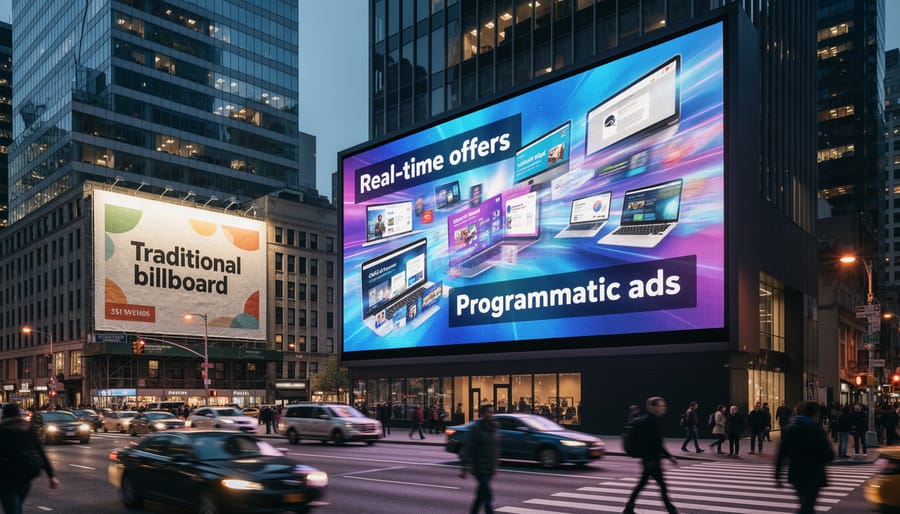
How Programmatic DOOH Works Behind the Scenes
The Technology Stack You Need to Know
Understanding the technology behind programmatic DOOH doesn’t require deep technical expertise, but knowing the key components helps you make informed decisions. Three main platforms power this ecosystem, working together to automate your advertising process.
Demand-Side Platforms (DSPs) are where you’ll actually manage your campaigns. These programmatic buying platforms let you purchase ad space, set targeting parameters, and control budgets across multiple DOOH networks from one interface. Think of DSPs as your campaign command center.
Supply-Side Platforms (SSPs) work on the publisher side, managing available inventory from digital billboards and screens. While you won’t interact directly with SSPs, they ensure competitive pricing and real-time availability of ad space.
Data Management Platforms (DMPs) collect and organize audience data that powers your targeting decisions. They analyze factors like foot traffic patterns, weather conditions, and demographic information to help you reach the right people at the right time.
The beauty of this stack is its automation. These platforms communicate instantly, handling bidding, placement, and optimization without manual intervention, freeing you to focus on strategy and creative messaging.
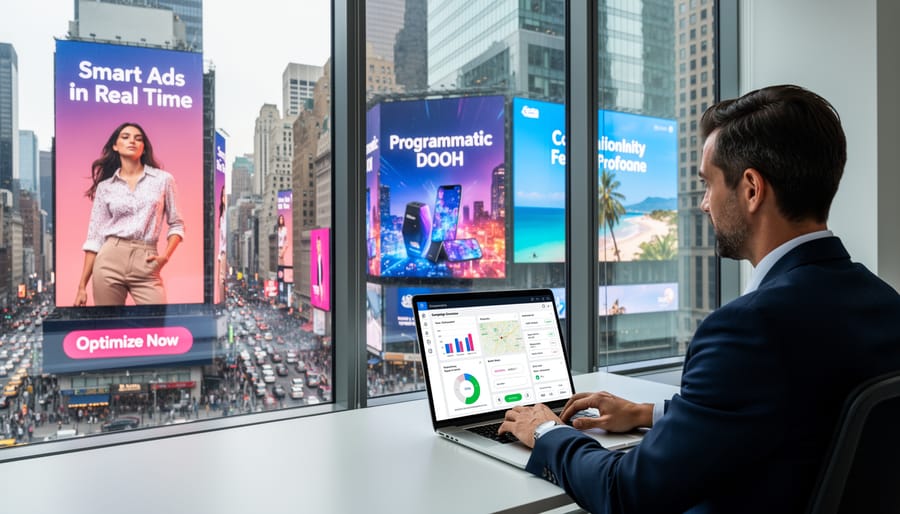
Real-Time Bidding vs. Direct Programmatic Deals
Programmatic DOOH offers two primary buying methods, each suited to different campaign objectives and budget considerations.
Real-time bidding (RTB) operates through open marketplaces where advertisers compete for ad space in automated auctions. This approach provides maximum flexibility and cost efficiency, as you only pay market value for impressions. RTB works well for campaigns with tight budgets, testing new markets, or when you need broad reach without specific location guarantees. The automated process evaluates thousands of opportunities per second, optimizing your spend based on performance data.
Direct programmatic deals, also called programmatic guaranteed or private marketplace deals, involve pre-negotiated arrangements with specific publishers or networks. You secure premium inventory at fixed prices before it reaches the open market. This method delivers greater control over where your ads appear, guaranteed impression volumes, and priority placement in high-traffic locations.
Choose RTB when budget efficiency and flexibility matter most. Your campaigns benefit from dynamic pricing and the ability to adjust quickly based on performance. Opt for direct deals when brand safety, specific location requirements, or guaranteed visibility are priorities. Many successful campaigns blend both approaches—using direct deals for core locations and RTB to extend reach cost-effectively. Your business goals and available resources should guide which method, or combination, aligns with your advertising strategy.
Why Your Business Should Care About Programmatic DOOH
Precision Targeting That Actually Works
Programmatic DOOH transforms billboard advertising from a spray-and-pray approach into a precision instrument. Instead of showing the same message to everyone all day, automated systems adjust your ads based on real-time conditions and audience data.
Here’s how it works in practice. A coffee shop can display breakfast promotions during morning commutes, then switch to afternoon pick-me-up messaging after 2 PM. A sporting goods store can trigger ads for umbrellas and rain gear when weather data indicates precipitation in the area. A fitness studio might target screens near office buildings during lunch hours when professionals are most likely to see gym membership offers.
The technology layers multiple data points simultaneously. Location intelligence identifies high-traffic areas where your ideal customers congregate. Demographic insights ensure your message reaches the right age groups and income levels. Mobile data can even detect foot traffic patterns, helping you understand which screens deliver actual store visits.
For startups with limited budgets, this precision eliminates waste. You’re not paying to advertise steak dinners to vegetarians or luxury watches to college students. The automated nature means these adjustments happen without manual intervention—your campaigns optimize themselves based on predefined rules you establish upfront.
Small businesses particularly benefit from dayparting capabilities. A local restaurant can advertise lunch specials only between 11 AM and 1 PM, maximizing relevance while controlling costs. This level of control was previously available only to enterprise advertisers with dedicated media buying teams.
Campaign Flexibility Without the Paperwork
Traditional outdoor advertising comes with rigid contracts, lengthy approval processes, and little room for adjustments once your campaign launches. Programmatic digital out of home changes this entirely by automating the buying process and giving you unprecedented control over your campaigns.
With programmatic DOOH, you can launch campaigns in days rather than weeks. The automated platform eliminates paper contracts and manual negotiations, replacing them with streamlined digital workflows. This means you can test new markets, adjust your strategy, and respond to opportunities without waiting for contract amendments or approval chains.
Real-time campaign management becomes genuinely possible. If your creative isn’t performing as expected, swap it out immediately. Notice that certain locations are driving better results? Reallocate budget to those high-performing screens within hours, not weeks. Running a limited-time promotion? Adjust your messaging across all screens simultaneously to match your current offer.
This flexibility extends to budget management as well. Instead of committing large sums upfront for month-long contracts, you can start with smaller test budgets and scale up based on performance. Pause campaigns during slow periods and ramp up during peak seasons without penalty fees or lengthy renegotiations.
The automation doesn’t just speed things up; it gives you the agility to operate like digital marketers have for years with online advertising. You maintain complete control while the platform handles the administrative heavy lifting, freeing your team to focus on strategy and creative excellence rather than paperwork.
Essential Digital Out-of-Home Advertising Tools and Extensions
Demand-Side Platforms for DOOH
Demand-Side Platforms are the software that automates your DOOH ad buying. Think of them as your command center—where you set campaign parameters, define audiences, manage budgets, and track performance in real-time.
Choosing the right DSP depends on three key factors. First, consider your business size and technical resources. Smaller businesses often benefit from user-friendly platforms with guided setup processes, while larger teams may need advanced customization options. Second, evaluate your budget. Some DSPs require minimum spending commitments, while others accommodate smaller campaigns. Third, align the platform with your campaign goals—whether that’s brand awareness, foot traffic, or conversions.
Look for these essential features when evaluating DSPs: intuitive dashboards that simplify campaign management, robust audience targeting capabilities including demographic and location-based filters, transparent reporting that shows real-time performance metrics, and integration with your existing marketing tools. Quality DSPs also provide access to premium DOOH inventory across multiple formats and locations.
The best platforms prioritize automation without sacrificing control. You should be able to launch campaigns quickly while maintaining the flexibility to adjust strategies based on performance data. Request demos from multiple providers and test their interfaces before committing—the right DSP will feel like a natural extension of your marketing workflow.
Analytics and Measurement Extensions
Modern programmatic DOOH platforms provide real-time analytics that go far beyond basic impression counts. These measurement tools track genuine business impact through foot traffic attribution, dwell time analysis, and conversion tracking. When a potential customer sees your billboard ad and later visits your store, advanced attribution technology connects those dots using anonymized mobile location data.
The key differentiator is focusing on actionable metrics. Rather than celebrating millions of impressions, you’ll monitor store visit lift, time-to-conversion, and audience composition. Many platforms integrate with existing marketing dashboards, allowing you to compare DOOH performance against your digital campaigns using consistent measurement frameworks.
Look for extensions that offer automated reporting with customizable alerts. You should receive notifications when campaigns underperform or overdeliver, enabling quick budget adjustments. The best measurement tools also provide competitive intelligence, showing when and where competitors advertise in the same markets.
Third-party verification services add credibility by independently confirming your ads actually displayed as promised. This transparency builds trust with stakeholders while ensuring you only pay for verified impressions. These verification layers automate quality control, eliminating manual spot-checks and reducing campaign management overhead.
Creative Management and Automation Tools
Managing creative content across multiple digital billboards and screens can quickly become overwhelming without the right tools. Creative management platforms streamline this process by centralizing asset creation, versioning, and distribution across your entire DOOH network.
These platforms automate routine tasks like resizing ads for different screen formats, scheduling content rotations, and adapting creative elements based on real-time triggers. For example, a restaurant chain can automatically display breakfast menus in the morning and dinner specials in the evening without manual intervention.
Modern creative management systems integrate directly with programmatic buying platforms, eliminating the need to manually upload assets for each campaign. This automation reduces production time from days to minutes while ensuring brand consistency across all locations.
AI-powered creative optimization takes this further by testing multiple creative variations and automatically prioritizing top performers. The system learns which messages, images, and calls-to-action generate the best response rates, continuously refining your campaigns without additional effort.
For businesses running multiple campaigns simultaneously, these tools provide clear visibility into what creative is running where, when, and how it performs. This transparency improves communication with stakeholders and enables faster decision-making based on actual performance data rather than assumptions.
Getting Started: A Practical Roadmap
Starting your first programmatic DOOH campaign doesn’t require a massive budget or technical expertise. The key is to begin strategically, test your approach, and expand based on measurable outcomes.
Begin by defining clear objectives for your campaign. Are you building brand awareness in specific neighborhoods? Driving foot traffic to your store? Promoting a time-sensitive offer? Your goals will determine which screens to target, when to display your ads, and how to measure success. Start with one primary objective rather than trying to accomplish everything at once.
Next, establish a realistic budget. Many programmatic DOOH platforms allow you to start with modest investments, sometimes as low as a few hundred dollars. This accessibility makes it ideal for testing without significant financial risk. Allocate your initial budget to a short campaign period, typically two to four weeks, which provides enough data to evaluate performance while maintaining flexibility.
Choosing the right platform is critical. Look for solutions that offer automated processes, eliminating manual tasks that consume time and resources. The platform should provide straightforward targeting options, real-time performance tracking, and responsive customer support. Many providers offer guided onboarding to help you navigate your first campaign setup.
When selecting screen locations, think strategically about where your target audience spends time. A coffee shop reaching young professionals might prioritize screens near transit hubs and business districts. A retail store could focus on high-traffic shopping areas within a specific radius of their location.
Keep your creative simple and impactful. Digital billboards display your message for just seconds, so use bold visuals, minimal text, and clear calls to action. Many businesses repurpose existing digital assets, making the creative process faster and more cost-effective.
Launch your campaign and monitor performance closely. Programmatic platforms provide real-time data on impressions, reach, and engagement patterns. Pay attention to which locations and times perform best. This automated reporting enables quick adjustments without waiting for end-of-campaign summaries.
For businesses managing multiple advertising channels, integrating your DOOH efforts with cross-platform campaign management ensures consistent messaging and better resource allocation across all touchpoints.
Once you identify what works, scale gradually. Increase budgets for high-performing locations, expand to similar areas, or extend campaign duration. This measured approach minimizes waste while maximizing learning and return on investment.
Common Pitfalls and How to Avoid Them
Even with programmatic automation handling the heavy lifting, businesses new to DOOH advertising often stumble over preventable mistakes. Understanding these pitfalls helps you avoid wasted budgets and disappointing results.
The most common error is treating DOOH creative like online banner ads. Digital billboards demand different design principles—viewers have just seconds to absorb your message while passing by. Businesses frequently launch campaigns with text-heavy designs or complex messaging that nobody can read from a moving vehicle. The solution is simple: use bold visuals, minimal text (seven words or less works best), and high-contrast colors. Test your creative by viewing it on your phone from across the room. If you can’t grasp the message in three seconds, redesign it.
Another frequent mistake involves ignoring location context. Running the same creative across shopping districts, highways, and office parks wastes your targeting capabilities. Match your message to the environment—promote breakfast items near morning commute routes, highlight happy hour specials in business districts during evening rush, and advertise weekend sales near residential areas. Automated programmatic platforms make contextual adjustments easy, but you need to set the parameters intentionally.
Many businesses also launch campaigns without proper measurement frameworks. Unlike digital ads with instant click data, DOOH requires upfront planning to track effectiveness. Before spending a dollar, decide what success looks like. Are you measuring foot traffic increases, website visits from specific zip codes, or brand awareness surveys? Set up tracking mechanisms like unique URLs, location-based analytics, or customer surveys that ask how people heard about you.
Finally, expecting immediate direct response results leads to disappointment. DOOH excels at building awareness and consideration, not instant conversions. It works best alongside other marketing channels, creating touchpoints that support your overall strategy. Set realistic expectations—think brand building and top-of-funnel awareness rather than immediate sales spikes. With proper creative, smart targeting, measurement systems, and appropriate expectations, your programmatic DOOH campaigns will deliver meaningful business results.
Programmatic DOOH has fundamentally changed billboard advertising by removing traditional barriers to entry. What once required lengthy negotiations, minimum spending commitments, and manual coordination now operates through automated platforms that handle everything from bidding to placement in real time. This democratization means businesses of all sizes can access premium advertising locations, target specific audiences with precision, and adjust campaigns on the fly based on actual performance data.
The key to success lies in selecting the right technology partners and platforms. Look for solutions that offer transparent reporting, flexible budget controls, and seamless integration with your existing marketing tools. Data-driven decision-making should guide every aspect of your programmatic DOOH strategy, from audience targeting to creative optimization. Without proper analytics and automation in place, you risk wasting budget on impressions that don’t convert.
As with any digital marketing channel, programmatic DOOH delivers the best results when it’s part of an integrated, automated approach. The same principles that drive effective digital campaigns—audience segmentation, real-time optimization, and measurable outcomes—apply here. By combining programmatic DOOH with automated marketing processes, you create a cohesive strategy that maximizes ROI while minimizing manual effort. Start small, test thoroughly, and scale what works.
Leave a Reply