What Is a Plant Digital Twin (and How Does It Work)?
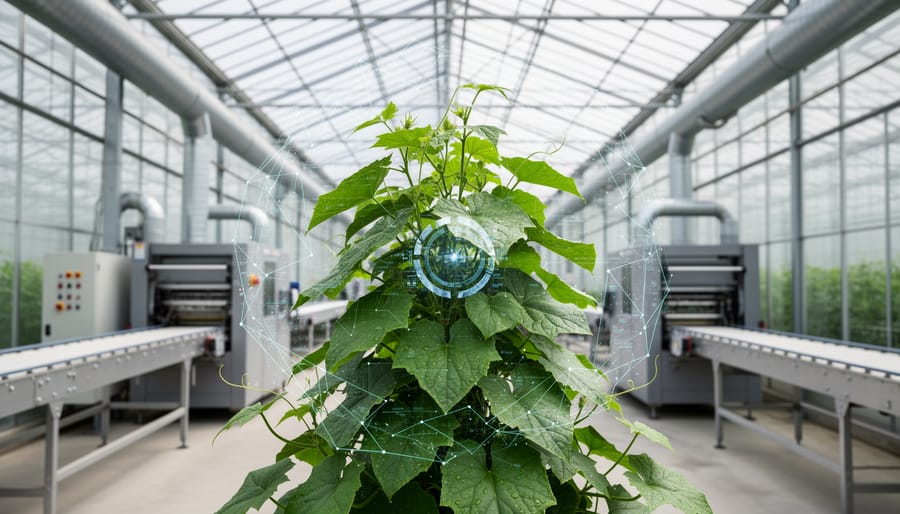
A plant digital twin is a virtual replica of a physical manufacturing facility, production line, or industrial plant that uses real-time data, sensors, and simulation models to mirror operations, predict performance, and optimize processes without disrupting actual production. This technology has moved from experimental concept to practical business tool in 2026, giving manufacturers and plant operators the ability to test changes, troubleshoot problems, and improve efficiency in a risk-free digital environment before implementing solutions on the factory floor.
For business owners managing production facilities, the appeal is straightforward. Rather than halting operations to test a new production sequence or waiting for equipment to fail before understanding why, a plant digital twin lets you run scenarios, identify bottlenecks, and validate improvements digitally. The result is less downtime, lower maintenance costs, and faster decision-making based on data instead of guesswork.
The business case extends beyond troubleshooting. Companies use plant digital twins to train staff on complex systems, plan capacity expansions, and automate quality control processes without the expense and risk of live experimentation. For organizations looking to drive business transformation through automation and smarter operations, digital twins provide a testing ground that connects directly to real-world outcomes.
This article breaks down what plant digital twins actually do, how they work in practice, the different types available, and the specific business applications where they deliver measurable returns. You’ll understand whether this technology fits your operation and what implementation really involves.
What Is a Plant Digital Twin?
A plant digital twin is a digital twin with real-time data that creates a virtual replica of an entire manufacturing facility or industrial plant. Unlike static CAD models or traditional monitoring systems, this technology continuously mirrors the physical plant’s operations, equipment performance, and environmental conditions through live data feeds. Every machine, process, and operational parameter exists as a dynamic software counterpart that updates in sync with its physical equivalent.
The core distinction lies in how information flows. Traditional plant management systems collect data retroactively, you review yesterday’s production reports or last week’s maintenance logs. A plant digital twin operates differently. Sensors throughout the facility stream operational data continuously into the virtual model, creating a real-time representation of what’s happening on the factory floor right now. When a conveyor belt slows down or a temperature fluctuates in a processing unit, the digital twin reflects that change immediately.
- Plant Digital Twin
- A virtual representation of a manufacturing facility that mirrors physical operations through continuous data synchronization, enabling real-time monitoring and predictive analysis.
- Virtual Replica
- A software model that duplicates the physical plant’s structure, equipment, and processes in digital form, updated constantly to match actual conditions.
- Real-Time Synchronization
- The continuous updating of the digital model to reflect current physical plant conditions, typically with latency measured in seconds or less.
- Operational Data Integration
- The automated collection and synthesis of information from sensors, control systems, and enterprise software into a unified digital representation.
This architecture transforms how plant managers understand their operations. Rather than piecing together insights from separate monitoring tools, you see the entire facility as an integrated system. The digital twin aggregates data from production equipment, utility systems, quality control instruments, and logistics tracking into one cohesive view. This holistic perspective reveals patterns and dependencies that fragmented traditional systems miss, making it easier to spot inefficiencies and optimize processes across the entire operation.
How Plant Digital Twins Work
Data Collection and Integration
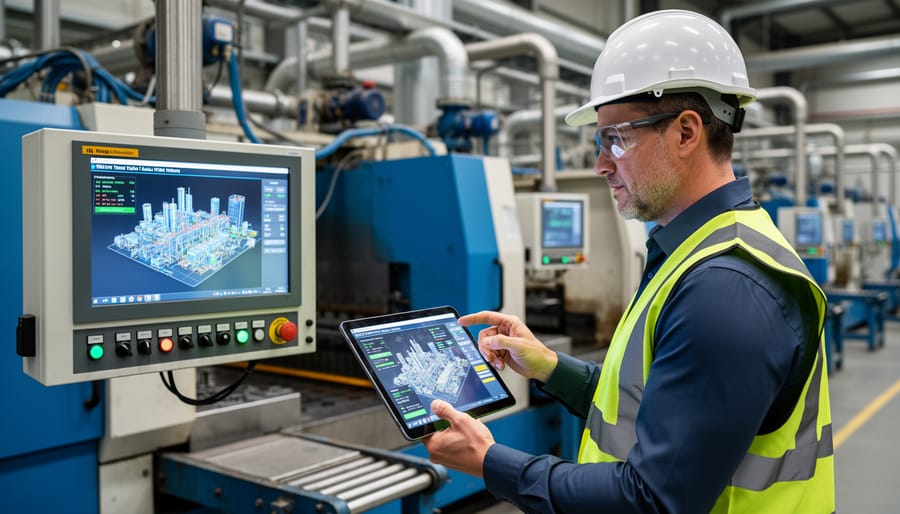
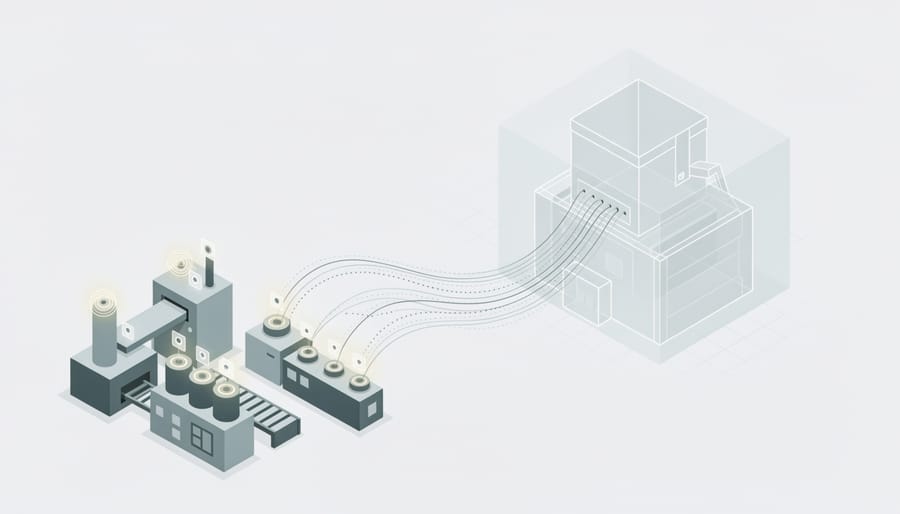
Industrial plant digital twins rely on continuous, automated data streams from across your facility. IoT sensors mounted on equipment monitor everything from temperature and vibration to energy consumption and cycle times, transmitting readings every few seconds without manual intervention. These sensors connect directly to the digital twin platform through industrial networks, eliminating the need for staff to record measurements or compile reports manually.
Equipment itself contributes operational data through built-in controllers and programmable logic controllers (PLCs). Modern machinery already tracks production counts, error codes, runtime hours, and maintenance intervals. The digital twin platform pulls this information automatically through standard industrial protocols like OPC UA or MQTT, creating a unified data environment.
Beyond physical sensors and equipment, the system integrates data from your existing business systems, enterprise resource planning software, manufacturing execution systems, quality management databases. This integration happens through APIs that synchronize information in real time, connecting production floor reality with your operational planning and client commitments.
The result is a single, constantly-updating data repository that reflects actual plant conditions. Your staff no longer spends time gathering metrics or reconciling conflicting spreadsheets. Instead, the digital twin handles data collection as a background process, freeing your team to focus on analysis and client relationships.
Real-Time Monitoring and Analysis
Once data flows into the digital twin, the platform processes it continuously, often in intervals of seconds or milliseconds depending on your monitoring requirements. This real-time processing transforms raw sensor readings into actionable operational insights that appear on dashboards accessible to plant managers and decision-makers.
The system compares current performance against baseline metrics and predefined thresholds. When a parameter drifts outside normal ranges, temperature rising in a reactor, pressure dropping in a hydraulic line, throughput slowing on a conveyor, the digital twin flags it immediately. You see these anomalies as they develop, not hours later in a shift report.
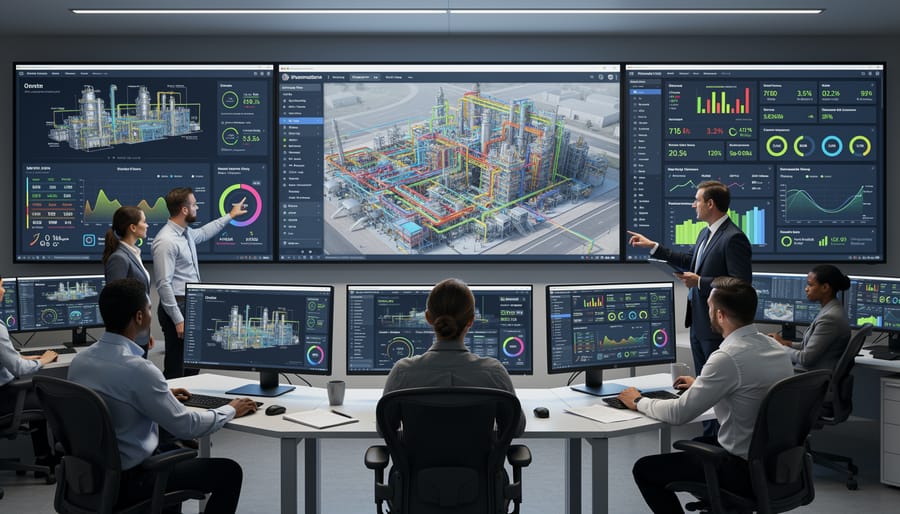
Modern platforms visualize this information through live heat maps, trend graphs, and equipment status indicators. Instead of walking the floor to check gauges, your team monitors dozens of processes simultaneously from a central control room or mobile device.
The analysis layer runs constantly in the background, calculating efficiency ratios, tracking cycle times, and measuring output quality. This gives you current operational metrics that reflect what’s actually happening now, enabling faster responses to problems and opportunities to optimize production mid-shift rather than waiting for end-of-day summaries.
Predictive Capabilities and Automation
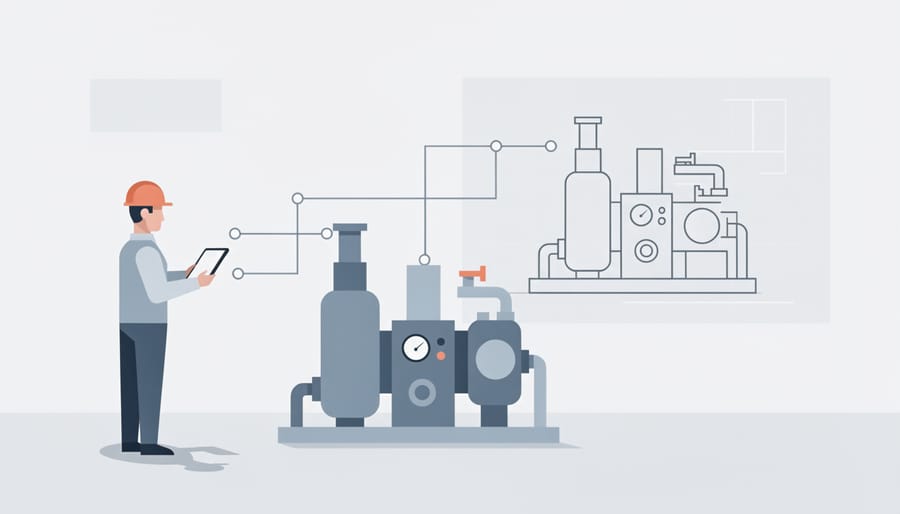
The digital twin’s true power lies in its ability to learn from accumulated operational data and anticipate problems before they occur. Machine learning algorithms analyze patterns from months or years of sensor readings, production cycles, and maintenance records to identify early warning signs of equipment degradation, quality drift, or process inefficiencies.
When the system detects anomalies, a bearing temperature creeping upward, a pump vibration frequency shifting outside normal range, it can trigger automated responses. Maintenance work orders generate automatically. Production parameters adjust in real time to compensate for changing conditions. The twin might slow a conveyor line slightly to prevent overheating or reroute materials to avoid a bottleneck developing three stations ahead.
This predictive layer eliminates reactive firefighting. Instead of discovering a failed motor during peak production, you get a notification two weeks earlier with a scheduled replacement window. The automation handles routine monitoring and adjustment tasks that previously consumed operator attention, letting your team focus on exceptions that genuinely need human judgment and on keeping clients informed with accurate, data-backed delivery commitments.
Types of Plant Digital Twins
Component-Level Digital Twins
Component-level digital twins focus on individual pieces of equipment, a specific pump, compressor, turbine, or production machine. These twins create virtual replicas of single assets, continuously ingesting data from sensors that track temperature, vibration, pressure, energy consumption, and operational cycles. The result is a detailed performance profile that reveals when a motor is running inefficiently, when bearing wear is accelerating, or when maintenance intervals need adjustment.
For business owners, this granular visibility translates directly into reduced downtime and lower maintenance costs. Instead of replacing parts on fixed schedules regardless of actual condition, you maintain equipment based on real performance data. The digital twin flags anomalies early, a temperature spike, unusual vibration patterns, declining throughput, so your team addresses issues before they cause failures that halt production.
Component-level twins also automate recurring tasks like performance logging, trend analysis, and alerts that previously required manual checks. Your staff receives actionable notifications rather than spending hours reviewing gauges and spreadsheets, freeing them to focus on optimization projects and maintaining strong client relationships through reliable delivery timelines.
System-Level Digital Twins
System-level digital twins map entire production lines or interconnected processes within your facility, capturing how equipment, materials, and workflows interact across multiple stages of operation. Unlike component-level twins that focus on individual machines, these models show the complete picture of how your production system performs as a unified whole.
This broader scope reveals bottlenecks that single-asset monitoring misses. When one machine slows down, the system-level twin shows exactly how that delay ripples through subsequent stages, affecting overall throughput and delivery schedules. You get visibility into interdependencies between equipment, material flow, and resource allocation that shape your production efficiency.
System-level twins excel at optimizing processes that span multiple touchpoints. They automatically adjust line speeds, coordinate maintenance windows to minimize disruption, and rebalance workloads when equipment performance changes. For manufacturing operations with complex workflows, this integrated view identifies improvement opportunities that component-level analysis overlooks, directly impacting your ability to meet client commitments consistently.
Full-Plant Digital Twins
A full-plant digital twin creates a unified virtual model of your entire facility, integrating every production line, utility system, and logistics process into a single interconnected platform. Rather than monitoring equipment or processes in isolation, this comprehensive approach captures how different operations affect each other, showing, for instance, how HVAC adjustments impact production quality or how shipping schedules influence inventory management.
The real power emerges when you can simulate facility-wide changes before implementing them. Want to reconfigure your production layout? Test it virtually first. Considering a shift schedule change? Model the cascading effects across all departments. This holistic view eliminates the blind spots that come from managing systems separately.
For business owners, full-plant twins excel at identifying optimization opportunities that span multiple departments. They reveal inefficiencies hiding in the gaps between systems, energy waste during shift transitions, bottlenecks caused by competing resource demands, or maintenance windows that disrupt unnecessarily. The platform coordinates these elements automatically, treating your facility as an integrated ecosystem rather than separate pieces.
Process-Specific Digital Twins
Process-specific digital twins zero in on individual operational workflows rather than monitoring equipment or entire facilities. These specialized systems model distinct manufacturing or support processes, quality control sequences, energy consumption patterns, supply chain logistics, or waste management cycles.
A quality control digital twin, for instance, tracks inspection checkpoints, defect rates, and testing parameters across production batches. It identifies recurring quality issues before they escalate, automatically flagging deviations from specifications and correlating them with upstream process variables like temperature, pressure, or material batch numbers.
Energy management twins monitor consumption across production cycles, pinpointing inefficiencies tied to specific operations. They reveal which processes drain the most power during peak-rate hours and suggest scheduling adjustments or equipment modifications that cut costs without disrupting output.
This targeted approach works well for businesses addressing a specific pain point, excessive waste, high energy bills, or inconsistent product quality, without committing to full-plant digitalization. The narrow scope means faster implementation, clearer ROI metrics, and easier staff adoption since changes affect one process rather than overhauling entire operations.
Business Applications and Use Cases
Automating Recurring Operational Tasks
Plant digital twins excel at taking over the repetitive operational tasks that consume valuable staff time. The system continuously monitors equipment performance, production metrics, and environmental conditions without human intervention, automatically generating status reports and performance dashboards that previously required manual data compilation. When parameters drift outside acceptable ranges, the digital twin triggers adjustments to equipment settings, production speeds, or environmental controls, eliminating the need for constant manual oversight.
This automation extends to routine maintenance scheduling, inventory tracking, and quality control checkpoints. The digital twin identifies patterns indicating when equipment needs servicing, orders replacement parts based on predicted wear schedules, and flags quality deviations as they emerge rather than during post-production reviews. By handling these recurring operational necessities automatically, businesses free their teams to focus on strategic initiatives, process reengineering and direct client engagement. Staff who once spent hours monitoring gauges and compiling reports can now analyse the insights generated by the digital twin to drive continuous improvement and respond to client needs proactively.
Improving Client Communication and Service
Plant digital twins transform how businesses communicate operational status and project timelines to clients. Rather than relying on manual updates or estimates based on incomplete information, companies can share real-time production data, quality metrics, and delivery forecasts generated directly from the digital twin platform. This transparency builds trust and sets accurate expectations from the outset.
The technology enables automated client reporting with precision that manual processes cannot match. When a client inquires about order status, teams can pull current production stage data, completion percentages, and projected finish times based on actual equipment performance and workflow analysis. Quality assurance data flows directly from monitoring systems, providing documented evidence of specification compliance and process controls without staff needing to compile reports manually.
This operational visibility elevates the customer experience by eliminating uncertainty and reducing the back-and-forth typically required for status updates. Clients receive proactive notifications about potential delays before they become critical issues, along with data-backed explanations and revised timelines. The digital twin identifies bottlenecks and capacity constraints early, allowing sales and account management teams to communicate realistic delivery windows and manage client expectations with confidence rather than optimism.
Implementation Considerations for Businesses
Before committing to plant digital twin technology, assess your existing data infrastructure. Most implementations fail because businesses lack the foundational systems to capture and transmit real-time operational data. You need functioning IoT sensors, reliable network connectivity across your facility, and integrated systems that can feed information into a central platform. If your plant still relies on manual data collection or standalone equipment without connectivity, factor in the cost and timeline for these prerequisites. A digital transformation that ignores infrastructure readiness burns budget without delivering results.
Set realistic expectations for return on investment. Most companies see measurable efficiency gains within 12 to 18 months, not immediately. Early months involve system calibration, staff adaptation, and process refinement. Budget for this ramp-up period and identify specific metrics you will track, energy consumption reduction, downtime decrease, or throughput improvement. Vague goals like “better operations” make it impossible to justify the investment when leadership asks for proof.
Your staff needs structured training, not just a vendor demo. Operators must understand how to interpret digital twin alerts and when to override automated recommendations. Maintenance teams require skills to validate virtual predictions against physical reality. Designate internal champions who will drive adoption and troubleshoot resistance. Without this human investment, even the best technology sits unused.
Evaluate vendors on integration capability first, features second. The platform must connect seamlessly with your existing ERP, MES, and SCADA systems. Ask for proof of successful integrations in similar industrial environments, not generic capability statements. Prioritize vendors offering phased implementation approaches that let you prove value in one area before scaling plant-wide. Avoid locked ecosystems that trap you with proprietary hardware or prohibitive switching costs.
how it works
A plant digital twin operates through a continuous cycle of data collection, processing, and automated response that mirrors your physical facility in real time.
The process starts with sensors embedded throughout your plant, on equipment, production lines, and environmental systems. These IoT devices capture operational metrics like temperature, pressure, vibration, output rates, and energy consumption every few seconds. This raw data streams automatically to a central platform without manual intervention.
The digital twin software aggregates this information and builds a virtual model of your plant’s current state. Advanced analytics engines compare live data against historical patterns, equipment specifications, and optimal operating parameters. When the system detects deviations, like a motor running hotter than normal or a production line slowing, it flags the issue immediately.
What separates digital twins from basic monitoring is their predictive intelligence. Machine learning algorithms analyze trends to forecast problems before they occur. If bearing wear patterns suggest imminent failure, the system alerts maintenance teams days in advance.
The twin then enables automated responses. When conditions shift, the platform can adjust process parameters, trigger workflow notifications, or activate backup systems, all without human oversight. This creates a self-optimizing facility that continuously improves performance while reducing the manual burden on your operations team.
Types or components
Plant digital twins vary significantly based on what they model and the operational problems they solve. Understanding these categories helps businesses choose the right implementation level.
Component-level twins focus on individual machines or equipment pieces. A component twin might monitor a specific CNC machine, tracking vibration patterns, temperature fluctuations, and wear indicators to predict maintenance needs before failures occur.
System-level twins model interconnected production lines or subsystems. These twins map how multiple machines work together, identifying bottlenecks in material flow or coordination issues between automated processes that impact overall throughput.
Full-plant twins create comprehensive virtual replicas of entire facilities. They integrate everything from production equipment to HVAC systems, utilities, and logistics operations. This holistic view enables enterprise-wide optimization decisions.
Process-specific twins target particular operational functions rather than physical assets. Quality control twins might simulate inspection protocols, while energy management twins optimize consumption patterns across shifts without modeling individual machines.
The right scope depends on your operational priorities and existing automation infrastructure.
Plant digital twins represent a clear path to operational transformation for businesses ready to move beyond reactive management. The technology delivers measurable improvements in efficiency, cost reduction, and service quality, not through wholesale replacement of existing systems, but by layering intelligent automation and predictive insights on top of your current infrastructure. For business owners juggling operational oversight with strategic growth, the value proposition is straightforward: automate the routine monitoring and adjustments that consume staff time, while gaining the visibility needed to serve clients better and make smarter decisions faster.
What industries benefit most from plant digital twins?
Manufacturing, chemical processing, pharmaceuticals, food production, and utilities see the strongest returns, particularly where process consistency, regulatory compliance, or asset uptime directly impact profitability.
What’s the typical ROI timeline for implementing a plant digital twin?
Most businesses report measurable returns within 12 to 18 months through reduced downtime, lower maintenance costs, and improved throughput. Energy-intensive operations often see savings even sooner.
Do I need to replace my existing plant systems?
No. Digital twin platforms integrate with existing sensors, control systems, and databases, adding a layer of intelligence without requiring equipment replacement.
What data infrastructure is required?
You need operational sensors feeding data to a centralized system, cloud or on-premises computing capacity for analysis, and network connectivity across the plant. Many facilities already have 70-80% of what’s required.
The best next step is an honest assessment of your operation’s current pain points. Where do recurring issues cost you time, money, or client trust? If manual monitoring, unexpected failures, or uncertain delivery timelines are holding you back, a targeted digital twin implementation might deliver faster transformation than broader technology overhauls. Start with one critical process or asset, prove the concept, then expand as results justify the investment.
Leave a Reply