What Is AI-Powered Social Listening (and How Does It Work)?

AI-powered social listening is the automated process of monitoring, analyzing, and extracting strategic insights from online conversations using artificial intelligence technologies like natural language processing and machine learning. Unlike basic social monitoring that simply tracks brand mentions, this approach interprets sentiment, identifies emerging trends, and delivers actionable recommendations without manual data sifting.
The difference matters because traditional social listening drowns teams in data. Marketing professionals at small and medium-sized businesses often lack the time to analyze thousands of daily social mentions, parse context, or spot patterns across platforms. AI automation handles this workload, surfacing the insights that actually drive decisions.
This technology transforms how businesses understand their customers. When someone complains about a product feature on Twitter, tags a competitor on Instagram, or discusses industry pain points in a LinkedIn thread, AI-powered tools capture the context, analyze the emotion behind the words, and flag conversations that require immediate attention or reveal strategic opportunities.
The practical question for business owners isn’t whether social listening provides value, it’s whether manual methods can compete with systems that process millions of conversations in real time. Social media analytics powered by AI reduces response times from hours to minutes and identifies customer needs before they become widespread complaints.
This article breaks down exactly how AI-powered social listening works, the core technologies that enable it, and specific ways businesses apply it to improve customer communication, product development, and competitive positioning. You’ll understand whether your business needs this capability and what implementation actually involves.
What Is AI-Powered Social Listening?
AI-powered social listening is the automated process of tracking, analyzing, and extracting meaningful insights from social media conversations using artificial intelligence technologies. Unlike traditional social media monitoring, which simply collects mentions and tracks basic metrics, AI-powered listening interprets what people actually mean, how they feel, and why specific topics are trending without requiring manual analysis of each post.
Traditional monitoring tells you someone mentioned your brand. AI-powered listening tells you whether they’re frustrated with your checkout process, thrilled about a new feature, or considering switching to a competitor based on price. That difference matters when you’re making business decisions.
- AI-Powered Social Listening
- The automated use of artificial intelligence to monitor online conversations, interpret sentiment and context, and deliver actionable business insights from social data at scale.
- Sentiment Analysis
- Machine learning technology that determines whether mentions express positive, negative, or neutral emotions about your brand, product, or industry topics.
- Natural Language Processing (NLP)
- The AI capability that enables computers to understand human language nuances, including slang, sarcasm, and context, not just keyword matching.
- Social Monitoring vs. Social Listening
- Monitoring tracks metrics like mentions and shares; listening interprets the meaning behind conversations to uncover why customers behave as they do and what actions you should take.
The automation component is critical. Where a marketing team might manually review hundreds of mentions per week, AI processes millions of conversations simultaneously, identifying patterns, emerging issues, and opportunities you’d never spot through human analysis alone. The technology doesn’t just report what happened, it explains what matters and suggests what to do next, turning overwhelming social data into a competitive advantage for businesses that would otherwise lack the resources to analyze conversations at scale.
How AI-Powered Social Listening Works

Data Collection and Aggregation
AI social listening tools connect to multiple data sources simultaneously through official APIs and web crawlers. These systems monitor major platforms like Twitter, Facebook, Instagram, LinkedIn, and TikTok in real time, capturing public posts, comments, and replies that mention your brand, products, or relevant keywords.
Beyond social networks, the tools scan review sites, online forums, blogs, news outlets, and community discussions where customers share unfiltered opinions. This broad coverage ensures you’re not missing conversations happening outside your owned channels.
The aggregation happens continuously, not just once daily. Modern tools collect millions of mentions per hour, filtering them based on your specified keywords, hashtags, competitor names, or industry terms. They automatically deduplicate identical posts, remove spam, and organize data by source, date, and geographic location.
This automated collection eliminates the manual work of checking multiple platforms separately. Instead of logging into ten different sites daily, the AI gathers everything into a centralized database where analysis can begin. The system runs 24/7, capturing mentions even outside business hours when sentiment can shift quickly.
AI Analysis and Pattern Recognition
Once raw data is collected, machine learning algorithms take over the heavy lifting. Natural language processing (NLP) scans each post, comment, and mention to understand context, tone, and intent, identifying whether someone is praising your product, complaining about service, or simply asking a question. This happens in milliseconds across thousands of conversations simultaneously.
Sentiment analysis assigns emotional scores to individual messages, flagging positive, negative, or neutral reactions without a human reading every word. Pattern recognition algorithms then surface recurring themes: if fifty people mention “slow checkout” in one week, the system automatically clusters those complaints and alerts your team. It’s how it works behind the scenes to turn noise into clarity.
Beyond sentiment, AI detects emerging trends by measuring sudden spikes in keyword usage, unusual conversation volume, or shifts in discussion topics. If a competitor launches a campaign or a related industry issue goes viral, the algorithms spot the anomaly before it’s obvious in manual dashboards. Classification models also categorize conversations by topic, customer segment, or urgency level, routing actionable insights to the right teams automatically. This continuous analysis runs 24/7, adapting as language evolves and new phrases emerge, ensuring your monitoring stays relevant without constant manual reconfiguration.
Insight Generation and Reporting
Once the AI finishes analyzing social conversations, it doesn’t just hand you spreadsheets full of numbers. Modern systems automatically package insights into formats your marketing team can actually use.
Most platforms generate visual dashboards that update in real time, showing sentiment trends, mention volume spikes, and emerging topics at a glance. You’re not hunting through data, the system surfaces what matters most based on your configured priorities.
Automated alerts notify relevant team members immediately when specific conditions trigger: sudden sentiment drops, viral mentions, competitor movements, or crisis signals. These push notifications mean your team responds to opportunities or threats within minutes, not days after someone finally reviews a report.
The reporting layer translates raw data into business language. Instead of “10,000 mentions with 68% positive sentiment,” you see “Brand perception improved 15% this week, driven primarily by positive product reviews on Reddit and Twitter.” Many systems now generate summary recommendations: “Consider amplifying the customer testimonial theme in paid campaigns” or “Address shipping delay complaints appearing in 23% of recent mentions.”
This automation eliminates the analyst bottleneck, turning social listening from a monthly research project into daily operational intelligence.
Key Components of AI-Powered Social Listening
Effective AI social listening platforms share several foundational technologies that work together to transform social data into business intelligence. Understanding these core components helps you evaluate tools and set realistic expectations for what automation can deliver.
At the heart of every AI social listening system are these essential technologies:
- Natural Language Processing (NLP) engines that interpret human language, slang, and context across multiple languages
- Sentiment Analysis Engines that classify mentions as positive, negative, or neutral automatically
- Trend Detection Algorithms that spot emerging patterns and viral content before they peak
- Multi-Platform Crawlers that gather data continuously from social networks, forums, blogs, and news sites
- Real-Time Alert Systems that notify teams immediately when specified keywords or sentiment thresholds trigger
- Automated Reporting Tools that generate dashboards and summaries without manual data compilation
Natural Language Processing forms the foundation. Without sophisticated NLP, AI tools cannot distinguish between “This product kills it” (positive) and “This update killed my workflow” (negative). Modern NLP engines trained on billions of social posts recognize sarcasm, emoji context, industry jargon, and regional expressions that trip up basic keyword filters. This capability determines whether your tool catches genuine sentiment or misclassifies half your mentions.
Sentiment analysis builds on NLP to assign emotional tone at scale. Basic tools use simple positive/negative word matching. Advanced systems analyze entire comment threads, weigh context, and detect mixed sentiment within a single post. The accuracy gap matters when you’re making decisions based on perceived customer satisfaction.
Trend detection separates signal from noise. AI algorithms identify statistically significant spikes in mention volume, unusual sentiment shifts, or new conversation clusters that manual monitoring would miss until too late. This component proves its worth when a product issue starts gaining traction or a campaign unexpectedly resonates with an unintended audience.
Multi-platform data collection determines your listening scope. Enterprise tools monitor dozens of sources simultaneously, including Reddit threads, TikTok comments, YouTube discussions, review sites, and niche forums where your customers actually talk. Limited crawlers miss conversations happening outside major platforms like Twitter and Facebook.
Integration capabilities tie everything together. The best AI social listening tools connect directly to your CRM, customer service platforms, and marketing automation systems. This connectivity means insights trigger actions automatically, a negative sentiment spike creates support tickets, or positive campaign reception adjusts ad spend in real time.
Practical Uses for Your Business
Brand Reputation Management
AI-powered social listening acts as an always-on reputation radar for your brand. Instead of manually searching for mentions across platforms, automated systems scan Twitter, Facebook, LinkedIn, Reddit, review sites, and forums continuously, flagging both direct tags and untagged references to your company name, products, or key executives. The real advantage lies in sentiment detection, algorithms immediately classify mentions as positive, negative, or neutral, letting you spot brewing problems before they spread. When a complaint surfaces, automated alerts notify your team within minutes rather than days, giving you time to respond while the conversation is still contained. This speed turns potential PR disasters into resolved issues, and AI systems can even route negative mentions directly to customer service teams while surfacing patterns that transform complaints to insights about product improvements or messaging gaps. You’re not just monitoring, you’re preventing reputation damage through early intervention.
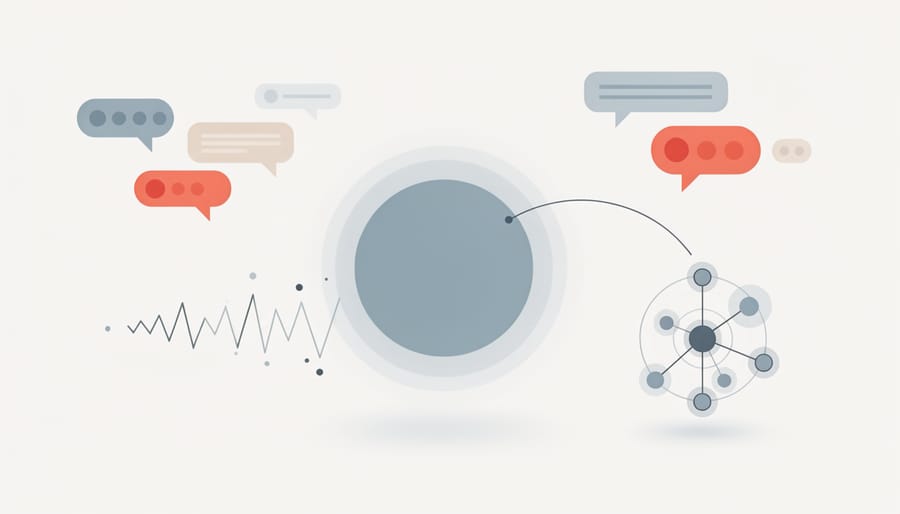
Customer Insights and Feedback
AI-powered social listening automatically extracts valuable customer feedback from conversations happening across social platforms, review sites, and forums, without requiring manual tagging or surveys. Instead of waiting for customers to complete feedback forms, the technology captures spontaneous mentions of your products, features, pricing, and user experience as people discuss them naturally online. Machine learning algorithms identify recurring pain points, feature requests, and usage patterns by analyzing thousands of comments and posts simultaneously, surfacing insights you might miss through traditional research methods. This gives your team a continuous pulse on customer sentiment and emerging issues. For example, if multiple users mention difficulty with a specific checkout step or express confusion about pricing tiers, the system flags these patterns automatically, allowing you to prioritize fixes based on actual customer language rather than assumptions.
Competitive Intelligence
AI-powered social listening automatically tracks what people say about your competitors across social platforms, review sites, and online forums. The technology captures competitor brand mentions, product launches, and campaign discussions in real time, showing you how audiences respond without requiring manual searches.
These tools analyze sentiment around competitor initiatives, revealing which messages resonate with target audiences and which fall flat. You’ll see patterns in customer complaints, feature requests, and switching behaviors that inform your own positioning strategy. When a competitor adjusts pricing or releases a new product, automated alerts notify you immediately with context about market reception.
The competitive advantage comes from speed and scale, AI processes thousands of conversations daily that would take teams weeks to review manually, giving you current intelligence to refine your messaging, identify service gaps, and respond strategically to market shifts.
Campaign Performance Tracking
AI-powered social listening delivers real-time feedback on campaign performance by analyzing social conversations as they unfold. Instead of waiting days for manual reports, marketing teams can track sentiment shifts, engagement patterns, and audience reactions within hours of launching a campaign.
The technology automatically measures how your messaging resonates across different audience segments. If sentiment turns negative in specific demographics or regions, the system flags these patterns immediately, allowing quick adjustments before issues spread. This matters for product launches, seasonal promotions, or brand announcements where timing determines success.
Beyond basic metrics like shares and comments, AI examines the quality of engagement. It identifies whether people discuss your campaign positively, what specific elements generate conversation, and which messages fall flat. Some platforms compare your campaign’s social performance against competitors running similar initiatives during the same period.
This automated analysis helps you allocate budget more effectively. When certain campaign angles drive disproportionate engagement or positive sentiment, you can shift resources toward those approaches mid-campaign rather than discovering what worked after the budget is spent.
Common Questions About AI-Powered Social Listening
How is AI-powered social listening different from social media monitoring?
Traditional monitoring tracks mentions and keywords; AI-powered social listening analyzes sentiment, identifies emerging trends, and automatically delivers insights without manual data sifting. It’s the difference between collecting data and understanding what that data means for your business.
Do I need a large budget to use AI social listening tools?
Not necessarily. While enterprise platforms exist, many AI social listening tools offer tiered pricing starting under $100 monthly for small businesses. Cost typically scales with the number of mentions tracked and platforms monitored.
Can AI social listening work effectively for small businesses?
Yes. Small businesses actually benefit significantly because AI automates the analysis work that would otherwise require dedicated staff. You get professional-grade insights into customer sentiment and market trends without hiring a full analytics team.
How accurate is AI sentiment analysis?
Modern AI sentiment analysis achieves 70-85% accuracy for straightforward language, though sarcasm and cultural nuances still present challenges. The technology improves continuously as models learn from corrections and new data patterns.
Beyond these operational questions, business owners frequently ask about data privacy and ethical AI considerations. Reputable platforms comply with data protection regulations and only analyze publicly available social content. You’re not accessing private messages or restricted information; you’re systematically analyzing what people voluntarily share in public spaces. Regarding platform coverage, most AI tools monitor major networks like Facebook, X, Instagram, and LinkedIn, plus review sites, forums, blogs, and news sources. The breadth depends on your chosen solution, but comprehensive monitoring across 10-20 platforms is standard even in mid-tier plans.
Types or components
Modern AI social listening platforms rely on four interconnected technologies working together automatically.
Natural Language Processing (NLP) enables machines to read and understand human language in social posts, comments, and reviews. NLP algorithms parse slang, emojis, sarcasm, and context, not just keywords, to grasp what people actually mean when they write about your brand.
Sentiment Analysis classifies the emotional tone of each mention as positive, negative, or neutral. Advanced systems detect nuanced emotions like frustration, excitement, or confusion, giving you a precise read on how audiences feel rather than just what they say.
Machine Learning Models improve accuracy over time by learning from patterns in your industry’s specific language and conversation styles. These models adapt to new trends, emerging terminology, and shifting customer concerns without requiring manual retraining.
Data Visualization Dashboards translate millions of data points into clear charts, trend graphs, and alert systems. Well-designed interfaces surface the insights that matter, sudden sentiment drops, viral mentions, or emerging themes, so teams can act immediately without drowning in raw data.
Leave a Reply