Your Brand’s Biggest Threat: How Fake Influencers Are Stealing Marketing Budgets

Verify follower authenticity by analyzing engagement rates against industry benchmarks—genuine influencers typically maintain 2-5% engagement rates, while fraudulent accounts show inflated followers with minimal meaningful interaction. Request direct access to their analytics dashboards rather than accepting screenshots, which are easily manipulated through editing tools.
Cross-reference audience demographics with your target market by examining the influencer’s follower locations, age ranges, and interests through platform-specific analytics. Fraudulent accounts often display suspicious patterns like sudden follower spikes, predominantly foreign audiences for domestic brands, or generic comment patterns using emojis and vague praise.
Implement a three-tier verification system before committing marketing budgets. First, run the account through fraud detection tools that identify bot followers and fake engagement. Second, review past brand partnerships for tangible results and authentic content integration. Third, establish performance-based payment structures that tie compensation to measurable outcomes like traffic, conversions, or qualified leads rather than vanity metrics.
The influencer fraud industry now exceeds $1.3 billion annually in wasted marketing spend, with studies showing that 15-30% of influencer accounts contain fraudulent elements. Small and medium-sized businesses face disproportionate risk due to limited resources for comprehensive vetting processes. Understanding detection methods and implementing automated verification systems protects your marketing investment while building partnerships with creators who deliver genuine audience connections and measurable business results.
The Real Cost of Influencer Fraud

Fake Followers and Ghost Engagement
The illusion of influence has become a lucrative business, with fraudulent influencers purchasing followers by the thousands and deploying bots to generate artificial engagement. These fake accounts create impressive-looking metrics that mask a fundamental problem: there’s no real audience behind the numbers.
Purchased followers are typically inactive accounts or bots that will never see your brand’s content, let alone convert into customers. Similarly, ghost engagement consists of automated likes, comments, and shares generated by software rather than genuine human interest. These metrics might boost an influencer’s perceived reach, but they deliver zero business value.
The financial impact is substantial. When you’re paying for sponsored posts based on follower counts or engagement rates, fake metrics mean you’re essentially funding empty impressions. Your marketing budget disappears into a void of non-existent consumers who will never purchase your products or services.
Detecting fake followers requires examining engagement patterns, follower quality, and comment authenticity. Legitimate influencers demonstrate consistent, meaningful interactions with their audience, while fraudulent accounts show suspicious spikes, generic comments, and followers with incomplete profiles or random usernames. Protecting your marketing investment starts with verification before commitment.
Hidden Costs Beyond the Campaign
The financial damage from influencer fraud extends far beyond wasted campaign budgets. When fake engagement inflates your metrics, you’re left with corrupted data that compromises future marketing decisions. Your analytics show impressive reach and engagement numbers, but these false signals lead to misallocated resources as you double down on strategies that never actually worked.
This creates a domino effect across your marketing operations. Teams spend valuable time analyzing meaningless data, building audience profiles based on bot behavior rather than real customers. Your automated marketing systems learn from fraudulent patterns, optimizing campaigns toward fake audiences instead of genuine prospects. The result? Increasingly inefficient ad spend and measuring real ROI becomes nearly impossible.
Perhaps most damaging is the reputational risk. When your brand associates with fraudulent influencers, you inherit their credibility problems. Savvy consumers recognize fake engagement, and your brand’s authenticity suffers by association. This erosion of trust takes years to rebuild and impacts customer acquisition costs across all channels. The hidden costs compound over time, making prevention far more cost-effective than recovery.
Red Flags That Signal a Fraudulent Influencer
Suspicious Follower Patterns
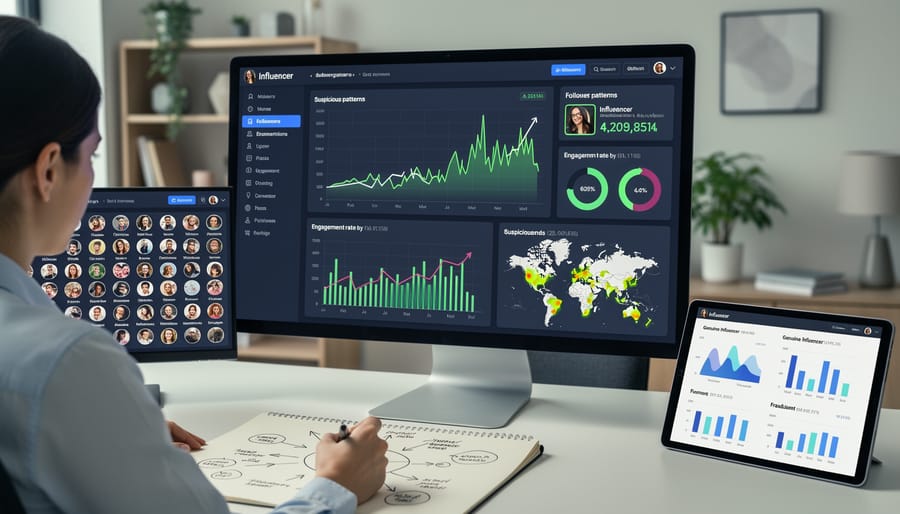
Authentic follower growth typically occurs gradually over time, while fraudulent accounts often display sudden, dramatic spikes that don’t align with specific campaigns or viral content. When evaluating an influencer’s legitimacy, examine their follower count history for unexplained jumps of thousands of followers within days.
The follower-to-engagement ratio serves as a critical indicator. Legitimate influencers generally maintain engagement rates between 1-5% for larger accounts and 5-10% for micro-influencers. If an influencer has 100,000 followers but receives only 200 likes per post, this discrepancy signals potential fraud.
Pay close attention to audience demographics. Genuine influencers attract followers who match their content niche and geographic focus. Red flags include disproportionate numbers of followers from countries unrelated to the influencer’s market, accounts with generic usernames like “user12345,” or profiles lacking photos and biographical information.
Automated verification tools can quickly analyze these patterns, saving your team hours of manual research. Request access to the influencer’s analytics dashboard to verify follower locations, age ranges, and gender distribution. Legitimate influencers willingly share this data, while fraudulent ones often refuse or provide excuses. Cross-reference multiple data points before committing your marketing budget to any partnership.
Engagement Quality Indicators
Authentic engagement follows recognizable patterns that fraudulent activity struggles to replicate. Real comments typically relate directly to the content, show personality variations, and come from accounts with complete profiles and diverse posting histories. Bot-generated comments often appear generic (“Great post!” or “Amazing content!”), arrive in clusters within minutes, or come from accounts with minimal followers and no profile pictures.
Engagement pods—groups of influencers who artificially boost each other’s metrics—create suspiciously consistent engagement patterns. Watch for the same accounts commenting on every post, unusually high engagement rates compared to follower count, or comment-to-like ratios that seem disproportionate.
Purchased likes reveal themselves through sudden, unexplained spikes in engagement that don’t correlate with content quality or posting schedule. Check if engagement comes from accounts in unexpected geographic regions or if followers have foreign usernames unrelated to your target market. Use automated social media analytics tools to track engagement velocity—authentic growth occurs gradually, while purchased metrics appear instantaneously.
Legitimate influencers maintain engagement rates between 1-5% for larger accounts and higher for micro-influencers. Anything significantly outside these ranges warrants deeper investigation before committing your marketing budget.
Profile and Content Inconsistencies
Fraudulent influencers often reveal themselves through inconsistent content quality and suspicious posting patterns. Watch for dramatic shifts in photography style, writing voice, or content themes that suggest multiple people managing the account. Authentic influencers maintain consistent brand aesthetics and messaging aligned with their stated niche.
Red flags include irregular posting schedules with sudden bursts of activity followed by long silences, or content that appears recycled from other sources. Generic captions lacking personal voice or specific details about products indicate potential fraud. Pay attention to engagement timing too—if comments arrive in unnatural waves or consist of repetitive, generic phrases, automated bots may be inflating activity.
Brand alignment issues signal deeper problems. Question influencers whose promoted products contradict their established values or who simultaneously endorse competing brands without disclosure. Genuine influencers carefully curate partnerships that resonate with their audience and personal brand. Before committing your marketing budget, review at least three months of content history. Look for authentic storytelling, genuine audience interactions, and logical brand collaborations. These verification steps protect your investment and ensure your campaigns reach real people who match your target market.
Essential Tools and Methods for Influencer Vetting
Automated Vetting Platforms
Modern automated vetting platforms have revolutionized how businesses evaluate potential influencer partners, replacing manual research with sophisticated algorithms that process thousands of data points in seconds. These tools eliminate guesswork by scanning an influencer’s profile to identify suspicious patterns that human reviewers might miss.
The core functionality centers on three critical metrics. First, follower authenticity checks reveal the percentage of real versus fake accounts following an influencer. Advanced platforms cross-reference follower profiles against known bot databases and examine account activity patterns. Second, engagement rate analysis compares likes, comments, and shares against follower counts to identify inflated audiences with minimal interaction. Platforms flag accounts where engagement doesn’t align with follower size or appears suddenly artificial. Third, audience quality assessments evaluate whether an influencer’s followers match your target demographic by analyzing location, interests, and purchasing behavior.
Leading platforms automate the entire data-driven vetting process, generating detailed reports within minutes rather than hours. They track historical data to spot sudden follower spikes or engagement drops that signal purchased followers or declining influence. Many integrate directly with campaign management systems, allowing you to screen multiple candidates simultaneously and compare results side-by-side.
For businesses managing multiple influencer relationships, these platforms provide ongoing monitoring, alerting you to changes in authenticity scores or engagement patterns. This continuous oversight ensures your partnerships maintain quality standards throughout campaign lifecycles, protecting your marketing investment from deterioration or fraud.
Manual Verification Techniques
Before investing in an influencer partnership, conduct thorough manual verification to protect your marketing budget. Start by examining the influencer’s engagement patterns across multiple posts. Genuine engagement shows varied comment lengths, relevant conversations, and natural interaction timing rather than simultaneous clusters of generic responses.
Review the influencer’s partnership history by scrolling through their content from the past six to twelve months. Look for transparency in sponsored post disclosures and note whether previous brand collaborations align with their stated niche. Authentic influencers maintain consistent content quality regardless of sponsorship status.
Cross-reference their follower demographics with your target audience. Request a media kit and verify claims by manually checking several metrics against their public profile. Examine follower accounts directly by clicking through profiles in their follower list. Red flags include accounts with no profile pictures, nonsensical usernames, or zero posts.
Contact previous brand partners directly when possible. A quick email or LinkedIn message asking about their experience provides invaluable insights that automated tools cannot capture. Document your findings in a verification checklist to streamline future evaluations and ensure consistent due diligence across all potential partnerships.
Building Your Vetting Checklist
Create a systematic approach to influencer evaluation by documenting clear criteria before each campaign. Start by establishing baseline metrics: minimum follower count, engagement rate thresholds (typically 2-5% for authentic accounts), and audience demographics that match your target market.
Next, build a verification workflow that your team can replicate. Include authentication steps like cross-platform profile checks, engagement pattern analysis over 30-90 days, and comment quality reviews. Automate data collection wherever possible to maintain consistency and save time.
Document red flags specific to your industry, such as sudden follower spikes, generic comments, or mismatched audience locations. Set clear approval gates requiring multiple stakeholders to sign off before contracts are finalized.
Finally, maintain a database of vetted and rejected influencers with notes explaining each decision. This creates institutional knowledge that protects your brand even as team members change, ensuring every collaboration meets your standards without reinventing the process each time.
Protecting Your Brand Through Smart Influencer Partnerships
Setting Clear Partnership Standards
Before launching any influencer campaign, establish non-negotiable standards that protect your investment. Start by defining minimum authenticity thresholds: require influencers to demonstrate at least a 2-3% engagement rate and provide evidence that followers originate from your target markets rather than bot farms or click farms.
Create a standardized vetting checklist that includes verification of audience demographics, content quality consistency over the past 90 days, and previous brand partnerships. This automated approach ensures every potential partner undergoes the same scrutiny, eliminating subjective decisions that leave room for fraud.
Set clear expectations around brand alignment by reviewing an influencer’s content history for controversial posts, competing brand relationships, and values that match your company’s mission. Document these requirements in writing before any negotiations begin.
Implement a communication protocol that requires influencers to disclose their verification methods and grant limited access to their analytics dashboards. Partners who resist transparency should raise immediate red flags. By establishing these baseline standards upfront, you create a filtering system that weeds out fraudulent actors before they can damage your brand reputation or drain your marketing budget.
Contract Protections Against Fraud
Building essential contract protections into your influencer agreements creates clear boundaries and recourse options when fraud occurs. Start with performance guarantees that specify minimum authentic engagement rates and audience quality standards. Include verification clauses requiring influencers to provide backend analytics access and third-party audit rights at your discretion.
Add representation warranties where influencers confirm their follower counts are legitimate and engagement is organic. This shifts legal liability if fraud surfaces later. Include specific penalties for metric manipulation, such as prorated payment reductions or full refunds.
Require transparent disclosure of bot-removal services or purchased followers before contract signing. Build in termination clauses that allow immediate contract cancellation without penalty if fraudulent activity is detected.
Most importantly, establish clear payment milestones tied to verified performance metrics rather than upfront lump sums. This protects your investment by allowing you to pause payments if red flags emerge. Automated tracking systems can monitor these metrics in real-time, triggering alerts when performance drops below contractual thresholds and streamlining your fraud detection process.
Ongoing Monitoring and Performance Tracking
Don’t wait until a campaign ends to discover you’ve been defrauded. Implement real-time monitoring systems that track engagement patterns throughout your partnership. Set up automated alerts for suspicious activity like sudden follower drops, unusual engagement spikes, or inconsistent posting behavior. Use analytics platforms that provide daily snapshots of reach, impressions, and audience interactions.
Request regular proof-of-performance updates from influencers, including native platform analytics screenshots rather than relying solely on third-party reports. Compare their reported metrics against your own tracking links and UTM parameters to verify alignment. Monitor comment quality and sentiment—authentic campaigns generate meaningful conversations, not generic emoji responses from questionable accounts.
Track business outcomes that matter: website traffic, conversion rates, and actual sales attributed to the campaign. If engagement appears high but conversions remain flat, investigate deeper. Establish clear communication protocols with influencers about reporting expectations and schedule periodic check-ins to address concerns immediately. Document everything for accountability and future reference, creating a data trail that protects your investment and informs smarter partnership decisions moving forward.
When to Walk Away: Dealing With Suspected Fraud
When you discover suspected influencer fraud, swift action protects your brand and budget. First, document everything immediately. Capture screenshots of suspicious metrics, engagement patterns, and any communications before data disappears. This documentation becomes essential if you need to pursue refunds or legal action.
Stop all payments and pause active campaigns until you complete your investigation. Review your contract terms regarding fraud clauses and performance guarantees. Many influencer agreements include provisions for fraudulent activity that allow you to terminate without penalty.
Communicate directly with the influencer using clear, factual language. Present your evidence and request an explanation. Sometimes anomalies have legitimate causes, but genuine influencers will address concerns transparently. If responses are evasive or hostile, that’s your signal to end the partnership.
For handling influencer fraud situations, implement damage control quickly. Notify your platform partners if fraud occurred through their marketplace. Request chargebacks through payment processors when applicable. Consider whether public disclosure serves your brand or creates unnecessary negative attention.
Internally, brief your team on what happened and update your vetting processes to prevent recurrence. Set up automated monitoring tools that flag suspicious activity patterns in real-time for future campaigns.
Finally, redirect your budget toward verified influencers or alternative marketing channels. Cut losses decisively rather than hoping fraudulent partnerships improve. Your credibility and marketing ROI depend on partnering only with authentic voices who deliver genuine engagement and measurable results.
Protecting your marketing budget from influencer fraud isn’t optional—it’s essential for sustainable growth and meaningful ROI. The data is clear: fake followers, engagement manipulation, and deceptive practices cost businesses billions annually. By implementing systematic vetting processes, you transform influencer partnerships from risky experiments into predictable, measurable marketing channels. Start with automated tools to screen for basic red flags, then establish clear verification protocols before every campaign launch. Document your vetting criteria, track performance metrics consistently, and maintain open communication channels with partners throughout each collaboration. Smart businesses don’t just react to fraud—they prevent it through structured, repeatable processes that scale with their marketing efforts. Take control of your influencer strategy today by building a fraud detection framework that safeguards your investment and delivers authentic audience engagement.
Leave a Reply