Why Your CRM Fails in VR/AR Environments (And How to Fix It)
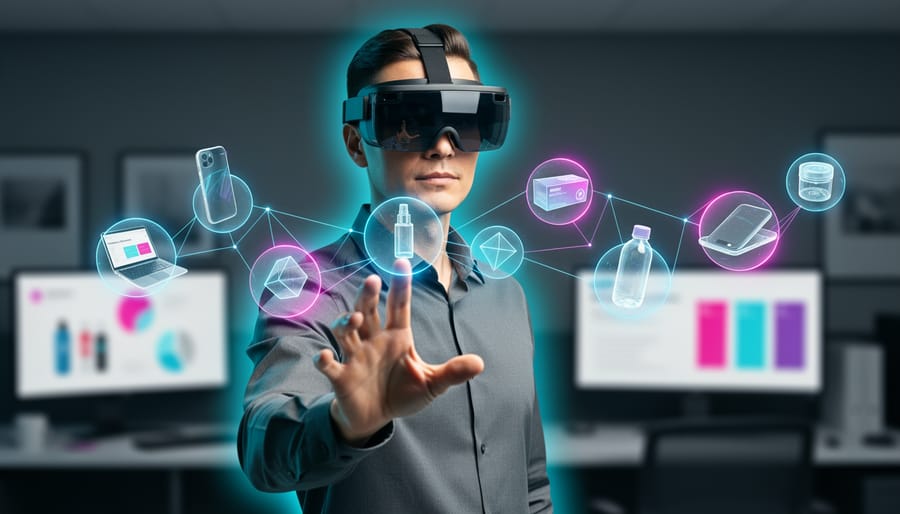
Connect your CRM directly to VR/AR platforms through API integrations that automatically sync customer interactions from virtual showrooms, AR product demos, and immersive experiences into your existing customer database. Implement automated tracking workflows that capture behavioral data when prospects engage with 3D product visualizations or virtual consultations, triggering personalized follow-up sequences based on specific actions like completing a virtual tour or requesting AR assistance.
Map your traditional customer journey stages to immersive touchpoints by identifying where VR/AR transform customer experience most effectively, then configure your CRM to segment users based on their engagement level with spatial content versus conventional channels. Set up lead scoring rules that assign higher values to prospects who spend meaningful time in virtual environments, since this engagement typically signals stronger purchase intent than passive website browsing.
Deploy middleware solutions that bridge the gap between immersive platforms and your CRM without requiring extensive technical expertise. Tools like Zapier, Make, or platform-specific connectors enable you to automate data flow between systems, ensuring every virtual handshake, product interaction, or shared AR experience becomes a documented touchpoint in your customer relationship timeline.
The convergence of CRM systems with spatial computing creates unprecedented opportunities for businesses to maintain continuity across physical and virtual customer interactions. This integration ensures that whether customers engage through traditional channels or emerging immersive technologies, their complete journey remains visible, trackable, and actionable within a unified system that drives informed marketing decisions and personalized communication strategies.
What VR/AR CRM Integration Actually Means for Your Business
VR/AR CRM integration connects your customer relationship management system with immersive technology platforms to capture and organize data from virtual and augmented reality interactions. When customers engage with your brand in VR showrooms, AR product visualizations, or virtual events, they generate behavioral signals that go far beyond clicks and page views.
Traditional CRMs track email opens, website visits, and purchase history. But what happens when a customer spends fifteen minutes examining a 3D product model in AR, returns to view it from different angles, or collaborates with colleagues in a virtual meeting space? These interactions reveal intent, interest levels, and decision-making patterns that standard analytics tools simply can’t measure.
Immersive environments create data points like gaze tracking (what products customers look at longest), spatial movement patterns (which areas of your virtual space attract attention), gesture interactions (how users manipulate 3D objects), and dwell time in specific virtual locations. This information helps you understand customer behavior at a deeper level than ever before.
Integration means these immersive interactions automatically flow into your CRM alongside traditional touchpoints. Your sales team sees when a prospect tried on a virtual product demo. Marketing can trigger follow-ups based on VR event attendance. Customer service accesses AR troubleshooting sessions to provide better support.
The practical outcome is a unified customer profile that spans physical and virtual worlds. You eliminate data silos, automate communication based on immersive engagement, and make decisions using complete information rather than fragmented insights from disconnected platforms.
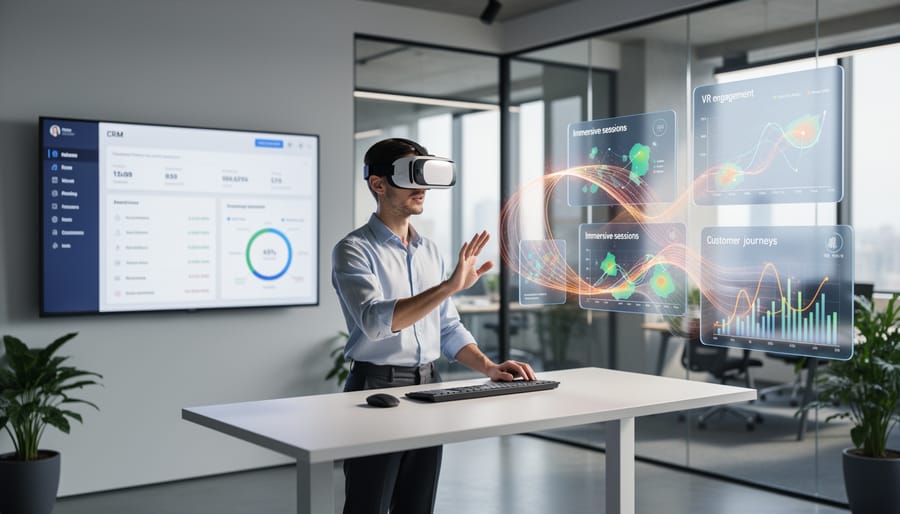
The Lifecycle Marketing Gap in Immersive Experiences
Tracking Customer Behavior in 3D Spaces
Virtual and augmented reality environments generate behavioral insights that traditional digital channels simply cannot capture. Unlike website clicks or email opens, VR/AR interactions reveal how customers physically engage with your products and spaces through gaze tracking, hand movements, and spatial navigation patterns.
These data points tell a compelling story. When a customer spends thirty seconds examining a specific product feature in VR, lingers in a particular area of your virtual showroom, or repeatedly reaches for certain objects, you’re capturing genuine interest signals. This immersive data analytics provides unprecedented clarity about customer preferences and purchase intent.
To capture this information effectively, ensure your VR/AR platform integrates with your CRM through automated data pipelines. Map spatial interactions to standard CRM fields: gaze duration becomes engagement score, visited locations transform into interest categories, and interaction frequency indicates purchase readiness. Modern integration platforms can automatically sync this behavioral data in real-time, eliminating manual data entry while enriching customer profiles with actionable insights that inform your sales conversations and marketing automation workflows.
Automated Touchpoints That Work in Immersive Environments
Immersive environments create unique opportunities for automated customer engagement that traditional channels can’t replicate. When a user abandons their virtual showroom visit halfway through, your CRM should automatically trigger a follow-up email with a direct link back to where they left off. This personalized touchpoint acknowledges their specific journey and reduces friction in returning.
Consider automating welcome sequences when users first enter your VR space. Capture their interaction data—which products they examined, how long they spent in each area—and use these behavioral triggers to send tailored product information or special offers within 24 hours. This bridges the gap between immersive exploration and concrete purchasing decisions.
Session completion milestones also work exceptionally well. When someone completes a virtual product demo or AR try-on experience, automatically schedule a consultation request or send comparison guides based on the items they interacted with most. These triggers feel natural because they’re responding to demonstrated interest rather than generic browsing.
The key is timing your automation to complement, not interrupt, the immersive experience. Send notifications after users exit the virtual environment, using their in-world behavior as smart segmentation criteria. This approach respects the customer journey while maintaining consistent communication that moves prospects toward conversion.
Essential Integration Points Between Your CRM and VR/AR Platforms
Data Synchronization That Actually Works
Real-time data synchronization eliminates the disconnect between your immersive experiences and customer records. When a prospect interacts with your VR product demo or AR catalog, that engagement should flow directly into your CRM without manual intervention. Modern integration tools use APIs to create bidirectional data exchange, meaning customer actions in virtual environments automatically update contact records, while CRM data populates personalized experiences in immersive platforms.
The key advantage is automation. Each virtual showroom visit, product configuration, or AR try-on becomes a trackable touchpoint that enriches customer profiles instantly. This eliminates spreadsheet updates and reduces data entry errors that plague manual processes. Your sales team sees complete interaction histories, including time spent in virtual environments, features explored, and expressed preferences.
Set up field mapping carefully during initial integration. Determine which immersive platform data points correspond to CRM fields—session duration might map to engagement scores, while product interactions update opportunity stages. Most platforms offer webhook support, triggering CRM updates the moment specific actions occur. This creates a single source of truth across physical and virtual customer journeys, enabling timely follow-ups based on actual behavior rather than assumptions.

User Identity Management Across Reality Platforms
One of the most critical challenges in VR/AR marketing is connecting virtual interactions to real customer records. When someone explores your virtual showroom or interacts with your AR product demo, that engagement needs to flow directly into your CRM as actionable customer data.
Start by implementing a unified login system that links virtual avatars to actual customer profiles. This authentication layer ensures that every virtual handshake, product interaction, or spatial event attendance is attributed to the correct contact record. Most modern CRM platforms support OAuth or single sign-on protocols that can authenticate users across multiple reality platforms.
Consider automated tracking mechanisms that capture immersive behaviors without manual data entry. When a customer spends time examining a product in VR or completes an AR-guided tutorial, these activities should trigger automated workflows in your CRM. This might include updating lead scores, sending follow-up communications, or alerting sales teams to high-intent behaviors.
The key is creating seamless data bridges between reality platforms and your customer database. Use middleware solutions or integration platforms that can translate VR/AR events into standard CRM fields and actions. This approach maintains clean data while enabling you to nurture relationships based on both physical and virtual touchpoints, creating a truly unified customer journey.
Communication Channels You Can’t Ignore
Modern CRM systems must handle communication across multiple touchpoints, from traditional email and phone to emerging immersive platforms. Your integrated system should centralize conversations regardless of channel, creating a unified customer history that informs every interaction.
Start by connecting your core channels: email, SMS, social media, and live chat. These fundamentals ensure no customer message falls through the cracks. Automated workflows can route inquiries to the right team members while maintaining consistent response times across all platforms.
As your business explores spatial computing, your CRM needs to capture interactions from virtual showrooms, AR product demonstrations, and VR/AR customer service sessions. These immersive touchpoints generate valuable behavioral data that traditional channels cannot capture, such as product engagement time, spatial preferences, and virtual consultation notes.
The key is treating all channels equally in your database. Whether a customer reaches you through a chatbot or during a VR experience, that conversation should automatically update their profile, trigger appropriate follow-ups, and inform future interactions. This omnichannel approach prevents disconnected experiences and ensures your team always has complete context when engaging customers.
Building Your VR/AR-Ready Lifecycle Marketing Strategy
Segmentation Strategies for Immersive Customers
Effective segmentation starts with tracking how customers interact with your immersive experiences. Your CRM should automatically capture metrics like session duration, feature usage frequency, completion rates, and interaction depth within VR or AR environments. These data points reveal distinct customer groups that require different communication approaches.
Begin by creating basic engagement tiers. High-engagement users who frequently access immersive content and spend significant time exploring virtual environments represent your most invested audience. These customers often respond well to advanced feature announcements and beta testing opportunities. Mid-tier users show sporadic engagement and benefit from educational content that demonstrates additional value they might be missing. Low-engagement or dormant users need re-engagement campaigns highlighting simplified use cases or updated content.
Beyond engagement levels, segment by behavioral patterns. Some customers primarily use VR/AR for product visualization before purchasing, while others engage post-purchase for training or support. Your CRM integration should tag these behaviors automatically, enabling targeted messaging that matches their specific journey stage.
Consider device preferences and technical proficiency as segmentation criteria. Customers using mobile AR have different expectations than those with dedicated VR headsets. Automated workflows can adjust communication complexity based on these factors, ensuring messages remain relevant and accessible.
The key is letting your CRM handle segmentation automatically based on predefined rules. Set up triggers that move customers between segments as their behavior changes, ensuring your outreach stays current without manual oversight. This approach scales efficiently as your immersive customer base grows.
Personalization at Scale in Mixed Reality
Modern CRM systems can automatically deliver personalized experiences across VR headsets, AR mobile apps, and traditional email or web channels without requiring manual intervention for each customer touchpoint. When properly integrated, your CRM tracks individual preferences, behavioral patterns, and engagement history to trigger relevant content regardless of where customers interact with your brand.
The key is establishing unified customer profiles that capture both immersive and conventional interactions. For example, when a customer explores a virtual showroom, your CRM automatically logs their product interests and time spent in specific areas. This data triggers personalized follow-up emails, customized AR product visualizations sent to their mobile device, or tailored recommendations during their next VR session.
Automation rules within your CRM handle the heavy lifting. Set conditions based on customer actions, such as sending an interactive AR catalog after someone abandons a virtual shopping cart, or scheduling a sales call when engagement reaches specific thresholds. These workflows operate continuously without manual oversight, ensuring consistent personalization across all channels.
This approach significantly reduces your team’s workload while improving conversion rates. Rather than manually segmenting audiences and crafting individual messages, your system adapts content automatically based on real-time behavior. The same principles that drive effective AR customer loyalty strategies apply here: consistent, relevant engagement that responds to individual preferences creates stronger customer relationships. Start with simple automation rules and expand as you identify patterns in customer behavior across your mixed reality and traditional channels.
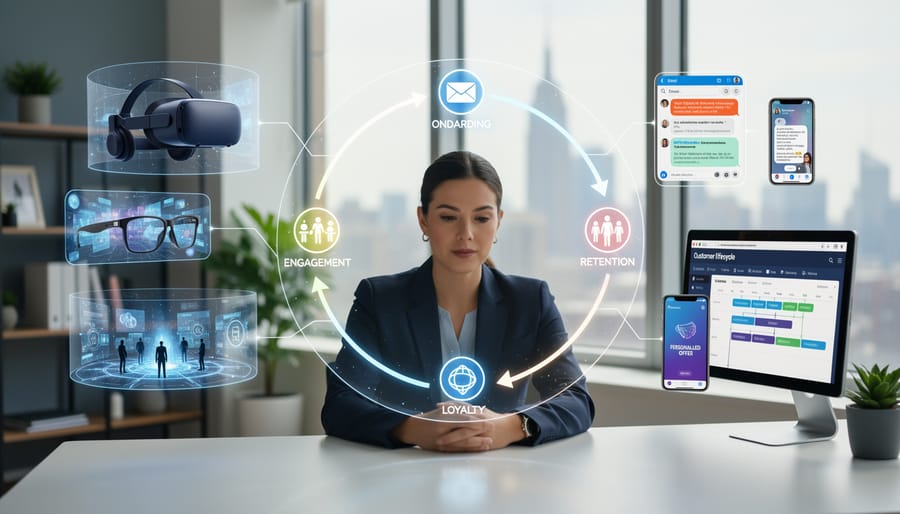
Real-World Applications by Business Type
Implementing VR/AR CRM integration doesn’t require Fortune 500 budgets. The key is matching the technology to your business model and customer journey.
For small retail businesses, start with augmented reality product visualization connected to your existing CRM. A furniture store can use tablet-based AR to let customers preview pieces in their homes while automatically logging these interactions in your CRM system. This creates personalized follow-up opportunities based on which items prospects viewed, with automated email sequences triggered by specific product interactions.
Real estate agencies represent an ideal mid-sized application. Virtual property tours integrate seamlessly with CRM platforms by tracking which properties clients spend the most time exploring, which rooms they revisit, and what features they question during the experience. Your CRM then segments these prospects based on their virtual behavior, enabling targeted communication about similar listings without manual data entry.
Service-based businesses like training companies can leverage VR simulations while capturing completion rates, struggle points, and skill progression directly into CRM records. This data automates certification reminders, upsell opportunities for advanced modules, and personalized coaching outreach based on individual performance metrics.
E-commerce startups benefit from AR try-on features for apparel, cosmetics, or accessories. When integrated with your CRM, these virtual fitting sessions become powerful data points. Track which items customers virtually tried but didn’t purchase, then automate strategic discount offers or alternative product suggestions.
The common thread across all business types is connecting immersive experiences to automated CRM workflows. You’re not building custom platforms from scratch. Instead, use available AR/VR tools that offer API access to your current CRM system, creating automated triggers based on user behavior within these experiences. This approach transforms emerging technology from a gimmick into a practical client communication enhancement that works within realistic budgets and existing infrastructure.
Common Integration Mistakes That Cost You Customers
Even well-intentioned integration efforts can backfire without proper planning. One of the most costly mistakes is creating data silos between your VR/AR platform and CRM system. When customer interactions in immersive environments don’t sync with your main database, you lose critical touchpoints that inform personalized communication. The solution is establishing bidirectional data flows from day one, ensuring every virtual showroom visit or AR product interaction updates customer profiles in real-time.
Another common pitfall is over-automating without human oversight. While automation streamlines processes, completely removing the human element from VR/AR customer journeys creates disconnected experiences. Customers who engage with immersive content often have complex questions that automated responses can’t address. Balance automated follow-ups with clear escalation paths to your sales team when prospects demonstrate high intent behaviors.
Failing to map the customer lifecycle across both physical and virtual touchpoints also derails integration success. Your CRM should track the complete journey, from initial AR product visualization to post-purchase support in virtual environments. Create unified customer profiles that reflect all interaction channels rather than treating VR/AR as separate campaigns.
Finally, neglecting mobile integration proves particularly damaging. Most AR experiences happen on smartphones, yet many businesses only optimize their CRM connections for desktop VR platforms. Ensure your integration captures mobile AR interactions with the same depth as other channels, maintaining consistent communication regardless of how customers access your immersive content.
The competitive landscape is shifting rapidly, and businesses that integrate VR and AR capabilities into their CRM systems now will gain significant advantages over those who wait. Early adoption doesn’t mean overhauling your entire infrastructure overnight. Instead, focus on building a foundation through small, automated processes that prepare your customer data and communication systems for spatial computing environments.
Start by auditing your current CRM capabilities. Can your system track interactions across multiple touchpoints? Does it support API integrations that could connect with emerging immersive platforms? Is your customer data structured in ways that translate to virtual environments? These questions will reveal gaps and opportunities for strategic improvements.
The businesses winning in tomorrow’s immersive marketplace will be those who established seamless data flow and automated client communication processes today. As VR and AR technologies become mainstream consumer tools, your CRM won’t just manage relationships – it will orchestrate experiences across physical showrooms, virtual product demonstrations, and augmented reality consultations.
Begin with one automated process that enhances your current customer journey. Perhaps it’s automated follow-ups after virtual product tours or personalized AR content delivery based on browsing behavior. Test, refine, and expand gradually. The goal isn’t perfection but progress toward a system that’s ready when your customers are.
The future of customer relationships is immersive. The question isn’t whether to integrate VR and AR into your CRM strategy, but how quickly you can start building that capability.
Leave a Reply