AR Gaming Campaigns That Actually Drive Sales (Not Just Engagement)

Launch AR marketing campaigns that deliver measurable results by starting with platform selection based on your audience demographics—Instagram and Snapchat for Gen Z consumers, WebAR for broader accessibility without app downloads. Define clear conversion metrics before deployment, whether that’s product trials, time spent engaging, or direct purchases, then track these through UTM parameters and platform analytics.
Design experiences that solve customer pain points rather than showcasing technology for its own sake. Virtual try-ons reduce return rates by 40% for fashion retailers, while furniture visualization tools increase purchase confidence. Keep initial interactions under 30 seconds to maintain engagement, then layer additional features for interested users.
Integrate AR gamification revolutionizing ROI elements like rewards, leaderboards, or challenges to extend campaign lifespan beyond initial novelty. Users who earn points or unlock achievements engage 3x longer than passive viewers and share experiences 60% more frequently.
Test campaigns with limited budgets starting at $5,000-$10,000 using existing 3D assets or templates before committing to custom development. Small businesses can leverage platforms like 8th Wall or Zappar for rapid deployment, while enterprises should consider proprietary solutions for brand control and data ownership. Allocate 30% of your budget to paid promotion—even compelling AR experiences need visibility to generate traction and meaningful business outcomes.
What Makes AR Gamification Different from Traditional Marketing Games

The Technology Behind AR Marketing Campaigns
AR marketing technology has become surprisingly accessible, with three main implementation options that don’t require massive technical resources.
Mobile apps remain the most robust AR solution. Customers download your branded app, which uses their phone’s camera and sensors to overlay digital content onto the real world. While this approach offers the richest experience, it requires users to install software, which can reduce participation rates. However, for loyalty programs or repeat customers, mobile apps deliver the most sophisticated AR features.
Web-based AR has emerged as a game-changer for businesses seeking immediate engagement. Modern browsers now support AR experiences without requiring downloads. Customers simply scan a QR code or click a link, and their phone camera activates the AR experience directly in their browser. This frictionless approach dramatically increases participation rates and works perfectly for product visualization, virtual try-ons, or location-based promotions.
Social media filters represent the lowest barrier to entry. Platforms like Instagram, Snapchat, and TikTok provide built-in AR tools that let brands create custom filters and effects. Users already understand how these work, making adoption nearly instant. While these filters offer less control than dedicated apps, they excel at viral marketing and reaching younger demographics.
The technology itself relies on your smartphone’s camera, motion sensors, and processing power to recognize surfaces, track movement, and place digital objects convincingly in real space. Modern phones handle this automatically, meaning your audience already has the hardware they need. Your role is simply choosing which delivery method aligns with your marketing goals and customer behavior patterns.
Why Customers Actually Participate in AR Games
Understanding why AR transforms customer experience starts with recognizing four key psychological drivers that compel customers to engage with AR games.
First, novelty creates immediate attention. Research shows consumers spend 75% more time with AR content compared to traditional digital ads. The technology itself triggers curiosity, making customers willing to invest time exploring your brand in ways they wouldn’t with standard marketing.
Second, social sharing amplifies reach organically. AR experiences are inherently shareable—people want to show friends their virtual try-ons, game scores, or location-based discoveries. This user-generated content acts as authentic endorsement, driving acquisition costs down while building trust.
Third, tangible rewards matter. Whether it’s discount codes unlocked through gameplay, exclusive product access, or loyalty points, customers participate when there’s clear value exchange. The gamification element makes earning these rewards feel entertaining rather than transactional.
Finally, experiential value addresses the modern consumer’s desire for memorable brand interactions. Rather than passive viewing, AR games create active participation. Customers remember experiences that engage multiple senses and require interaction—making your brand more memorable than competitors relying on traditional ads.
For marketing professionals, this translates to measurable business outcomes: higher engagement rates, longer session times, increased conversion rates, and organic social reach. The key is ensuring your AR game delivers on these psychological drivers while aligning with automated marketing workflows that track and optimize performance based on real customer behavior data.
Five AR Gamification Strategies That Convert

Scavenger Hunts and Location-Based Challenges
AR scavenger hunts transform routine shopping trips into engaging adventures that drive measurable foot traffic. Customers use their smartphones to discover virtual items hidden throughout your physical locations, unlocking exclusive discounts or rewards upon completion. This approach works particularly well for retail stores, shopping centers, and event venues looking to increase dwell time and boost purchases.
The key to successful location-based AR campaigns lies in strategic placement and clear rewards. Position virtual checkpoints near high-margin products or underperforming store sections to guide customer flow naturally. Each checkpoint completed should trigger automated notifications updating participants on their progress, maintaining engagement without manual intervention.
Modern AR platforms now integrate directly with customer relationship management systems, automatically tracking participation rates, completion times, and subsequent purchase behavior. This data flows seamlessly into your marketing automation, enabling targeted follow-up campaigns to non-completers or special offers to top performers.
Set up automated reward distribution through digital coupons or loyalty points that activate immediately upon hunt completion. This eliminates manual processing while creating instant gratification that encourages social sharing and repeat participation.
Virtual Try-On Experiences with Gamified Elements
Virtual try-on tools become powerful engagement drivers when paired with gamification mechanics. Fashion retailers can implement point systems where customers earn rewards for trying multiple items, completing outfit combinations, or sharing their virtual looks on social media. Home goods brands see impressive results by challenging customers to redesign room spaces using AR furniture placement, with achievement badges for completing different styles or room types.
The key is making interactive AR shopping experiences rewarding beyond the purchase itself. Build leaderboards for style challenges, offer exclusive discounts for completing try-on milestones, or create shareable certificates when customers visualize products in their space. Beauty brands successfully use streak tracking, encouraging daily virtual try-ons with incremental rewards.
Implementation requires integrating your AR platform with a simple rewards system. Start with three basic actions: try-on completions, social shares, and return visits. Track these behaviors through your existing analytics tools and automate reward delivery through email or in-app notifications. This approach increases session time by 40-60% while building valuable customer behavior data for future campaigns.
Social Media AR Filters with Built-In Competitions
Social media AR filters with integrated competitions create powerful viral loops that drive engagement with minimal upfront investment. Platforms like Instagram, Snapchat, and TikTok enable brands to deploy custom filters that users can apply to their content while participating in contests or challenges.
The mechanics are straightforward: users activate your branded filter, create content, and share it with specific hashtags to enter. This generates authentic user-generated content while expanding your reach through participants’ networks. Winners receive prizes based on creativity, engagement metrics, or random selection.
Implementation requires working with AR developers to create filters that align with your brand identity and campaign goals. Most platforms offer built-in analytics to track filter usage, impressions, and shares. The low barrier to entry means participants need only a smartphone and existing social media account, making these campaigns accessible to broad audiences.
Success metrics include filter applications, shares, hashtag reach, and new follower acquisition. Budget allocation typically covers filter development, prize costs, and promotional spending to jumpstart initial participation.
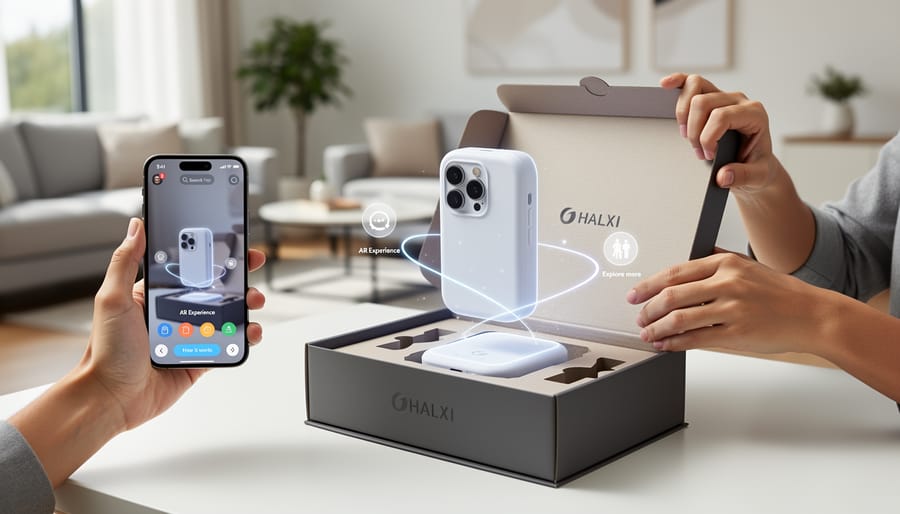
Interactive Product Packaging Experiences
Transform your product packaging into an interactive marketing channel by adding AR-enabled experiences. When customers scan your packaging with their smartphones, they can unlock exclusive content like behind-the-scenes videos, limited-time discount codes, or mini-games related to your brand. This approach turns one-time purchases into ongoing engagement opportunities.
Consider implementing a tiered rewards system where multiple scans unlock progressive benefits. A beverage company might offer recipe videos on first scan, entry into a monthly contest on the second, and exclusive product previews on subsequent interactions. This creates compelling reasons for customers to keep your packaging and return to your brand.
The beauty of scannable packaging lies in its automated data collection capabilities. Track scan rates, geographic patterns, and engagement metrics without manual intervention. These insights help you understand which products generate the most interest and which rewards drive repeat interactions. Start with simple implementations like exclusive content access before advancing to complex gamification features, ensuring your system integrates smoothly with your existing customer communication channels.
Event-Based AR Activations
Trade shows and pop-up events offer prime opportunities to deploy AR gaming experiences that transform passive attendees into active participants. Place AR markers throughout your booth space that unlock product demos, interactive challenges, or digital scavenger hunts. Attendees scan QR codes to access these experiences directly from their smartphones, eliminating barriers to engagement.
The key advantage is automated data capture. Each AR interaction can prompt users to share contact information before accessing premium content or entering prize draws. Configure your AR platform to sync lead data directly with your CRM system, ensuring immediate follow-up capabilities.
Design experiences with clear objectives: product education through gamified tutorials, brand storytelling via augmented narratives, or lead qualification through interactive quizzes. Track completion rates, time spent, and share metrics to measure engagement quality, not just quantity.
For maximum impact, communicate pre-event with registered attendees about exclusive AR experiences available at your booth. This drives intentional traffic while capturing high-intent leads who actively seek your branded content. Post-event, use collected behavioral data to personalize follow-up communications based on which AR features each prospect engaged with most.
Building Your AR Campaign: A Practical Implementation Roadmap
Choosing the Right Platform and Tools
Selecting the right AR platform depends on your business size, budget, and technical resources. Three mainstream platforms dominate the accessible AR landscape, each offering distinct advantages.
Spark AR (Meta) provides the most immediate reach through Facebook and Instagram integration. It’s ideal for small to medium businesses with limited budgets, offering free access to Meta’s 3 billion users. The platform requires minimal coding knowledge and enables quick deployment of branded filters and effects.
Lens Studio (Snapchat) targets younger demographics effectively, making it perfect for brands engaging Gen Z audiences. Like Spark AR, it’s free and user-friendly, with straightforward templates that allow non-technical marketers to create campaigns within days rather than weeks.
8th Wall stands out for businesses seeking web-based AR experiences that work across devices without app downloads. While more expensive (starting at $99 monthly), it offers greater customization and works on any mobile browser. This platform suits medium-sized businesses ready to invest in cross-platform accessibility.
Custom AR solutions provide maximum flexibility but require significant investment, typically starting at $10,000 for development. Reserve this option for enterprises with specific requirements that platforms can’t accommodate.
For startups and small businesses, begin with Spark AR or Lens Studio to test concepts affordably. Mid-sized companies benefit from 8th Wall’s versatility and professional features. Only pursue custom development once you’ve validated AR’s impact on your specific audience through platform-based campaigns. This staged approach minimizes risk while building internal knowledge about what resonates with your customers.
Setting Measurable Goals and KPIs
Success in AR marketing campaigns requires tracking the right metrics from day one. While engagement numbers look impressive, they don’t tell the complete story of your campaign’s business impact.
Start by establishing clear conversion rate targets. Track how many users who interact with your AR experience complete desired actions—whether that’s making a purchase, requesting a demo, or signing up for your newsletter. These conversions directly tie your AR investment to revenue outcomes.
Monitor customer acquisition cost (CAC) specifically for AR campaign leads. Calculate total campaign expenses divided by new customers acquired through the AR experience. Compare this against your traditional marketing channels to validate your investment. Most successful campaigns see CAC improvements of 15-30% once optimized.
Measure customer lifetime value (CLV) for AR-acquired customers separately. Early data suggests customers who engage with AR experiences often show higher brand loyalty and repeat purchase rates, making this metric particularly valuable for long-term planning.
Implement automated tracking systems from launch. Use AR marketing analytics platforms that integrate with your CRM to capture user behavior, completion rates, and conversion paths without manual data entry. Set up automated weekly reports that highlight key performance indicators and flag underperforming elements.
Consider secondary metrics like session duration, feature interaction rates, and social sharing frequency. These indicators help optimize the experience itself while your primary metrics measure business outcomes. Automated dashboards displaying these metrics keep stakeholders informed and enable quick strategic adjustments.
Common Pitfalls and How to Avoid Them
Despite the growing accessibility of AR technology, many businesses stumble when launching their first campaigns. Understanding these common challenges helps you avoid costly mistakes and accelerate your path to results.
Technical barriers remain a primary concern. Many business owners assume AR requires extensive development resources or specialized expertise. The reality is simpler: today’s AR platforms offer template-based solutions that work within existing marketing automation systems. Start with web-based AR experiences that don’t require app downloads. These run directly in mobile browsers, eliminating the biggest adoption barrier. Partner with vendors who provide automated setup processes rather than custom development services.
User adoption challenges often derail even well-designed campaigns. If your AR experience takes more than three steps to access, you’ll lose half your audience before they engage. Keep activation simple: QR code scan, camera permission, immediate experience. Test your campaign with non-technical users first. If your office manager can’t figure it out in 30 seconds, redesign it.
Measuring ROI presents another stumbling block. AR campaigns generate unique metrics that don’t fit standard marketing dashboards. Focus on trackable engagement actions rather than vanity metrics. Monitor completion rates, time spent in experience, and conversion paths from AR interaction to purchase. Connect your AR platform to your CRM system to attribute revenue directly to campaign touchpoints.
Over-complexity kills promising campaigns. Businesses often try cramming multiple features into one experience, creating confusion instead of engagement. Choose one clear objective per campaign. If you’re showcasing a product, don’t simultaneously collect survey data and request social shares. Build a straightforward path from engagement to conversion.
Budget creep happens when scope expands during development. Define your minimum viable AR experience upfront. Launch that version first, gather user feedback, then iterate. This approach reduces initial investment while providing real performance data to guide future enhancements. Most successful AR campaigns started simple and evolved based on actual user behavior rather than assumptions.
Making AR Gamification Work for Your Business Size
Your business size directly impacts which AR gamification approach makes the most sense for your budget and resources.
If you’re running a small business or startup, begin with social media AR filters. Platforms like Instagram and Snapchat offer built-in tools that require minimal investment while still delivering engaging experiences. A coffee shop might create a simple branded filter that customers can use when posting photos, turning each share into organic marketing. This approach costs little to nothing but can generate significant reach when designed with shareability in mind.
Medium-sized enterprises should consider custom AR experiences that align with specific campaign goals. With budgets ranging from $5,000 to $50,000, you can develop branded games, virtual try-on features, or interactive product demonstrations. These investments pay off through higher engagement rates and detailed user data that informs future marketing decisions. Focus on one well-executed experience rather than multiple basic implementations.
Large organizations can explore comprehensive AR platforms with ongoing gamification elements, including loyalty programs, treasure hunts, and multi-location experiences. Budget allocation should account for development costs, ongoing maintenance, and promotion to ensure adoption.
Regardless of size, start small and scale based on performance data. Track engagement metrics from day one, maintain clear communication with your development team about deliverables, and set realistic timelines. Most businesses see initial results within the first campaign cycle, but meaningful ROI typically emerges after refining the experience based on user feedback and automated performance tracking.
AR gamification is no longer reserved for brands with massive budgets and technical teams. Today’s automated platforms have democratized this technology, making it accessible for businesses of all sizes to create engaging campaigns that drive measurable results. The key to success isn’t about having the most sophisticated setup—it’s about starting with a clear strategy.
Before launching any AR marketing campaign, define what you want to achieve. Are you aiming to increase product engagement, collect customer data, or drive foot traffic to physical locations? Your objectives will determine which gamification format works best for your audience. A simple scavenger hunt might outperform a complex branded game if it aligns better with your customer’s preferences and your business goals.
Choose platforms that offer built-in analytics and automated tracking systems. These tools eliminate guesswork by providing real-time data on user participation, engagement duration, and conversion rates. This information becomes invaluable for refining your approach and demonstrating ROI to stakeholders.
Start small and scale strategically. Test your first AR campaign with a limited audience, gather feedback, and optimize before expanding. This approach minimizes risk while maximizing learning opportunities.
The most important step is simply starting. Select one clear objective, choose an appropriate AR gamification format, and implement tracking from day one. The technology is ready, the audience is engaged, and the competitive advantage belongs to businesses willing to take that first practical step today.
Leave a Reply