Why Digital Billboards Are Crushing Traditional Ads (And How to Use Them)
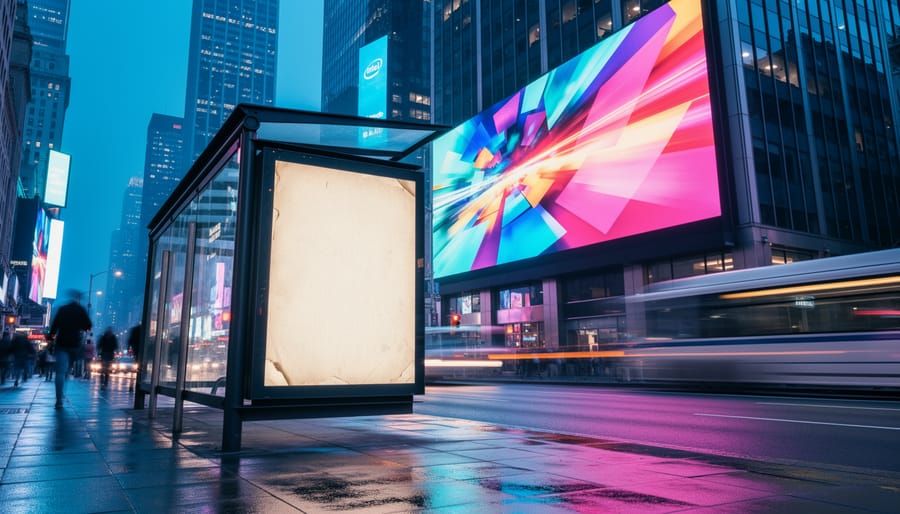
Digital out of home advertising transforms static billboards and transit posters into dynamic, data-driven marketing channels that reach consumers where traditional digital ads cannot. Today’s DOOH campaigns leverage programmatic platforms that let you buy, manage, and optimize digital displays across thousands of locations from a single dashboard—eliminating the manual coordination that once made outdoor advertising prohibitively complex for smaller businesses.
The technology stack behind successful DOOH campaigns consists of three core components: demand-side platforms (DSPs) that automate media buying, content management systems that schedule and deploy creative assets, and measurement tools that track exposure and attribution. Together, these systems enable the same precision targeting and performance optimization you expect from online advertising, now applied to screens in shopping malls, airports, and roadside displays.
Modern DOOH platforms integrate with your existing marketing automation and CRM systems, allowing automated campaign triggers based on weather conditions, local events, inventory levels, or customer behavior patterns. This automation reduces manual workload while increasing campaign relevance—when configured properly, your DOOH ads can adjust messaging in real-time to match current conditions without requiring constant oversight.
The fundamental shift from traditional outdoor advertising to DOOH is not just about swapping paper for pixels. It is about gaining measurable results, flexible campaign management, and the ability to test and refine messaging as you would with any digital channel—making outdoor advertising accessible and accountable for businesses of every size.
What Makes Digital Out-of-Home Advertising Different
Digital out-of-home advertising represents a significant evolution from the static billboards you’ve likely passed on your daily commute. Unlike traditional outdoor advertising that displays the same message 24/7 until someone physically changes it, DOOH uses digital screens to deliver dynamic content that can be updated instantly and remotely.
The core distinction lies in programmability. DOOH displays operate through connected networks that allow advertisers to schedule different messages for different times of day, rotate multiple campaigns on the same screen, and adjust content based on real-world conditions. A coffee brand can promote iced drinks during hot afternoons and warm beverages on chilly mornings, all automatically through programmatic systems.
Location-based targeting adds another layer of sophistication. DOOH networks can deliver specific messages to screens in particular neighborhoods, near relevant points of interest, or along commuter routes. A fitness center can advertise on displays within a three-mile radius of its location during peak gym hours, maximizing relevance to potential members.
Real-time data integration sets DOOH apart from any traditional outdoor medium. These systems can pull live information like weather conditions, traffic patterns, sports scores, or social media trends to trigger appropriate creative. Rain in the forecast might activate umbrella advertisements, while a local team’s victory could trigger celebratory messaging from sponsors.
This automation eliminates the manual processes and lead times associated with traditional billboards. Campaign changes that once required printing new materials and coordinating installation crews now happen through software interfaces. You gain the flexibility to respond to market conditions, test different messages, and optimize performance without the friction of physical production cycles. The result is outdoor advertising that behaves more like digital channels you already use, with measurable results and actionable data.
Essential Tools for Managing DOOH Campaigns
Programmatic DOOH Platforms
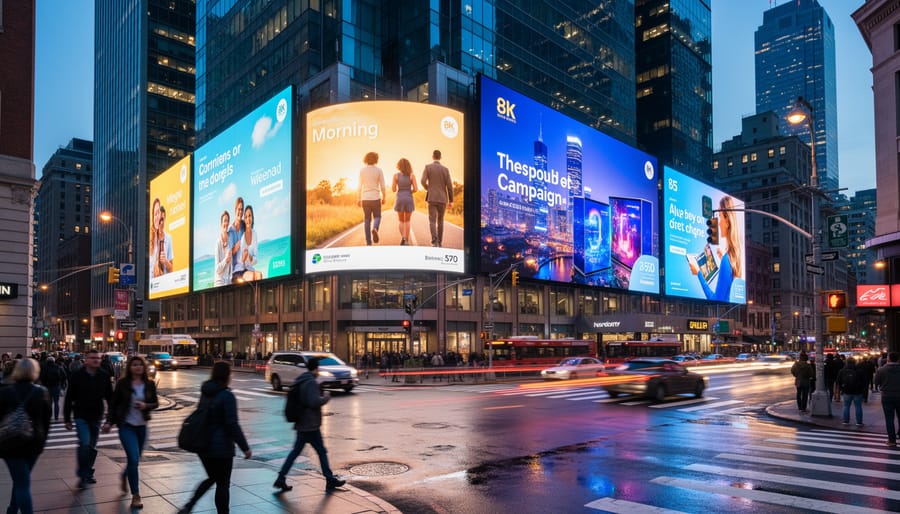
Programmatic buying platforms have revolutionized how businesses purchase digital out of home advertising space. Instead of manually negotiating with individual billboard owners or networks, these platforms automate the entire process through real-time bidding and intelligent placement algorithms.
Think of programmatic DOOH platforms as the bridge between your advertising goals and available screen inventory across multiple networks. When you set your campaign parameters—target audience, locations, budget, and timing—the platform automatically identifies optimal placements and bids on your behalf. This eliminates hours of back-and-forth communication while ensuring you’re paying fair market rates.
Leading platforms like Broadsign, Hivestack, and Vistar Media aggregate inventory from thousands of digital billboards, transit screens, and retail displays. You can launch campaigns across multiple cities or venues through a single interface, adjusting parameters in real-time based on performance data.
The automation benefits are substantial. You’ll reduce campaign setup time from weeks to hours, access transparent pricing across competing inventory, and receive detailed performance analytics without manual reporting. Many platforms integrate with your existing marketing tools, creating seamless workflows from planning through measurement.
For businesses new to DOOH, programmatic platforms lower the barrier to entry. Start with smaller budgets to test locations and creative approaches, then scale quickly when you identify winning combinations. The platforms handle technical complexities like file formatting and scheduling, letting you focus on strategy and creative messaging that resonates with your audience.
Campaign Management Systems
Modern campaign management systems serve as your command center for digital out-of-home advertising, consolidating what used to require multiple platforms into a single, streamlined interface. These centralized dashboards let you create, launch, and monitor campaigns across dozens or even hundreds of screens simultaneously, regardless of their physical locations.
The core value lies in automation and efficiency. Instead of coordinating with individual venue operators or managing separate systems for each screen location, you can upload creative assets once, set your scheduling parameters, and deploy campaigns across your entire network in minutes. Most platforms offer drag-and-drop functionality for building campaigns, making the process accessible even without extensive technical expertise.
Real-time monitoring capabilities give you immediate visibility into campaign performance. You can track which screens are active, verify that your content is displaying correctly, and access engagement metrics from a single dashboard. This transparency proves essential when you need to provide clients with quick updates or troubleshoot issues before they impact results.
Scheduling features allow you to plan campaigns weeks or months in advance, automating the entire deployment process. You can set specific dayparts to target audiences at optimal times, rotate multiple creative variations, and adjust campaigns on the fly based on performance data. Geographic targeting tools help you activate specific screens by location, ensuring your message reaches the right audiences in the right markets.
The best systems integrate with your existing marketing stack, syncing with CRM platforms and analytics tools to provide comprehensive campaign insights without manual data transfers.
Analytics and Attribution Tools
Understanding campaign performance is essential for optimizing your DOOH investment. Modern analytics and attribution tools provide concrete data on how your digital billboards and displays are performing, moving beyond traditional outdoor advertising’s guesswork.
Mobile location data serves as the foundation for DOOH measurement. These tools anonymously track smartphone movement patterns to measure how many people pass by your ads, how long they linger, and whether they visit your business location afterward. This foot traffic attribution connects ad exposure directly to store visits, giving you clear ROI metrics similar to what you’d expect from online campaigns.
Computer vision technology takes measurement further by analyzing actual viewer engagement. Cameras equipped with privacy-compliant software can detect how many people looked at your display, their approximate demographics, and attention duration. This real-time feedback helps you understand which creative elements resonate most with your audience.
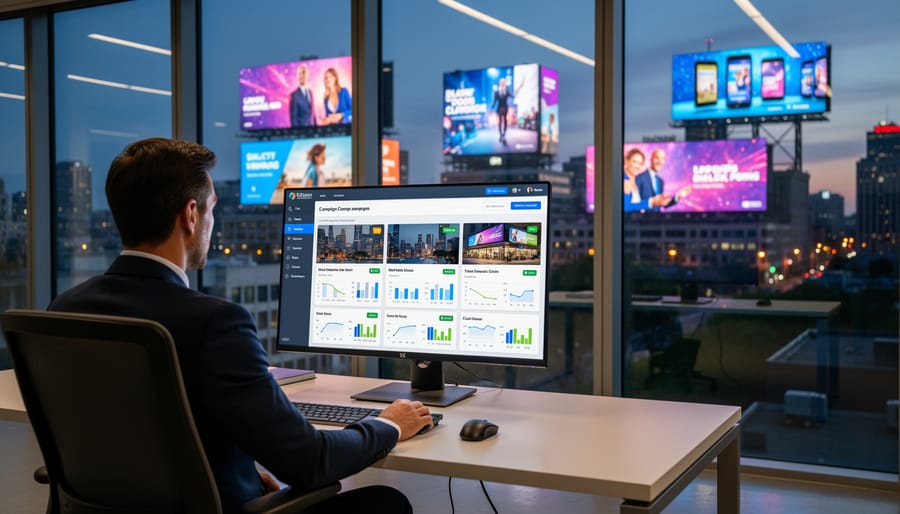
Leading platforms integrate multiple data sources to provide comprehensive reporting dashboards. You’ll see impressions delivered, reach and frequency metrics, conversion tracking, and cost-per-visit calculations. Many systems offer automated reporting that sends performance updates directly to your team, eliminating manual data compilation.
Attribution windows typically range from one hour to 30 days, allowing you to measure both immediate and delayed responses to your campaigns. Advanced platforms can even correlate DOOH exposure with online behavior, tracking whether viewers later searched for your brand or visited your website.
When selecting measurement tools, prioritize platforms that integrate with your existing marketing stack. Automated data synchronization ensures your DOOH metrics flow seamlessly into your broader marketing analytics, providing a complete picture of campaign performance across all channels.
Extensions That Amplify Your DOOH Impact
Dynamic Content Management
Modern DOOH platforms leverage dynamic content management to automatically adjust your creative in real-time based on multiple data triggers. These automated systems connect to weather APIs, event calendars, inventory databases, and social media feeds to ensure your messaging remains relevant and timely.
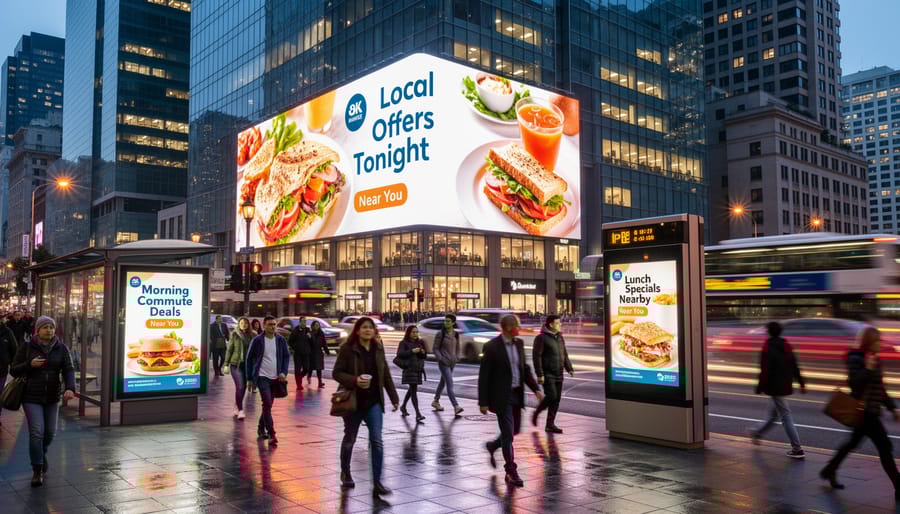
Weather-triggered content is particularly effective for retail and hospitality businesses. Your ad can automatically showcase hot beverages during cold weather or promote air conditioning services when temperatures rise. Time-based triggers adjust messaging throughout the day, displaying breakfast offerings in the morning and dinner specials in the evening.
Location-specific content management tools pull data from local event calendars, sports scores, or traffic patterns. If a concert lets out nearby, your restaurant ad can highlight late-night menu options. Retail businesses can sync DOOH displays with inventory levels, promoting items currently in stock while automatically pulling ads for sold-out products.
Social media integration allows screens to display user-generated content, trending hashtags, or real-time engagement metrics. These systems require minimal manual intervention once configured, running on preset rules and automated workflows. Most DOOH platforms offer dashboard controls where you can set parameters, approve content variations, and monitor performance without technical expertise.
Audience Targeting Extensions
Modern DOOH platforms bridge the gap between traditional billboard advertising and digital precision through sophisticated audience targeting capabilities. These extensions transform static outdoor displays into data-driven marketing channels that rival online advertising effectiveness.
Geofencing technology creates virtual boundaries around specific locations, triggering ad displays when potential customers enter designated areas. Your restaurant can target commuters within a two-mile radius during lunch hours, or your retail store can reach shoppers near competitor locations. This location-based precision ensures your message reaches audiences when they’re most likely to take action.
Mobile device ID matching takes targeting further by connecting DOOH impressions to individual devices. When someone views your digital billboard, the system can capture anonymized device identifiers and serve follow-up ads on their smartphones or tablets. This creates a seamless omnichannel experience, reinforcing your message across multiple touchpoints without manual coordination.
Demographic targeting capabilities leverage aggregated mobile data and third-party insights to display relevant content based on audience characteristics. Display luxury car ads during peak income earner commute times, or promote family-friendly services when demographic data indicates parents are present.
These automated targeting extensions eliminate guesswork from DOOH campaigns, delivering measurable results similar to programmatic digital advertising while maintaining outdoor advertising’s high-impact visual presence.
Integration with Other Marketing Channels
Modern DOOH advertising delivers maximum impact when it works alongside your existing marketing channels rather than operating in isolation. Integration capabilities have become essential features in today’s DOOH platforms, enabling businesses to create seamless, multi-touchpoint campaigns.
The most effective DOOH tools now connect directly with social media platforms, allowing you to trigger billboard content based on trending topics or campaign performance. When your outdoor ad appears in high-traffic areas, you can simultaneously launch complementary social campaigns to the same demographic, amplifying your message across multiple environments.
Search campaign integration takes this further by enabling location-based coordination. Your DOOH ads can display in specific geographic areas while your search ads target users in those same locations, creating a reinforced brand presence. This synchronized approach helps prospects recognize your brand when they search for related products or services.
CRM system connectivity adds another powerful dimension. By connecting DOOH platforms with your customer database, you can trigger different creative content based on customer segments, purchase history, or loyalty status. This automated approach ensures your outdoor messaging stays relevant without requiring manual updates.
Perhaps most valuable is integration with retargeting platforms. When someone passes your digital billboard, modern systems can capture mobile device IDs and add them to retargeting audiences. You can then follow up with online ads, creating a complete customer journey from outdoor exposure to digital conversion. These connections enable truly coordinated marketing strategies that work harder and deliver measurable results across every channel.
Choosing the Right DOOH Tools for Your Business
Selecting the right DOOH platform starts with understanding your specific needs. Begin by assessing your campaign objectives. Are you focused on brand awareness, driving foot traffic, or promoting time-sensitive offers? Your goals will determine which features matter most, from real-time content updates to location-based targeting capabilities.
Budget plays a central role in your decision. For smaller businesses, self-service platforms offer affordable entry points with transparent pricing models. These tools typically charge based on impressions or screen time, making costs predictable. Larger enterprises might benefit from programmatic platforms that provide access to extensive networks and advanced targeting, though they require higher minimum spends.
Consider your team’s technical capabilities honestly. Some platforms offer intuitive drag-and-drop interfaces perfect for teams without design experience, while others require knowledge of digital asset specifications and campaign management systems. If your team is lean, prioritize platforms with strong customer support and educational resources.
Automation should be non-negotiable for most businesses. Look for tools that streamline campaign creation, automate content scheduling based on time of day or audience presence, and provide automated reporting. These features save hours of manual work and reduce human error. The best platforms integrate with your existing marketing tools, allowing campaign data to flow seamlessly into your CRM or analytics dashboard.
Scalability matters even if you’re starting small. Choose platforms that can grow with your business, offering expanded network access, additional screen formats, and more sophisticated targeting as your needs evolve. Test the platform’s flexibility by asking whether you can easily adjust campaign parameters, add new locations, or modify creative assets without starting from scratch.
Request demos from multiple providers and run small test campaigns before committing to long-term contracts. Pay attention to reporting quality during these trials. Effective DOOH tools provide clear metrics on impressions, engagement estimates, and campaign performance, enabling you to communicate results confidently to stakeholders and make data-driven decisions for future campaigns.
Making DOOH Work Without the Complexity
Getting started with DOOH doesn’t require a dedicated technical team or months of preparation. The key is choosing platforms that handle the heavy lifting while you focus on campaign strategy and results.
Start by selecting a demand-side platform that offers automated campaign management. Look for tools that include built-in audience targeting, real-time bidding, and performance tracking. These features eliminate manual processes like negotiating individual placements or tracking metrics across multiple spreadsheets. Modern DOOH platforms can automatically optimize your ad delivery based on foot traffic patterns, weather conditions, and audience demographics without requiring constant oversight.
For creative optimization, keep your designs simple and impactful. Remember that viewers typically have only 3-7 seconds to absorb your message. Use high-contrast colors, minimal text, and a single clear call-to-action. Many DOOH platforms now include dynamic creative optimization tools that automatically adjust your content based on time of day, location, or current events. This automation ensures your ads remain relevant without manual updates.
When it comes to measurement, rely on platforms that provide consolidated reporting dashboards. You should be able to see impressions, estimated reach, and conversion metrics in one place rather than piecing together data from multiple sources. Set up automated reports that deliver key performance indicators to your inbox weekly, allowing you to stay informed without constantly logging into different systems.
The most successful DOOH campaigns happen when you spend 80 percent of your time on strategy and creative development, and only 20 percent on technical execution. By choosing the right automated tools from the start, you can maintain this balance and achieve better results with less operational burden.
Digital out-of-home advertising no longer requires massive budgets or specialized technical expertise. The right combination of programmatic platforms, content management systems, and analytics tools makes sophisticated outdoor campaigns accessible to businesses of all sizes. What once demanded dedicated teams and complex workflows now operates through automated systems that handle bidding, placement, scheduling, and performance tracking with minimal manual intervention.
The key is selecting tools that integrate seamlessly and align with your specific campaign goals. Whether you’re targeting commuters near your retail location or building brand awareness across multiple markets, modern DOOH platforms simplify the technical complexity while delivering measurable results. Automation takes care of the heavy lifting—real-time bidding, creative optimization, and data synchronization—allowing you to focus on crafting compelling messages and interpreting performance metrics.
As DOOH technology continues advancing, the barrier to entry keeps dropping. Start with core platforms that match your budget and objectives, then expand with extensions as your campaigns grow. The sophisticated outdoor advertising landscape is now within reach for any business ready to connect with audiences beyond their screens.
Leave a Reply