What Is Video Sustainability (and How Does It Work)?

Video sustainability is the practice of reducing the environmental impact and resource consumption of digital video throughout its entire lifecycle, from production and storage to distribution and playback. As businesses scale their video marketing efforts in 2026, the hidden costs become harder to ignore: server farms storing thousands of unused video files, bandwidth-heavy assets slowing page loads, and energy-intensive streaming that compounds with every view.
The business case extends beyond environmental responsibility. Sustainable video practices directly improve page performance, reduce hosting costs, and enhance user experience across devices. When a marketing team optimizes video file sizes, implements efficient hosting strategies, and automates the delivery of appropriate formats to different users, they simultaneously cut carbon emissions and operational expenses.
This article breaks down the mechanics of video sustainability into manageable components. You’ll learn how video files consume resources at each stage, which technical decisions create the biggest impact, and how to build automated workflows that make sustainable practices the default rather than an afterthought. The focus is practical implementation: specific actions your team can take today without requiring dedicated sustainability expertise or significant budget allocation.
What Video Sustainability Means for Digital Marketers
For digital marketers, video sustainability means understanding and reducing the environmental cost embedded in every piece of video content you create and distribute. Every video uploaded, streamed, or viewed requires energy, from the data centers that host your files to the networks that transmit them to the devices your audience uses to watch.
The carbon footprint of video content is substantial and growing. When you post a promotional video to social media or embed a product demo on your website, that content triggers a chain of energy consumption. Data centers storing your files consume electricity for both server operation and cooling. Content delivery networks duplicate and cache your videos across global servers. Every view requires bandwidth, with data traveling through network infrastructure. Finally, each viewer’s device, whether a smartphone, tablet, or desktop computer, uses power to decode and display your content.
- Carbon Footprint of Video
- The total greenhouse gas emissions generated throughout a video’s lifecycle, from encoding and storage to transmission and playback. A single hour of high-definition video streaming can produce the equivalent of driving a quarter mile.
- Data Transfer Emissions
- The energy consumed moving video data from servers through networks to viewers’ devices. This represents the largest portion of video’s environmental impact, particularly for content viewed repeatedly across multiple platforms.
- Streaming Efficiency
- How effectively a video delivers its message relative to its file size and energy requirements. Higher efficiency means maintaining quality while minimizing data transfer and storage needs.
- Sustainable Encoding
- The practice of using modern codecs and compression techniques to reduce video file sizes without sacrificing viewer experience. Proper encoding can cut file sizes by 50% or more compared to older methods.
This matters for two critical reasons. First, businesses face increasing pressure to demonstrate environmental responsibility as stakeholders and customers demand sustainable practices. Second, sustainable video practices often align with performance benefits, smaller files load faster, consume less bandwidth, and create better user experiences.
The good news? Most sustainability improvements can run automatically through properly configured workflows. Modern encoding tools, smart CDN selection, and platform-specific optimization rules handle the heavy lifting without requiring manual intervention for each asset you publish.
How Video Sustainability Works

Production and Encoding Efficiency
Choosing the right codec directly impacts both file size and the energy required to process and deliver your marketing videos. H.265 (HEVC) typically reduces file sizes by 40-50% compared to older H.264 while maintaining the same visual quality, meaning less data storage and lower bandwidth consumption. AV1, though newer and more processor-intensive during encoding, delivers even better compression for platforms that support it. VP9 sits between these options, offering solid efficiency with broad compatibility across web browsers.
Resolution optimization means matching video quality to actual viewing contexts. That 4K product demo looks impressive, but if 90% of viewers watch on mobile devices, a 1080p version uses significantly less energy during encoding, storage, and playback without any perceived quality loss for your audience.
Bitrate management fine-tunes this further. Rather than using fixed bitrates, adaptive streaming adjusts quality based on viewer connection speeds, preventing wasted data transmission. For social media clips that play for seconds, you can use lower bitrates than long-form content without affecting viewer engagement. A 30-second Instagram Reel at 3 Mbps instead of 8 Mbps cuts energy use by more than half while remaining visually indistinguishable on small screens.
Hosting and Distribution Infrastructure
Where your videos live matters as much as how they’re encoded. The infrastructure powering video delivery accounts for a significant share of total emissions, making hosting and distribution choices critical sustainability levers that marketing teams can control through platform selection and configuration.
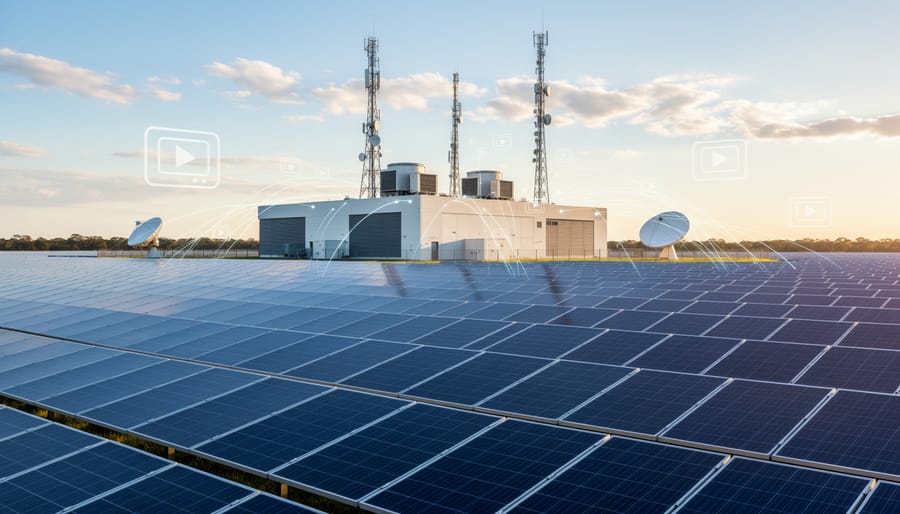
Green data centers represent the foundation of sustainable video infrastructure. These facilities run on renewable energy sources like wind and solar, dramatically reducing the carbon footprint of storing and serving video assets. When evaluating hosting providers in 2026, look for documented renewable energy commitments and transparency about power usage effectiveness (PUE) metrics. Major cloud platforms now publish sustainability reports showing their renewable data centre expansion efforts, making it easier to choose providers aligned with environmental goals.
Content delivery networks amplify these benefits by distributing video files across geographically dispersed servers. When a viewer requests content, they receive it from the nearest server rather than a distant origin, reducing both latency and energy consumption from data transmission. Automated caching strategies further optimize this process by predicting which content will be requested and pre-positioning it close to likely viewers, minimizing redundant data transfers.
Implementing automated rules that purge unused cached video files prevents energy waste from storing content that’s no longer relevant to your marketing campaigns. Set retention policies that align with your content lifecycle, social video ads might cache for weeks, while evergreen website content caches longer.
Core Components of a Sustainable Video Strategy
Automated Optimization Workflows
Modern video platforms let businesses build automated systems that optimize every upload without manual work. You set the rules once, and the system handles compression, format selection, and delivery settings for each new video.
Start with automated encoding pipelines that convert uploads into multiple formats simultaneously. These systems detect the source video quality and generate optimized versions for different devices and networks, mobile viewers get smaller files while desktop users receive higher resolution. The automation applies sustainable codecs like H.265 or AV1 without you choosing settings for each asset.
Compression tools integrate directly into your content workflow. When a marketing team uploads a product demo or social media clip, the system automatically reduces file size while preserving visual quality. These tools adjust bitrates based on content type, a talking-head video compresses more aggressively than a product showcase with detailed visuals.
Delivery automation selects the most efficient distribution method for each viewer. The system routes content through renewable-powered servers when available and serves cached versions to reduce redundant data transfers. It adapts video quality dynamically based on the viewer’s connection speed, preventing wasted bandwidth from delivering 4K streams to users on slower networks.
Set thresholds once, maximum file sizes, acceptable quality ranges, preferred codecs, and let automation maintain these standards across your entire video library as it grows.
Platform-Specific Considerations
Each social platform’s technical requirements shape your video’s environmental footprint differently. TikTok and Instagram Reels compress aggressively on upload, which reduces file sizes but can mean uploading higher-quality source files wastes bandwidth if the platform downgrades them anyway. YouTube Shorts preserves more quality headroom, making it more efficient to upload optimized files that match their encoding targets rather than over-delivering resolution. LinkedIn video tends to serve smaller audience segments with less aggressive compression, so starting with leaner files cuts hosting overhead without degrading professional presentation.
Your social platform strategy should account for these differences by tailoring source files to each channel’s sweet spot rather than uploading identical assets everywhere. A 1080p vertical video encoded at 8 Mbps might be perfect for YouTube Shorts but overkill for TikTok, where a 5 Mbps version delivers identical viewer experience with 37% less data transfer. Automate this with platform-specific export presets that match technical specs to actual delivery profiles, cutting redundant bandwidth without manual per-video adjustments.
Practical Applications for Marketing and Business

Marketing teams consistently find that sustainable video practices deliver measurable benefits across multiple channels and use cases. Social media campaigns optimized for sustainability reduce upload times and data costs while reaching broader audiences on platforms with varying bandwidth conditions. A compressed TikTok campaign that maintains visual quality performs identically to bloated versions but cuts distribution energy by 40-60% and loads faster in emerging markets where connectivity varies.
Website video backgrounds present a prime opportunity for automated optimization. Rather than auto-playing full HD loops that consume energy for every visitor, businesses can implement lazy-loading scripts, compress background videos to appropriate bitrates, and pause playback when users scroll away. These adjustments align UX content strategy with sustainability goals, faster page loads improve user experience while reducing the carbon footprint of each site visit.
Specific applications where sustainable video practices create dual value include:
- Social video campaigns with adaptive bitrate delivery that automatically serves optimized versions based on viewer connection speed
- Website video integration using poster images, manual play controls, and compressed files instead of auto-playing HD backgrounds
- Video email marketing with thumbnail-to-landing-page approaches rather than embedded players that bloat message size
- Webinar hosting through platforms with renewable energy commitments and automated recording compression
- Product demonstration libraries organized with metadata-driven delivery so customers receive only relevant videos in appropriate resolutions
Client communications benefit substantially from sustainable video approaches. Sending compressed screen recordings and proposal videos reduces email attachment sizes, ensures reliable delivery across corporate firewalls, and respects recipients’ data plans. Automated encoding pipelines handle these optimizations without requiring team members to manually adjust export settings for every video they create.
Product demonstrations and tutorials represent another high-impact area. Companies building video libraries can implement automated workflows that generate multiple resolution versions, apply efficient codecs, and serve appropriate formats based on viewer context. This creates content that converts while minimizing the energy cost of delivering that content to prospects and customers. Video ads see similar benefits, smaller file sizes reduce serving costs while maintaining the visual quality that drives click-through rates, proving that sustainability and performance aren’t competing priorities but complementary ones.
Measuring and Communicating Your Video Sustainability Impact
Tracking your video sustainability efforts starts with concrete metrics. Carbon calculators like the Carbon Trust’s footprint tool or Green Web Foundation’s library estimate emissions based on data transfer volume, energy sources, and viewing time. These tools translate technical specifications, file size, playback duration, CDN energy mix, into carbon equivalents you can monitor over time.
Set baseline measurements before implementing changes. Track total data transferred per campaign, average file sizes across video types, and energy profiles of your hosting infrastructure. After optimizing encoding or switching to renewable-powered CDNs, measure the same metrics to quantify reductions. A 30% file size decrease through better compression translates directly to lower bandwidth consumption and measurable carbon savings.
Integrate these numbers into your existing marketing reports. Include sustainability metrics alongside standard performance indicators like engagement rates and conversion data. This approach treats environmental impact as a business metric rather than an afterthought, making it easier to communicate value to clients and stakeholders.
When sharing your sustainability work externally, be specific and honest. Instead of vague claims like “eco-friendly video,” state verifiable facts: “Our videos now use 40% less bandwidth through AV1 encoding” or “All content is delivered through carbon-neutral CDNs.” Avoid exaggeration or selective disclosure that constitutes greenwashing. Clients appreciate transparency about both progress and limitations, such as acknowledging that certain platforms don’t yet support the most efficient codecs.
Document your methodology so others can replicate your measurements. This transparency builds credibility and demonstrates genuine commitment beyond marketing messaging.
Common Questions About Video Sustainability
Does video sustainability affect quality?
No. Modern codecs like H.265 and AV1 maintain the same visual quality while reducing file sizes by 30-50%. Your audience won’t notice the difference, but your carbon footprint and bandwidth costs will drop significantly.
How much does it cost to implement sustainable video practices?
Most sustainable video tools are free or already included in platforms you’re using. Switching to efficient codecs costs nothing, and green hosting providers typically price competitively with standard options. The ROI comes from reduced storage and bandwidth expenses.
Will clients notice if I optimize videos for sustainability?
Clients notice faster load times and smoother playback, which they appreciate. They won’t detect the technical changes behind the scenes unless you choose to communicate your sustainability efforts as part of your brand story.
How do I choose a green hosting provider?
Look for providers that publish renewable energy commitments and carbon neutrality certifications. Many major CDNs now offer transparency reports showing their energy sources and offset programs.
Beyond these common questions, business owners often worry about the learning curve. The reality is that sustainable video practices integrate smoothly into existing workflows once you set up automated optimization rules. You’re not adding tasks; you’re configuring smarter defaults.
The competitive advantage question matters too. Early adopters gain differentiation with environmentally conscious clients and partners, but the efficiency gains benefit every business regardless of whether sustainability becomes a selling point. Lower hosting costs, faster delivery, and reduced bandwidth consumption improve your bottom line whether or not you advertise your green practices.
Video sustainability represents a convergence of environmental responsibility and operational efficiency that businesses can no longer afford to ignore. The good news: you don’t need to be a technical expert or dedicate significant resources to make meaningful progress. Automated optimization workflows, smart hosting choices, and platform-specific encoding strategies handle the heavy lifting once you set them up.
Start small. Pick one component, perhaps automated compression for your social media videos or switching to a green-powered CDN for your website content. Monitor the results, measure the impact, and expand from there. Early adopters aren’t just reducing their carbon footprint; they’re building competitive advantages through faster load times, lower hosting costs, and stronger brand positioning with environmentally conscious clients.
The infrastructure exists. The tools are accessible. What matters now is taking that first step toward sustainable video practices that benefit both your business and the planet.
Leave a Reply