Melanotan-II Peptide Properties and Structure: What Marketers Need to Know in 2026

Melanotan II is a synthetic analog of alpha-melanocyte stimulating hormone (α-MSH), comprising seven amino acids in a cyclic heptapeptide structure with the sequence Ac-Nle-cyclo[Asp-His-D-Phe-Arg-Trp-Lys]-NH2. This molecular configuration allows the peptide to bind melanocortin receptors with significantly higher potency than the natural hormone, primarily targeting MC1R and MC4R pathways.
For marketing professionals in regulated peptide industries, understanding these structural properties matters because they form the foundation of compliant product communications. The cyclical nature of the molecule contributes to its stability and bioavailability, facts that shape how you position products to research communities and institutional buyers. The specific amino acid substitutions, particularly the inclusion of D-Phe and norleucine, directly influence the peptide’s pharmacological profile and must be accurately represented in all automated marketing materials.
This knowledge gap between technical accuracy and marketing execution creates compliance risks. Getting the science right isn’t optional when your messaging reaches educated buyers who scrutinize molecular claims. What follows is a practical framework for translating peptide structure into clear, compliant marketing language that serves both scientific accuracy and business objectives.
What Is Melanotan-II: Core Structure and Composition

Melanotan-II is a synthetic peptide consisting of seven amino acids arranged in a specific sequence: Ac-Nle-cyclo[Asp-His-D-Phe-Arg-Trp-Lys]-NH2. This heptapeptide structure makes it significantly shorter than many naturally occurring peptides, which directly impacts its stability and manufacturing costs, two factors that influence product pricing and positioning in marketing materials.
The peptide functions as a synthetic analog of alpha-melanocyte-stimulating hormone, a naturally occurring hormone in the human body. However, Melanotan-II’s structure differs from natural α-MSH in critical ways. The molecule includes a lactam bridge between the aspartic acid (Asp) and lysine (Lys) residues, creating a cyclic structure that enhances stability and receptor binding efficiency. Additionally, it contains norleucine (Nle) at the N-terminus and D-phenylalanine (D-Phe) instead of the natural L-form, both modifications that resist enzymatic degradation.
These structural modifications mean Melanotan-II has a longer duration of action compared to natural α-MSH, which breaks down rapidly in the body. For marketers, understanding this distinction is essential because it affects how you position product benefits and address customer questions about why a synthetic version exists when the body produces a natural hormone.
The molecular weight sits at approximately 1,024 daltons, making it small enough for certain administration routes but large enough to require specific storage and handling protocols. This physical characteristic informs packaging requirements, shipping procedures, and customer education content about proper product care.
When creating marketing materials, the synthetic nature of Melanotan-II requires careful language. You cannot position it as identical to the body’s natural hormone, nor can you claim it is a natural product. Your content must accurately reflect its laboratory-synthesized origin while explaining the functional relationship to endogenous α-MSH. This distinction carries significant regulatory weight across advertising platforms and determines which claims pass compliance review and which trigger content rejections or legal scrutiny.
Physical and Chemical Properties of Melanotan-II
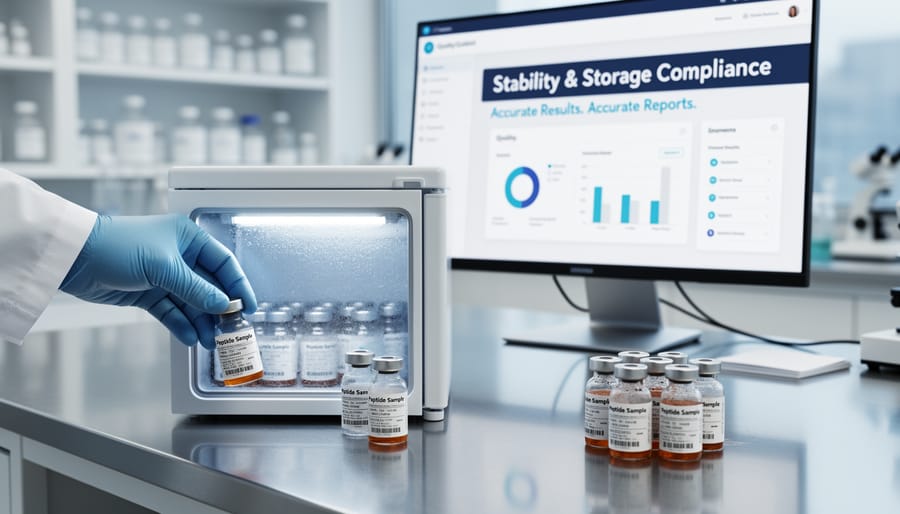
Melanotan-II exists as a white to off-white lyophilized powder in its stable form, requiring specific handling and storage conditions that directly affect packaging claims and customer guidance. The peptide demonstrates sensitivity to light, heat, and moisture, making storage parameters a central consideration for businesses developing product information and automated customer communication systems.
In its unreconstituted powder form, Melanotan-II remains stable for 18-24 months when stored at -20°C (freezer storage), or approximately 90 days at room temperature away from direct light. Once reconstituted with bacteriostatic water, the peptide’s stability drops significantly to 30 days under refrigeration at 2-8°C. These stability windows create specific requirements for product labeling, shipping procedures, and customer education content that marketing teams must communicate accurately.
| Property | Specification | Marketing/Business Implication |
|---|---|---|
| Solubility | Soluble in sterile water, bacteriostatic water, and saline | Informs preparation instructions and customer support FAQs |
| Storage (powder) | -20°C for 18-24 months; 90 days at room temp | Affects shipping claims, packaging requirements, and inventory messaging |
| Storage (reconstituted) | 2-8°C for maximum 30 days | Dictates usage timeline content and waste prevention guidance |
| Light sensitivity | Degrades under UV and direct light exposure | Requires amber vial specifications and storage warnings in all materials |
The peptide’s water solubility makes reconstitution straightforward, but this property also means businesses must address proper mixing ratios and sterility protocols in their customer communications. Marketing teams handling peptide products need automated content addressing these technical requirements without overpromising stability or shelf life. Temperature excursions during shipping represent a common customer concern, requiring clear policies and realistic expectations in product descriptions and automated response systems.
Biological Properties and Mechanism of Action
Receptor Binding and Activity

Melanotan-II’s seven-amino-acid cyclic structure creates a molecular shape that fits precisely into melanocortin receptors, particularly MC1R, MC3R, and MC4R. The peptide’s ring configuration, formed by a disulfide bridge between two cysteine residues, maintains the rigid three-dimensional structure necessary for receptor recognition.
This structural stability allows Melanotan-II to activate multiple melanocortin receptor subtypes with varying degrees of affinity. MC1R activation occurs in melanocytes, while MC3R and MC4R binding happens in different tissue types. The peptide’s synthetic modifications enhance its binding strength compared to natural alpha-MSH, creating more sustained receptor activation.
The structure-activity relationship matters for marketing professionals because it explains why Melanotan-II produces different biological responses than naturally occurring hormones. This distinction becomes critical when developing educational content that accurately represents the compound’s properties without crossing into therapeutic territory.
Understanding receptor selectivity helps marketers position products appropriately and address customer questions about how the peptide works at a molecular level, supporting transparent communication while maintaining compliance boundaries.
Duration and Bioavailability
Melanotan-II demonstrates a half-life of approximately 33 minutes in plasma, though its biological effects persist considerably longer due to its binding affinity with melanocortin receptors. This disconnect between pharmacokinetic clearance and observable duration creates a common challenge in customer education, explaining why effects last days when the peptide itself clears rapidly.
Subcutaneous injection remains the primary administration route, offering bioavailability near 100%. The peptide’s hydrophilic nature prevents effective oral absorption, as digestive enzymes rapidly break down the amino acid chain. This administration requirement directly shapes product positioning and customer support workflows, as businesses must prepare educational materials addressing injection protocols, dosing schedules, and storage handling.
Peak plasma concentrations occur within one hour of subcutaneous administration. The peptide crosses the blood-brain barrier, contributing to its systemic effects beyond dermal melanogenesis. For marketing professionals, these absorption characteristics inform realistic timeline expectations in customer communications and help structure automated follow-up sequences that align with the compound’s actual pharmacological profile rather than anecdotal user reports.
Regulatory and Compliance Considerations for Marketing
Understanding Melanotan-II’s regulatory status is critical before launching any marketing campaign. The FDA has not approved this peptide for human use, classifying it as an unapproved drug. This classification fundamentally shapes every marketing decision you make, from ad copy to platform selection.
In the United States, promoting Melanotan-II for human consumption violates federal law. The FDA has issued warning letters to companies selling it, and customs regularly seizes shipments. Marketing professionals must recognize that the peptide’s chemical structure and mechanism of action place it squarely under pharmaceutical regulations, not cosmetic or supplement rules. You cannot sidestep these restrictions through clever wording or disclaimers.
International regulatory frameworks vary significantly. The UK’s Medicines and Healthcare products Regulatory Agency (MHRA) treats Melanotan-II as an unlicensed medicine, making its sale illegal. Australia’s Therapeutic Goods Administration (TGA) has banned it entirely. Canada prohibits its sale for human use. These disparate regulations complicate global marketing strategies and require country-specific compliance protocols.
For regulatory marketing professionals, these restrictions create substantial challenges for content creation. Search engines like Google explicitly prohibit ads for unapproved pharmaceuticals in their policies. Facebook and Instagram categorize Melanotan-II alongside prohibited substances, triggering account suspensions for promotional content. Even educational content can face scrutiny if platforms detect sales intent.
SEO optimization strategies must account for these limitations. Organic content can provide educational value about peptide properties without crossing into promotional territory, but the line remains thin. Automated keyword insertion tools can inadvertently generate non-compliant claims if not carefully configured with regulatory guardrails.
Influencer compliance presents particular risks. Influencers discussing Melanotan-II face potential legal liability, and platforms increasingly enforce medical product restrictions. Automated affiliate programs and tracking systems can create documentation trails that regulators scrutinize during enforcement actions.
The peptide’s specific properties compound these challenges. Because its melanocortin receptor activity produces observable effects, testimonials and before-after content naturally emerge. Businesses must implement strict content moderation systems to prevent user-generated promotional materials from creating compliance exposure, even when the company itself maintains compliant messaging.
Applying Scientific Knowledge to Marketing Strategy
Understanding the molecular structure and functional properties of Melanotan-II creates a foundation for marketing messages that balance scientific accuracy with legal compliance. The seven-amino-acid sequence and receptor-binding characteristics you’ve learned aren’t just technical details, they’re the basis for every claim, description, and educational piece your business produces.
Start by mapping your content to the science. When creating product descriptions or educational materials, reference the peptide’s structure and mechanism without making therapeutic claims. For instance, explaining how the compound interacts with melanocortin receptors educates prospects while avoiding FDA red flags. This approach builds trust through transparency rather than overpromising results.
Develop templated responses for common questions that cite the peptide’s properties accurately. Your customer service team and automated chatbots should explain concepts like bioavailability, stability requirements, and administration methods in plain language. These explanations demonstrate expertise without crossing into medical advice territory.
Automate compliant content distribution by building libraries of pre-approved messaging based on verified scientific facts. Create modular content blocks about the peptide’s composition, storage needs, and physical properties that your team can assemble into emails, social posts, and landing pages. This systemization ensures consistency across channels while maintaining accuracy at scale.
Use real-time analytics to monitor which scientific explanations resonate with your audience and which raise compliance concerns. Track engagement on educational content about molecular structure versus mechanism of action, then refine your messaging based on what prospects actually need to know before purchasing.
Train your marketing team to recognize the line between education and claims. The peptide’s receptor affinity is factual information; suggesting health outcomes based on that affinity violates regulations. Build internal review processes where scientific accuracy and legal compliance checks happen before content goes live, especially for automated campaigns running across multiple platforms.
Common Questions About Melanotan-II Properties
Marketing teams fielding customer inquiries about Melanotan-II need standardized, scientifically accurate responses that maintain compliance while addressing legitimate questions. These common queries appear across email, social media, and live chat platforms, making them ideal candidates for automated response systems and FAQ content strategies.
How should we explain Melanotan-II’s synthetic nature to customers?
Describe it as a laboratory-created peptide analog of naturally occurring alpha-MSH, emphasizing that its seven amino acids are arranged in a specific sequence that differs from the endogenous hormone. This framing maintains accuracy without making it sound experimental or unsafe.
What storage properties matter for product descriptions?
Highlight that Melanotan-II requires refrigeration after reconstitution and remains stable when stored as lyophilized powder at proper temperatures. These details support customer education content and help set proper handling expectations.
Can we mention receptor binding in marketing materials?
You can explain that the peptide’s structure allows it to interact with melanocortin receptors as an educational point, but avoid linking this mechanism to specific health outcomes or therapeutic claims, which triggers regulatory scrutiny.
How do we address questions about purity and composition?
Focus on standard industry purity levels, molecular weight, and the presence of seven amino acids in the sequence. Provide concrete specifications rather than vague quality claims, which builds trust and supports informed purchasing decisions.
Preparing your team with these clarifications reduces response time and ensures consistency across channels. Document these answers in your CRM system and email automation platforms, creating templates that support staff can deploy quickly while maintaining the professional, scientifically grounded tone your audience expects. Regular training on these core questions prevents miscommunication and keeps your messaging aligned with both regulatory requirements and customer needs.
Key Takeaways for Marketing Professionals
Marketing Melanotan-II or related peptide products demands a foundation in the science. The peptide’s cyclic heptapeptide structure isn’t academic trivia, it shapes how you position products, what claims you can make, and how you educate customers without crossing regulatory lines. Knowing that it binds primarily to MC1R and MC4R receptors helps you explain effects accurately while avoiding therapeutic language that triggers FDA scrutiny.
The practical properties matter most in day-to-day operations. Melanotan-II requires refrigeration and has specific solubility characteristics that inform storage instructions, packaging claims, and customer support content. Your automated email sequences and FAQ responses must reflect these realities. A half-life of approximately one hour after subcutaneous administration directly affects how customers perceive dosing schedules and product value, making it essential information for landing pages and sales materials.
From a compliance standpoint, remember that Melanotan-II lacks FDA approval for human use in the United States and faces similar restrictions in most major markets. This status dictates your entire content strategy, from keyword selection to social media guidelines to payment processing options. Your marketing automation tools must incorporate compliance checks that prevent claims about tanning, weight loss, or any therapeutic benefit.
Translate technical knowledge into client value by focusing on education over persuasion. Automated content should explain what the peptide is, how its structure determines stability, and what proper handling requires. This positions your business as a trustworthy information source while keeping all messaging defensible under regulatory review.
Leave a Reply