Boost Your Conversion Rates with the Octalysis Framework (That Actually Works)

Transform your business metrics through the Octalysis Framework – a groundbreaking gamification model that drives user engagement by targeting eight core human drives. Created by Yu-kai Chou, this scientific approach to motivation has revolutionized how companies like Google, Microsoft, and LEGO design their user experiences. Rather than relying on basic points and badges, Octalysis taps into deeper psychological motivators: meaning, accomplishment, empowerment, ownership, social influence, scarcity, unpredictability, and avoidance.
By understanding and implementing these core drives, businesses consistently achieve 20-200% increases in key performance indicators, from customer retention to employee productivity. The framework’s power lies in its ability to transform mundane tasks into compelling experiences that naturally motivate desired behaviors. Whether you’re optimizing an e-commerce platform, developing a training program, or designing a customer loyalty system, Octalysis provides a structured methodology to create engaging experiences that deliver measurable results.
Today’s successful organizations recognize that engagement isn’t about manipulating users – it’s about creating meaningful experiences that align business objectives with human motivation. This comprehensive guide will show you how to leverage the Octalysis Framework to create sustainable, ethical engagement strategies that drive real business value.
Why Traditional CRO Tactics Fall Short
Traditional Conversion Rate Optimization (CRO) tactics often rely heavily on A/B testing, heatmaps, and basic user behavior analysis. While these methods have their merits, they frequently miss the mark in today’s dynamic digital landscape where user expectations have evolved beyond simple functionality and aesthetics.
The conventional approach typically focuses on surface-level metrics like click-through rates and time on page, failing to address the deeper psychological aspects of user engagement. These methods tend to treat all users as rational decision-makers who respond primarily to logical persuasion and clear value propositions. However, human behavior is far more complex, driven by emotions, social influences, and the desire for meaningful experiences.
Another significant limitation of traditional CRO is its overemphasis on short-term gains rather than sustainable engagement. Standard tactics often prioritize immediate conversions over building lasting user relationships, leading to higher customer acquisition costs and lower lifetime value. They also frequently ignore the power of intrinsic motivation, which is crucial for long-term user retention and loyalty.
Moreover, traditional approaches often fall into the trap of generic best practices that don’t account for unique audience characteristics or industry-specific challenges. The one-size-fits-all methodology fails to recognize that different user segments respond to varying motivational drivers and engagement triggers.
In today’s competitive digital environment, businesses need more sophisticated approaches that incorporate psychological insights and behavioral science. This is where gamification through the Octalysis framework offers a more comprehensive solution, addressing both the rational and emotional aspects of user engagement while creating memorable experiences that drive sustainable growth.
The Power of Octalysis in Digital Marketing
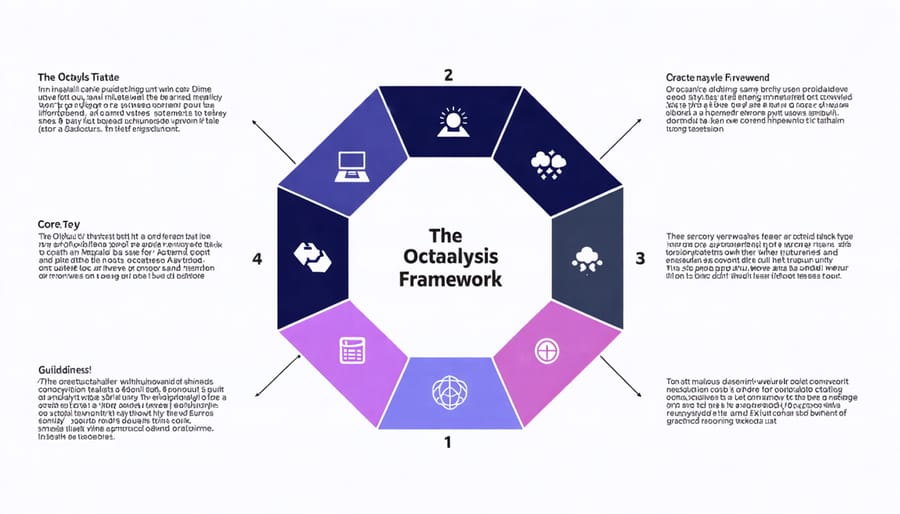
Core Drives That Shape User Behavior
The Octalysis framework identifies eight core drives that influence user decision-making psychology and motivation. Each drive represents a distinct psychological trigger that shapes user behavior and engagement.
Epic Meaning & Calling drives users when they believe they’re part of something larger than themselves. This manifests in brand communities where users feel they’re contributing to a meaningful cause.
Development & Accomplishment focuses on progress, skill development, and challenge overcome. This drive powers features like achievement badges, level systems, and progress bars.
Empowerment of Creativity & Feedback motivates users through creative problem-solving and seeing the results of their choices. This appears in customization options and user-generated content.
Ownership & Possession relates to users wanting to own, control, and improve something. It’s evident in features like virtual goods, customizable profiles, and collectible items.
Social Influence & Relatedness encompasses all social elements, including mentorship, competition, and companionship. This drive powers social sharing, leaderboards, and group challenges.
Scarcity & Impatience motivates through the inability to have something immediately. Limited-time offers and exclusive content leverage this drive.
Unpredictability & Curiosity keeps users engaged through mystery and surprise. Random rewards, easter eggs, and plot twists in content tap into this motivation.
Loss & Avoidance drives action through the fear of losing something or missing opportunities. Countdown timers and expiring offers utilize this core drive effectively.
White Hat vs. Black Hat Motivation
In gamification design, understanding the distinction between White Hat and Black Hat motivation is crucial for creating sustainable engagement strategies. White Hat motivators tap into positive emotions and provide users with a sense of meaning, accomplishment, and empowerment. These elements align closely with emotional user experience design principles and tend to create long-term engagement.
Common White Hat motivators include:
– Achievement through skill mastery
– Personal growth and development
– Contributing to a greater purpose
– Creative expression and ownership
Black Hat motivators, while potentially powerful, rely on negative emotions such as scarcity, fear of loss, or social pressure. These include:
– Limited-time offers
– Countdown timers
– Fear of missing out (FOMO)
– Unpredictable rewards
While both types can be effective, White Hat motivation typically leads to more sustainable user engagement and better brand perception. Black Hat techniques might drive quick results but can lead to user burnout or negative associations with your brand. The key is finding the right balance based on your business goals and target audience’s preferences.
For optimal results, consider implementing a predominantly White Hat strategy, using Black Hat elements sparingly to create urgency or excitement at specific points in the user journey.

Implementing Octalysis for Better Conversion Rates
User Journey Mapping with Core Drives
To effectively map user journeys with Octalysis Core Drives, start by identifying key touchpoints in your user experience. Break down each interaction into four phases: Discovery, Onboarding, Scaffolding, and Endgame. For each phase, analyze which core drives are present and which are missing.
Begin with user research to understand your audience’s motivations and pain points. Document their current experience, noting emotional responses and engagement levels at each stage. Pay special attention to moments where users tend to drop off or show decreased interest.
Next, evaluate each touchpoint against the eight core drives. For example, during onboarding, you might leverage Epic Meaning by connecting users to a larger purpose, or Social Influence by showing how many others have joined. Create a matrix that scores each phase against each core drive on a scale of 0-10.
Use this analysis to identify opportunities for improvement. Focus on strengthening weak areas by introducing relevant game elements that activate missing core drives. Remember to maintain balance – overemphasizing certain drives while neglecting others can lead to an uneven experience.
Finally, implement changes incrementally and measure their impact on user engagement and retention metrics.
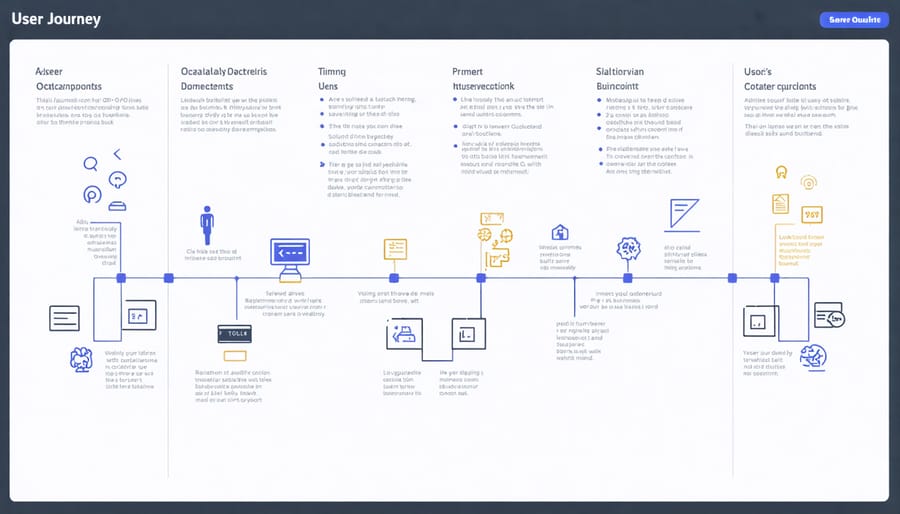
Engagement Loops and Trigger Design
Engagement loops and trigger design form the backbone of successful gamification strategies by creating effective feedback systems that motivate users to take desired actions. These loops consist of three key elements: motivation, action, and feedback. When users receive immediate feedback after completing an action, it reinforces their behavior and encourages continued engagement.
To design effective triggers, focus on timing and context. External triggers, such as notifications or email reminders, should be strategically timed to catch users when they’re most likely to engage. Internal triggers develop over time as users form habits, eventually associating your product with specific needs or emotions.
The key to successful engagement loops lies in balancing immediate rewards with long-term goals. Start with simple, achievable actions that provide quick wins, then gradually increase complexity as users become more invested. Remember to maintain a clear connection between user actions and rewards, ensuring that feedback is both meaningful and proportional to the effort required.
Consider implementing progressive challenges that adapt to user skill levels, maintaining an optimal balance between difficulty and achievement to keep users in a state of flow.
Measuring Success: Octalysis Metrics That Matter
Success in gamification implementation requires careful tracking of specific metrics that align with your business objectives. The key is to focus on both quantitative and qualitative indicators that reflect user engagement and behavioral change. Start by measuring engagement metrics such as daily active users (DAU), retention rates, and completion rates for desired actions.
For Core Drive 1 (Epic Meaning), track mission completion rates and community contribution levels. With Core Drive 2 (Development), monitor skill progression and achievement unlocking patterns. For Core Drives 3 and 4 (Creativity and Ownership), measure user-generated content and customization rates.
Essential KPIs include:
– Conversion rate improvements
– Time spent on platform
– User progression velocity
– Social sharing frequency
– Task completion rates
– Return user percentage
Remember to establish baseline metrics before implementation and set realistic improvement targets. Regular A/B testing helps optimize your gamification elements for maximum impact. Create a dashboard that combines these metrics to provide a holistic view of your gamification success, focusing particularly on indicators that directly correlate with your business goals and ROI.
Monitor these metrics consistently and adjust your strategy based on user behavior patterns and feedback. This data-driven approach ensures your gamification efforts remain effective and aligned with your objectives.
Implementing the Octalysis Framework for gamification represents a powerful strategy to enhance user engagement and drive business results. By understanding and applying the eight core drives, organizations can create meaningful experiences that motivate desired behaviors while maintaining authentic connections with their audience.
Success with gamification requires a balanced approach: start small, measure results, and iterate based on user feedback. Begin by identifying your key objectives and selecting one or two core drives that align most closely with your goals. Monitor key metrics like engagement rates, user retention, and conversion improvements to validate your implementation.
Remember that effective gamification goes beyond points and badges. Focus on creating genuine value for users through meaningful challenges, social connections, and personal achievement opportunities. Regular assessment and refinement of your gamification elements ensure they continue to serve both user needs and business objectives.
To get started, conduct a thorough analysis of your current user experience, identify potential engagement points, and develop a phased implementation plan. With careful planning and strategic execution, the Octalysis Framework can transform your user experience and deliver measurable business impact.
Leave a Reply