How 5G IoT Devices Are Rewriting the Rules of Business Strategy
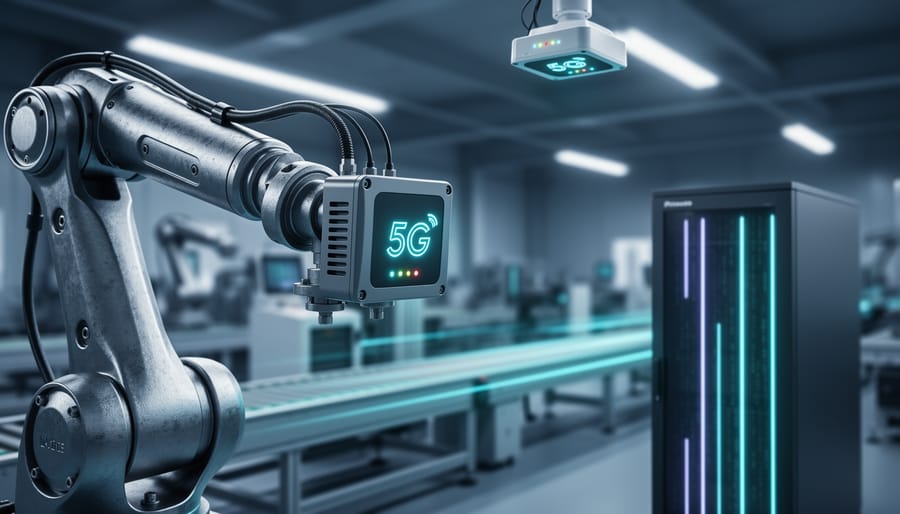
Transform your operations by deploying 5G IoT devices that process data up to 100 times faster than 4G, enabling real-time decision-making that directly impacts your bottom line. Manufacturing floors can now monitor equipment performance millisecond-by-millisecond, catching failures before they happen and reducing downtime costs by 30-50%.
Leverage ultra-low latency connections to create new revenue streams through smart monitoring services, predictive maintenance contracts, or usage-based pricing models. Companies currently generating $2-5 million annually are adding six-figure income streams by packaging 5G-enabled sensor data into subscription services for their clients.
Deploy edge computing capabilities that allow devices to analyze data locally, cutting cloud storage costs while improving response times from minutes to milliseconds. Logistics companies are tracking thousands of shipments simultaneously, adjusting routes in real-time based on traffic, weather, and delivery windows without overwhelming their networks.
Start with pilot programs in your highest-impact areas rather than company-wide rollouts. Identify processes where seconds matter, like quality control on production lines, fleet management, or customer experience monitoring. These targeted deployments deliver measurable ROI within 90-120 days while building your team’s expertise.
The competitive advantage isn’t just faster connectivity. It’s the ability to monetize real-time insights through proven IoT business models that turn operational data into predictable revenue streams, creating market differentiation that’s difficult for competitors to replicate.
What Makes 5G IoT Different From Previous Generations
Previous generations of IoT operated under significant constraints that limited their business applications. 4G networks, while revolutionary for smartphones, couldn’t support the massive device deployments that modern businesses need. The difference with 5G isn’t just incremental—it fundamentally changes what’s possible.
Speed represents the most visible upgrade. 5G networks deliver data rates up to 100 times faster than 4G, enabling real-time video analytics, instant inventory updates, and immediate transaction processing. For your business, this means customer experiences that were previously impossible become standard operations.
Latency—the delay between sending and receiving data—drops from 50 milliseconds in 4G to under 5 milliseconds with 5G. This seemingly small change unlocks entirely new business models. Autonomous delivery vehicles can react instantly to obstacles. Remote equipment monitoring can prevent failures before they happen. 5G edge computing processes data at the network’s edge, reducing delays even further while maintaining security.
The third critical advantage is device density. 4G networks support roughly 2,000 connected devices per square kilometer. 5G handles one million devices in the same space. This capacity transforms how businesses approach automation. Retailers can track every product in real time. Manufacturers can monitor every component on the production line. Property managers can automate entire building systems with thousands of sensors.
These three capabilities—speed, low latency, and massive device support—work together to enable business models that simply couldn’t exist before. You’re not just upgrading your network; you’re accessing capabilities that create competitive advantages and open new revenue opportunities your competitors using older technology cannot match.
Five Business Model Innovations Powered by 5G IoT
Product-as-a-Service Models
5G IoT transforms traditional equipment sales into ongoing service relationships through real-time monitoring capabilities. This connectivity enables manufacturers and equipment providers to shift from one-time transactions to recurring revenue models based on actual usage and performance data.
In manufacturing, companies now offer machinery as a service rather than selling equipment outright. Connected sensors track operating hours, production output, and maintenance needs instantly. Clients pay only for what they use—whether measured in production cycles, operating hours, or units manufactured. This reduces upfront capital expenditure while ensuring equipment operates at peak efficiency.
Construction equipment providers exemplify this model effectively. Instead of purchasing excavators or loaders, contractors access machinery through usage-based subscriptions. 5G connectivity transmits real-time data on fuel consumption, idle time, and maintenance requirements, enabling transparent billing and proactive service scheduling.
The benefits extend beyond pricing flexibility. Real-time monitoring allows providers to identify potential failures before they occur, automatically scheduling maintenance and reducing downtime. This proactive approach strengthens client relationships through improved communication and reliability, while creating predictable revenue streams for service providers. Companies implementing these models report higher customer retention rates and increased lifetime value compared to traditional sales approaches.
Predictive Maintenance Operations
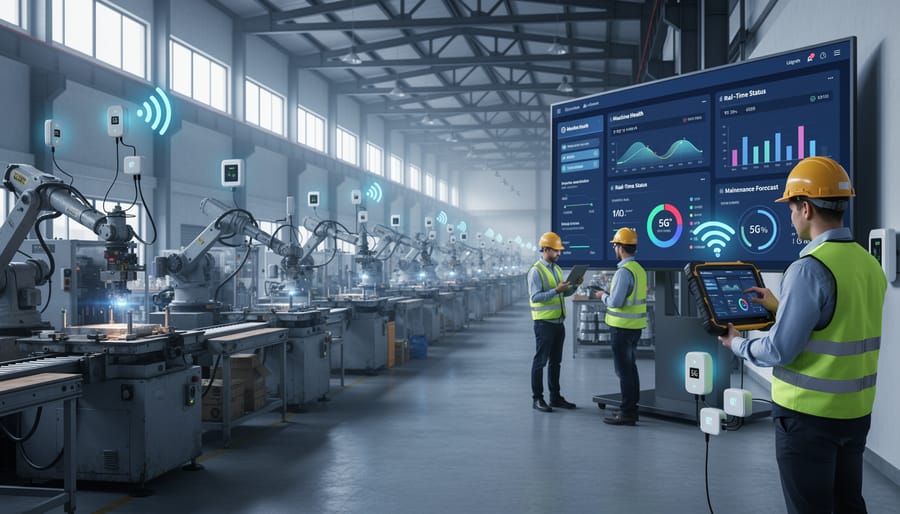
Manufacturing facilities are deploying 5G-connected sensors to monitor equipment performance in real-time, detecting subtle vibrations, temperature changes, and operational anomalies before they cause costly breakdowns. This shift transforms maintenance from reactive firefighting to proactive planning, reducing unplanned downtime by up to 50% in early adopter facilities.
The business impact extends beyond cost savings. Companies now offer predictive maintenance as a service to clients, creating recurring revenue streams from equipment they manufacture or lease. For example, industrial equipment manufacturers bundle 5G sensors with machinery, providing customers with guaranteed uptime agreements while collecting valuable performance data.
This approach integrates seamlessly with business process automation, enabling automatic service ticket generation, parts ordering, and technician dispatch based on sensor alerts. Clients receive proactive communication about potential issues before they impact operations, strengthening customer relationships and reducing emergency service calls. Small manufacturers can compete with larger players by offering sophisticated monitoring capabilities that were previously cost-prohibitive, leveling the competitive landscape through technology rather than scale.
Automated Customer Experience
Retail and hospitality businesses are leveraging 5G IoT devices to eliminate common customer pain points while delivering personalized service at scale. Smart sensors and connected devices now track customer preferences, inventory levels, and wait times in real-time, enabling staff to respond proactively rather than reactively.
In retail environments, 5G-connected cameras and sensors identify returning customers, triggering personalized product recommendations sent directly to their mobile devices. This technology enables frictionless checkout experiences where customers simply walk out with their purchases, with payment processed automatically through connected systems.
Hospitality venues use 5G IoT to streamline guest experiences from check-in to checkout. Smart room controls adjust temperature and lighting based on guest preferences, while connected concierge services anticipate needs before they’re voiced. Restaurant chains deploy IoT-enabled ordering systems that remember dietary restrictions and favorite dishes, reducing order errors and improving satisfaction.
The key advantage lies in automated communication workflows. When systems detect potential issues like delayed service or out-of-stock items, they automatically alert staff or trigger customer notifications. This proactive approach to digital customer experience reduces complaints while building loyalty through consistently personalized interactions.
Real-Time Supply Chain Optimization
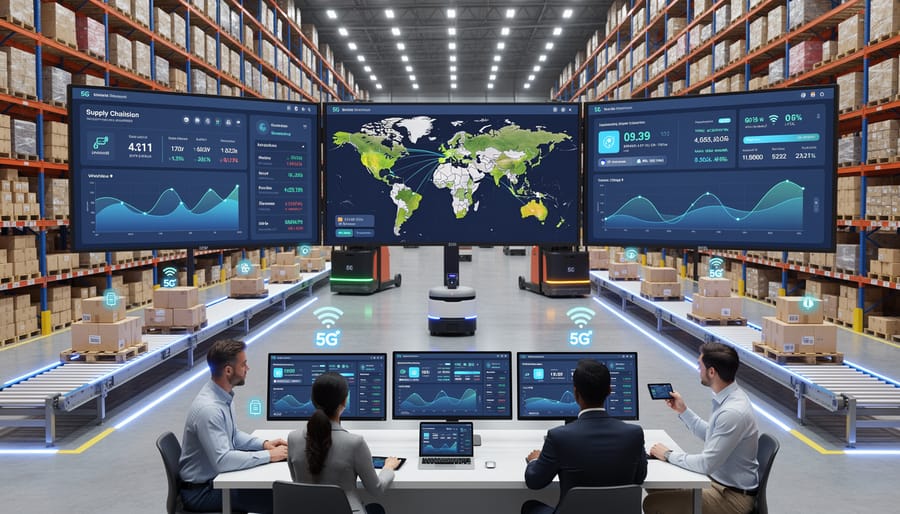
5G IoT devices are transforming supply chain management by enabling real-time tracking and automated decision-making across your entire logistics network. These connected sensors provide instant visibility into inventory levels, shipment locations, and warehouse conditions, allowing you to respond immediately to disruptions or delays.
The ultra-low latency of 5G means your inventory management systems can process data from thousands of devices simultaneously, triggering automated reordering when stock reaches predetermined thresholds. This eliminates manual inventory counts and reduces both overstocking and stockouts that impact your bottom line.
For logistics operations, 5G-connected IoT sensors on delivery vehicles and containers provide precise location tracking and condition monitoring. You can instantly reroute shipments based on traffic patterns or weather conditions, while temperature and humidity sensors ensure product quality throughout transit.
The real business advantage comes from improved client communication. When customers inquire about order status, your team can provide accurate, real-time updates pulled directly from IoT devices rather than estimating based on outdated information. This transparency builds trust and reduces customer service inquiries by up to 40 percent, freeing your team to focus on strategic relationships.
Smart Environment Creation
Dense 5G IoT networks transform how businesses manage buildings and facilities by connecting thousands of sensors throughout a single location. This connectivity enables real-time monitoring of energy consumption, occupancy patterns, air quality, and equipment performance across entire campuses or multi-building portfolios.
The business model centers on automated efficiency improvements. Smart sensors detect when conference rooms sit empty and adjust lighting and climate controls automatically, reducing energy costs by 20-30%. Predictive maintenance sensors monitor HVAC systems and elevators, alerting facility managers before breakdowns occur, minimizing expensive emergency repairs and tenant disruptions.
Property management companies can offer premium smart building services as a differentiator, attracting tenants willing to pay higher rates for optimized workspaces. Manufacturing facilities use these networks to monitor production floor conditions, ensuring optimal temperature and humidity levels that reduce product defects.
Implementation starts with identifying your highest-cost facility challenges—whether energy waste, maintenance expenses, or tenant satisfaction. Deploy sensors strategically in those areas first, then expand as you demonstrate ROI. Partner with established IoT platform providers who handle technical complexity, allowing you to focus on client communication and service delivery.
Getting Started: Three Practical Steps for Your Business
Identify Your Business Model Pain Points
Before investing in 5G IoT technology, take a clear-eyed look at your current operations to identify where these devices can deliver genuine value. Start by examining your data collection processes. Are you making decisions based on delayed or incomplete information? Do your teams waste time manually checking equipment status or inventory levels?
Next, evaluate your customer communication workflow. How quickly can you respond to service requests or quality issues? Can you proactively alert clients about potential problems before they escalate? 5G IoT devices excel at enabling real-time monitoring and automated client notifications.
Consider your operational efficiency gaps. Which processes still rely on manual intervention that could be automated? Where do bottlenecks occur in your production or service delivery? Look for areas where real-time visibility would prevent costly downtime or delays.
Finally, assess your competitive positioning. Are competitors offering faster service or better insights? Could predictive maintenance or location tracking create new value propositions for your customers? The key is identifying specific, measurable pain points rather than adopting technology for its own sake. Focus on problems where immediate data access and automated responses would directly impact your bottom line or customer satisfaction.
Start Small with Pilot Programs
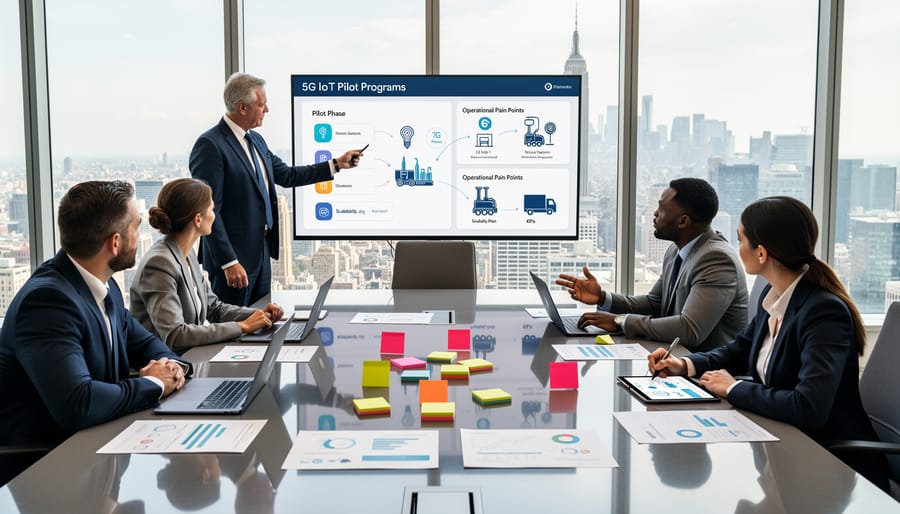
Before committing significant resources to 5G IoT infrastructure, launch a targeted pilot program that delivers measurable results. Start by identifying one specific business challenge where 5G connectivity could drive immediate value, such as real-time inventory tracking or automated customer alerts.
Choose a single department or location to test your 5G IoT solution. This contained approach lets you evaluate performance, identify technical issues, and refine automated processes without disrupting your entire operation. Focus on solutions that integrate with your existing systems rather than requiring complete infrastructure replacement.
Set clear success metrics from day one. Track concrete outcomes like reduced processing time, improved customer response rates, or operational cost savings. These benchmarks help you communicate ROI to stakeholders and justify broader implementation.
Work with vendors who offer flexible, scalable deployment options. Many providers now support phased rollouts that grow with your needs, eliminating the pressure to over-invest upfront. Document your findings throughout the pilot phase, capturing both wins and challenges. This creates a roadmap for expansion while building internal confidence in the technology. Once your pilot proves successful, you can scale strategically based on real data rather than assumptions.
Build Your Implementation Timeline
Start by establishing a clear 12-18 month phased rollout plan. Begin with a 60-day discovery phase to identify specific business processes that will benefit most from 5G IoT connectivity. This should align with your broader digital transformation strategy to ensure seamless integration with existing systems.
Month three through six should focus on vendor selection. Evaluate at least three providers based on network coverage, device compatibility, and support capabilities. Request proof-of-concept deployments before committing to full-scale contracts.
Months seven through twelve involve pilot implementation. Deploy devices in one location or department first, establishing clear success metrics around operational efficiency, cost savings, or customer experience improvements. This controlled environment lets you troubleshoot integration issues without disrupting broader operations.
The final phase addresses scaling and automation. Document your learnings from the pilot and create standardized deployment procedures. Build automated monitoring systems to track device performance and flag maintenance needs proactively. Schedule quarterly reviews to assess ROI and adjust your implementation strategy based on actual business outcomes rather than vendor promises.
Common Pitfalls and How to Avoid Them
Implementing 5G IoT devices comes with real challenges that can derail even well-planned initiatives. Understanding these pitfalls upfront helps you navigate them successfully.
The most common mistake is underestimating total deployment costs. Beyond device purchases, you’ll face expenses for 5G connectivity plans, infrastructure upgrades, integration services, and ongoing maintenance. Many businesses budget for hardware alone and get blindsided by monthly connectivity fees that can range from $10 to $50 per device. Create a comprehensive three-year cost projection that includes all these elements before committing.
Security vulnerabilities present another significant concern. Each connected device creates a potential entry point for cyber threats. Companies often deploy devices without proper security protocols, leaving their networks exposed. Implement end-to-end encryption, require regular firmware updates, and segment your IoT network from critical business systems. Partner with vendors who prioritize security and provide ongoing support.
Integration with existing systems frequently proves more complex than anticipated. Your new 5G IoT devices need to communicate with current software, databases, and workflows. Without proper planning, you’ll end up with data silos and disconnected processes. Before purchasing, verify compatibility with your existing infrastructure and budget time for custom integration work.
Coverage gaps can undermine deployments, especially in rural areas or inside buildings with thick walls. Don’t assume 5G availability everywhere you need it. Test coverage at your actual deployment locations before scaling up. Consider hybrid solutions that fall back to 4G when necessary.
Finally, many businesses deploy technology without clear use cases or success metrics. This leads to expensive pilot projects that never deliver measurable value. Define specific problems you’re solving and establish concrete KPIs before implementation. Start with one high-impact use case, prove the ROI, then expand gradually. This approach minimizes risk while building internal expertise and stakeholder confidence.
The shift to 5G IoT isn’t reserved for Fortune 500 companies with unlimited budgets. Small and medium-sized businesses now have unprecedented access to technologies that were once exclusive to enterprise players. Whether you operate a local retail chain, manage a fleet of delivery vehicles, or run a manufacturing facility, 5G IoT solutions can be scaled to match your specific needs and budget constraints.
The key is starting with a clear evaluation of where connectivity gaps currently impact your operations. Look at processes where real-time data could improve decision-making, areas where automation could reduce manual workload, or customer touchpoints that would benefit from enhanced communication capabilities. These insights become the foundation for a practical implementation roadmap.
You don’t need to transform your entire operation overnight. Many successful 5G IoT adopters begin with pilot projects that address one specific challenge, measure the results, and expand from there. This approach minimizes risk while building internal expertise and demonstrating tangible value to stakeholders.
The technology landscape moves quickly, and staying informed about emerging opportunities gives your business a competitive edge. Connect with implementation experts who understand both the technical requirements and business implications of 5G IoT solutions. The right guidance helps you avoid common pitfalls, select appropriate vendors, and design systems that grow with your business. Your competitors are already exploring these possibilities. The question isn’t whether to engage with 5G IoT innovation, but how quickly you can position your business to benefit from it.
Leave a Reply