How Smart Companies Turn IoT Customer Feedback Into Products People Actually Want
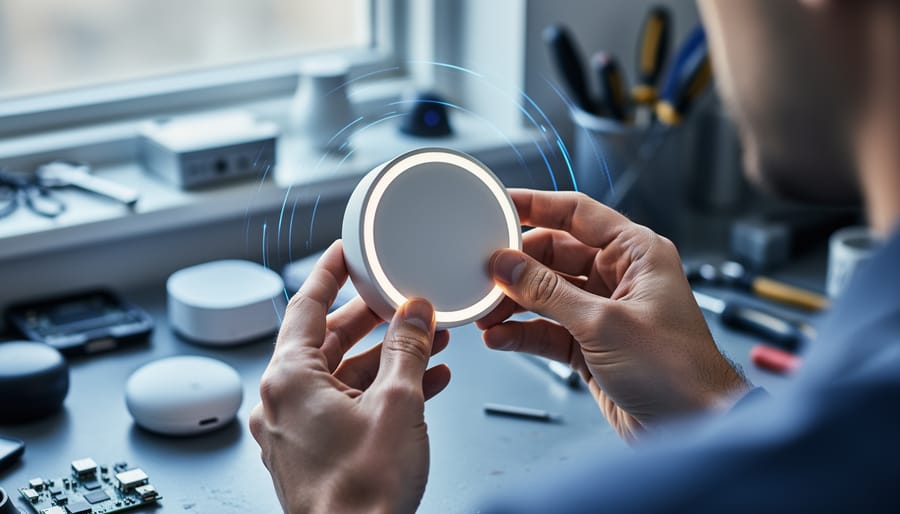
The difference between products customers tolerate and products they can’t live without comes down to one factor: whether you built what they actually need. Customer-driven innovation flips traditional product development on its head by letting user feedback, behavior data, and direct requests shape your roadmap instead of boardroom assumptions.
IoT technology has transformed this approach from periodic surveys into continuous intelligence streams. Smart devices now generate real-time usage data that reveals exactly how customers interact with products, what features they ignore, and which pain points drive them away. Companies leveraging this feedback loop are launching innovations faster, reducing development costs by up to 40%, and achieving customer retention rates that outpace competitors by double-digit margins.
The businesses winning with customer-driven innovation share three characteristics: they’ve built automated systems to capture and analyze customer signals continuously, they’ve shortened the cycle between feedback collection and product iteration, and they’ve aligned their entire organization around responding to customer needs rather than defending original product visions.
This isn’t about conducting more focus groups or sending annual satisfaction surveys. It’s about implementing always-on listening systems that transform customer interactions into product improvements before competitors even recognize the opportunity. The companies featured ahead have mastered this approach, turning customer insights into market-leading innovations that generated measurable revenue growth and competitive advantages their industries couldn’t ignore.
What IoT-Driven Customer Feedback Actually Means for Your Business
IoT-driven customer feedback transforms how businesses understand their customers by collecting real-time data through connected devices. Rather than relying on surveys or focus groups that capture opinions at a single point in time, IoT sensors revolutionizing customer listening capture actual behavior patterns continuously and automatically.
Here’s what makes this approach different: traditional feedback methods require customers to remember and report their experiences, which introduces bias and inaccuracy. IoT devices eliminate this problem by recording exactly how customers use products in their natural environment. A smart thermostat tracks temperature adjustments throughout the day. A fitness tracker monitors which features users access most frequently. Industrial equipment sensors identify when machines struggle with specific tasks.
This automated data collection delivers three key advantages for your business. First, you receive objective information based on actual usage rather than perceived usage. Second, the feedback arrives continuously without requiring your team to conduct repetitive surveys or interviews. Third, you can identify problems before customers even realize they’re frustrated, allowing proactive improvements rather than reactive fixes.
The practical impact means your product development team works with concrete usage data instead of assumptions. Your marketing team understands which features truly matter to customers. Your customer service team anticipates issues before they escalate into complaints.
This shift from asking customers what they think to observing what they actually do represents a fundamental change in customer-driven innovation. The technology handles the heavy lifting of data collection, freeing your team to focus on analyzing insights and implementing improvements that directly address real customer needs.
Real Companies Using IoT Feedback to Drive Innovation
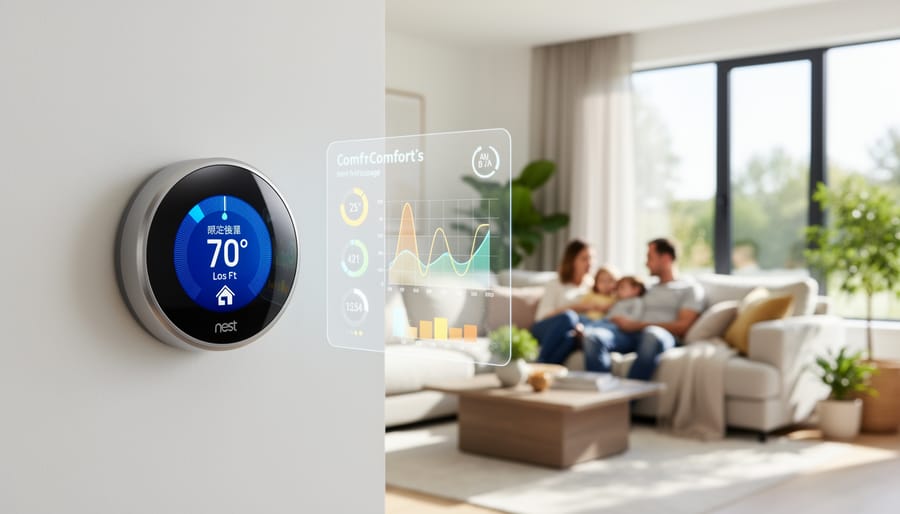
Smart Home Devices: Nest’s Temperature Learning Algorithm
Nest transformed home temperature control by letting customer behavior drive product development. When the company launched its smart thermostat in 2011, it incorporated sensors and algorithms designed to learn from actual usage patterns rather than relying on predetermined settings.
The device collected real-time data on when homeowners adjusted temperatures, their preferred comfort levels at different times, and occupancy patterns. This continuous feedback loop revealed that most people wanted warmth when waking up and returning home, but wasted energy heating or cooling empty houses during work hours.
Nest’s engineering team analyzed millions of temperature adjustments across thousands of households. They discovered that customers rarely used complex programming features but consistently made similar daily adjustments. This insight led to automated learning capabilities that required minimal user input—the thermostat simply observed and adapted.
The results proved significant. Independent studies showed Nest users reduced heating costs by 10-12% and cooling costs by 15%, translating to average savings of $131-$145 annually. These weren’t projected numbers but actual measured outcomes from existing customers.
What made this approach particularly effective was Nest’s commitment to continuous improvement. The company regularly pushed software updates based on aggregated customer data, refining the algorithm’s accuracy without requiring hardware replacements. This created an automated feedback system where every customer interaction improved the product for all users.
For business owners, Nest demonstrates how collecting and analyzing customer usage data can reveal opportunities invisible through traditional market research. The key is building systems that automatically capture behavioral patterns, then using those insights to eliminate friction points in the customer experience.
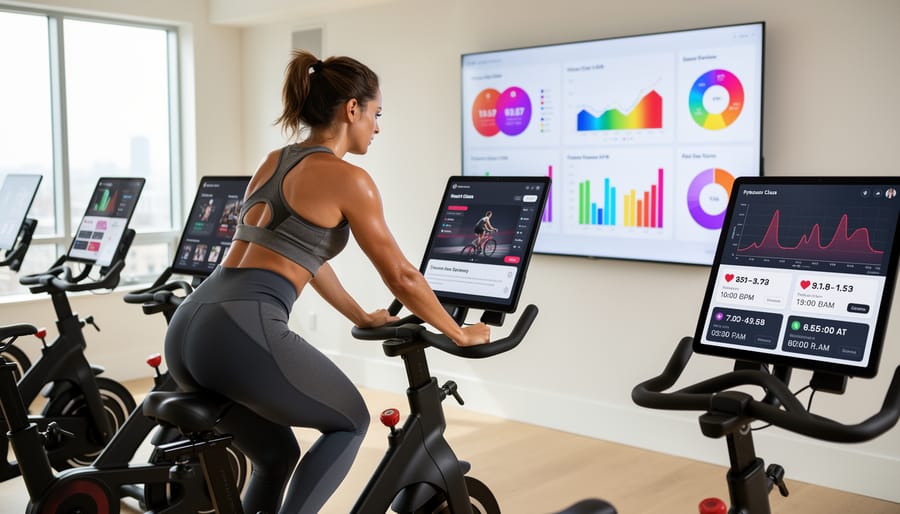
Connected Fitness: Peloton’s Class Scheduling Revolution
Peloton transformed their entire content strategy by leveraging data from their connected fitness equipment to understand exactly when and how customers work out. Their bikes and treadmills continuously collect information about class completion rates, preferred workout times, and content preferences, creating a rich dataset that reveals customer behavior patterns.
The company discovered that traditional fitness class schedules weren’t matching when their customers actually wanted to exercise. By analyzing workout data across their user base, Peloton identified peak demand periods and specific content gaps. They found that many subscribers started classes but didn’t finish them, signaling a mismatch between class offerings and customer needs.
Using these personalized customer insights, Peloton restructured their entire live class schedule. They added more early morning and lunch-hour sessions when data showed increased demand. They also adjusted class lengths after discovering that 20-minute sessions had significantly higher completion rates than 45-minute ones during weekday mornings.
The results were substantial. Engagement metrics improved, with members taking more classes per month and completing a higher percentage of their workouts. Peloton also used this data to guide instructor hiring and content production, investing in the class types that drove the most consistent engagement.
This approach demonstrates how IoT-enabled products create continuous feedback loops. Rather than relying on surveys or focus groups, Peloton accesses real behavioral data that shows what customers actually do, not just what they say they want, enabling rapid, data-driven adjustments to their service offerings.
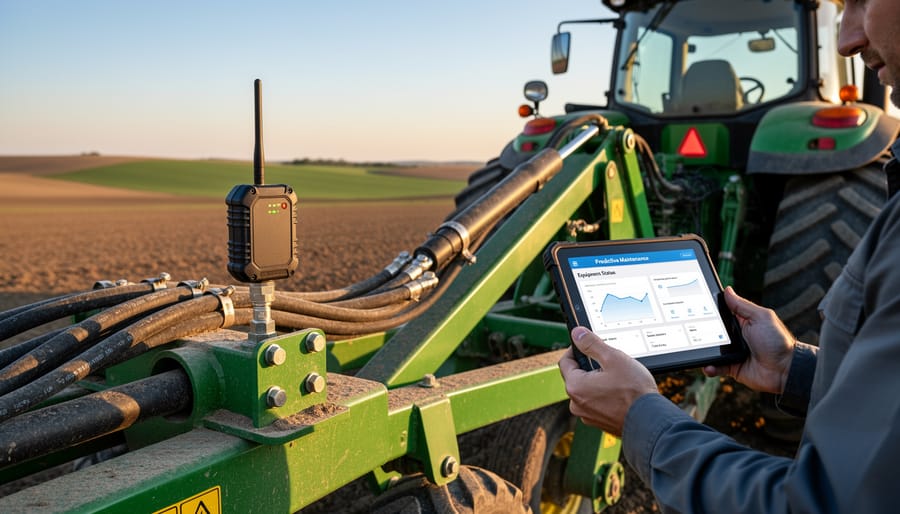
Industrial IoT: John Deere’s Predictive Maintenance Features
John Deere transformed agricultural equipment maintenance by listening to what their data was telling them about customer needs. Farmers were experiencing unexpected breakdowns during critical planting and harvesting seasons, resulting in costly downtime and lost revenue. The company recognized this pain point and took action.
By analyzing telematics data from connected farm equipment across thousands of operations, John Deere identified specific patterns that preceded component failures. Their engineers discovered that certain combinations of engine temperature, vibration levels, and operating hours consistently signaled impending breakdowns. This insight became the foundation for their predictive maintenance system.
The company developed automated alerts that notify farmers and dealers before failures occur, allowing scheduled repairs during off-peak seasons. This proactive approach contrasts sharply with traditional reactive maintenance, where farmers only learned about problems after equipment stopped working in the field.
The results speak clearly: farmers reduced unplanned downtime by up to 20 percent and extended equipment lifespan through timely interventions. Dealers benefit too, with better inventory management for replacement parts and more predictable service scheduling.
John Deere’s success demonstrates the power of predictive analytics in customer-driven innovation. They didn’t assume what farmers needed; they extracted insights from real-world usage patterns. This data-driven approach created tangible value by solving an actual problem their customers faced daily. The automated notification system ensures farmers receive timely information without constantly monitoring equipment themselves, exemplifying how IoT solutions should simplify rather than complicate the customer experience.
Retail IoT: Amazon Go’s Checkout-Free Shopping
Amazon identified a critical pain point through customer behavior analysis: checkout lines consistently ranked as the most frustrating aspect of retail shopping. By analyzing in-store traffic patterns, wait times, and customer feedback data, Amazon discovered that shoppers were willing to abandon purchases rather than endure lengthy checkout processes.
This insight drove the development of Amazon Go stores, which launched in 2018 with a revolutionary Just Walk Out technology. The system uses hundreds of ceiling-mounted cameras, weight sensors on shelves, and computer vision algorithms to track what customers pick up or return. Shoppers simply scan their smartphone app upon entering, select items, and leave—charges appear automatically on their Amazon account.
The customer data that informed this innovation came from multiple sources: point-of-sale transaction times, customer satisfaction surveys highlighting checkout frustrations, and heat mapping showing bottlenecks in traditional stores. Amazon’s IoT infrastructure continuously refines the system by monitoring shopping patterns, identifying products that cause scanning confusion, and adjusting sensor sensitivity based on real-world performance.
Results demonstrate significant improvements in customer satisfaction. Average shopping trips decreased from 20 minutes to under 5 minutes, and customer surveys showed 85% satisfaction rates with the enhanced customer experience. The technology has expanded to larger format stores and third-party retailers.
For businesses considering similar innovations, start small: identify your customers’ biggest friction points through surveys and behavioral data, then develop automated solutions that directly address those specific pain points rather than implementing technology for its own sake.
How to Implement IoT Feedback Systems Without Overwhelming Your Team
Start With One High-Impact Product or Service
The most common mistake companies make is trying to implement customer-driven innovation across their entire product portfolio simultaneously. This approach spreads resources too thin and makes it difficult to measure meaningful results.
Instead, identify one product or service where customer interaction happens frequently and feedback data is already accessible. Look for offerings where customers naturally communicate their experiences—whether through support tickets, repeat purchases, or regular usage patterns. A subscription-based service, for instance, generates consistent touchpoints that reveal customer preferences and pain points.
Consider which product affects your revenue most significantly. Focusing on a high-impact area ensures that improvements will deliver measurable business outcomes quickly, building momentum for broader innovation initiatives.
Your initial selection should also have straightforward data collection mechanisms in place. If you already capture customer communications through email, chat, or automated systems, you can begin analyzing patterns immediately without building complex infrastructure.
Start small, prove the concept, and expand systematically. Once you demonstrate how customer feedback drives tangible product improvements in one area, you’ll have both the expertise and organizational buy-in to scale your customer-driven innovation approach across additional offerings.
Choose Feedback Platforms That Integrate With Your Existing Tools
The right feedback platform should work with your business, not against it. When evaluating IoT platforms for customer insights, prioritize solutions that seamlessly connect with your existing technology stack.
Look for platforms that offer native integrations with your CRM system, whether that’s Salesforce, HubSpot, or another solution. This connectivity ensures customer feedback flows directly into contact records, eliminating manual data entry and reducing the risk of lost insights. Your sales and support teams can then view product usage patterns and customer sentiment alongside traditional contact information.
API availability is equally important. Even if a platform doesn’t offer pre-built integrations, robust API documentation allows your team to create custom connections with analytics tools, project management software, or marketing automation platforms.
Consider platforms that support automated workflows. For instance, when a sensor detects a product issue, the system should automatically create a support ticket, notify the relevant team member, and log the incident in your customer record. This automation speeds up response times and ensures consistent communication with affected customers.
Test the platform’s reporting capabilities before committing. Real-time dashboards that compile IoT data with customer demographics and purchasing history provide the complete picture needed for innovation decisions. The goal is a unified view of customer behavior that informs product development without creating additional administrative burden.
Set Up Automated Alerts for Pattern Recognition
Modern customer feedback systems generate massive amounts of data daily, making manual analysis impractical. The solution is configuring automated alert systems that highlight patterns worth investigating. Start by establishing baseline metrics for normal product usage, then set threshold triggers that notify your team when significant deviations occur. For example, if customer support tickets mentioning a specific feature suddenly spike by 30%, your system should automatically flag this for review.
Configure your alerts to identify both negative patterns (repeated complaints, abandonment at specific workflow steps) and positive anomalies (unexpected feature adoption, creative workarounds customers develop). Link these alerts directly to real-time data collection systems to catch issues while they’re developing, not weeks later.
Most CRM and analytics platforms offer built-in alert functionality. Define specific criteria such as comment frequency, sentiment scores dropping below certain levels, or usage patterns clustering around particular features. Route alerts to designated team members who can quickly assess whether patterns represent innovation opportunities or problems requiring immediate attention. This transforms your team from data archaeologists into proactive problem solvers, focusing energy on developing solutions rather than searching for insights buried in spreadsheets.
Create a Fast Feedback Loop to Product Development
Transform IoT data into product improvements by establishing a streamlined process from insight to action. Start by creating weekly review sessions where your team analyzes customer usage patterns and pain points identified through connected devices. Designate a cross-functional response team that includes product development, marketing, and customer service to evaluate findings together.
Implement rapid prototyping cycles—aim for 30-day sprints from insight identification to initial testing. When IoT data reveals a specific customer need, develop a minimum viable solution and deploy it to a small user segment for real-world validation. This approach reduces development costs while maximizing learning opportunities.
Automate your data collection and reporting to eliminate manual bottlenecks. Set up alerts for significant usage pattern changes or customer frustration signals, enabling immediate response. Keep customers informed throughout the process by sharing how their device usage influenced specific improvements. This transparency builds trust and encourages continued engagement with your products, creating a virtuous cycle where customers actively participate in innovation because they see tangible results from their feedback.
Common Pitfalls That Kill IoT Feedback Initiatives
Collecting Data Without a Clear Purpose
Many businesses fall into the trap of collecting every piece of customer data available without identifying what problems they’re trying to solve. This scattershot approach creates massive datasets that overwhelm teams and delay decision-making. Instead of generating innovation, you end up with analysis paralysis.
The solution is simple: start with specific customer pain points. Before implementing any data collection system, ask yourself what particular problem you’re addressing. Are customers abandoning their carts at checkout? Is a specific feature causing confusion? Do users struggle with onboarding?
When you focus your data collection on targeted issues, you gather actionable insights rather than noise. For instance, if customers complain about delivery times, track only the metrics relevant to that experience—order processing speed, shipping delays, and communication touchpoints. This focused approach lets you quickly identify solutions and test improvements.
Set up automated processes that collect feedback at key moments in the customer journey. Post-purchase surveys, usage analytics for specific features, and support ticket categorization all provide purposeful data that directly informs product development. Remember, quality trumps quantity when it comes to customer insights that drive real innovation.
Ignoring Customer Privacy Concerns
While collecting customer data through IoT devices offers valuable insights, companies that ignore privacy concerns risk destroying trust and damaging their brand reputation. The most successful customer-driven innovation strategies prioritize transparency from the start. Smart companies implement clear, accessible privacy policies that explain exactly what data they collect, how they use it, and who has access to it. Building automated opt-in mechanisms gives customers control over their information while streamlining the consent process. For example, instead of burying privacy settings in complex menus, leading brands create simple toggles during device setup that let users choose their comfort level with data sharing. This approach actually increases participation rates because customers feel respected rather than exploited. Companies that treat privacy as a feature rather than an afterthought see higher customer retention and more enthusiastic feedback participation. Remember that customers who trust your data practices become your strongest advocates, willingly sharing detailed insights that fuel genuine innovation.
Failing to Close the Communication Loop
Collecting customer data and implementing changes means nothing if your customers don’t know about it. Many companies miss this crucial step, leaving customers unaware that their behavior directly influenced product improvements. This breaks trust and reduces future engagement with feedback mechanisms.
Create a systematic approach to closing this loop. When you launch updates based on customer usage patterns, send targeted communications explaining the connection. For example, if IoT data revealed that users struggled with a specific feature during evening hours, announce the fix with context: “Based on usage patterns, we noticed difficulties with nighttime operations and have simplified the interface.”
Automate this process by linking your product update notifications to your customer communication platform. Segment announcements so customers who experienced specific issues receive personalized messages showing how their experience drove change. This transforms passive users into engaged advocates who feel heard.
Document the feedback-to-implementation timeline visibly. Use newsletters, in-app notifications, or customer portals to showcase a running list of customer-driven improvements. This transparency demonstrates your commitment to listening and builds confidence that continued engagement yields tangible results, creating a sustainable innovation cycle.
Here’s the reality: IoT-driven customer feedback isn’t about implementing complex technology for the sake of innovation. It’s about creating automated systems that listen to what your customers are actually doing with your products, not just what they say in surveys.
The companies we’ve examined—from Nest’s learning thermostats to John Deere’s precision agriculture—succeeded because they built continuous feedback loops into their products. They automated the listening process, removing the guesswork from product development and letting real usage patterns drive their innovation roadmap.
You don’t need a massive technology budget to start. Begin by identifying one product area where automated feedback could immediately impact your business. Maybe it’s understanding how customers interact with a specific feature, or tracking when products fail during their lifecycle. Pick something measurable, something that currently relies on customer complaints or periodic surveys to surface problems.
The difference between reactive and proactive innovation often comes down to visibility. When you automate customer feedback through connected products, you transform raw usage data into actionable insights without adding burden to your customer communication processes. You’re not asking customers to tell you what’s wrong—you’re observing how they naturally use your products and responding accordingly.
Start small, focus on one area, and build from there. The competitive advantage goes to businesses that implement these automated feedback systems before their competitors realize what’s possible.
Leave a Reply