Transform Your B2B Leads into Sales with Smart Multichannel Integration

Transform your B2B lead nurturing effectiveness by implementing multichannel lead nurturing strategies that consistently convert prospects into loyal customers. Map your customer journey across email, social media, and content touchpoints to deliver perfectly timed, personalized communications that resonate with decision-makers. Automate lead scoring based on engagement metrics, demographic data, and behavioral signals to prioritize high-potential prospects and optimize resource allocation. Deploy dynamic content that evolves with each prospect’s position in the buying cycle, addressing specific pain points and objections at every stage. Track conversion metrics, engagement patterns, and pipeline velocity to continuously refine your nurturing sequences and maximize ROI. This strategic approach to lead nurturing doesn’t just generate leads—it builds lasting business relationships that drive sustainable growth through targeted, value-driven interactions across all channels.
Building a Strong Foundation for Multichannel Lead Nurturing
Data Integration and Customer Profiling
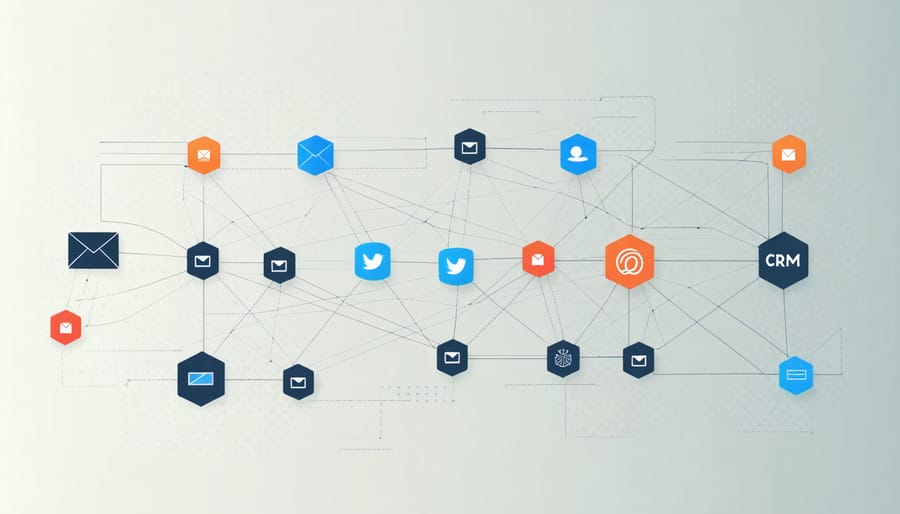
Effective customer data integration forms the backbone of successful B2B lead nurturing. Start by consolidating data from various touchpoints, including website interactions, email engagement, social media activity, and CRM records. This unified approach creates a 360-degree view of each lead’s journey and preferences.
To build comprehensive lead profiles, implement these key strategies:
1. Use progressive profiling forms to gather information gradually
2. Track behavioral data across all marketing channels
3. Integrate your CRM with marketing automation platforms
4. Maintain data hygiene through regular updates and validation
5. Segment leads based on industry, company size, and engagement level
Remember to prioritize data privacy compliance while collecting and storing information. Set up automated data synchronization processes to ensure all teams work with the most current lead information. This consolidated approach enables personalized communication strategies and helps identify optimal engagement opportunities throughout the buyer’s journey.
With accurate profiling, you can deliver targeted content that addresses specific pain points and moves leads efficiently through your sales funnel.
Channel Selection and Optimization
Effective B2B lead nurturing requires a strategic mix of communication channels tailored to your audience’s preferences and behaviors. Start by analyzing your target accounts’ digital footprint to identify where they spend most of their time and how they prefer to receive information.
Email marketing remains a cornerstone channel for B2B lead nurturing, but it shouldn’t stand alone. Integrate LinkedIn for professional networking and content distribution, while using retargeting ads to maintain visibility across multiple platforms. Consider incorporating SMS for time-sensitive updates and webinar reminders, particularly for decision-makers who are frequently mobile.
To optimize your channel mix, implement tracking mechanisms to measure engagement across platforms. Use this data to adjust your channel allocation based on performance metrics such as response rates, conversion rates, and engagement levels. Remember to maintain consistency in messaging across all channels while adapting the format to suit each platform’s unique characteristics.
Test different channel combinations for various segments of your audience, and don’t hesitate to retire underperforming channels. The key is to create a seamless experience that meets your prospects where they are, without overwhelming them with excessive touchpoints.
Automated Lead Scoring and Segmentation
Behavioral Scoring Models
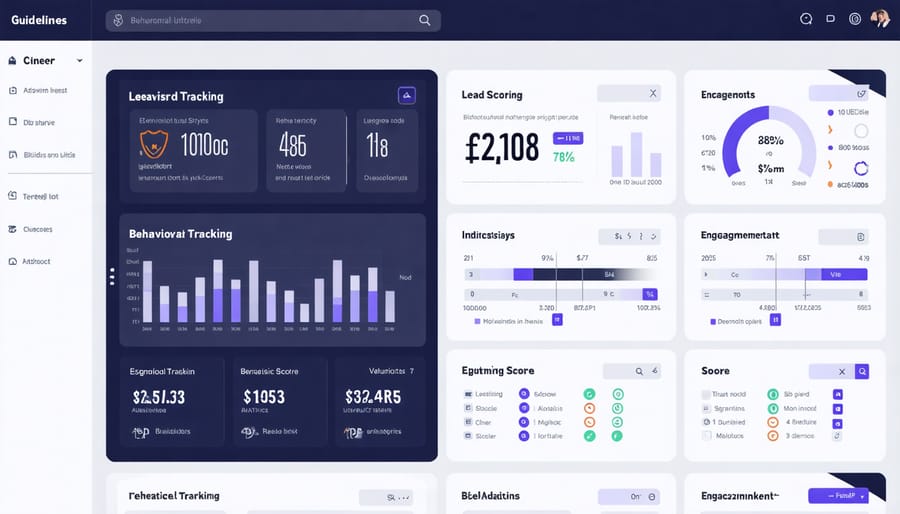
Behavioral scoring models are essential for effectively qualifying and prioritizing B2B leads based on their engagement patterns and readiness to purchase. To create an effective scoring system, start by identifying key behavioral indicators such as website visits, content downloads, email interactions, and form submissions.
Assign point values to different actions based on their importance in the buying journey. For example, downloading a product brochure might earn 10 points, while viewing pricing pages could be worth 15 points. Consider both explicit behaviors (direct interactions) and implicit behaviors (browsing patterns) when developing your scoring criteria.
Implementation should focus on three main components:
1. Demographic scoring: Evaluate how well leads match your ideal customer profile
2. Engagement scoring: Track interaction frequency and depth across channels
3. Decay rules: Reduce scores over time for inactive leads
Set up scoring thresholds that trigger specific actions. For instance, leads reaching 75 points might be ready for sales contact, while those between 50-74 points need additional nurturing content.
Regular review and refinement of your scoring model is crucial. Monitor conversion rates at different score levels and adjust point values based on actual sales outcomes. Use automation tools to track and update scores in real-time, ensuring sales teams always have current lead qualification data.
Remember to align scoring models with your sales team’s feedback and experience to ensure the system accurately reflects real-world buyer readiness.
Dynamic Segmentation Strategies
Dynamic segmentation has evolved beyond basic demographic filtering to become a cornerstone of effective lead nurturing tactics. Modern B2B businesses should implement automated segmentation based on multiple data points, including behavioral signals, engagement patterns, and buying intent indicators.
Start by establishing primary segmentation criteria such as industry vertical, company size, and purchase history. Layer this with behavioral data like website interactions, content downloads, and email engagement rates. Implement lead scoring systems that automatically adjust segment placement based on real-time activities and engagement levels.
Create dynamic segments that automatically update as leads progress through your pipeline. For example, when a lead’s engagement score reaches a predetermined threshold, they should automatically move to a higher-priority segment with more targeted content and increased touch points.
Consider implementing the following automated triggers:
– Content interaction patterns
– Time-based engagement scores
– Purchase intent signals
– Website behavior tracking
– Email response rates
– Social media engagement
Regularly review and refine your segmentation rules based on conversion data and feedback from your sales team. This ensures your automation remains aligned with actual buyer behaviors and business outcomes. Remember to maintain clean data hygiene and regularly purge inactive leads to keep your segments accurate and effective.
Content Synchronization Across Channels
Content Mapping and Journey Alignment
Effective content mapping ensures your leads receive relevant information at each stage of their buying journey. Start by categorizing your content according to the awareness, consideration, and decision stages. For awareness, focus on educational content like industry reports, whitepapers, and thought leadership pieces that address common pain points. During the consideration stage, provide comparative guides, case studies, and detailed solution descriptions that showcase your expertise.
As leads move into the decision stage, offer product demonstrations, customized proposals, and ROI calculators that help build confidence in your solution. Ensure your content distribution aligns with channel preferences – use email for in-depth resources, social media for quick insights, and your website as a comprehensive knowledge hub.
Create trigger-based content workflows that automatically deliver the right content based on lead behavior and engagement signals. For example, if a lead downloads a whitepaper about industry challenges, follow up with case studies demonstrating how similar companies solved those problems using your solution.
Remember to maintain consistency in messaging across all channels while adapting the format and depth of content to suit each platform’s unique characteristics. Regularly analyze content engagement metrics to refine your mapping strategy and improve alignment with your audience’s needs.
Cross-Channel Message Consistency
In B2B lead nurturing, maintaining consistent messaging across all communication channels is crucial for building trust and brand recognition. Your prospects may interact with your brand through email, social media, website content, and direct communications, making it essential to present a unified voice and message.
Start by developing clear brand guidelines that outline your company’s tone, messaging framework, and value propositions. These guidelines should be accessible to all team members involved in lead communication and content creation. Ensure that your core message remains consistent while adapting the delivery format to suit each channel’s unique characteristics.
Implement a content calendar that coordinates messaging across platforms, preventing disconnected or contradictory communications. Use templates and pre-approved messaging blocks to maintain consistency in routine communications while allowing for channel-specific customization.
Regular audits of your cross-channel communications can help identify any inconsistencies and areas for improvement. Pay special attention to how your brand story unfolds across different touchpoints in the customer journey. Consider using marketing automation tools to streamline message delivery and maintain consistency in timing and content across channels.
Remember that consistency doesn’t mean identical content – rather, it means ensuring your core message and value proposition remain clear and aligned regardless of the communication channel.
Measuring and Optimizing Performance
Cross-Channel Analytics
In today’s multi-channel B2B environment, effective lead nurturing requires a comprehensive approach to analytics across all touchpoints. Implementing robust cross-channel analytics enables businesses to track campaign performance and optimize their nurturing strategies based on concrete data.
Start by implementing unified tracking systems that consolidate data from various channels including email, social media, website interactions, and content downloads. Popular tools like HubSpot, Marketo, or Salesforce can integrate these diverse data streams into a single dashboard, providing a holistic view of lead behavior.
Key metrics to monitor across channels include:
– Engagement rates across different platforms
– Channel-specific conversion rates
– Time to conversion by channel
– Attribution data for successful conversions
– Cross-channel interaction patterns
Set up custom attribution models to understand how different channels work together in moving leads through your funnel. This helps identify which combinations of touchpoints are most effective at different stages of the buyer’s journey.
Regular analysis of cross-channel data reveals opportunities for optimization. For instance, if data shows that leads who engage with both your LinkedIn content and email newsletters convert at higher rates, you can adjust your strategy to encourage this multi-channel engagement.
Remember to establish baseline metrics and set realistic KPIs for each channel while maintaining focus on overall conversion goals. This balanced approach ensures you’re optimizing individual channels without losing sight of the bigger picture.
Performance Optimization Techniques
To maximize your B2B lead nurturing effectiveness, implement these proven optimization techniques. Start by segmenting your leads based on behavior patterns, industry verticals, and engagement levels. This targeted approach typically increases conversion rates by 20-30%.
Establish clear lead scoring criteria that align with your sales cycle. Assign point values to specific actions like email opens, content downloads, and website visits. This helps prioritize leads and ensures timely follow-up with the most promising prospects.
Monitor and optimize email send times based on your audience’s engagement patterns. A/B test different elements including subject lines, content formats, and call-to-action placements. Track metrics such as open rates, click-through rates, and conversion rates to identify what resonates best with your audience.
Leverage marketing automation to streamline workflows while maintaining personalization. Set up trigger-based communications that respond to specific lead actions or milestones in the buyer’s journey. Regular analysis of your automation sequences helps identify bottlenecks and opportunities for improvement.
Finally, implement progressive profiling to gather additional lead information gradually. This approach reduces form friction while building comprehensive prospect profiles over time, leading to more meaningful engagement and higher conversion rates.
Remember to regularly review and adjust your optimization strategies based on performance data and feedback from your sales team.
ROI Measurement and Reporting
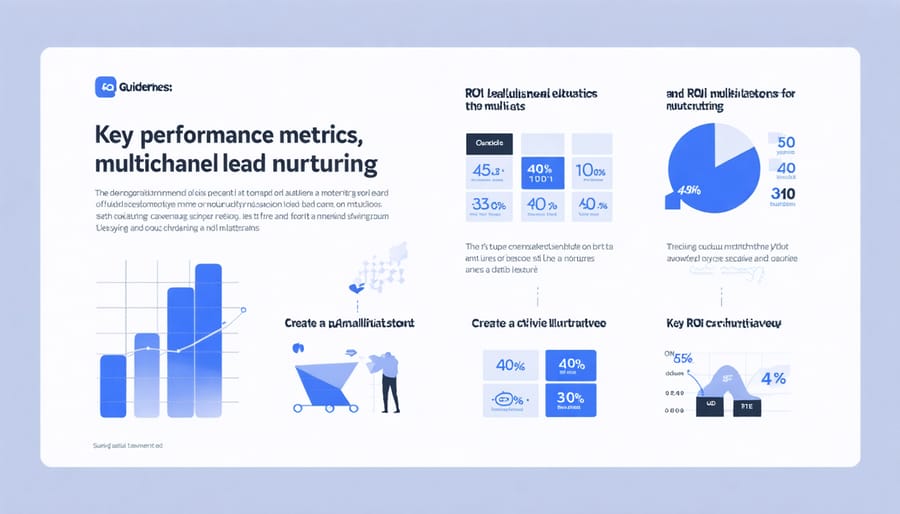
Measuring the ROI of your lead nurturing efforts is crucial for demonstrating value and optimizing your strategy. Start by establishing key performance indicators (KPIs) that align with your business objectives, such as conversion rates, sales velocity, and average deal size.
Track both quantitative and qualitative metrics throughout the nurturing process. Essential metrics include:
– Lead-to-opportunity conversion rate
– Time to conversion
– Cost per qualified lead
– Revenue generated from nurtured leads
– Customer lifetime value
Use marketing automation platforms to set up tracking parameters and create custom reporting dashboards. This enables real-time monitoring and helps identify which nurturing tactics are most effective.
Calculate your ROI using this formula:
(Revenue from nurtured leads – Total nurturing costs) / Total nurturing costs × 100
Create monthly or quarterly reports that showcase:
– Pipeline growth from nurturing activities
– Revenue attribution by channel
– Engagement rates across different content types
– Cost savings compared to traditional acquisition methods
Remember to document qualitative feedback from sales teams and customers to provide context to your numerical data. This comprehensive approach to ROI measurement helps justify investment in lead nurturing programs and identifies areas for optimization.
Implementing effective B2B lead nurturing practices is crucial for sustainable business growth and building lasting client relationships. By following the best practices outlined in this guide, you can create a robust lead nurturing strategy that delivers measurable results and drives revenue growth.
Remember to start by clearly defining your target audience and creating detailed buyer personas. Focus on delivering personalized, value-driven content that addresses specific pain points at each stage of the buyer’s journey. Leverage marketing automation tools to streamline your processes while maintaining a human touch in your communications.
Multi-channel integration is key to success – ensure your messaging remains consistent across email, social media, content marketing, and direct outreach efforts. Regular monitoring and optimization of your campaigns through data analytics will help you refine your approach and improve conversion rates over time.
Take action today by:
– Auditing your current lead nurturing processes
– Implementing marketing automation tools
– Creating a content calendar aligned with your buyer’s journey
– Setting up tracking metrics and KPIs
– Developing a regular review and optimization schedule
Success in B2B lead nurturing comes from consistent effort, continuous learning, and adaptability. Start implementing these practices gradually, measure your results, and adjust your strategy as needed. Remember that building strong relationships takes time, but the investment in proper lead nurturing will pay dividends in long-term business success.
Leave a Reply