Zero Trust Security: The New Blueprint for Digital Marketing Success

Visualize your zero trust security framework through precise architecture diagrams that map every access point, data flow, and authentication checkpoint across your marketing technology stack. Understanding digital marketing security fundamentals is essential, but translating these principles into actionable diagrams revolutionizes how teams implement and maintain secure systems.
Modern zero trust diagrams must capture three critical layers: the user identity verification process, microsegmentation of marketing assets and data, and continuous monitoring touchpoints. Each component requires explicit trust verification, regardless of location or network status, creating an environment where security becomes inherent rather than an afterthought.
Marketing professionals implementing zero trust architectures gain unprecedented control over sensitive customer data, campaign assets, and automation workflows. By mapping every interaction point and establishing clear verification protocols, organizations transform abstract security concepts into concrete, implementable processes that protect digital assets while maintaining operational efficiency.
This architectural approach eliminates traditional perimeter-based security weaknesses, replacing them with dynamic, context-aware protection that scales with your marketing operations. The resulting diagram serves as both a strategic planning tool and an operational guide, ensuring consistent security implementation across all marketing technology investments.
Understanding Zero Trust Architecture in Digital Marketing
Core Components of Zero Trust Marketing Security
Zero trust marketing security relies on three fundamental components that work together to create a robust defense system. First, identity verification serves as the gateway, requiring all users, devices, and applications to prove their authenticity before accessing any marketing resources. This includes multi-factor authentication and role-based access controls for team members handling sensitive campaign data.
Micro-segmentation is the second critical element, dividing your marketing infrastructure into isolated segments. Each segment contains specific resources like customer databases, analytics tools, or campaign management platforms. This approach ensures that a potential breach remains contained and doesn’t compromise your entire marketing ecosystem.
The third component, continuous monitoring, maintains security through real-time surveillance of all network activities. This involves tracking user behaviors, analyzing access patterns, and automatically flagging suspicious activities in your marketing operations. Advanced monitoring systems can detect unusual data transfers, unauthorized access attempts, and potential threats before they escalate into security incidents.
Together, these components create a comprehensive security framework that protects your marketing assets while maintaining operational efficiency and seamless collaboration among team members.

Why Traditional Security Falls Short
Traditional perimeter-based security approaches are becoming increasingly ineffective in today’s digital marketing landscape. The “castle and moat” security model, which focuses on defending the network boundary while trusting everything inside, leaves organizations vulnerable to sophisticated cyber threats.
When marketing teams collaborate with external partners, use cloud-based tools, and handle sensitive customer data, conventional security measures create significant blind spots. These traditional approaches assume that users and devices within the network are trustworthy, which is a dangerous assumption in an era of remote work and interconnected marketing systems.
Moreover, traditional security fails to address the dynamic nature of modern marketing operations. With teams accessing multiple platforms, analyzing customer data, and managing campaigns across various channels, static security boundaries become obsolete. The rise of marketing automation tools and third-party integrations further compounds these vulnerabilities.
Legacy systems also struggle with the granular access control needed for marketing operations. When everyone has broad access to resources, it becomes impossible to maintain data privacy and prevent unauthorized changes to campaign assets. This “trust by default” approach increases the risk of data breaches and compliance violations.
Mapping Your Zero Trust Marketing Architecture
Data Flow and Access Points
In a zero trust architecture, data flow follows strictly controlled pathways with multiple verification checkpoints. The diagram illustrates how marketing data moves through various systems while maintaining robust marketing data security at every touchpoint. Each access point requires separate authentication, even for users who have already logged into the network.
Data typically flows through three main zones: the external zone (where customer interactions occur), the processing zone (where data analysis happens), and the secure storage zone. At each boundary between zones, automated verification processes check credentials, assess risk levels, and monitor for suspicious activities.
Marketing teams access data through designated endpoints that implement just-in-time access controls. These endpoints verify not only who is requesting access but also the context of the request – including device status, location, and time of day. The system grants temporary permissions based on the principle of least privilege, ensuring team members can only access the specific data needed for their current task.
Real-time monitoring tracks data movement across all access points, while automated systems log and analyze these patterns to detect potential security threats. This continuous verification process ensures that even if one access point is compromised, the rest of the system remains secure, protecting sensitive marketing assets and customer information.

Authentication and Authorization Layers
In a zero trust architecture, the authentication and authorization layers form the backbone of secure access control. These layers work together to verify user identities and manage permissions across all system touchpoints. The foundation starts with robust user authentication systems that employ multiple verification methods, including biometrics, multi-factor authentication (MFA), and single sign-on (SSO) solutions.
The authorization layer builds upon successful authentication by implementing role-based access control (RBAC). This ensures users can only access resources necessary for their specific job functions. Each access request is evaluated individually, considering factors such as user role, device status, location, and time of request.
For business owners, implementing these layers means creating a systematic approach to user verification and permission management. This includes maintaining detailed user directories, regularly updating access policies, and monitoring authentication attempts. The key is to balance security with user experience, ensuring that legitimate users can access necessary resources efficiently while maintaining strong protection against unauthorized access.
Remember to regularly review and update these security measures as your business grows and technology evolves.
Monitoring and Response Systems
Effective monitoring and response systems form the backbone of a zero trust architecture, providing continuous surveillance and rapid incident management capabilities. These systems utilize advanced analytics and automation to detect potential threats in real-time, ensuring that any suspicious activity is immediately flagged and addressed.
Key components include Security Information and Event Management (SIEM) tools, which aggregate and analyze data from multiple sources across your network. These tools monitor user behaviors, system activities, and network traffic patterns to identify potential security breaches or policy violations.
Automated response protocols play a crucial role in maintaining security. When threats are detected, these systems can automatically initiate containment measures, such as isolating affected systems, revoking access credentials, or triggering additional authentication requirements. This immediate response capability helps minimize potential damage and maintain business continuity.
Regular system health checks and compliance monitoring ensure that all security measures remain effective and up-to-date. Dashboard reporting provides clear visibility into security status, making it easier for business owners to understand their security posture and make informed decisions about risk management.
Implementation Steps for Marketing Teams
Initial Assessment and Planning
Before implementing a zero trust architecture, conducting a thorough initial assessment and creating a detailed implementation plan is crucial. Start by evaluating your current security infrastructure, including all network resources, applications, and data access points. Document existing security measures, identify potential vulnerabilities, and map out data flows between different systems and users.
Create an inventory of all digital assets, including cloud services, third-party applications, and internal systems. This inventory should detail who has access to what resources and under what circumstances. Pay special attention to critical business applications and sensitive data repositories that require enhanced protection.
Next, establish clear security objectives aligned with your business goals. Define success metrics and set realistic timelines for implementation phases. Consider factors such as budget constraints, technical capabilities, and potential impact on business operations.
Develop a staged implementation plan that prioritizes critical systems and high-risk areas. This should include:
– User identity and access management protocols
– Network segmentation strategy
– Authentication mechanisms
– Monitoring and logging requirements
– Incident response procedures
Engage stakeholders early in the planning process to ensure buy-in and address concerns proactively. Document potential challenges and prepare mitigation strategies. Remember that zero trust implementation is an iterative process that requires regular assessment and adjustment based on changing business needs and emerging security threats.
Integration with Marketing Tools
When implementing zero trust architecture in your marketing operations, securing your marketing tools and platforms becomes crucial. Start by implementing strong authentication protocols for all marketing automation platforms, CRM systems, and analytics tools. Each tool should require multi-factor authentication and regular credential rotation.
For email marketing platforms, ensure that access is strictly controlled and segmented based on user roles. Content creators might need access to email templates, while campaign managers require broader permissions. Implement IP whitelisting for accessing these platforms, especially when handling sensitive customer data.
Social media management tools present unique challenges due to their broad access requirements. Use dedicated devices for social media access and implement endpoint security solutions. Consider using social media management platforms that offer SSO (Single Sign-On) integration with your existing security infrastructure.
Analytics platforms should be accessed through secure VPN connections, with data encryption both in transit and at rest. Set up separate viewing permissions for different team members based on their need-to-know basis. For marketing automation tools, ensure that API keys are regularly rotated and stored securely.
Customer data platforms (CDPs) require special attention due to their sensitive nature. Implement strict data governance policies, including regular audits of access logs and data usage. Consider using cloud access security brokers (CASBs) to monitor and control access to marketing cloud services, ensuring compliance with security policies while maintaining marketing team efficiency.
Remember to regularly review and update access permissions as team members’ roles change or they leave the organization. Document all security protocols and ensure your marketing team is trained on secure practices.
Measuring Security Success
Key Performance Indicators
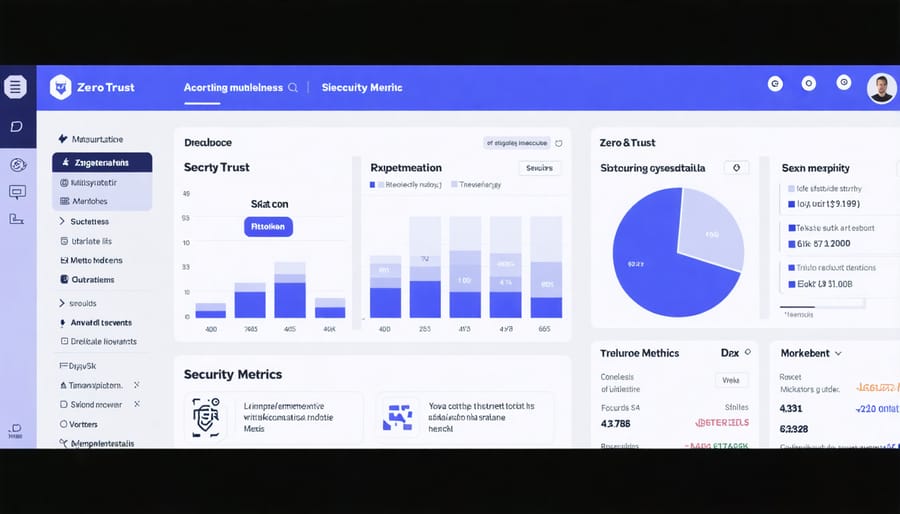
To effectively monitor your zero trust architecture implementation, tracking key security performance metrics is essential. Focus on measuring authentication success rates, which should typically exceed 98% for authorized users while maintaining zero unauthorized access attempts. Monitor response times for access requests, aiming to keep them under 200 milliseconds to ensure smooth operations.
Track the number of security incidents and policy violations monthly, with a goal of continuous reduction. Device compliance rates should maintain at least 95% adherence to security policies. Measure the time taken to detect and respond to potential threats, targeting under 15 minutes for critical alerts.
Important KPIs also include user satisfaction scores regarding security processes, system availability percentages, and successful automation rates for security workflows. Monitor the percentage of encrypted data in transit and at rest, aiming for 100% compliance. Regular assessment of these metrics helps identify potential vulnerabilities and areas for improvement in your zero trust implementation.
Keep detailed records of access pattern changes and anomaly detection rates to fine-tune your security policies and enhance overall system effectiveness.
Continuous Improvement Strategies
A successful zero trust architecture requires constant evolution to stay effective against emerging threats. Start by implementing regular security assessments, ideally quarterly, to identify potential vulnerabilities and gaps in your current setup. Establish clear metrics to measure the effectiveness of your security controls, such as failed authentication attempts, policy violations, and response times to security incidents.
Automate your monitoring and response systems to quickly detect and address potential threats. This includes setting up automated alerts for suspicious activities and implementing AI-driven security tools that can adapt to new attack patterns. Regular updates to access policies and authentication protocols should be scheduled based on threat intelligence and user behavior analysis.
Invest in ongoing staff training to ensure everyone understands and follows security protocols. Create feedback loops between security teams and users to identify pain points and improve user experience without compromising security. Document all changes and their impacts, maintaining a comprehensive change management system that tracks improvements and their outcomes.
Consider adopting a DevSecOps approach, integrating security practices into your development and operational processes from the start. This ensures that security remains a priority as your system evolves and grows.
Implementing zero trust architecture in your digital marketing infrastructure is no longer optional but essential for modern business security. By following the architectural principles outlined in this guide, you can create a robust security framework that protects your marketing assets while maintaining operational efficiency. Start with a thorough assessment of your current systems, implement identity verification at every access point, and gradually expand your zero trust model across all marketing operations. Remember to regularly review and update your security policies, train your team on new protocols, and maintain clear documentation of your architecture. Consider partnering with security experts for initial implementation, and don’t forget to measure the effectiveness of your zero trust model through regular audits and testing. With proper planning and execution, you can build a secure, scalable marketing infrastructure that protects your valuable data while supporting your business growth objectives.
Leave a Reply