How Sustainable Packaging Design Drives Marketing Success (Real Examples Inside)

Transform your brand’s environmental impact while driving consumer loyalty through sustainable packaging design. In today’s eco-conscious marketplace, packaging decisions directly influence purchasing behavior, with 73% of consumers willing to pay more for sustainable options. Smart businesses are revolutionizing their packaging strategies not just to meet environmental responsibilities, but to capture market share and reduce operational costs.
The shift toward sustainable packaging represents more than an environmental choice—it’s a strategic business imperative. From biodegradable materials to minimalist designs that reduce waste, innovative packaging solutions are helping companies slash shipping costs, enhance brand perception, and meet increasingly strict environmental regulations. Major brands implementing sustainable packaging initiatives have reported cost savings of up to 30% while significantly boosting customer satisfaction scores.
Forward-thinking businesses must act now to stay competitive. With global sustainable packaging market value projected to reach $305.31 billion by 2027, early adopters with well-executed strategies will capture the greatest advantages. This article explores proven approaches to sustainable packaging design, offering practical solutions that balance environmental responsibility with business performance and brand enhancement.
Let’s dive into actionable strategies that transform packaging sustainability from a corporate challenge into a competitive advantage.
Why Sustainable Packaging Matters in Marketing
Consumer Expectations and Brand Perception
Modern consumers increasingly base their purchasing decisions on a company’s environmental commitment, with packaging playing a crucial role in this evaluation. Research shows that 73% of consumers are willing to pay more for products with sustainable packaging, making it a key factor in both initial purchase decisions and long-term brand loyalty.
Sustainable packaging helps build customer trust by demonstrating environmental responsibility through tangible actions. Companies that effectively communicate their sustainable packaging initiatives often see improved brand perception and increased customer retention rates.
To meet consumer expectations, businesses should focus on:
– Clear labeling of recycling instructions
– Transparent communication about materials used
– Minimalist design that reduces waste
– Educational content about environmental impact
However, it’s essential to balance sustainability with functionality. Consumers expect eco-friendly packaging to maintain product quality and convenience while reducing environmental impact. Brands that successfully achieve this balance often see higher customer satisfaction scores and stronger market positioning against competitors who haven’t prioritized sustainable packaging solutions.
Environmental Impact as a Marketing Asset
In today’s environmentally conscious market, sustainable packaging isn’t just an ethical choice—it’s a powerful marketing asset. Businesses that effectively communicate their packaging sustainability initiatives often see increased brand loyalty and market share. By implementing circular business models and showcasing your commitment to eco-friendly packaging, you can create compelling marketing narratives that resonate with consumers.
To leverage your sustainable packaging efforts, focus on transparent communication about materials, recycling processes, and environmental impact. Use packaging design to tell your sustainability story through clear labeling, QR codes linking to detailed information, and educational elements that help consumers understand their role in the recycling process.
Consider creating marketing campaigns that highlight specific environmental benefits, such as reduced carbon footprint or plastic waste elimination. Share these achievements across multiple channels, including social media, product packaging, and company reports. Remember to back all claims with concrete data to maintain credibility and avoid greenwashing accusations.
Engage customers by making them part of your sustainability journey through interactive elements like recycling programs or packaging return initiatives. This not only strengthens brand loyalty but also generates valuable user-generated content for marketing purposes.
Essential Elements of Sustainable Packaging Design
Material Selection and Innovation
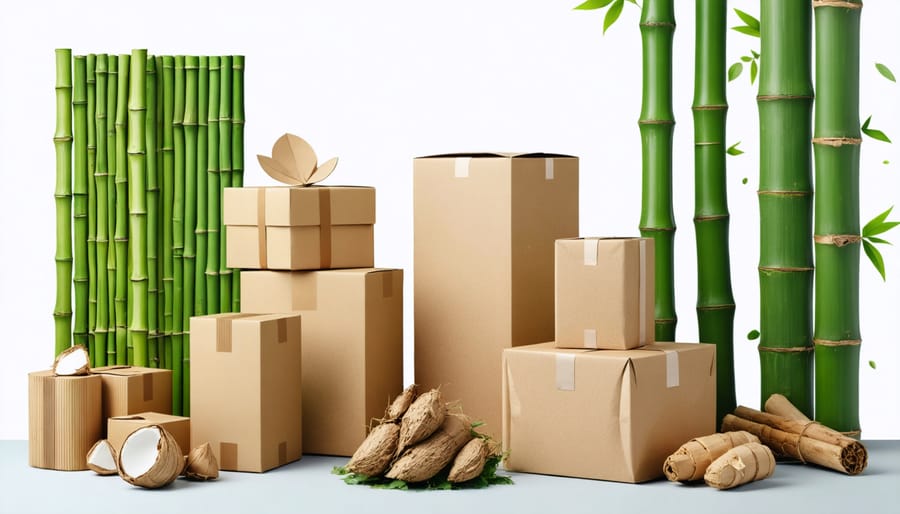
Selecting the right sustainable packaging materials is crucial for both environmental impact and brand perception. Today’s market offers numerous eco-friendly options that combine functionality with sustainability. Biodegradable materials like cornstarch-based polymers and mushroom packaging provide excellent protection while naturally decomposing after use. Recycled materials, particularly post-consumer recycled (PCR) plastics and papers, demonstrate your commitment to circular economy principles.
Plant-based materials such as bamboo, sugarcane bagasse, and hemp are gaining popularity due to their renewable nature and positive consumer reception. These materials often require less energy to produce and can be marketed as innovative solutions that align with eco-conscious consumer values.
When selecting materials, consider both immediate and long-term implications. While traditional plastics might offer lower upfront costs, sustainable alternatives can provide better brand positioning and customer loyalty. Many consumers are willing to pay more for products with environmentally responsible packaging, making the initial investment worthwhile.
Innovation in material science continues to introduce new options. Smart packaging materials that extend product shelf life or bioplastics that maintain the durability of conventional plastics while being environmentally friendly are revolutionizing the industry. These innovations not only support sustainability goals but also create compelling marketing narratives that can differentiate your brand in a crowded marketplace.
Remember to verify suppliers’ environmental claims and certifications to ensure authenticity in your sustainability messaging.
Design Principles for Maximum Impact
Creating sustainable packaging requires a delicate balance between environmental responsibility and visual appeal. The key lies in adopting a holistic approach that considers both aesthetic impact and ecological footprint from the outset of the design process.
Start by selecting materials that are both environmentally friendly and visually appealing. Recycled cardboard, biodegradable plastics, and plant-based materials can be transformed into stunning packaging through innovative design techniques. Consider using natural textures and minimalist patterns that showcase the material’s inherent beauty while reducing the need for additional decorative elements.
Color choices play a crucial role in sustainable packaging design. Opt for eco-friendly inks and printing processes that minimize environmental impact. Earth tones and natural pigments not only communicate environmental consciousness but also create a premium, authentic feel that resonates with environmentally aware consumers.
Structure your design around the principle of material efficiency. Minimize excess space and layers while maintaining the packaging’s protective function. Clean lines and thoughtful proportions can create visual interest without requiring additional resources.
Remember that transparency in design can be powerful. Consider incorporating elements that visually communicate the package’s sustainability features, such as recycling instructions or material composition. This not only enhances the design but also educates consumers about your environmental commitment.
Finally, ensure your packaging design maintains brand consistency while pushing sustainability boundaries. The most successful sustainable packaging solutions are those that seamlessly integrate environmental responsibility with brand identity and market appeal.
Integrating Sustainable Packaging into Marketing Campaigns
Digital Marketing Strategies
In today’s digital landscape, effectively communicating your sustainable packaging initiatives requires a strategic online presence. Implementing successful green marketing strategies across digital channels can significantly amplify your brand’s commitment to environmental responsibility.
Start by showcasing your sustainable packaging through high-quality visual content on social media platforms. Create engaging posts that highlight your eco-friendly materials, demonstrate recyclability, and explain the environmental impact reduction. Instagram and Pinterest are particularly effective for sharing before-and-after transformations and educational infographics about your packaging choices.
Develop dedicated landing pages on your website that detail your sustainable packaging journey, complete with metrics on environmental impact and waste reduction. Include interactive elements such as packaging lifecycle visualizations or carbon footprint calculators to engage visitors and demonstrate transparency.
Leverage email marketing to keep customers informed about your sustainable packaging initiatives. Send regular updates about new developments, share success stories, and provide tips on proper recycling or reuse of your packaging materials.
Consider creating video content for YouTube and other platforms to demonstrate your packaging in action. Short-form videos explaining the sustainable features of your packaging can be particularly effective on platforms like TikTok and Instagram Reels, where environmentally conscious consumers are increasingly active.
Monitor and engage with customer feedback across all digital channels to continuously improve your sustainable packaging communication strategy and build trust with your audience.
Social Media Engagement
In today’s digital landscape, sustainable packaging initiatives present unique opportunities for social media engagement and brand storytelling. Creating shareable content around your eco-friendly packaging efforts can significantly amplify your brand’s sustainability message while driving meaningful engagement with environmentally conscious consumers.
Start by documenting your sustainable packaging journey through behind-the-scenes content. Share visual stories of your material selection process, showcase your packaging’s lifecycle, and demonstrate how customers can properly recycle or reuse your packaging. Short-form videos and Instagram Reels are particularly effective for highlighting these elements in an engaging way.
Consider developing a branded hashtag campaign that encourages customers to share their experiences with your sustainable packaging. This user-generated content not only increases visibility but also builds community around your environmental initiatives. Leverage eco-conscious influencer partnerships to extend your reach and add credibility to your sustainability message.
Engage your audience through interactive content such as polls about future packaging designs or educational posts about environmental impact. Share infographics comparing traditional versus sustainable packaging options, and highlight key statistics about waste reduction achieved through your initiatives.
Remember to maintain transparency about your sustainability journey. Share both successes and challenges, and actively respond to customer feedback and suggestions. This authentic approach helps build trust and demonstrates your commitment to continuous improvement in sustainable practices.
Measuring Campaign Success
To effectively measure the success of sustainable packaging campaigns, businesses must track specific metrics that align with both environmental impact and marketing objectives. Key performance indicators (KPIs) should include reduction in packaging material usage, customer feedback scores, and social media engagement rates around sustainability initiatives.
Start by monitoring packaging-specific metrics such as material cost savings, waste reduction percentages, and carbon footprint measurements. Track these monthly to establish clear benchmarks and demonstrate ROI to stakeholders. Customer surveys and feedback forms can provide valuable insights into perception and acceptance of new sustainable packaging solutions.
Digital analytics play a crucial role in measuring campaign success. Monitor website traffic to sustainable packaging landing pages, engagement rates on social media posts featuring eco-friendly packaging, and conversion rates for products with sustainable packaging alternatives. Use A/B testing to compare performance between traditional and sustainable packaging options.
Sales metrics should include both direct and indirect indicators: track changes in sales volume after implementing sustainable packaging, monitor customer retention rates, and analyze any shifts in market share. Pay attention to earned media coverage and brand sentiment analysis to gauge broader market impact.
Remember to document cost savings from reduced material usage, shipping efficiencies, and any tax incentives or regulatory compliance benefits. These financial metrics help justify sustainable packaging investments and demonstrate business value beyond environmental impact.
Case Studies: Successful Sustainable Packaging Campaigns
Let’s examine three standout sustainable packaging campaigns that have successfully combined environmental responsibility with effective marketing strategies.
Lush Cosmetics revolutionized the beauty industry with their “Naked” packaging initiative. By eliminating packaging entirely for 35% of their products, they prevented 6 million plastic bottles from entering landfills annually. Their transparent communication about this choice resonated strongly with consumers, leading to a 27% increase in sales of package-free products within the first year.
Dell’s breakthrough came with their mushroom-based packaging solution for servers. By replacing traditional foam with biodegradable mushroom packaging, they achieved both sustainability and superior protection. The campaign highlighted the innovative nature of their solution through compelling visuals and educational content, resulting in significant media coverage and a 9% reduction in packaging costs.
Boxed Water Is Better demonstrated how sustainable packaging could become a brand’s core identity. Their distinctive paper-based cartons, made from 74% renewable materials, became instantly recognizable. Their #BetterPlanet social media campaign, which planted trees for every posted photo, generated over 100,000 user engagements and led to the planting of 612,000 trees.
Key success factors across these campaigns include:
– Clear communication of environmental impact
– Innovation in material choice and design
– Strong visual branding that emphasizes sustainability
– Measurable results shared transparently with stakeholders
– Active consumer engagement through social media
These examples show that sustainable packaging isn’t just about environmental responsibility—it’s a powerful marketing tool that can drive brand loyalty, reduce costs, and create meaningful consumer connections. The most successful campaigns combine innovative solutions with compelling storytelling and measurable environmental impact.
As we’ve explored throughout this article, sustainable packaging design is no longer just a trend but a crucial business imperative. By implementing eco-friendly packaging solutions, businesses can significantly reduce their environmental impact while building stronger connections with environmentally conscious consumers.
To successfully integrate sustainable packaging into your marketing strategy, start by conducting a thorough assessment of your current packaging practices. Identify areas where you can make immediate improvements, such as reducing material usage or switching to recyclable alternatives. Remember that sustainability is a journey, not a destination – begin with achievable goals and gradually expand your efforts.
Key action steps include:
– Partner with suppliers who share your commitment to sustainability
– Educate your team about sustainable packaging principles and practices
– Communicate your sustainability initiatives transparently to customers
– Track and measure the impact of your sustainable packaging efforts
– Regularly review and update your packaging strategies based on new innovations and customer feedback
Remember to highlight your sustainable packaging initiatives in your marketing communications, but ensure all claims are genuine and verifiable. Consider creating educational content that helps customers understand how to properly dispose of or recycle your packaging.
By taking these steps, you’ll not only contribute to environmental preservation but also position your brand as a responsible business leader in your industry. Start small, stay consistent, and let your sustainable packaging efforts evolve alongside your business growth and customer expectations.
Leave a Reply