Your Subscribers Went Silent—These Emails Bring Them Back

Segment your inactive subscribers into specific groups based on their last engagement date—those dormant for 30 days require different messaging than those absent for six months. Build your re-engagement emails around three proven psychological triggers: scarcity (limited-time offers), curiosity (sneak peeks at new features), and loss aversion (highlighting what they’re missing). Test subject lines that acknowledge the silence directly—phrases like “We miss you” or “Still interested?” consistently outperform generic promotional headers by 22-40% in open rates.
Your re-engagement campaign should deploy a three-email sequence over two weeks, starting with a friendly check-in, followed by an incentive-based message, and concluding with a final opportunity before list removal. This progression respects your subscribers’ attention while giving genuine chances to reconnect. Focus each email on a single, clear call-to-action rather than overwhelming recipients with multiple options—whether that’s updating preferences, claiming a discount, or simply confirming they want to stay subscribed.
Automate the technical heavy lifting by setting up trigger-based workflows that identify disengaged contacts and initiate campaigns without manual intervention. This approach ensures consistency while freeing your team to focus on crafting compelling copy. Most importantly, establish a clear sunset policy that removes persistently unresponsive subscribers after your final attempt—maintaining list hygiene improves deliverability rates and ensures you’re investing resources in genuinely interested prospects. The examples ahead demonstrate exactly how successful businesses implement these strategies.
Why Re-Engagement Emails Work (When Done Right)
Re-engagement emails tap into a simple psychological principle: people respond to personalized attention and the fear of missing out. When subscribers go dormant, they haven’t necessarily lost interest in your business—they’re often just overwhelmed by inbox clutter or their priorities have shifted temporarily. A well-timed re-engagement email cuts through the noise by acknowledging the relationship gap and offering value without pressure.
The optimal timing for re-engagement campaigns depends on your typical customer engagement cycle. For most businesses, subscribers who haven’t opened emails in 60-90 days qualify as dormant. E-commerce companies might act sooner at 30-45 days, while B2B organizations with longer sales cycles may wait 120 days. Track your email analytics to identify patterns specific to your audience.
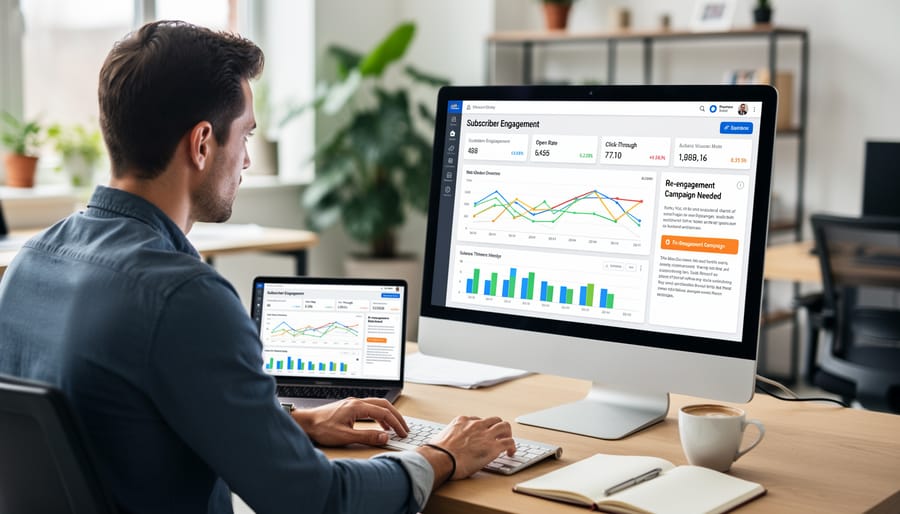
Key metrics signal when it’s time to launch a re-engagement campaign. Watch for subscribers with zero opens across your last 5-10 emails, declining click-through rates below 1%, or complete inactivity since their initial signup. These indicators suggest your messages aren’t resonating, and intervention is needed before these contacts become completely disengaged.
The success of re-engagement emails hinges on three factors: acknowledging the silence without guilt-tripping, providing clear value or incentives, and making it easy to update preferences or unsubscribe. Counterintuitively, cleaning your list of truly uninterested subscribers actually improves deliverability and engagement rates across your remaining audience. A smaller, engaged list outperforms a large, disinterested one every time.
The ‘We Miss You’ Approach
What Makes This Work
Successful re-engagement emails share several core elements that drive results. First, compelling subject lines create urgency or curiosity without being misleading. Lines like “We miss you” or “Is this goodbye?” feel personal and prompt opens.
The tone should balance professionalism with genuine warmth. Acknowledge the subscriber’s absence without guilt-tripping, and focus on the value you can still provide. A conversational approach works better than overly formal language.
Clear calls-to-action are essential. Whether asking subscribers to update preferences, claim an offer, or simply confirm their interest, make the next step obvious and easy. Include one primary CTA that stands out visually.
Timing matters too. Send re-engagement campaigns after 60-90 days of inactivity, when subscribers are disengaged but not completely disconnected from your brand.
Finally, personalization increases effectiveness. Reference past purchases, browsing behavior, or specific interests when possible. Automated systems can trigger these emails based on engagement metrics, ensuring you reach inactive subscribers at scale without manual effort.
Real-World Example Breakdown
Let’s examine a real campaign from an online software company that achieved a 28% open rate and 12% click-through rate with their re-engagement email.
The subject line read: “We noticed you’ve been away—here’s 30% off to come back.” This combined acknowledgment with immediate value, addressing the absence directly while providing a compelling incentive.
The email body opened with personalized copy: “Hi Sarah, it’s been 90 days since your last login.” Using the recipient’s name and specific timeframe created relevance without sounding accusatory. The next paragraph highlighted three new features added since their last visit, demonstrating product evolution and giving concrete reasons to return.
The call-to-action was singular and prominent: “Claim Your 30% Discount.” Focusing on one clear action prevented decision paralysis. Below the primary CTA, they included a secondary option: “Just browsing? See what’s new” with a link to their product updates page.
The email concluded with a simple feedback request: “Not interested anymore? Let us know why in one click.” This provided an exit option while gathering valuable data about customer churn reasons. The entire message stayed under 150 words, respecting the recipient’s time while delivering maximum impact through focused, benefit-driven messaging.
The Incentive-Driven Win-Back
When to Use Incentives
Incentives work best when you’ve identified specific segments showing declining engagement but haven’t completely disengaged. Target subscribers who haven’t opened emails in 60-90 days—they’re still warm enough to respond to value propositions but need a compelling reason to return.
Deploy incentive-based campaigns during key business moments: product launches, seasonal promotions, or when introducing new features. These natural touchpoints make your offer feel timely rather than desperate. Avoid overusing discounts with your most active customers, as this can devalue your brand and train them to wait for deals.
Price-sensitive segments and first-time buyers who never converted to repeat customers respond particularly well to incentives. Set up automated triggers based on purchase history and engagement patterns to deploy these campaigns efficiently. Test different incentive types—percentage discounts, free shipping, exclusive access—with small segments before rolling out broadly. Monitor redemption rates to ensure your incentives generate profitable re-engagement, not just one-time bargain hunters.
Example That Converts
A skincare brand successfully reactivated 23% of dormant subscribers with a 72-hour flash sale email that combined urgency with personalization. The subject line “We miss you—here’s 30% off your favorites” achieved a 31% open rate, significantly above their industry average of 18%.
The email’s effectiveness stemmed from four specific tactics. First, it referenced the customer’s previous purchase history in the opening line, creating immediate relevance through personalized email content. Second, the discount applied exclusively to items the customer had previously browsed or bought, eliminating decision fatigue. Third, a countdown timer added genuine scarcity without feeling manipulative.
Most importantly, the email included a clear feedback mechanism. Recipients who weren’t interested could click to update preferences rather than unsubscribe entirely, preserving 11% of non-converters for future campaigns.
The conversion rate of 8.7% generated $47,000 in recovered revenue from a list segment of 6,400 inactive subscribers. The automated workflow triggered after 60 days of inactivity, with dynamic product recommendations pulling from each recipient’s browsing data. This example proves that combining behavioral data with time-sensitive offers creates measurable results without requiring complex campaign management.
The Preference Update Strategy
Building the Perfect Preference Email
A successful preference email starts with clear, actionable options. Give recipients specific choices: update email frequency (weekly, monthly, quarterly), select content topics that interest them, or choose communication channels. Avoid overwhelming with too many options—five to seven preferences work best.
Use encouraging language that emphasizes control and value. Phrases like “Help us send you content you’ll love” or “Choose what matters to you” frame the email positively rather than as a last resort. Include a brief reminder of what subscribers gain by staying connected, whether it’s exclusive insights, early access, or industry updates.
For automation setup, trigger preference emails based on engagement metrics. Send them after 60-90 days of inactivity, following a bounce-back email, or when someone clicks but doesn’t convert. Build a simple workflow that segments recipients based on their selections and automatically adjusts their subscription settings.
Include a prominent “Update My Preferences” button in your primary call-to-action, with an unsubscribe link as a secondary option. This hierarchy encourages engagement over opt-out. Track which preferences receive the most selections to refine your overall content strategy and better serve your audience’s actual interests.
The ‘Last Chance’ Approach
The Unsubscribe Confirmation Email
When a subscriber chooses to leave, respect that decision with grace while keeping future possibilities open. Your unsubscribe confirmation email should acknowledge their choice immediately and make the process friction-free.
Example: “We’ve processed your unsubscribe request. You won’t receive marketing emails from us anymore. We’re sorry to see you go, but we respect your decision. If you change your mind, you can resubscribe anytime at [link]. Questions? Reply to this email—we’re here to help.”
This approach accomplishes three things: it confirms the action, shows respect for their preference, and provides a simple path back if circumstances change. Avoid guilt-tripping or making unsubscribing difficult, as this damages your brand reputation.
Consider including a brief, non-intrusive survey question: “Mind sharing why you unsubscribed? Your feedback helps us improve.” Keep it optional and simple—one click is ideal. Automate this email to send immediately after an unsubscribe request, ensuring subscribers receive instant confirmation. This final touchpoint demonstrates professionalism and may preserve goodwill for future interactions through other channels.
Automating Your Re-Engagement Sequence
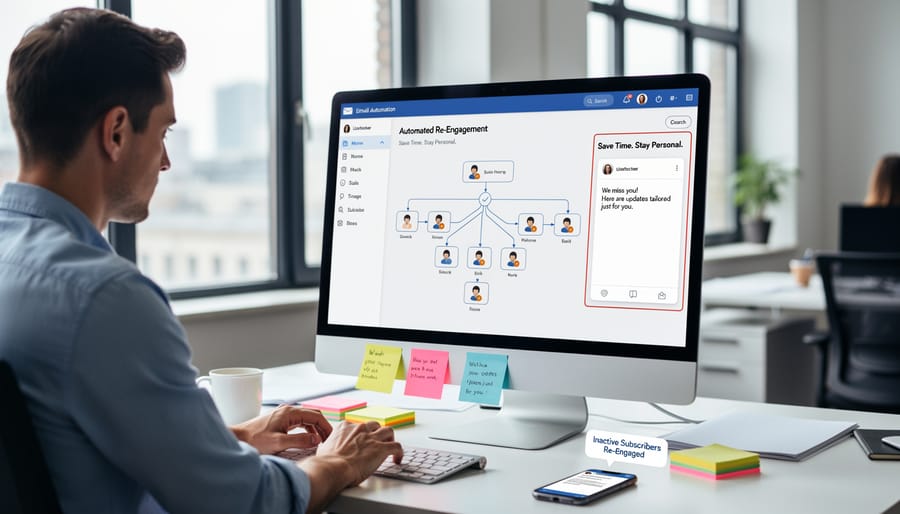
Setting up automated re-engagement workflows eliminates manual follow-up while ensuring consistent communication with inactive subscribers. Start by defining your trigger points based on engagement metrics. Most businesses set the first trigger at 30 days of inactivity, though this varies depending on your typical sales cycle and communication frequency.
Build your sequence with strategic timing intervals. A proven structure includes three touchpoints: the first email at 30 days of inactivity, a second at 60 days with a different angle or stronger incentive, and a final message at 90 days offering an easy unsubscribe option. This spacing prevents overwhelming recipients while maintaining presence.
Segmentation transforms generic campaigns into personalized experiences. Group inactive subscribers by previous purchase behavior, engagement level, or customer lifecycle stage. Someone who abandoned a shopping cart requires different messaging than a former customer who stopped opening emails after six months.
Use automated email triggers that respond to specific behaviors beyond simple time delays. When a subscriber clicks a link in your re-engagement email but doesn’t convert, trigger a follow-up with related content or a limited-time offer. If they open but don’t click, send a simplified version with a clearer call-to-action.
Include conditional logic in your workflows to stop the sequence when subscribers re-engage. If someone opens an email, clicks a link, or makes a purchase, immediately remove them from the re-engagement sequence and return them to your regular communication flow.
Test one variable at a time within your automation. Try different subject lines in email one, adjust timing between emails two and three, or experiment with incentive types. Track open rates, click-through rates, and conversion metrics for each variation to optimize performance over time without requiring constant manual intervention.
Testing and Measuring Success
Track these key performance indicators to measure your re-engagement campaign effectiveness: open rates (target 15-25% for dormant subscribers), click-through rates (aim for 2-5%), conversion rates, unsubscribe rates, and the percentage of subscribers who become active again. Monitor these metrics over a 30-day period after sending your re-engagement sequence to understand true impact.
A/B testing your emails is essential for optimization. Start by testing subject lines—compare direct approaches (“We miss you”) against curiosity-driven options (“Is this goodbye?”). Test one variable at a time for clear results. Next, experiment with email content elements: personalization levels, offer types (discounts versus exclusive content), call-to-action placement, and email length. Run each test with at least 1,000 subscribers per variation for statistical significance.
Use your results to refine your strategy continuously. If certain subject lines consistently outperform others, apply those principles across future campaigns. When specific offers drive higher re-engagement, incorporate similar incentives. Pay attention to timing—if emails sent on Tuesdays generate better response rates, adjust your automated sequences accordingly.
Set up automated reporting in your email platform to track performance weekly. Create a simple spreadsheet documenting what works and what doesn’t. This data becomes invaluable for improving not just re-engagement campaigns but your overall email marketing strategy. Remember, successful re-engagement is an ongoing process of testing, measuring, and adapting based on real subscriber behavior.
Re-engagement isn’t a one-time fix but an essential ongoing strategy for maintaining a healthy, responsive email list. The examples we’ve covered demonstrate that with the right approach and automation in place, you can systematically identify disengaged subscribers and bring them back into the conversation. The key is treating re-engagement as a regular part of your email marketing workflow rather than an afterthought when performance dips.
By implementing automated re-engagement sequences, you free up valuable time to focus on what truly matters: building genuine relationships with active customers and creating content that resonates. Set up your triggers, craft compelling messages using the examples provided, and let the system work while you concentrate on strategy and growth.
Start by choosing one or two examples that align with your brand voice and business model. Test them, measure results, and refine your approach based on what your audience responds to. Remember, every subscriber who re-engages represents renewed opportunity and validates your efforts to maintain meaningful communication. Your list health directly impacts deliverability, engagement rates, and ultimately, your bottom line. Take action today and make re-engagement a cornerstone of your email marketing strategy.
Leave a Reply