How Digital Out-of-Home Advertising Tools Are Transforming Your Marketing ROI

Digital out-of-home advertising has evolved from static billboards into a sophisticated, data-driven channel that reaches consumers at scale across digital screens in airports, shopping centers, transit stations, and urban landscapes. Modern DOOH platforms now offer the programmatic capabilities marketing professionals expect from online advertising—real-time bidding, audience targeting, performance tracking, and dynamic creative optimization—all applied to physical world environments.
The technology stack powering DOOH campaigns includes demand-side platforms that automate media buying, creative management systems that adapt content based on triggers like weather or time of day, and measurement tools that quantify foot traffic and attribution. These interconnected solutions transform what was once a manual, relationship-driven buying process into an efficient, scalable operation accessible to businesses of all sizes.
Understanding which tools fit your specific needs requires clarity on campaign objectives, budget parameters, and internal capabilities. Supply-side platforms connect you directly with premium inventory networks. Programmatic exchanges enable auction-based buying with precise targeting parameters. Analytics integrations bridge the gap between physical impressions and digital conversion data, answering the critical question of campaign ROI.
The barrier to entry has dropped significantly. Small and medium-sized businesses can now access enterprise-grade DOOH capabilities through self-service platforms and managed solutions that handle technical complexity while maintaining campaign control. The key lies in selecting tools that align with your operational workflow and communication requirements with stakeholders who need transparent reporting on campaign performance.
What Makes Digital Out-of-Home Advertising Different
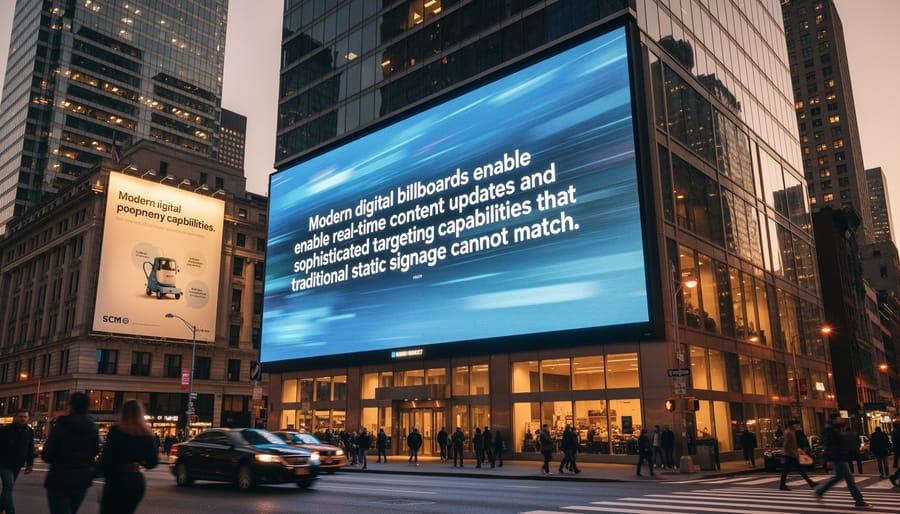
Digital out-of-home advertising represents a significant evolution from traditional billboards and static outdoor displays. While traditional outdoor advertising relies on printed materials that remain unchanged for weeks or months, DOOH uses digital screens and connected technology to display dynamic content that can be updated instantly from anywhere.
The key difference lies in flexibility and control. Traditional outdoor campaigns require physical installation and manual updates, meaning once your billboard goes up, you’re committed to that creative for the entire campaign duration. DOOH eliminates this constraint entirely. You can modify your messaging in real-time based on performance data, weather conditions, time of day, or current events. This adaptability means your advertising stays relevant and timely without additional production costs or installation delays.
DOOH also delivers measurable results that traditional outdoor advertising cannot match. Digital displays connect to analytics platforms that track impressions, engagement patterns, and audience demographics. This data-driven approach allows you to optimize campaigns continuously rather than waiting until the end to evaluate performance. You gain insights into which messages resonate with your audience and can adjust your strategy accordingly.
For business owners, this translates to better budget efficiency. Instead of printing multiple versions of static advertisements to test different messages, you can deploy several creative variations through a single digital display and measure which performs best. The automated nature of DOOH platforms means less manual work coordinating with vendors and more time focusing on strategy and results.
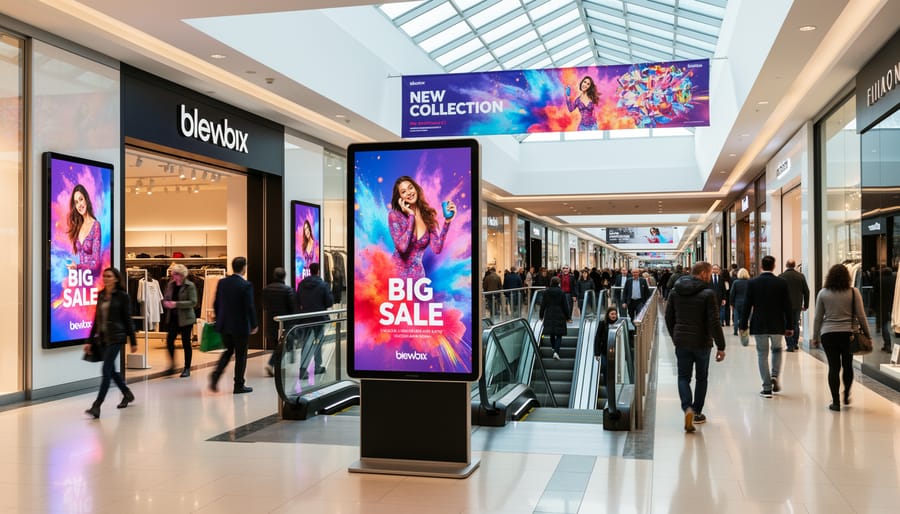
The real-time capabilities of DOOH also enable contextual advertising opportunities. Your restaurant can promote breakfast specials in the morning and happy hour deals in the evening, all through the same display location, maximizing the value of your advertising investment.
Essential DOOH Advertising Tools Every Business Should Know
Programmatic DOOH Platforms
Programmatic buying platforms have revolutionized how businesses purchase and manage digital out-of-home advertising. These automated systems eliminate the traditional manual process of negotiating with individual billboard owners, replacing it with streamlined software that connects advertisers directly to available screen inventory across multiple locations.
The core advantage lies in real-time bidding capabilities. Instead of committing to long-term contracts, you can bid on specific time slots and locations based on current market rates. This approach gives you greater flexibility and often reduces costs by allowing you to adjust spending based on campaign performance data.
These platforms typically feature intuitive dashboards where you can set campaign parameters, define target audiences, establish budget caps, and monitor results in real-time. The system automatically optimizes ad placement by analyzing factors like foot traffic patterns, weather conditions, and audience demographics to ensure your message reaches the right people at the right time.
Budget allocation becomes more efficient through automated optimization algorithms. The platform continuously evaluates which screens deliver the best return on investment and adjusts spending accordingly. You maintain full control through customizable rules and spending limits while benefiting from machine learning that improves targeting accuracy over time.
For businesses new to DOOH, programmatic platforms simplify entry by providing transparent pricing, performance metrics, and the ability to test campaigns with smaller budgets before scaling up. This accessibility makes professional-grade outdoor advertising achievable for companies of all sizes.
Campaign Management Systems
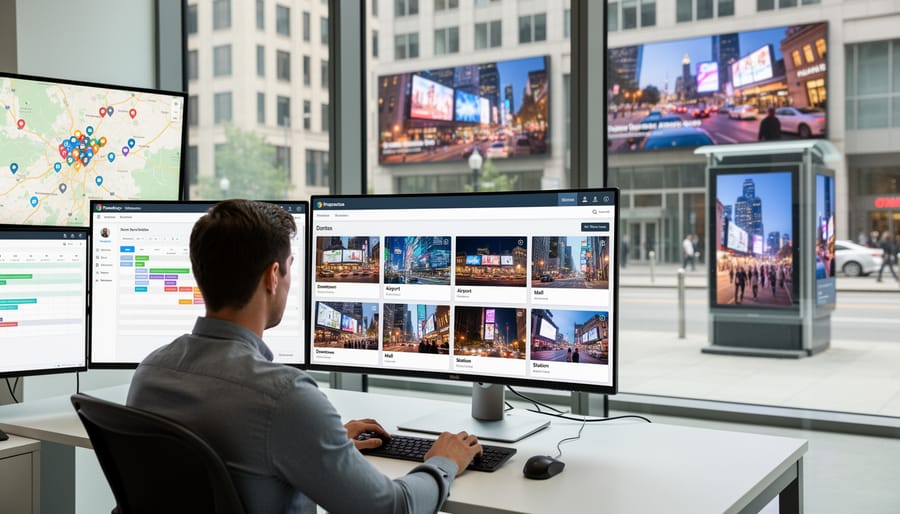
Campaign management systems serve as your central command center for orchestrating DOOH advertising across multiple screens and locations. These platforms streamline the entire process, from initial planning to execution and monitoring, saving you valuable time while reducing the risk of human error.
Modern campaign management tools automate scheduling, allowing you to set specific time slots for different content across various displays. You can program campaigns to run during peak traffic hours at one location while displaying different creative at another site simultaneously. This automation eliminates the need for manual updates and ensures your ads appear exactly when and where you intend them to.
Most platforms include drag-and-drop interfaces that make campaign setup straightforward, even if you’re not technically inclined. You can group screens by location, audience type, or campaign objective, then apply content and scheduling rules to entire groups rather than configuring each screen individually.
Real-time monitoring features let you track campaign performance as it happens. If something isn’t working, you can make immediate adjustments without waiting for campaign reports. Many systems also send automated alerts when screens go offline or campaigns need attention.
The client communication benefits are substantial. These systems typically include reporting dashboards you can share with stakeholders, providing transparency into campaign delivery and performance. Some platforms even offer client portals where customers can approve content, review schedules, and access analytics independently, reducing back-and-forth communication and strengthening trust in your service delivery.
Analytics and Attribution Tools
Measuring campaign performance is essential for optimizing your DOOH investment and demonstrating tangible business results. Modern analytics and attribution tools provide comprehensive insights into how your digital billboards and screens drive real-world actions.
These platforms track multiple performance indicators including impressions, dwell time, audience demographics, and foot traffic patterns. Advanced solutions integrate with mobile location data to measure store visits and conversions after ad exposure, connecting your outdoor campaigns directly to revenue outcomes. Many tools also offer weather and traffic integration, showing how external factors influence campaign performance.
Key features to prioritize include real-time dashboards that update automatically, eliminating manual reporting tasks and keeping stakeholders informed. Look for platforms offering cross-channel attribution that combines DOOH data with your other marketing efforts, providing a complete picture of customer journeys. Automated alerts notify you when campaigns underperform, enabling quick adjustments.
Popular solutions range from screen-specific analytics built into programmatic platforms to comprehensive attribution software that integrates with your existing marketing stack. Most providers offer customizable reporting that simplifies client communication by presenting complex data in digestible formats.
The right analytics tool transforms DOOH from an awareness channel into a measurable, accountable marketing investment. Start with platforms offering free trials to test compatibility with your existing systems before committing to long-term contracts.
DOOH Extensions That Amplify Your Campaign Results
Dynamic Content Triggers
Dynamic content triggers represent one of the most powerful capabilities in modern DOOH advertising. These automated systems adjust your ad creative in real-time based on external data feeds, delivering highly relevant messages when they matter most.
Weather-based triggers are particularly effective for retail and service businesses. A coffee chain can promote hot beverages during cold snaps while switching to iced drinks when temperatures rise. Restaurant ads can feature comfort food on rainy days and patio dining during sunny weather.
Time-based triggers optimize messaging throughout the day. Breakfast promotions appear during morning commutes, lunch specials at midday, and happy hour offers in late afternoon. This automation ensures your audience always sees contextually appropriate content without manual intervention.
Traffic pattern integration helps you reach audiences when they’re most receptive. Ads near congested highways can promote podcast apps or audiobooks, while messages near cleared routes focus on destination-based offerings.
Event-triggered content responds to real-time happenings like sports scores, stock market changes, or local news, creating timely connections with viewers. These triggers work through API integrations with data providers, automatically updating your campaigns based on predefined rules you establish during setup.
Mobile and Social Media Integrations
Modern DOOH platforms excel when they integrate seamlessly with your existing mobile and social channels. These integrations enable you to create cohesive campaigns that follow your audience across multiple touchpoints, maximizing message reinforcement and conversion opportunities.
Mobile integration tools use location-based technology and device IDs to bridge physical billboard exposure with digital follow-up. When someone passes your DOOH display, these systems can trigger mobile ads on their smartphone within minutes, creating immediate retargeting opportunities. This approach delivers measurable results by connecting offline impressions to online actions, helping you track the complete customer journey from billboard view to website visit or purchase.
Social media connectors allow you to synchronize DOOH creative with your Facebook, Instagram, and LinkedIn campaigns, maintaining omnichannel consistency across all marketing efforts. These platforms automatically adjust messaging timing and frequency based on real-time social engagement data, ensuring your outdoor displays complement rather than duplicate your digital presence.
The most effective solutions provide attribution tracking that links DOOH exposure to mobile conversions, giving you concrete ROI metrics. Look for platforms offering automated campaign synchronization that updates messaging across channels simultaneously, eliminating manual coordination and reducing the risk of inconsistent branding. This integration framework transforms DOOH from a standalone channel into a powerful component of your complete marketing ecosystem.
Audience Data Integrations
Modern audience data integrations transform digital out-of-home advertising from a broadcast medium into a precision targeting tool. These extensions connect your DOOH campaigns with demographic, behavioral, and real-time audience intelligence platforms to deliver relevant content to specific segments as they pass by your displays.
Leading integrations pull data from mobile device signals, retail foot traffic patterns, and third-party demographic databases. This allows you to adjust messaging based on who’s actually viewing your screens at any given moment. For example, a coffee shop chain might display breakfast promotions during morning commutes when data indicates a higher concentration of working professionals in the area, then switch to student-focused messaging during afternoon hours near campus locations.
Popular audience data platforms include LiveRamp for identity resolution, Placed for location analytics, and Cuebiq for mobility insights. These integrations typically work through automated triggers that swap creative assets based on predefined audience parameters you establish during campaign setup.
The key advantage is efficiency. Rather than running generic content around the clock, you serve tailored messages when your target audience is most likely to see them. This automated approach reduces wasted impressions and improves campaign performance without requiring constant manual oversight. Most platforms provide dashboard analytics showing which audience segments engaged most with your content, enabling continuous optimization of both targeting parameters and creative messaging.
Choosing the Right Tools for Your Business Size and Goals
Selecting the right DOOH tools starts with an honest assessment of your current position and realistic goals. A startup with a $5,000 monthly marketing budget has fundamentally different needs than an enterprise allocating six figures to outdoor advertising. Begin by defining your primary objective: Are you building brand awareness in specific neighborhoods, driving foot traffic to physical locations, or supporting a broader omnichannel campaign?
For businesses new to DOOH, start with platforms offering self-service capabilities and straightforward pricing models. These typically provide access to smaller screen networks and local inventory without requiring substantial minimum spends. They’re ideal for testing DOOH’s effectiveness for your business before committing to comprehensive solutions. Look for platforms that offer transparent audience metrics and simple campaign setup processes that don’t demand specialized technical knowledge.
Mid-sized businesses with established marketing operations should evaluate tools based on integration capabilities. Your DOOH platform should connect seamlessly with your existing customer relationship management system, analytics tools, and other advertising channels. This integration enables automated campaign triggers based on customer behavior, weather conditions, or inventory levels, reducing manual work while improving campaign relevance.
Consider your team’s capacity honestly. Sophisticated programmatic platforms with extensive targeting options and real-time bidding features deliver powerful results but require dedicated personnel to manage effectively. If you lack in-house expertise, prioritize platforms offering managed services or strong customer support, even if they cost slightly more upfront.
Evaluate whether you need advanced features like dynamic creative optimization, cross-channel attribution, or audience verification. These capabilities add value for data-driven organizations running complex campaigns but represent unnecessary expenses for businesses focused on simple brand messaging in specific locations.
Finally, request trial periods or pilot programs before signing annual contracts. Testing platforms with small-scale campaigns reveals whether the interface suits your workflow, the available inventory matches your target markets, and the reporting provides actionable insights for optimization.
How Automation Simplifies DOOH Campaign Management
Modern DOOH platforms leverage automation to eliminate time-consuming manual work, allowing marketing teams to focus on strategic planning and client relationships. These systems handle repetitive operational tasks with greater speed and accuracy than manual processes.
Campaign optimization happens automatically through real-time performance monitoring. Campaign automation tools continuously analyze metrics like audience engagement, impressions, and conversion data, then adjust ad placements and bidding strategies accordingly. This ensures campaigns perform at peak efficiency without constant human oversight.
Scheduling becomes straightforward with automated systems that manage when and where ads appear across multiple screens. You can set parameters for dayparting, location-based triggers, and audience-specific delivery rules once, and the platform executes these instructions consistently. This eliminates scheduling conflicts and ensures your ads reach the right audiences at optimal times.
Reporting automation generates comprehensive performance summaries on demand or at scheduled intervals. Instead of manually compiling data from various sources, you receive consolidated reports showing key metrics, spending patterns, and campaign outcomes. This streamlined reporting process makes client communication more efficient and data-driven.
Budget management tools monitor spending in real-time and can automatically pause campaigns approaching their limits or reallocate funds to better-performing placements. This financial oversight prevents overspending while maximizing return on investment.
The time saved through automation translates directly into capacity for higher-value activities. Your team can dedicate more hours to creative development, strategic planning, and meaningful client conversations rather than administrative tasks. This shift improves both campaign quality and client satisfaction, creating a more scalable and profitable business model for agencies and in-house marketing teams alike.
Digital out-of-home advertising offers measurable results and unprecedented flexibility for businesses ready to expand beyond traditional marketing channels. The key to success lies in starting with established core platforms that align with your campaign goals and budget constraints. Major programmatic DOOH platforms provide the foundation you need, while specialized extensions and integrations can enhance your capabilities as you grow more comfortable with the medium.
Begin by selecting one or two primary platforms that offer robust targeting options and transparent reporting. This focused approach prevents the common pitfall of spreading resources too thin across multiple tools before understanding what works for your specific audience. As you launch your first campaigns, prioritize platforms that integrate smoothly with your existing marketing stack to maintain efficient workflows and centralized data management.
Measurement remains the cornerstone of continuous improvement in DOOH advertising. Establish clear key performance indicators from the outset and consistently track metrics like foot traffic attribution, conversion rates, and audience reach. Use these insights to refine your targeting parameters, creative assets, and budget allocation over time. Automated reporting tools eliminate manual data compilation, freeing your team to focus on strategic optimization rather than administrative tasks.
Remember that DOOH advertising is not a set-it-and-forget-it channel. Regular performance reviews and iterative adjustments based on real-world data will dramatically improve your return on investment. Start small, measure diligently, and scale what works. This methodical approach transforms DOOH from an experimental tactic into a reliable, results-driven component of your marketing strategy.
Leave a Reply