Advertising Specialties That Actually Drive Customers to Your Store
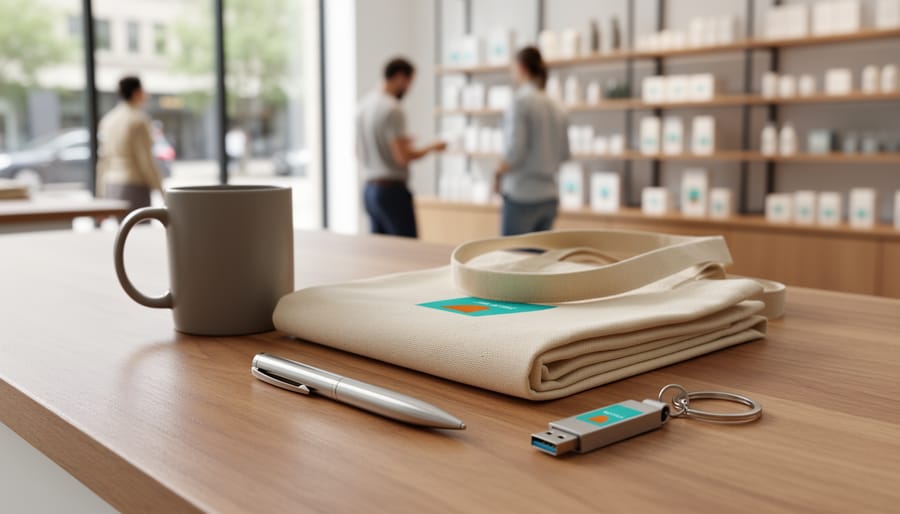
Advertising specialties are promotional products imprinted with your company’s name, logo, or message and distributed to customers and prospects at no charge. These tangible items—ranging from branded pens and tote bags to USB drives and coffee mugs—serve as physical reminders of your business long after initial contact.
Unlike traditional advertising that disappears after a campaign ends, advertising specialties remain in circulation for months or years, generating repeated brand impressions every time recipients use them. A well-chosen promotional product becomes a functional part of someone’s daily routine, creating positive associations with your brand while providing genuine utility.
The effectiveness of advertising specialties lies in their ability to create reciprocity. When you give someone a useful item, they’re more likely to remember your business favorably and consider your services when the need arises. This psychological principle makes promotional products particularly valuable for specialty retailers and service businesses seeking to build lasting customer relationships.
Modern Specialty Shop Marketing Guidelines emphasize integrating advertising specialties into broader customer communication strategies rather than treating them as standalone giveaways. The key is selecting products that align with your target audience’s preferences and your brand identity while maintaining quality standards that reflect positively on your business. This article will guide you through strategic selection, budgeting, and deployment of advertising specialties to maximize your marketing investment.
What Advertising Specialties Really Are
Advertising specialties are tangible promotional items imprinted with your business name, logo, or message that you give away to customers and prospects. These are the pens, tote bags, calendars, keychains, and coffee mugs you’ve likely received from businesses over the years. Unlike traditional advertising that you see or hear, advertising specialties are items people can touch, use, and keep.
What sets advertising specialties apart from other promotional materials is their staying power and functionality. A newspaper ad disappears after one day. A social media post vanishes in someone’s feed within minutes. But a branded coffee mug sits on your customer’s desk for months or even years, creating thousands of impressions. Each time someone uses that item, they’re reminded of your business.
For specialty shops, these promotional products serve a distinct purpose compared to flyers or business cards. While a flyer typically gets discarded after one reading, an advertising specialty continues working long after the initial exchange. A customer who receives a branded reusable shopping bag from your boutique will carry it around town, effectively turning into a walking advertisement for your store.
The effectiveness of advertising specialties for brick-and-mortar retail locations comes down to three factors. First, they create reciprocity. When you give someone a useful gift, they’re more likely to remember your store positively and return the favor through purchases. Second, they increase visibility in your local community. Unlike digital ads that target broad audiences, a branded item from your shop stays within your geographic market where your actual customers live and shop. Third, they’re memorable. People remember businesses that give them something useful far better than those that simply handed them a coupon.
The key is selecting items that align with your brand and provide genuine value to recipients.
Why Specialty Shops Win With Branded Giveaways
Building Local Brand Recognition
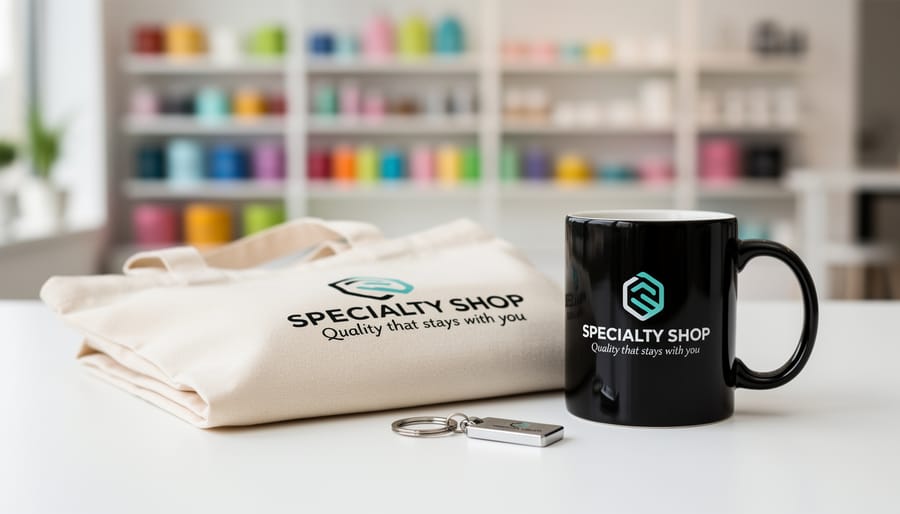
Advertising specialties work differently than traditional advertising because they create lasting impressions through repeated daily use. When a customer receives a branded calendar, coffee mug, or tote bag from your specialty shop, they’re exposed to your business name and logo multiple times throughout their routine. This repeated visibility builds brand recognition far more effectively than a single billboard or social media ad that disappears from view.
The real power lies in how these items circulate through your local community. A branded pen moves from desk to desk. A reusable shopping bag gets seen at the grocery store, gym, and neighborhood events. Each time someone uses or sees your promotional item, your business name registers in their mind, creating familiarity and trust. This organic exposure is particularly valuable for specialty shops that rely on local foot traffic and word-of-mouth referrals.
Track the impact by monitoring customer acquisition sources and asking new clients how they heard about you. Many business owners discover that customers mention seeing their branded items around town before deciding to visit. This validates the investment in quality advertising specialties that people actually keep and use, rather than disposable items that end up forgotten in drawers.
Turning Customers Into Walking Advertisements
The true value of advertising specialties becomes apparent when your customers become brand ambassadors without even realizing it. When someone carries your branded tote bag to the grocery store, wears your company t-shirt to the gym, or uses your coffee mug at their office, they’re essentially providing free advertising to everyone who sees them.
This multiplier effect is what separates advertising specialties from traditional advertising channels. A billboard reaches people in one location. A social media ad appears briefly in someone’s feed. But a quality branded item travels with your customer, exposing your brand to dozens or even hundreds of people throughout its lifetime.
The key to activating this effect is selecting items people actually want to use in public settings. Water bottles, backpacks, phone accessories, and quality apparel tend to generate significant visibility because people naturally incorporate them into their daily routines. A branded pen might stay in someone’s desk drawer, but a sleek insulated tumbler becomes a constant companion.
Track which items generate the most customer enthusiasm and requests. When clients actively ask for your branded merchandise, you’ve hit on something that provides real value. This positive association strengthens their connection to your brand while simultaneously expanding your reach to their personal and professional networks, creating a cost-effective advertising loop that continues long after the initial investment.

Choosing the Right Advertising Specialties for Your Shop
Match Your Shop’s Personality
Your advertising specialties should feel like a natural extension of your brand, not generic afterthoughts. Start by identifying what makes your shop distinctive. A boutique coffee roaster might choose insulated travel mugs or locally-made coasters, while a vintage clothing store could opt for retro-style tote bags or enamel pins that echo their aesthetic.
Consider your typical customer’s lifestyle and preferences. Are they eco-conscious millennials who’d appreciate sustainable bamboo products? Or busy professionals who need practical desk accessories? The right match strengthens brand recall and increases the likelihood your items will be used regularly.
Your specialty shop likely has visual elements that set it apart—specific colors, patterns, or design motifs. Incorporate these into your promotional items to maintain brand consistency. A bohemian-style shop benefits from earth-toned items with artistic flair, while a tech-focused retailer might choose sleek, minimalist designs.
Don’t overthink it. Simple questions guide smart choices: Would my regular customers actually use this? Does this item reflect our values? Will people associate this with our brand? When the answers align, you’ve found advertising specialties that work as authentic brand ambassadors rather than forgettable giveaways that end up in donation bins.
Useful Beats Clever Every Time
The most successful advertising specialties aren’t necessarily the most creative ones. They’re the items people reach for repeatedly throughout their day. A sleek, functional pen outperforms a novelty item that sits in a drawer. A quality water bottle beats a clever gadget that breaks after one use.
Think about it from your customer’s perspective. When they use a practical promotional item daily, your brand becomes part of their routine. That USB drive keeping their important files safe or that sturdy tote bag carrying their groceries creates positive associations with your business. Each use reinforces your message without being pushy.
The return on investment speaks for itself. A $3 coffee mug used 200 times over a year delivers thousands of brand impressions. Compare that to a $10 creative item that gets used once and forgotten. The math is simple.
Focus on items that solve real problems for your target audience. Office workers need functional desk accessories. Tradespeople value durable tools. Parents appreciate practical household items. When you match the promotional product to genuine needs, you’re not just giving away freebies. You’re providing value that keeps your brand top-of-mind exactly when customers are making purchasing decisions.
Quality matters too. A well-made item that lasts reflects positively on your business standards, while cheap products that fail quickly send the wrong message about your commitment to excellence.
Budget-Smart Options That Work
Smart budget allocation starts with understanding that effective advertising specialties don’t require premium pricing. Pens and keychains in the $0.50-$2 range deliver exceptional ROI when distributed strategically at high-traffic events or with every purchase. Mid-range items like drinkware ($3-$8) offer extended brand exposure since recipients use them daily for years. For businesses with larger budgets, quality apparel ($15-$30) transforms customers into walking advertisements.
The key is matching products to your distribution strategy rather than selecting items based solely on unit cost. A $5 notebook given to a decision-maker who uses it in meetings generates more value than a $0.75 pen left on a conference table. Calculate ROI by considering impressions per item, target audience reach, and longevity of use. Automated ordering systems streamline the process, allowing you to focus resources on strategic distribution rather than procurement logistics. Track redemption rates and customer feedback to refine your product selection over time, ensuring every dollar invested works harder for your brand awareness goals.
Strategic Distribution Methods That Maximize Impact
Purchase Milestones and Loyalty Rewards
Integrate advertising specialties into your customer loyalty program to automate recognition and strengthen retention. When customers reach specific purchase milestones—such as their fifth order, annual spending threshold, or one-year anniversary—trigger automatic distribution of branded gifts that acknowledge their commitment.
Set up tiered reward structures where promotional items increase in value and quality as customer engagement deepens. First-time buyers might receive a branded pen, while loyal customers who reach higher spending levels earn premium items like insulated drinkware, tech accessories, or custom apparel. This graduated approach motivates continued engagement while demonstrating appreciation proportional to customer value.
Automate the process by connecting your customer relationship management system to your promotional products supplier. Configure triggers that automatically generate orders when customers hit predetermined milestones. This eliminates manual tracking and ensures timely, consistent reward delivery without requiring staff intervention.
Personalize items whenever possible by including customer names, purchase dates, or milestone achievements. A water bottle engraved with “5 Years of Partnership” carries more emotional weight than generic swag. These personalized touches transform ordinary promotional products into meaningful keepsakes that customers actually use and display, extending your brand visibility while reinforcing positive associations with your business.
Community Events and Local Partnerships
Extending your advertising specialties beyond direct customer interactions creates opportunities to reach potential clients who may not yet know about your business. Community events offer ideal platforms for strategic distribution of branded items while building goodwill in your local market.
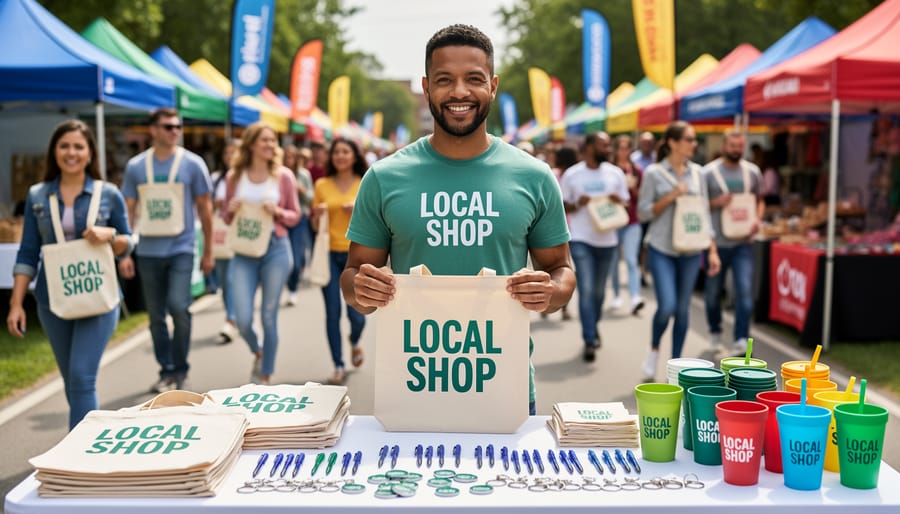
Start by identifying events that align with your target audience. Local charity runs, school fundraisers, business expos, and community festivals attract diverse crowds and welcome sponsor contributions. Partner with event organizers to provide branded water bottles, tote bags, or t-shirts that attendees will use during and after the event. This visibility extends your brand reach far beyond the event day itself.
Establish partnerships with complementary local businesses to cross-promote through shared promotional products. A coffee shop might team up with a bookstore to create co-branded items, or a fitness center could partner with a health food store. These collaborations reduce individual costs while doubling exposure to each other’s customer bases.
Consider sponsoring youth sports teams, community centers, or nonprofit organizations with branded items they actually need. Custom team jerseys, equipment bags, or volunteer t-shirts keep your business name visible while supporting causes your community cares about. This approach builds authentic connections that paid advertising cannot replicate.
Create a streamlined system for tracking which events and partnerships generate the most engagement. Use unique promotional codes or dedicated landing pages for different community initiatives to measure their effectiveness. This data helps you allocate your advertising specialties budget to the partnerships that deliver real results, ensuring your community presence remains both impactful and cost-effective.
Integrating Specialties With Your Digital Marketing
Today’s most effective promotional strategies don’t choose between physical and digital marketing—they integrate both. Advertising specialties create powerful opportunities to bridge these two worlds, turning tangible branded items into gateways for ongoing digital engagement.
The simplest integration method involves adding QR codes to your promotional products. A branded water bottle with a QR code can direct customers to exclusive content, special offers, or your social media pages. This transforms a one-time gift into a renewable touchpoint. The key is ensuring the QR code leads to mobile-optimized content that delivers immediate value, whether that’s a discount code, helpful resource, or entertaining content.
Social media campaigns gain traction when paired with physical giveaways. Consider running a contest where participants share photos of themselves using your branded items with a specific hashtag. This creates user-generated content while expanding your reach organically. Each post becomes free advertising that feels authentic because it comes from real customers.
Email marketing becomes more effective when you can reference physical items recipients have received or might receive. Send a follow-up email after distributing promotional products at an event, reinforcing your brand message and directing recipients to take the next step in your sales funnel.
Your digital marketing efforts can also promote the availability of your advertising specialties. Feature them in social media posts, include them in email signatures, or showcase them on your website to build anticipation for upcoming events.
Track engagement by using unique URLs or promo codes on different promotional items. This data reveals which products resonate most with your audience, allowing you to refine both your physical and digital strategies simultaneously. The goal is creating a seamless experience where your promotional products and online presence work together to keep your brand top-of-mind.
Measuring Results Without Getting Lost in Data
Tracking your advertising specialties program doesn’t require sophisticated software or complex formulas. Start with three straightforward metrics that directly impact your bottom line.
First, monitor redemption rates for promotional items tied to specific offers. When you distribute branded items with discount codes or special promotions, track how many customers actually use them. This tells you whether recipients are engaging with your brand beyond just accepting the freebie. A simple spreadsheet noting the number of items distributed versus codes redeemed gives you a clear picture of effectiveness.
Second, ask new customers how they heard about you. Add this question to your intake process, whether through automated email confirmations or in-person conversations. When customers mention receiving your branded item, you’ve identified a direct connection between your specialty program and new business. Keep a running tally to understand which items generate the most referrals.
Third, calculate cost per acquisition for your specialty campaigns. Divide your total investment in promotional items by the number of new customers generated. Compare this figure to your other marketing channels. If your cost per customer through advertising specialties is lower than digital ads or direct mail, you’ve found an efficient channel worth expanding.
Set up automated reminders to review these metrics monthly. This regular cadence prevents data from piling up while keeping your program accountable. When numbers trend downward, test different items or distribution strategies. When results improve, document what worked to replicate success. Simple tracking beats sophisticated analytics you’ll never actually use.
Advertising specialties represent a strategic investment in your specialty shop’s marketing efforts, not simply another expense line item. When integrated thoughtfully into your broader marketing framework, these tangible branded items create lasting impressions that digital advertising alone cannot achieve. The key lies in selecting items that genuinely resonate with your target audience and reflect your brand values.
Quality should always take precedence over quantity when implementing advertising specialties. A single well-crafted item that recipients use daily delivers far greater return than dozens of forgettable trinkets destined for the trash bin. Focus on products that align with your customers’ lifestyles and solve real problems they face.
To get started, identify three to five promotional items that complement your existing customer communication strategy. Consider your typical customer journey and pinpoint moments where a physical reminder of your brand would prove most valuable. Whether it’s a thank-you gift for repeat customers or a practical item distributed at local events, ensure each specialty serves a specific purpose within your marketing plan.
Remember that advertising specialties work best as one component of a comprehensive approach. Combine them with consistent customer communication, quality products, and genuine relationship-building to create a marketing strategy that drives sustainable growth for your specialty shop.
Leave a Reply