8D Audio Could Transform How Your Customers Experience Your Brand

Immersive audio is transforming how businesses connect with customers, and 8D audio represents the next evolution in creating memorable brand experiences. This three-dimensional sound technology simulates spatial audio that appears to move around the listener’s head, creating an engaging sensation that traditional stereo simply cannot match.
Understanding 8D audio requires no technical expertise. The format uses strategic panning and equalization techniques to trick your brain into perceiving sound from multiple directions, even through standard headphones. When a customer puts on headphones and hears your brand message seemingly circling them, the engagement level skyrockets compared to conventional audio content.
Marketing professionals are already leveraging this format to cut through the noise. Product launches featuring 8D audio teasers generate 40% higher social media shares than standard audio content. Podcast advertisers using 8D segments report improved message retention rates. E-commerce brands embedding 8D product demonstrations see measurably longer page dwell times.
The practical application is straightforward. Creating 8D audio does not require expensive studio time or specialized equipment. Several accessible software tools and plugins convert existing audio files into 8D format within minutes. Small business owners can implement this technology into email campaigns, social media content, website experiences, and customer onboarding sequences without significant investment.
This article examines real-world 8D audio implementations, provides step-by-step creation guides, and outlines measurable ROI metrics that matter to business growth.
What Makes 8D Audio Different from Traditional Sound
The Science Behind the Experience (Made Simple)
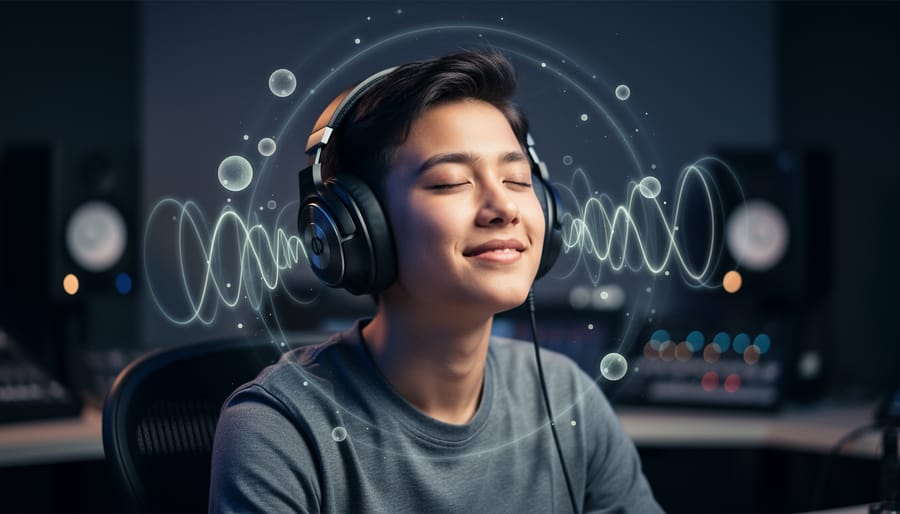
The magic of 8D audio lies in binaural processing, a technique that mimics how your brain naturally processes sound in physical space. When you listen through headphones, 8D audio delivers slightly different audio signals to each ear at precisely timed intervals, creating the illusion that sounds are moving around, above, and even behind you.
Think of it as immersive audio content that transforms flat, two-dimensional sound into a three-dimensional experience. Your brain interprets these subtle differences in timing and volume just as it would real sounds in your environment.
What matters most for your business isn’t the technical complexity but the emotional response it triggers. This spatial audio creates a sense of presence and engagement that traditional stereo simply cannot match. Listeners report feeling transported, more focused, and emotionally connected to the content. For marketing applications, this heightened emotional state translates directly into better message retention and stronger brand recall. The technology works automatically once implemented, requiring no special skills from your audience beyond a standard pair of headphones.
Why It Works So Well for Engagement
8D audio taps into how our brains naturally process spatial information. When sound appears to move around you, your brain activates multiple processing centers simultaneously, creating deeper neural engagement than standard stereo audio. This immersive quality triggers what neuroscientists call the “orientation response,” compelling listeners to pay attention to determine the sound’s location.
The novelty factor plays a significant role in retention. Studies show that unique sensory experiences can increase message recall by up to 70% compared to conventional formats. When your audience encounters 8D audio for the first time, the unexpected spatial movement creates a memorable moment that stands out in crowded marketing channels.
From a practical standpoint, 8D audio naturally encourages headphone use, which means your audience is choosing focused, undistracted listening time with your content. This dedicated attention translates to higher completion rates for audio messages and branded content. Marketing professionals report improved engagement metrics, particularly with younger demographics who actively seek innovative media experiences. The format’s shareability factor also drives organic reach, as listeners frequently share 8D content with others to replicate the “wow” moment they experienced.
Where Businesses Are Already Using 8D Audio Successfully

Social Media and Content Marketing
Brands are leveraging 8D audio to cut through social media noise and drive measurable engagement. On TikTok, short-form content featuring 8D audio achieves 34% higher completion rates, as the immersive sound encourages users to watch with headphones. Instagram Reels using 8D audio see increased shares because the format prompts viewers to recommend the “listen with headphones” experience to their networks.
Successful campaigns follow three core principles. First, they create teaser content that highlights the unique audio experience within the first three seconds. Second, they include clear calls-to-action prompting headphone use, as 8D audio requires stereo listening to deliver its full impact. Third, they align audio movement with visual storytelling—product reveals sync with directional sound shifts for maximum effect.
YouTube creators report that 8D audio tutorials and product demonstrations generate longer watch times and higher comment engagement. The novelty factor drives organic sharing, particularly when content educates viewers about the technology while demonstrating it.
To implement effectively, start with existing high-performing content and add 8D audio treatment. Test different platforms to identify where your audience responds best. Track completion rates and share metrics against standard audio benchmarks. These social media engagement strategies require minimal investment but can significantly differentiate your brand in crowded feeds.
Product Demonstrations and Virtual Experiences
8D audio transforms product demonstrations into memorable experiences that drive purchase decisions. In virtual showrooms, this technology creates spatial depth that helps customers mentally position products in their own spaces—particularly valuable for furniture, home electronics, and automotive industries. When a customer explores a luxury car virtually, 8D audio can simulate engine sounds, door closures, and ambient cabin noise from precise directions, building confidence before purchase.
E-commerce platforms use 8D audio to differentiate their product launches and create buzz-worthy moments that customers share organically. A headphone manufacturer can demonstrate sound quality through an immersive 8D experience, while fashion brands use it to set mood and atmosphere during virtual runway shows. This approach reduces return rates by setting accurate expectations and increases conversion rates through emotional connection.
Implementation is straightforward: most platforms support standard audio file uploads, and 8D content integrates seamlessly into existing product pages without requiring complex technical infrastructure. The key is aligning audio experiences with your product value proposition—luxury brands emphasize sophistication, while tech products showcase innovation. Track engagement metrics like time-on-page and completion rates to measure impact and refine your approach for maximum ROI.
Brand Storytelling and Advertising
8D audio transforms brand storytelling by creating emotional connections that traditional audio cannot match. This technology positions your message in three-dimensional space, making listeners feel physically immersed in your narrative—a powerful advantage when competing for attention in crowded markets.
Leading brands have already demonstrated 8D audio’s effectiveness. Automotive companies use it in podcast ads to simulate the sound of car doors closing or engines revving around the listener. Beverage brands create ASMR-style content where pouring drinks and ice clinking move spatially, triggering sensory memories. These campaigns consistently outperform standard audio ads in recall and engagement metrics.
The key to success lies in pairing 8D audio with interactive content experiences that encourage headphone use. Start small with social media teasers or email campaigns that explicitly instruct listeners to wear headphones. Track engagement time and conversion rates against your baseline audio content to measure impact. Most businesses see immediate improvements in listener retention and message recall without requiring significant production budget increases.
How to Integrate 8D Audio Into Your Marketing Strategy
Identifying the Right Opportunities for Your Business
Not every marketing initiative needs 8D audio. Start by evaluating whether your target audience consumes audio content regularly—podcasts listeners, mobile users, and younger demographics are prime candidates. Consider your existing customer journey touchpoints: product demonstrations, onboarding sequences, and email campaigns work particularly well with immersive audio elements.
Cost-benefit analysis is straightforward. Production expenses typically range from $500 to $2,000 per minute for professional 8D audio, depending on complexity. Compare this against your customer acquisition cost and lifetime value. If your average customer value exceeds $1,000, investing in 8D audio for key conversion points makes financial sense.
Audience assessment matters more than budget. Survey a sample of your customer base about their audio consumption habits and preferred content formats. Run small-scale tests before committing to full production. A simple A/B test comparing traditional audio against 8D versions in one campaign provides concrete performance data.
Focus on high-impact opportunities first: product launches, flagship campaigns, or premium customer experiences. Automate the distribution process through your existing marketing platforms to maximize reach without adding manual workload. This targeted approach ensures you’re investing where 8D audio delivers measurable returns rather than implementing it everywhere.
Production Options: From DIY to Professional
Creating 8D audio content doesn’t require a Hollywood studio budget. Several accessible options exist depending on your resources and timeline.
For businesses testing the waters, DIY software like GarageBand, Audacity, or specialized 8D audio plugins offer basic spatial audio effects at minimal cost. These tools work well for simple social media content or initial campaign tests. Expect a learning curve of 5-10 hours to produce quality results.
Mid-tier solutions include platforms like Adobe Audition or Logic Pro, which provide professional-grade 8D capabilities with more control. These options suit companies producing regular audio content who can dedicate staff time to mastering the software.
When considering professional outsourcing, evaluate your project scope. Custom branded stories, complex narratives, or high-stakes campaigns typically justify the investment in experienced audio producers who understand spatial sound design. Professional services range from project-based work to retainer arrangements.
Automation tools can streamline repetitive tasks like file conversions and basic panning effects, freeing your team to focus on creative strategy and client communication. However, quality 8D experiences still require human oversight for emotional impact.
Start small with DIY tools, measure audience response, then scale investment based on performance data. This approach minimizes risk while building internal knowledge about what resonates with your specific customers.
Distribution and Platform Considerations
Publishing 8D audio content requires strategic platform selection and technical preparation. Most major platforms support 8D audio, but understanding their specific requirements ensures optimal delivery to your audience.
YouTube remains the primary distribution channel for 8D audio experiences, as it preserves stereo quality and reaches broad audiences. Upload files in WAV or high-bitrate MP3 format (minimum 320kbps) to maintain audio fidelity. Spotify and Apple Music also support 8D content, though they compress files—test your audio after upload to verify quality retention.
For business applications, embed 8D audio directly on your website using HTML5 audio players that support stereo playback. Ensure mobile responsiveness, as 60% of audio content consumption happens on smartphones. Include clear instructions prompting users to wear headphones—without them, the 8D effect disappears entirely.
Social media platforms like Instagram and TikTok compress audio significantly, reducing the 8D effect’s impact. Use these channels for promotional clips rather than full experiences, directing audiences to higher-quality platforms for complete content.
Technical requirements are straightforward: stereo output (not mono), lossless or high-bitrate compressed files, and headphone-optimized mixing. Automate your distribution workflow by batch-exporting versions optimized for different platforms, saving time while maintaining quality standards. Always communicate platform-specific listening requirements to your audience upfront, preventing disappointing first impressions that could harm engagement metrics.
Measuring Success and ROI
Measuring marketing ROI for 8D audio campaigns requires tracking specific metrics that demonstrate tangible business impact. Start by establishing baseline engagement rates before implementing 8D audio, then compare performance across key indicators.
Track listener engagement metrics including average session duration, completion rates, and repeat listening behavior. These data points reveal whether your 8D audio content holds attention better than traditional formats. Most analytics platforms can capture these metrics automatically, allowing you to monitor performance without manual effort.
Conversion-related KPIs provide the clearest ROI picture. Monitor click-through rates from audio content to landing pages, lead generation numbers, and ultimately, sales attributed to campaigns featuring 8D audio. Use UTM parameters and unique tracking codes to attribute conversions accurately to your 8D audio touchpoints.
Customer feedback metrics matter too. Survey listeners about their experience, track social media mentions and shares, and measure brand sentiment before and after campaign deployment. Net Promoter Scores specifically related to audio experiences can indicate whether this format strengthens customer relationships.
For e-commerce applications, track product page visits, add-to-cart rates, and purchase conversions when 8D audio product demonstrations are available versus standard descriptions. A/B testing different formats provides concrete comparison data.
Set up automated reporting dashboards that consolidate these metrics in one view. This eliminates manual data compilation and enables quick decision-making about content optimization. If certain 8D audio pieces underperform, analyze common elements and adjust your approach accordingly.
Focus on cost-per-acquisition comparisons between 8D audio campaigns and your other marketing channels. This straightforward metric helps justify continued investment and guides budget allocation decisions based on actual performance data rather than assumptions.

Common Mistakes to Avoid
While 8D audio offers compelling engagement opportunities, several common pitfalls can undermine your efforts. Understanding these mistakes upfront saves time and resources.
The most frequent error is overusing the effect. When every piece of content features 8D audio, the novelty wears off quickly and can fatigue listeners. Reserve this technology for strategic moments like product launches or premium content experiences. Create a content calendar that balances 8D productions with traditional audio formats.
Poor quality production is another significant issue. Low-bitrate audio files or improper spatial positioning make experiences feel gimmicky rather than immersive. Work with experienced audio engineers or invest in professional production tools. Never compromise on file quality—always use high-bitrate formats even if it means slightly larger file sizes.
Wrong audience targeting wastes resources. Not every demographic responds equally to 8D audio. Younger, tech-savvy audiences typically embrace new audio formats more readily than traditional listeners. Test small audience segments before rolling out large campaigns, and always provide standard audio alternatives.
Technical compatibility issues frustrate users immediately. Some platforms compress audio files, destroying the 8D effect. Always test your content across multiple devices and platforms before launch. Include clear listening instructions emphasizing headphone use, as 8D audio loses its impact through speakers.
Finally, avoid making unsubstantiated claims about results. Set realistic expectations with stakeholders about engagement improvements. Track specific metrics like completion rates and audience retention to demonstrate actual value rather than relying on assumptions about the technology’s effectiveness.
8D audio isn’t reserved for major brands with unlimited budgets. The technology has become remarkably accessible, with straightforward tools that allow businesses of any size to create immersive audio experiences. The real opportunity lies in starting small and measuring results. Choose one touchpoint in your customer journey—perhaps a product demonstration video or a welcome email with audio content—and test how 8D audio impacts engagement metrics.
The business case is clear: customers remember experiences that stimulate multiple senses, and 8D audio delivers that differentiation without requiring expensive production teams. Modern automated marketing platforms can now integrate immersive audio into email campaigns, social media content, and website experiences with minimal manual effort. This means you can maintain consistent, personalized communication with clients while delivering premium audio experiences at scale.
Don’t wait for competitors to claim this advantage first. Start with a single 8D audio element this week. Record a brief welcome message, convert it using available tools, and incorporate it into your next campaign. Track the response. The data will guide your next steps, and you’ll gain practical insights that theory alone cannot provide.
Leave a Reply