Immersive Audiobooks Transform Digital Marketing: Here’s What You Need to Know

In today’s digital landscape, immersive audiobooks represent a revolutionary shift in how we consume and interact with narrative content. By combining traditional audiobook narration with spatial audio, ambient soundscapes, and interactive elements, these next-generation productions are transforming storytelling into a fully engaging sensory experience. Much like immersive technology in marketing, this format creates deeper emotional connections and higher engagement levels with audiences. For businesses and content creators, immersive audiobooks offer unprecedented opportunities to captivate listeners, enhance brand storytelling, and generate new revenue streams in the rapidly expanding digital audio market. As consumer demand for immersive content continues to surge, understanding and leveraging this technology has become crucial for staying competitive in the digital entertainment and marketing landscape.
What Makes Audiobooks Truly Immersive?
3D Audio Technology
3D audio technology transforms traditional audiobook narration into an immersive listening experience by creating a realistic sound environment around the listener. Using spatial audio techniques, sound engineers can position different audio elements in specific locations within a 360-degree sphere, making listeners feel as if they’re inside the story.
Binaural recording, a key component of this technology, uses specialized microphones that mimic human ear positioning. This technique captures sound the way our ears naturally process it, complete with subtle differences in timing and volume between each ear. When played back through headphones, these recordings create an incredibly realistic three-dimensional soundscape.
The technology allows for precise placement of narrative elements – character voices can come from different directions, ambient sounds can surround the listener, and sound effects can move through space. This enhanced audio experience helps listeners better engage with the story and retain information more effectively. For business audiobooks and educational content, this means improved comprehension and engagement rates compared to traditional audio formats.
These advancements in audio technology are becoming more accessible and cost-effective, making them viable options for publishers looking to differentiate their audiobook offerings in an increasingly competitive market.

Multiple Voice Acting
Multiple voice acting transforms traditional audiobooks into engaging theatrical experiences, significantly enhancing listener immersion. Instead of a single narrator handling all roles, full-cast performances feature different voice actors for each character, creating distinct personalities and emotional depth that resonate with audiences.
This approach offers several business advantages. Production companies report higher engagement rates and longer listening sessions when using multiple voice actors, as listeners find it easier to follow complex narratives and connect with characters. Market research indicates that full-cast audiobooks command premium pricing, with consumers willing to pay 20-30% more compared to single-narrator versions.
For publishers and content creators, multiple voice acting opens new marketing opportunities. These productions can be promoted as “audio experiences” rather than traditional audiobooks, attracting both audiobook enthusiasts and podcast listeners. The theatrical nature of these recordings also creates opportunities for cross-promotion with entertainment venues and performing arts organizations.
However, this enhanced production value comes with increased complexity and cost. Successful implementation requires careful casting, sophisticated audio engineering, and coordinated recording sessions.

Business Benefits of Immersive Audiobooks
Enhanced Customer Engagement
Immersive audiobooks are revolutionizing how listeners engage with content, creating deeper connections and increased retention rates compared to traditional formats. By incorporating spatial audio, ambient sounds, and multiple voice actors, these productions transform passive listening into an active, memorable experience. Studies show that listeners spend 30% more time engaged with immersive audiobooks compared to standard recordings, leading to higher completion rates and better comprehension.
The enhanced interactive content engagement created through immersive audio technology helps businesses capture and maintain audience attention in today’s competitive digital landscape. Listeners report feeling more emotionally invested in the content, with 65% saying they’re more likely to recommend immersive audiobooks to others.
Key engagement metrics show that immersive audiobooks drive:
– 40% higher retention rates
– 25% increase in listener reviews and ratings
– 50% more social media shares
– 35% higher completion rates for educational content
These enhanced engagement levels translate directly into business value, with listeners showing increased brand loyalty and willingness to purchase additional content. Companies implementing immersive audio features in their content strategy report significant improvements in customer satisfaction scores and repeat engagement rates, making it a valuable tool for both entertainment and educational content providers.
Brand Storytelling Opportunities
Immersive audiobooks present a unique opportunity for brands to elevate their storytelling capabilities and forge deeper connections with their audience. By incorporating dynamic soundscapes, multiple voice actors, and ambient effects, brands can transform traditional marketing narratives into memorable audio experiences that resonate with listeners on an emotional level.
For businesses investing in content strategy optimization, immersive audio offers several compelling advantages. Companies can leverage this technology to create branded podcasts, audio whitepapers, or interactive customer testimonials that stand out in an increasingly crowded digital landscape.
Key storytelling opportunities include:
– Creating immersive product demonstrations that allow customers to experience features through sound
– Developing audio-based case studies that bring customer success stories to life
– Producing branded soundscapes that reinforce company values and identity
– Crafting audio-first content that caters to busy professionals during their commute
To maximize impact, brands should focus on creating audio experiences that align with their existing brand voice while taking full advantage of the medium’s unique capabilities. This might involve incorporating signature sound elements, maintaining consistent narrator voices, or developing audio branding guidelines that ensure cohesive storytelling across all channels.
By investing in immersive audio content, businesses can differentiate themselves while providing value to their audience in an engaging, accessible format.
Implementation Strategies
Production Considerations
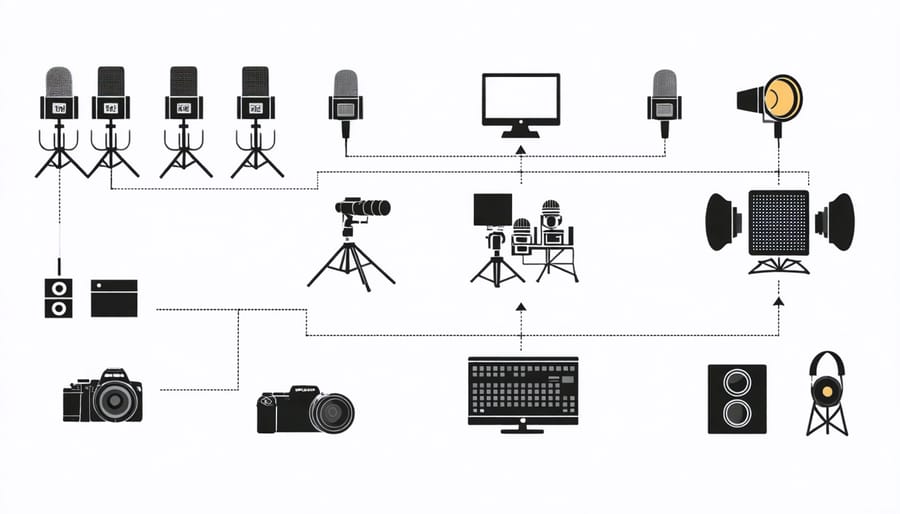
Creating immersive audiobooks requires careful attention to technical specifications and production quality. A professional recording studio with acoustic treatment is essential for capturing clear, pristine audio. The minimum technical requirements include a high-quality condenser microphone, audio interface with at least 24-bit/96kHz capability, and professional-grade Digital Audio Workstation (DAW) software.
Sound design plays a crucial role in the immersive experience. Producers should maintain a library of high-quality sound effects and ambient tracks, ensuring they’re properly licensed for commercial use. Spatial audio technology, such as binaural recording or Dolby Atmos, can significantly enhance the listening experience when implemented correctly.
Voice talent selection should prioritize performers with experience in spatial audio recording techniques. Multiple voice actors may be needed for different characters, requiring careful coordination and consistent recording conditions across sessions.
Post-production workflow must include proper audio mixing and mastering specifically optimized for various listening devices, from smartphones to smart speakers. Quality control should involve testing across different platforms and devices to ensure consistent playback quality.
File delivery specifications typically require high-quality MP3 files (minimum 256 kbps) or lossless formats like WAV or FLAC, depending on the distribution platform. Implementing proper metadata and chapter markers helps listeners navigate the content effectively while maintaining the immersive experience.
Distribution Channels
Today’s immersive audiobook market offers multiple distribution channels, each catering to different audience segments and business models. Major platforms like Audible, Apple Books, and Google Play Books remain primary channels, offering established infrastructure and wide reach. However, specialized platforms focusing exclusively on immersive content are emerging, providing enhanced features for spatial audio and interactive elements.
Publishers and creators can choose between exclusive distribution agreements with major platforms or opt for wide distribution through aggregators. Aggregators like Findaway Voices and Author’s Republic simplify the process by distributing content across multiple platforms while managing technical requirements and royalty tracking.
Direct-to-consumer (D2C) distribution through dedicated apps or websites is gaining traction, especially for publishers with strong brand recognition or unique content offerings. This approach provides greater control over the user experience and higher profit margins, though it requires significant investment in technology and marketing.
Subscription-based services are becoming increasingly popular, with platforms offering unlimited access to immersive audiobook libraries. These services often include features like offline listening, personalized recommendations, and social sharing capabilities.
For optimal market reach, many publishers adopt a hybrid distribution strategy, combining traditional audiobook platforms with specialized immersive content channels. This approach maximizes visibility while catering to both conventional audiobook listeners and tech-savvy users seeking enhanced experiences.
Immersive audiobooks represent a significant evolution in digital storytelling, combining traditional narration with innovative technology to create more engaging content experiences. As we’ve explored throughout this article, these enhanced audio productions offer businesses new opportunities to connect with audiences and monetize content in ways previously impossible.
The market for immersive audiobooks continues to grow, driven by advances in spatial audio technology, artificial intelligence, and increased consumer demand for interactive entertainment. Business owners and content creators who embrace this medium early stand to gain a competitive advantage in an increasingly crowded digital marketplace.
Key factors for success include selecting appropriate content for immersive adaptation, investing in quality production values, and developing effective marketing strategies that highlight the unique benefits of the format. The integration of immersive audiobooks into existing content strategies can help businesses diversify their revenue streams and reach new audience segments.
Looking ahead, we can expect to see further technological innovations in this space, including more sophisticated AI-driven narratives, enhanced personalization features, and improved integration with smart devices. The potential for marketing applications, particularly in branded content and educational materials, remains largely untapped.
For businesses considering entry into the immersive audiobook market, the time to act is now. While the technology continues to evolve, the fundamental appeal of immersive storytelling remains constant. By understanding the technical requirements, market dynamics, and consumer preferences discussed in this guide, organizations can position themselves effectively in this growing sector.
Success in this emerging field will depend on maintaining a balance between technological innovation and storytelling excellence, while keeping focus on delivering value to the end user.
Leave a Reply